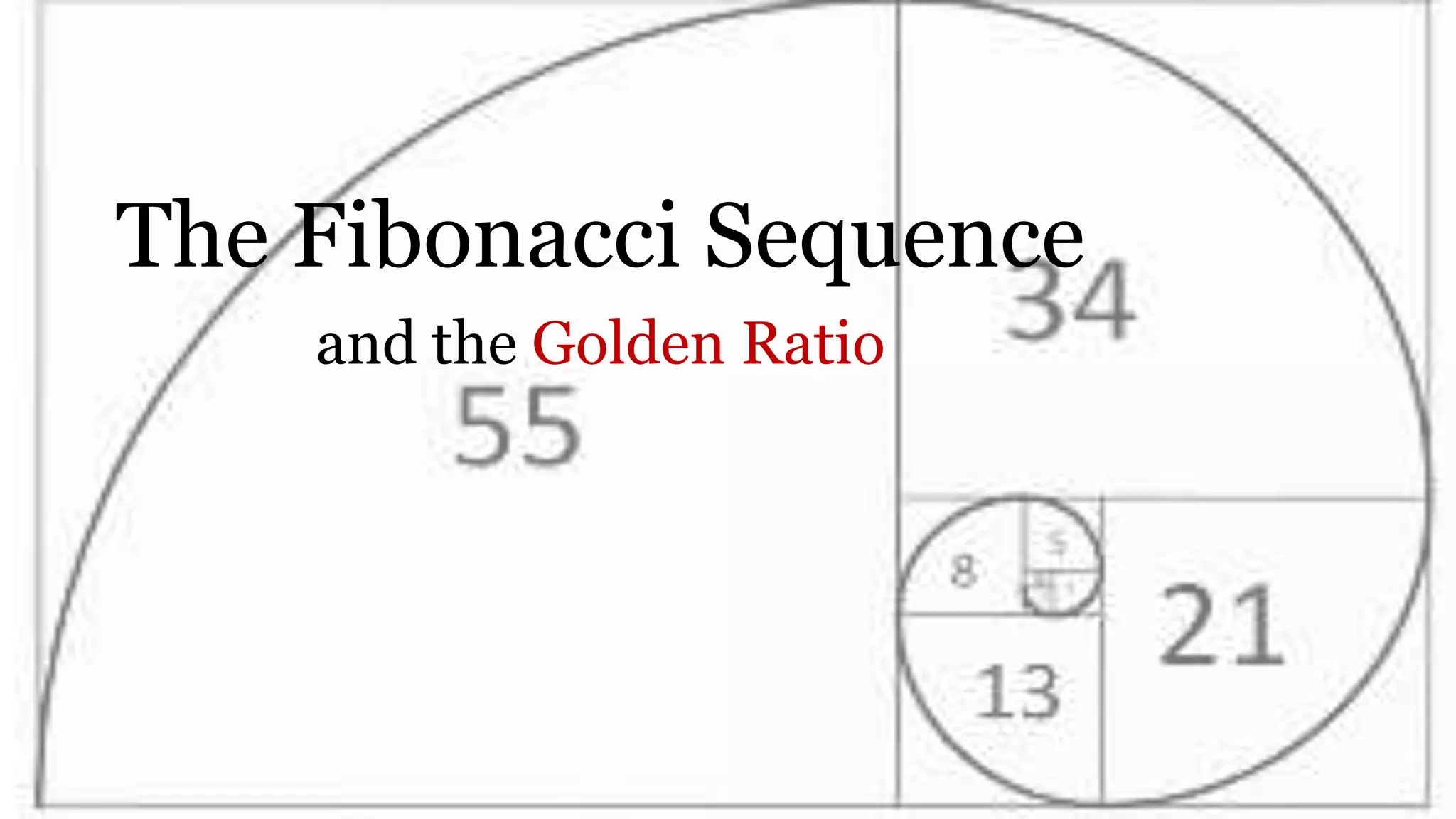
The Fibonacci Sequence
and the Golden Ratio
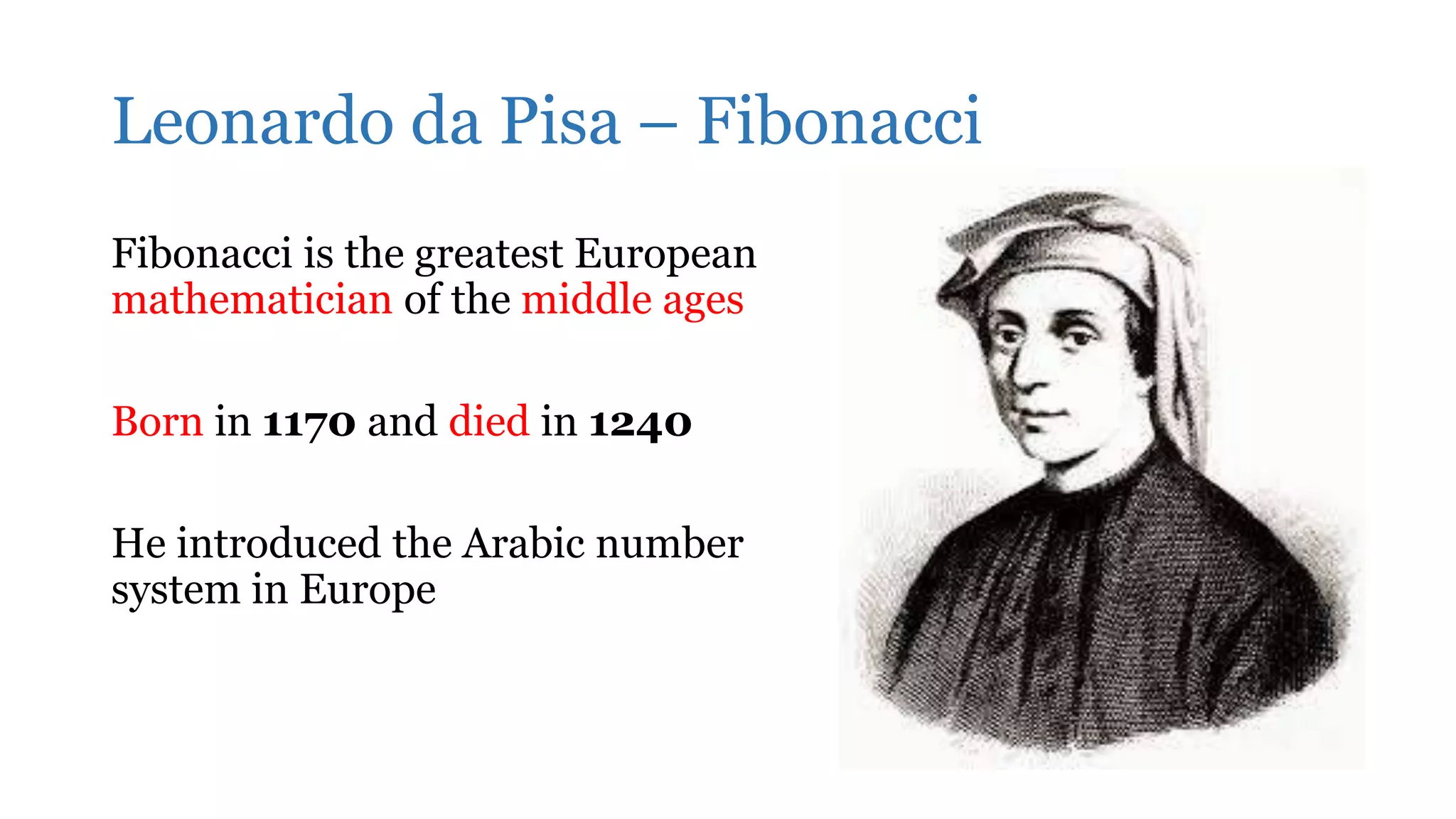
Leonardo da Pisa – Fibonacci
Fibonacci is the greatest European
mathematician of the middle ages
Born in 1170 and died in 1240
He introduced the Arabic number
system in Europe
Fibonacci Sequence
The sequence in which each number is the SUM of the two
preceding numbers
+ + + + + + + +++
1 2 3 5 8 13 21 34 55 89 2331441
+
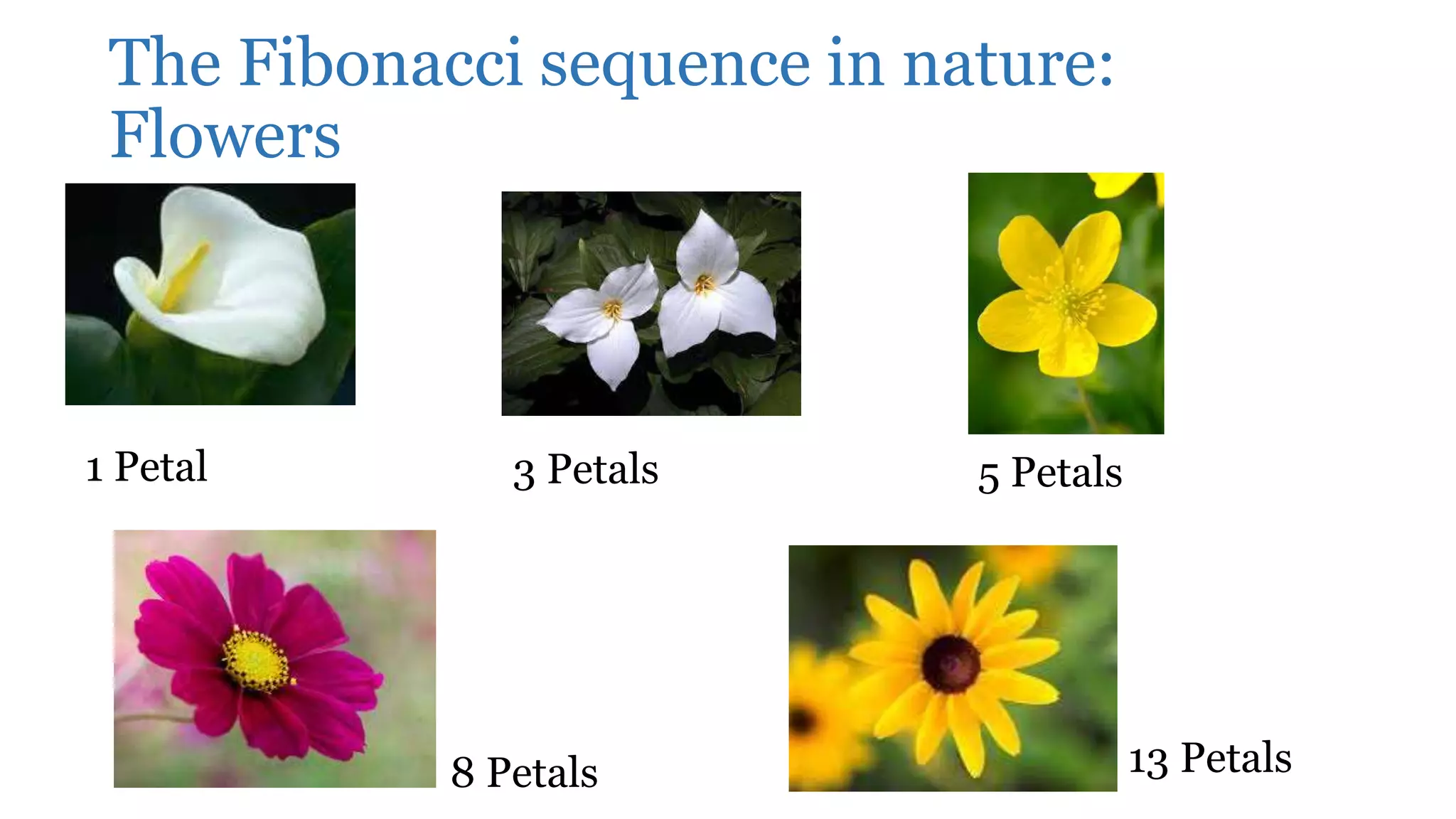
The Fibonacci sequence in nature:
Flowers
1 Petal 5 Petals3 Petals
8 Petals 13 Petals
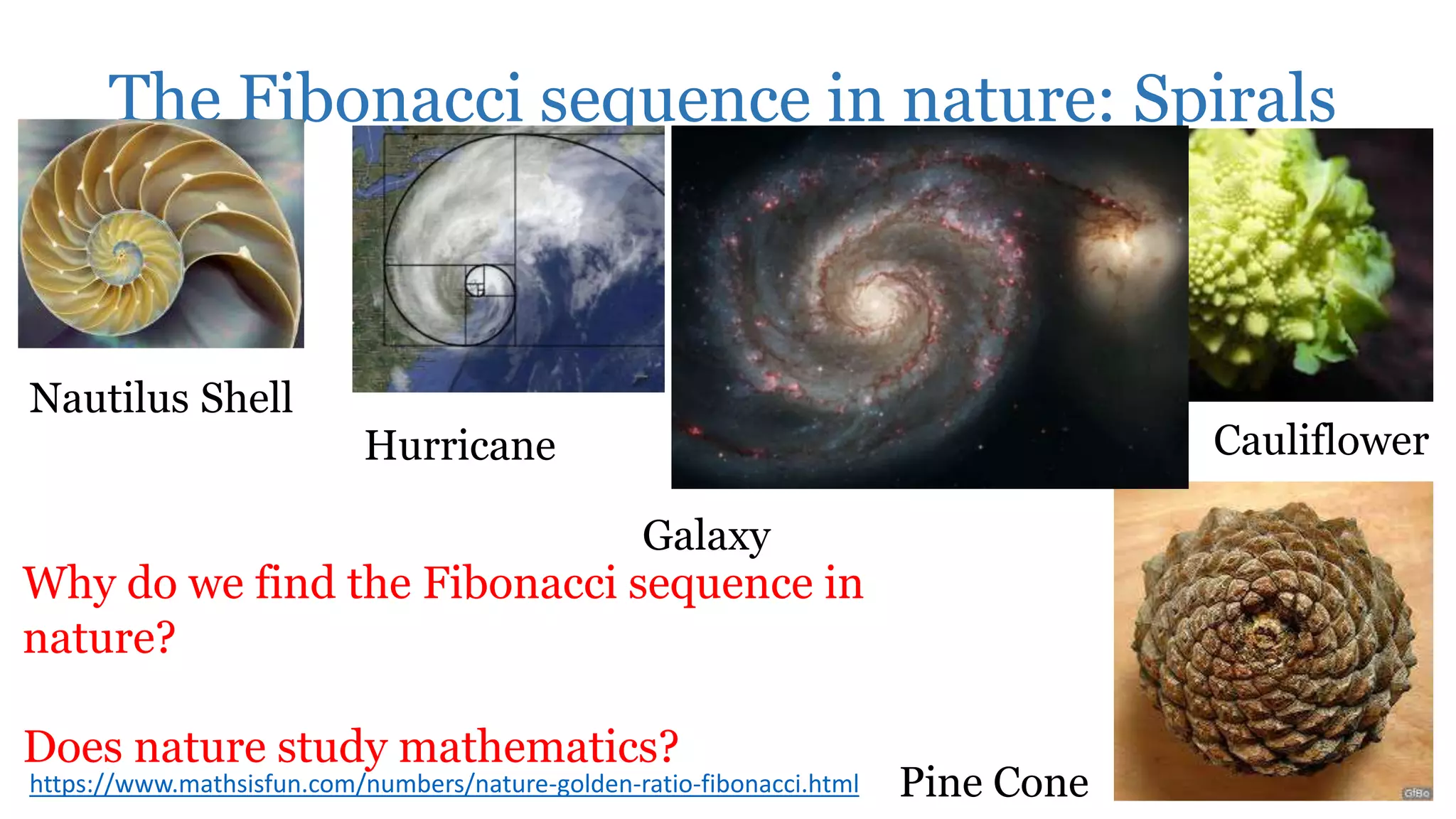
The Fibonacci sequence in nature: Spirals
Nautilus Shell
Cauliflower
Pine Conehttps://www.mathsisfun.com/numbers/nature-golden-ratio-fibonacci.html
Why do we find the Fibonacci sequence in
nature?
Does nature study mathematics?
Hurricane
Galaxy
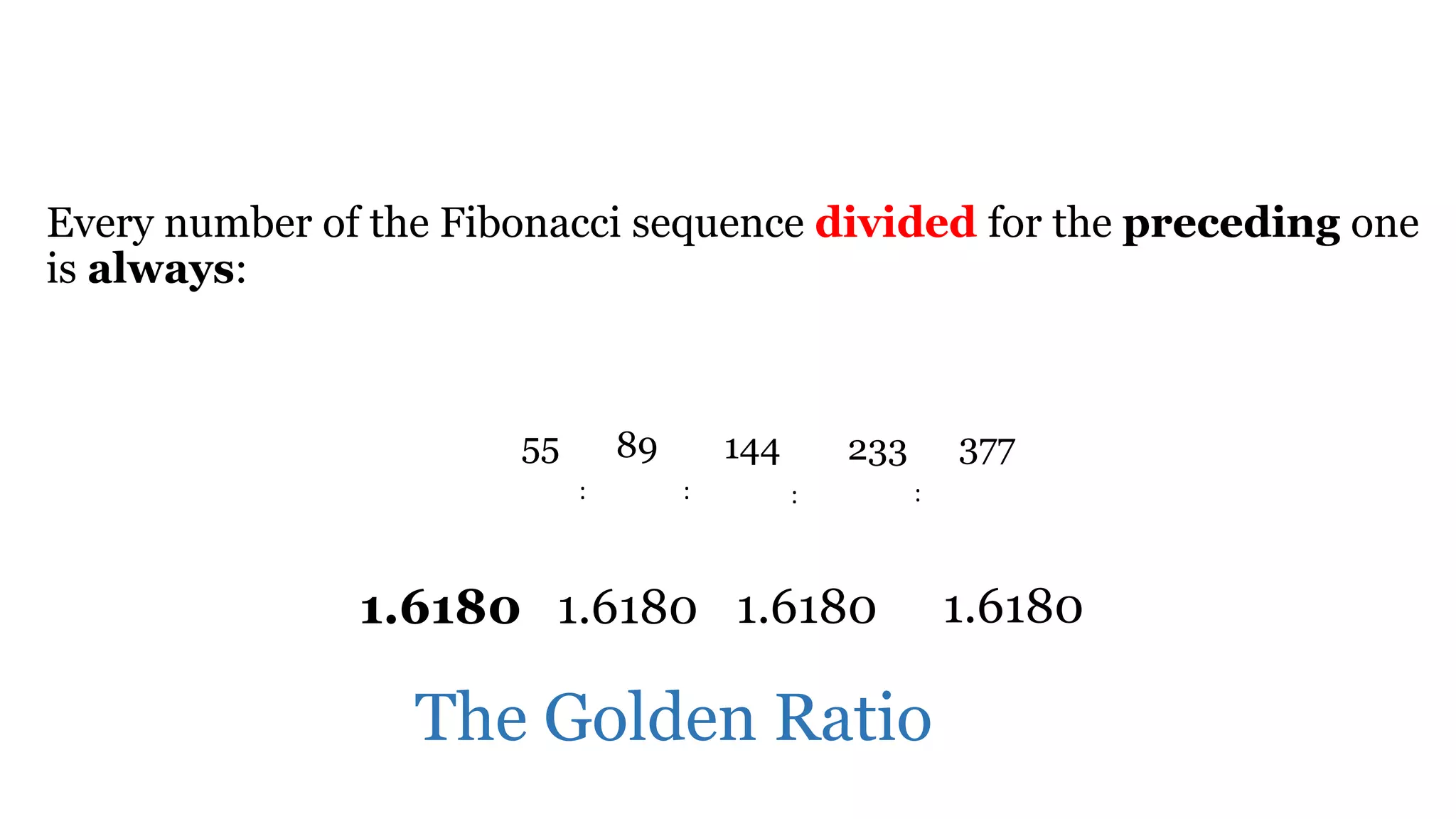
The Golden Ratio
: : ::
55 89 144 233 377
Every number of the Fibonacci sequence divided for the preceding one
is always:
1.61801.61801.61801.6180
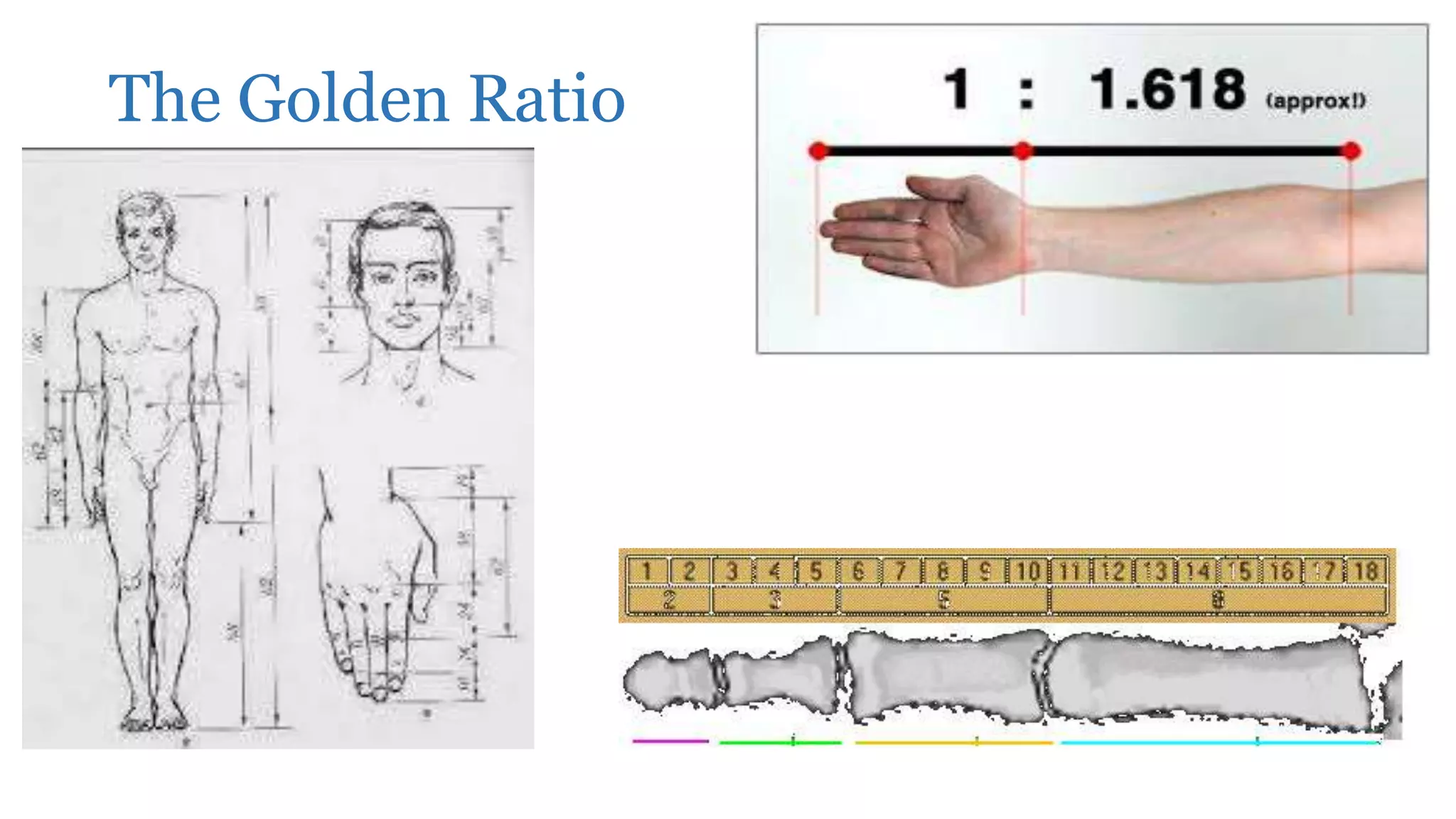
The Golden Ratio
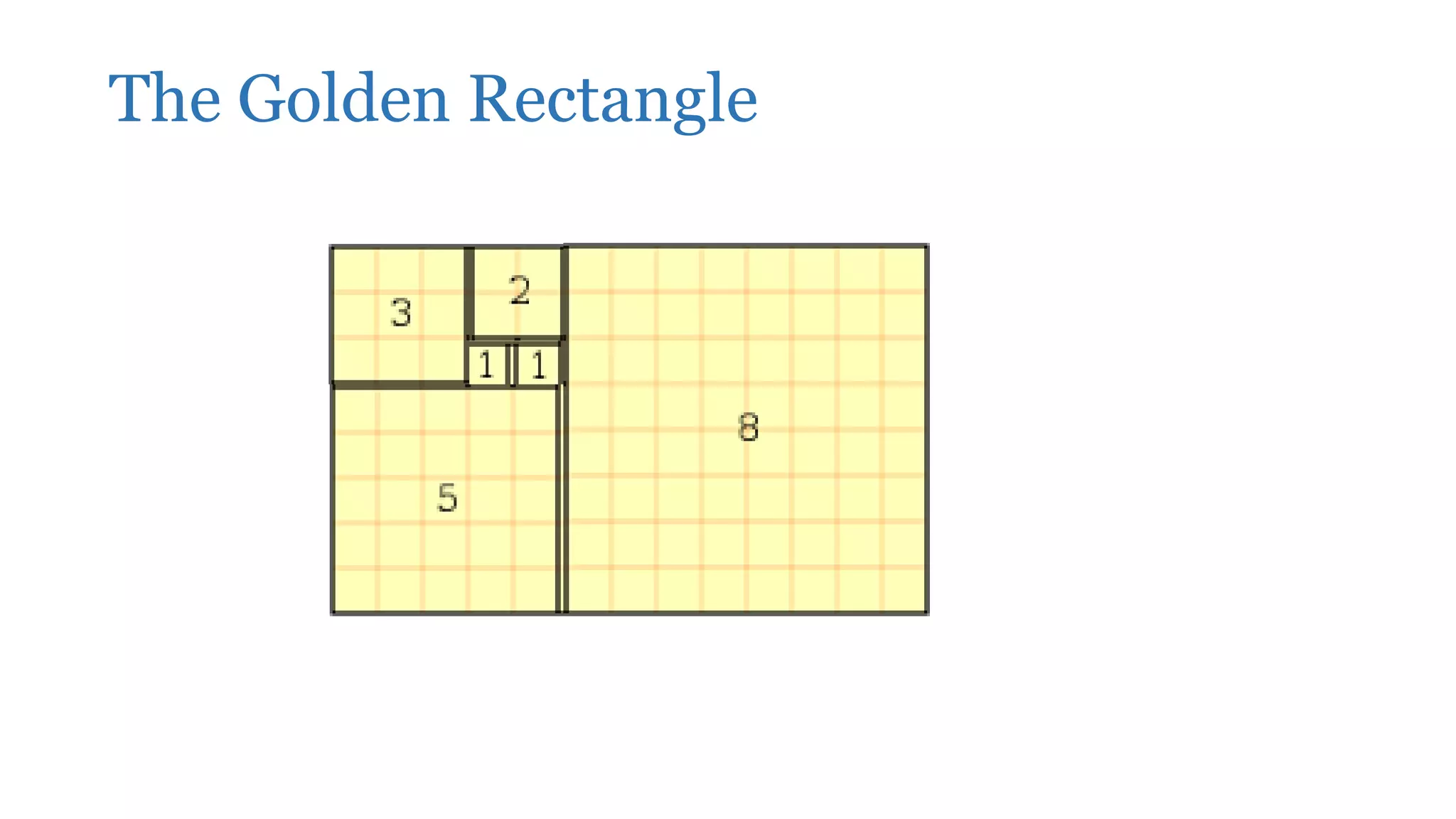
The Golden Rectangle
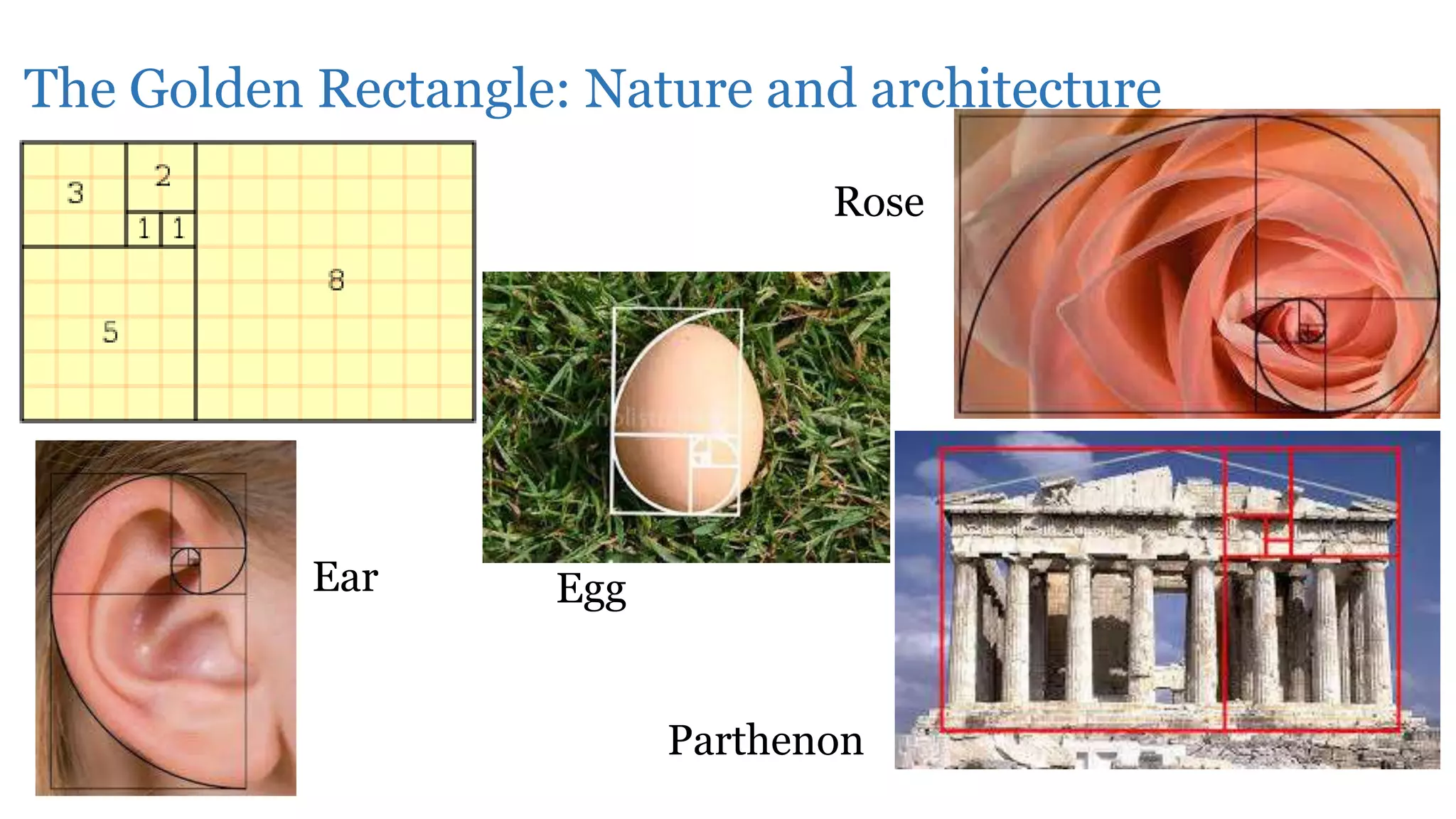
The Golden Rectangle: Nature and architecture
Ear Egg
Rose
Parthenon
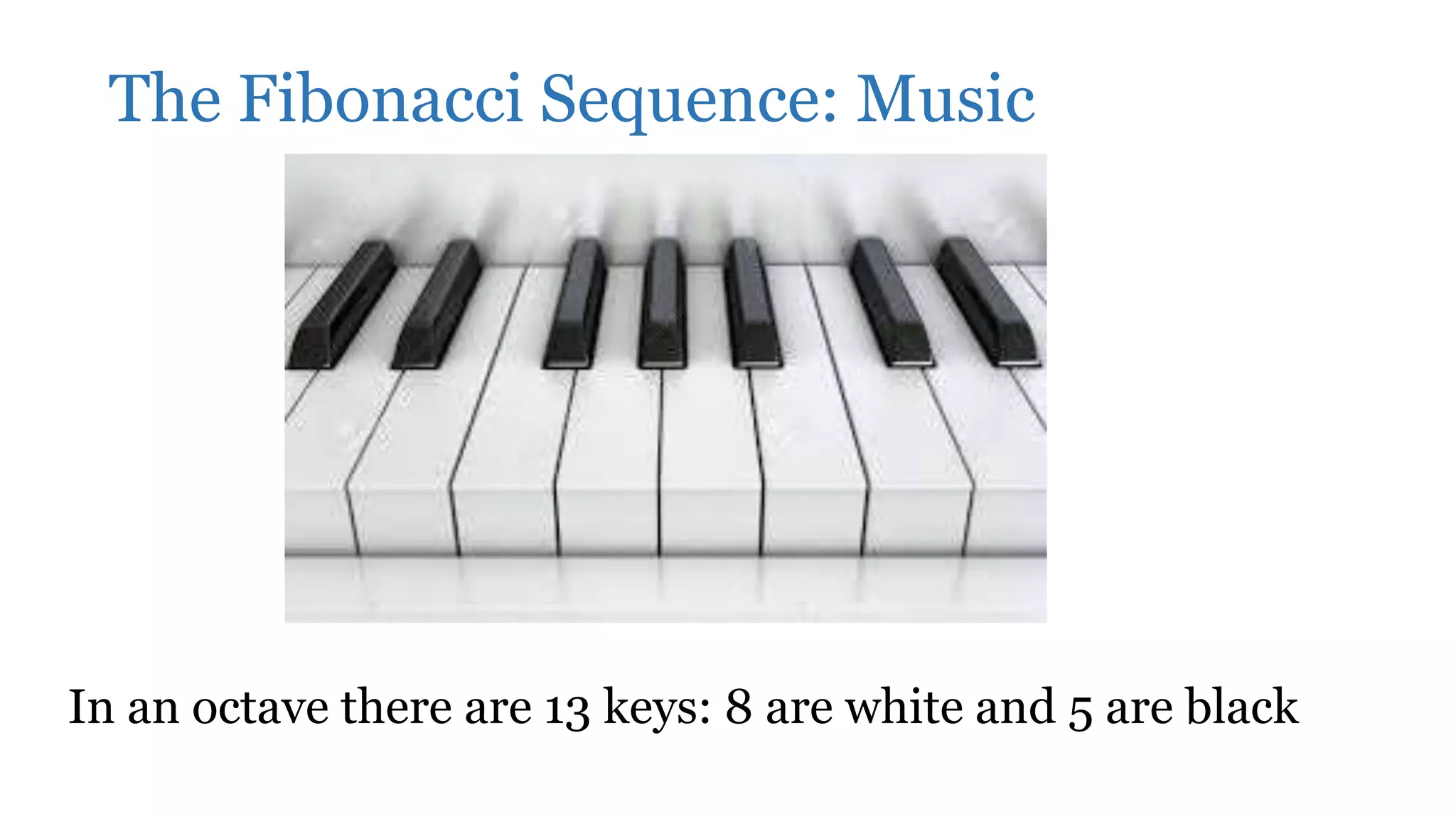
The Fibonacci Sequence: Music
In an octave there are 13 keys: 8 are white and 5 are black
To sum up
The Fibonacci sequence:
A sequence in which every number is the SUM of the preceding
two
The Golden Rectangle:
A rectangle built according to the Fibonacci sequence
The Golden Ratio:
The number you get DIVIDING a number of the Fibonacci sequence for
the preceding one:
1.6180

The fibonacci sequence

  • 1.
  • 2.
    Leonardo da Pisa– Fibonacci Fibonacci is the greatest European mathematician of the middle ages Born in 1170 and died in 1240 He introduced the Arabic number system in Europe
  • 3.
    Fibonacci Sequence The sequencein which each number is the SUM of the two preceding numbers + + + + + + + +++ 1 2 3 5 8 13 21 34 55 89 2331441 +
  • 4.
    The Fibonacci sequencein nature: Flowers 1 Petal 5 Petals3 Petals 8 Petals 13 Petals
  • 5.
    The Fibonacci sequencein nature: Spirals Nautilus Shell Cauliflower Pine Conehttps://www.mathsisfun.com/numbers/nature-golden-ratio-fibonacci.html Why do we find the Fibonacci sequence in nature? Does nature study mathematics? Hurricane Galaxy
  • 6.
    The Golden Ratio :: :: 55 89 144 233 377 Every number of the Fibonacci sequence divided for the preceding one is always: 1.61801.61801.61801.6180
  • 7.
  • 8.
  • 9.
    The Golden Rectangle:Nature and architecture Ear Egg Rose Parthenon
  • 10.
    The Fibonacci Sequence:Music In an octave there are 13 keys: 8 are white and 5 are black
  • 11.
    To sum up TheFibonacci sequence: A sequence in which every number is the SUM of the preceding two The Golden Rectangle: A rectangle built according to the Fibonacci sequence The Golden Ratio: The number you get DIVIDING a number of the Fibonacci sequence for the preceding one: 1.6180