Accounting: Balance Sheet 
By Cameron Fen and Jeffery Cherkin
Balance Sheet 
• Snapshot of everything the company owns 
and owes 
Assets = Liabilities + Equity
• Assets are the total amount a firm owns 
• Liabilities are the total debts and obligations 
owed 
• Equity is the net assets the owners of the 
company have a claim to (ie the amount that 
doesn’t belong to the liabilities holders)
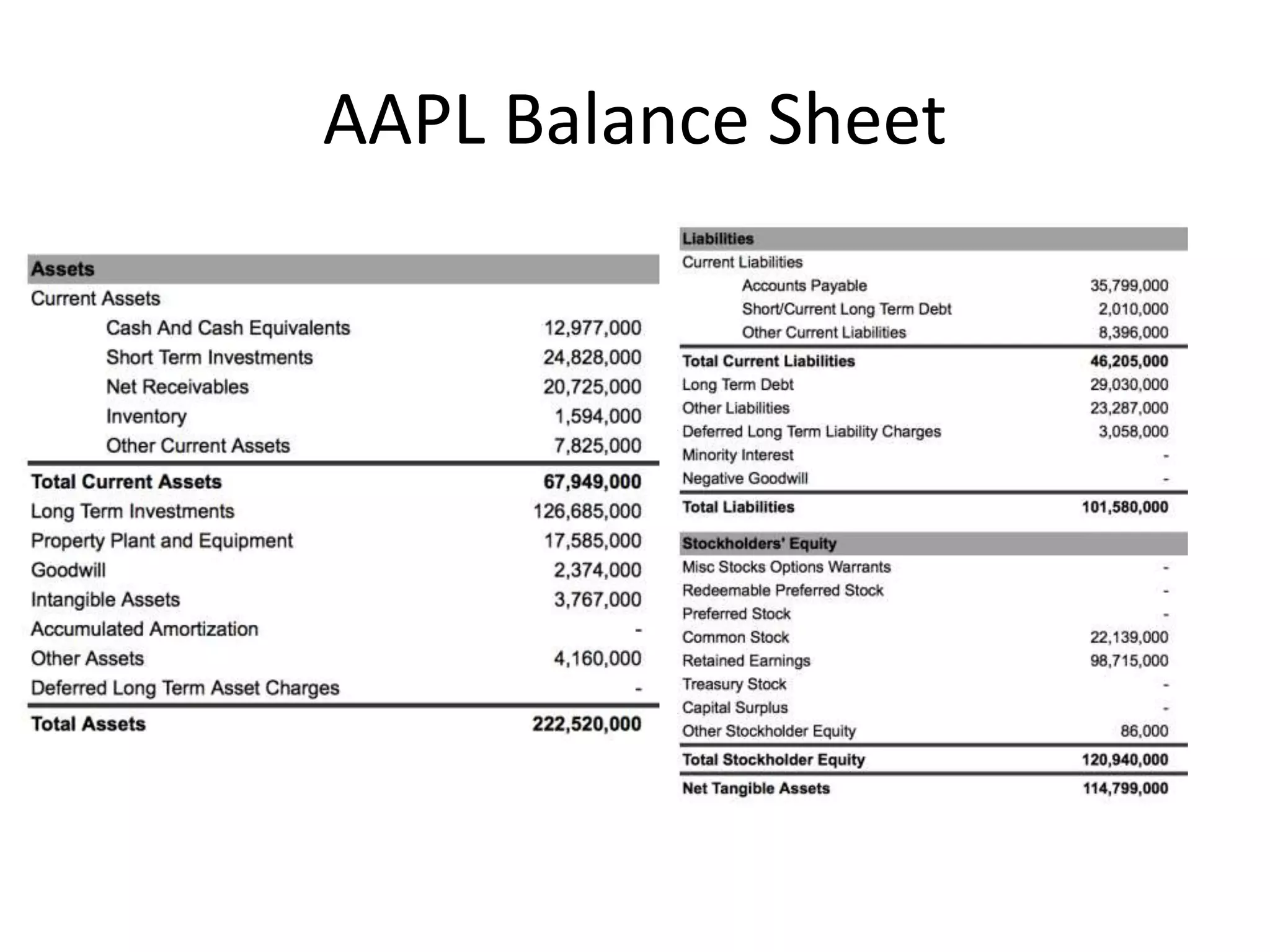
AAPL Balance Sheet
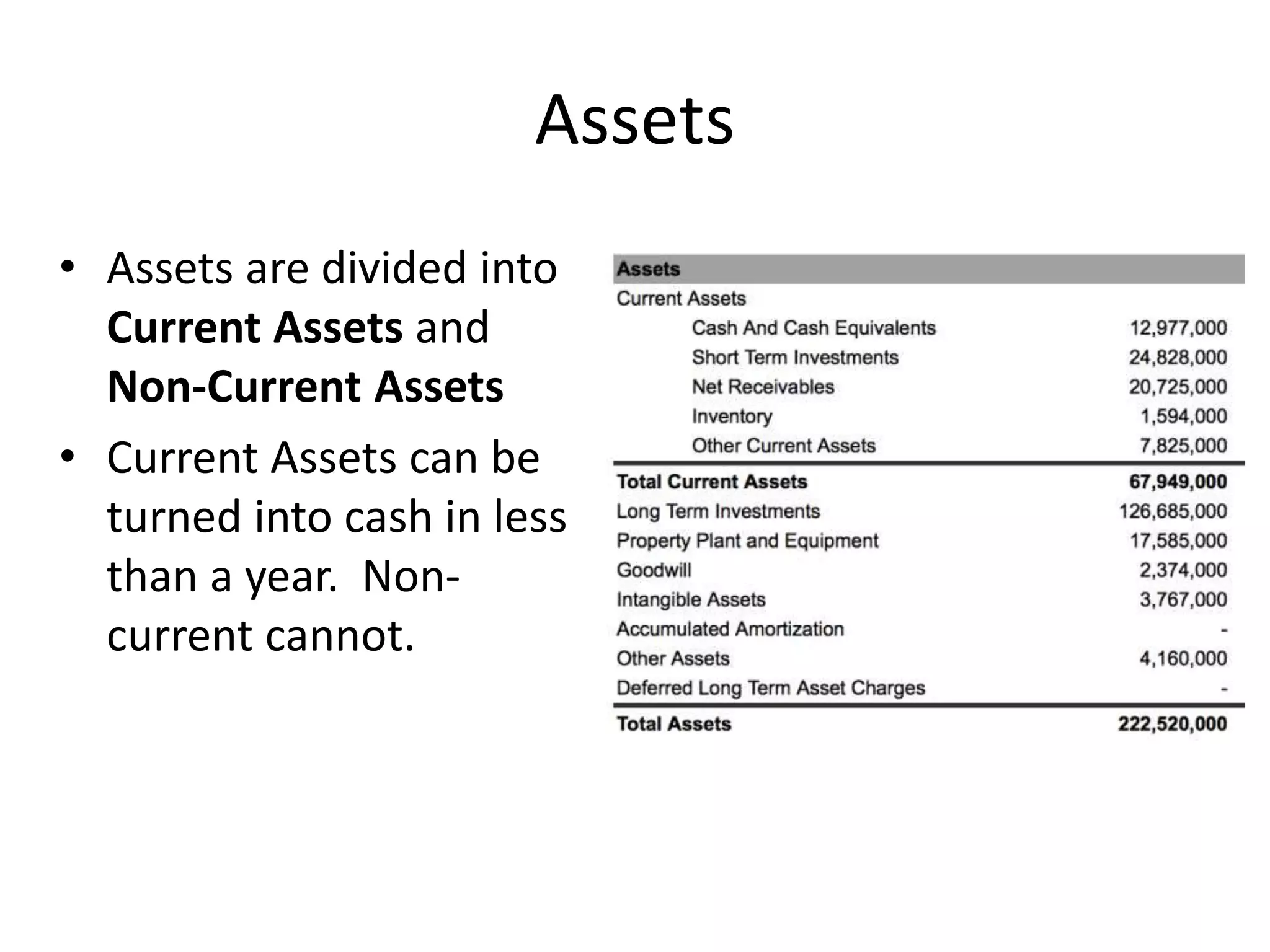
Assets 
• Assets are divided into 
Current Assets and 
Non-Current Assets 
• Current Assets can be 
turned into cash in less 
than a year. Non-current 
cannot.
Current Assets 
• Cash is self-explanatory 
• Trading Assets are short term investments that 
the company is actively trading in and out of 
• Accounts receivables are short term IOU’s 
where the company already provides the 
service or product and is yet to be paid
Inventories 
• If a company is selling things, like phones, the 
company needs to keep a stock of them so 
customers can buy 
• LIFO, FIFO, or Weighted Average inventory 
accounting methods
Goodwill 
• When a company buys another company, often 
they will pay more for the company than the 
value of the company’s equity (remember they 
pay for the assets but have to assume 
responsibility for the liabilities) 
• The amount paid above and beyond net asset 
value (equity) is capitalized as goodwill 
• If the value of the acquired company goes down, 
(i.e. the company does worse than anticipated) 
goodwill has to be written off 
• Goodwill is an intangible asset
Property Plant and Equipment 
• When you own stuff often time when you use 
it a lot or over a long period of time it wears 
out and is worth less 
– Remember: PPE is initially valued at the cost to 
acquire these assets 
• We try to estimate the reduction in value of 
these assets due to getting older or wear and 
tear by depreciating the assets
Capital Expenditures 
• Funds used by a company to acquire or upgrade physical 
assets 
- property, industrial buildings or equipment. 
This type of outlay is made by companies to maintain or increase 
the scope of their operations. These expenditures can include 
everything from repairing a roof to building a brand new factory.
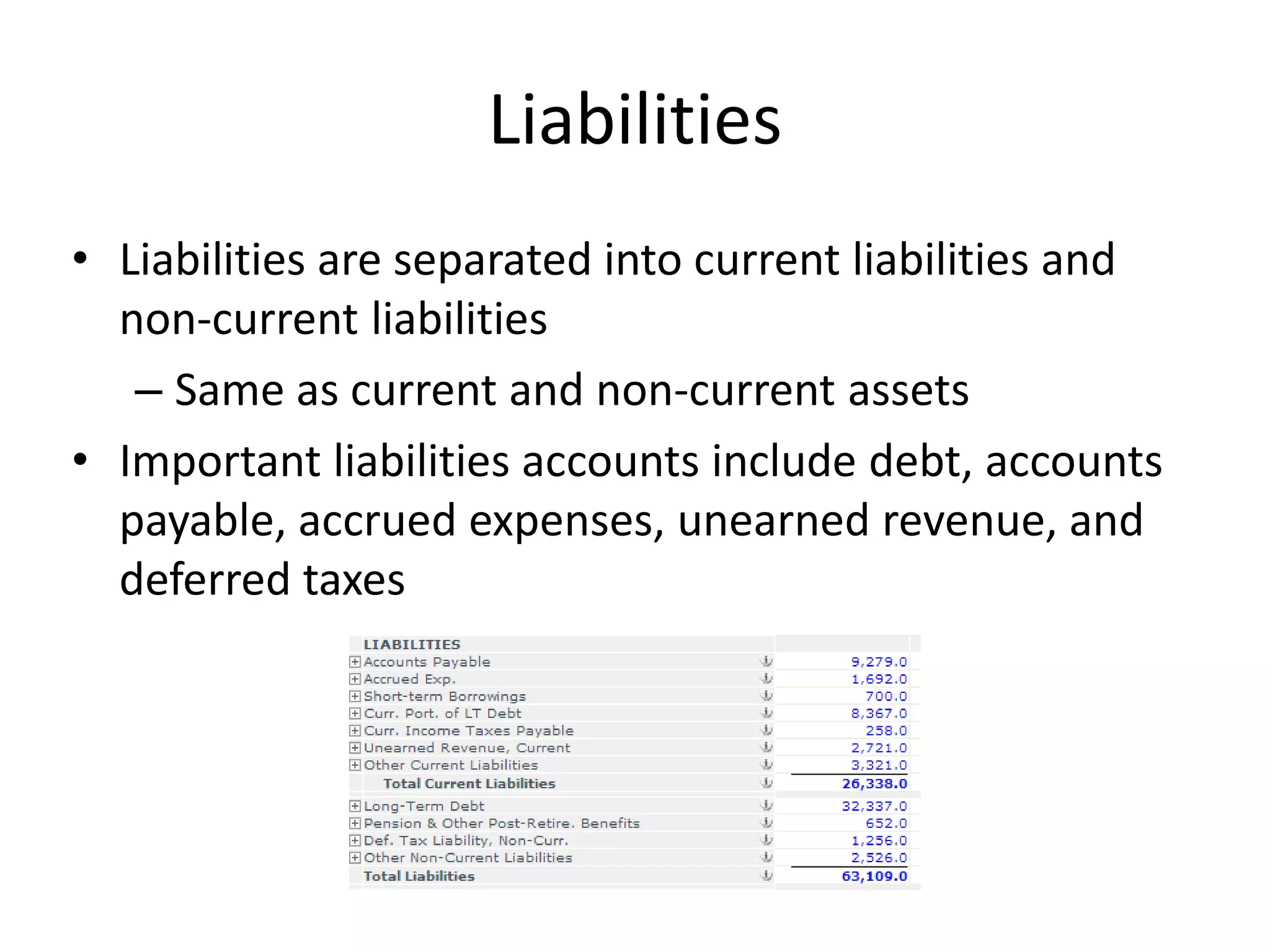
Liabilities 
• Liabilities are separated into current liabilities and 
non-current liabilities 
– Same as current and non-current assets 
• Important liabilities accounts include debt, accounts 
payable, accrued expenses, unearned revenue, and 
deferred taxes
Accounts Payable & Accrued expenses 
• Like accounts receivable except these are the 
IOU’s that the company owes to others 
– Perhaps the company got a shipment of iPhones and 
pays for the shipment monthly 
• Accrued expenses are expenses for services the 
company has already used but has yet to pay for 
– For example using electricity and then paying for it 
later after the month is over 
• Accounts payable and Accrued expenses are very 
similar
Unearned Revenue 
• Unearned Revenue is revenue that has been 
collected but the services have not been provided 
– Example: Subscriptions 
– Since the company hasn’t provided the services which 
will lead to expenses the revenue cannot be 
recognized yet 
– Thus since the company has already collected the 
revenue in the form of cash or accounts receivable, 
the company has to balance the increase in assets 
with an increase in liabilities (because the company 
still owes the service)
Debt 
• This is loans that the company gets from the 
bank or from selling bonds 
• Separated into short and long term debt 
• The interest the company pays is treated as an 
expense (*pre-tax) 
• Principle on the debt is treated as a liability
Equity 
• This is the amount of assets that belong to the 
owners of the company 
• Also known as the net asset value
Retained Earnings 
• Retained earnings measure the earnings the 
company reinvests in itself 
– If a company makes one dollar in profit, equity 
holder should theoretically be one dollar richer 
and if the company does not pay the money out 
to stockholders, retained earnings and therefore 
equity goes up by one 
• Dividends and stock buybacks make retained 
earnings go down
Capital Allocation 
Uses of Cash/Earnings 
• R&D 
– Invest in current business 
• Acquisitions 
• Pay down debt 
• Return to Shareholders 
– Pay Dividend 
– Stock Buyback
Buybacks 
• When a share of a stock is bought back it is no longer on 
the market and the total number of shares outstanding 
goes down 
– Current stockholders own a slightly larger percentage of the 
company 
• Suppose the stock is overvalued 
– The intrinsic value of a share of the company is $1 and the stock 
costs two dollars 
– If the company buys back shares it is distributing $1 of intrinsic 
value to the rest of the shareholders for $2 in cash, destroying 
value for shareholders 
• Undervalued the opposite is the case 
– It costs the company less to distribute more
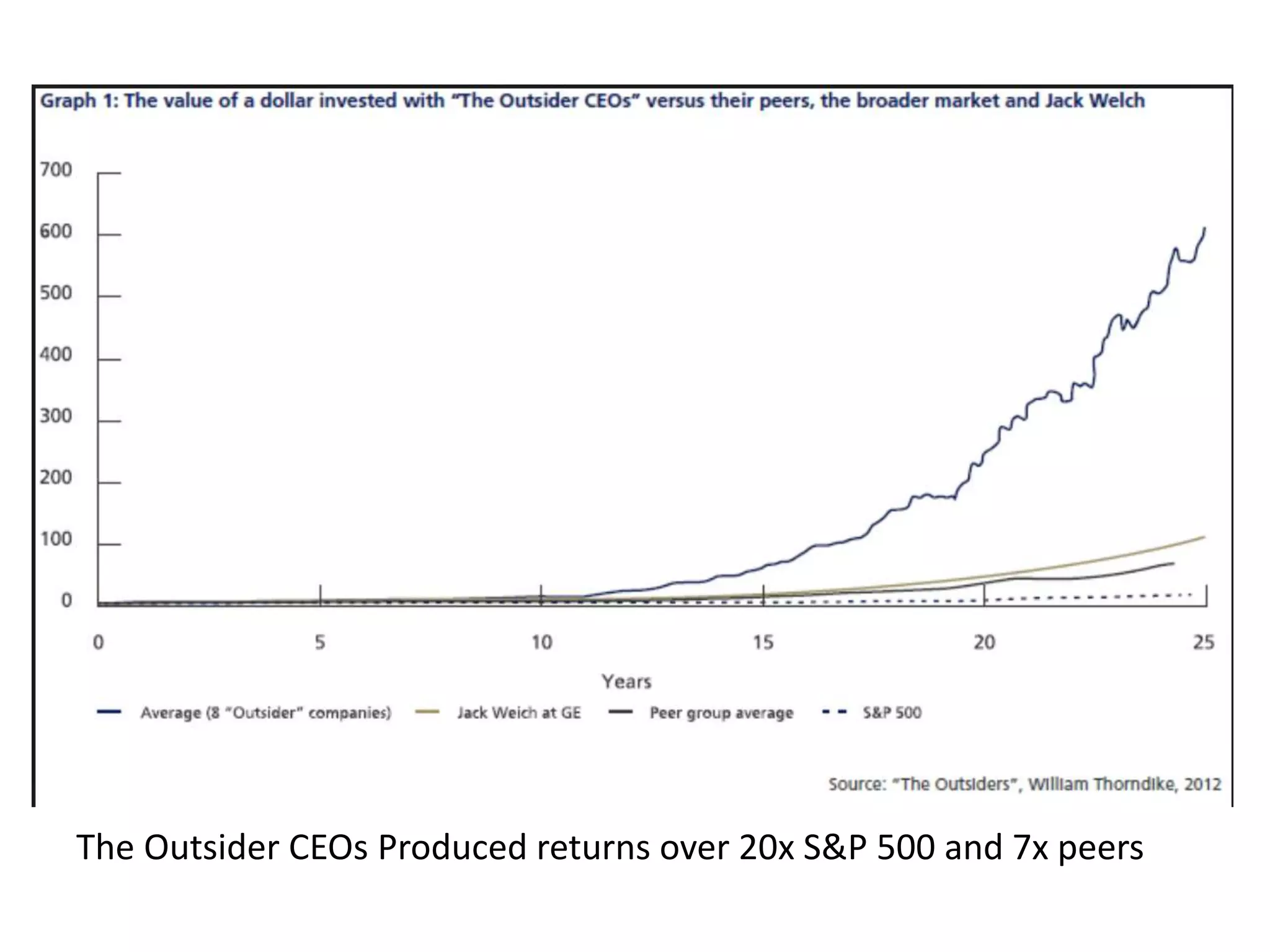
Management is the Difference Maker
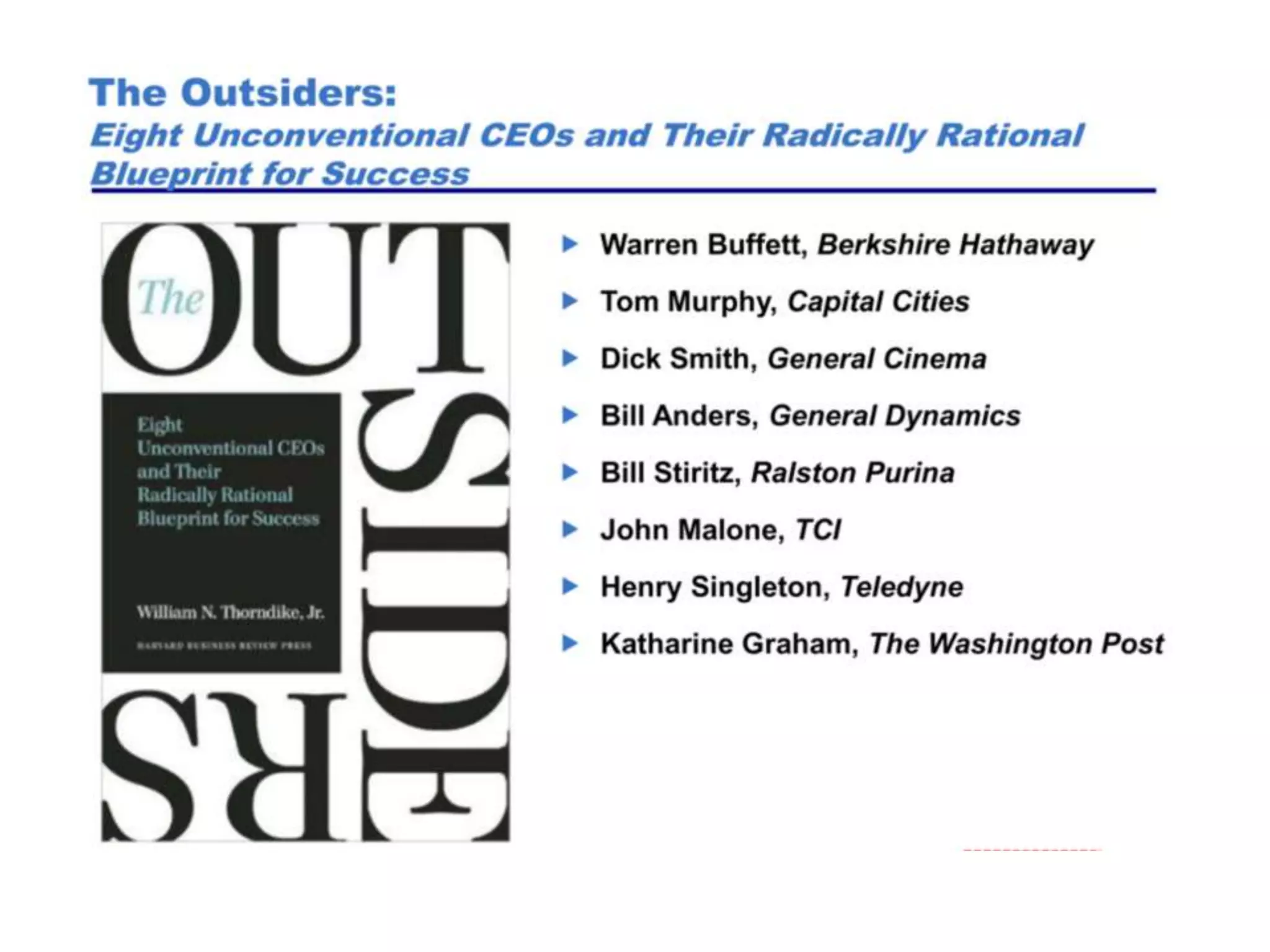
The Outsider CEOs Produced returns over 20x S&P 500 and 7x peers
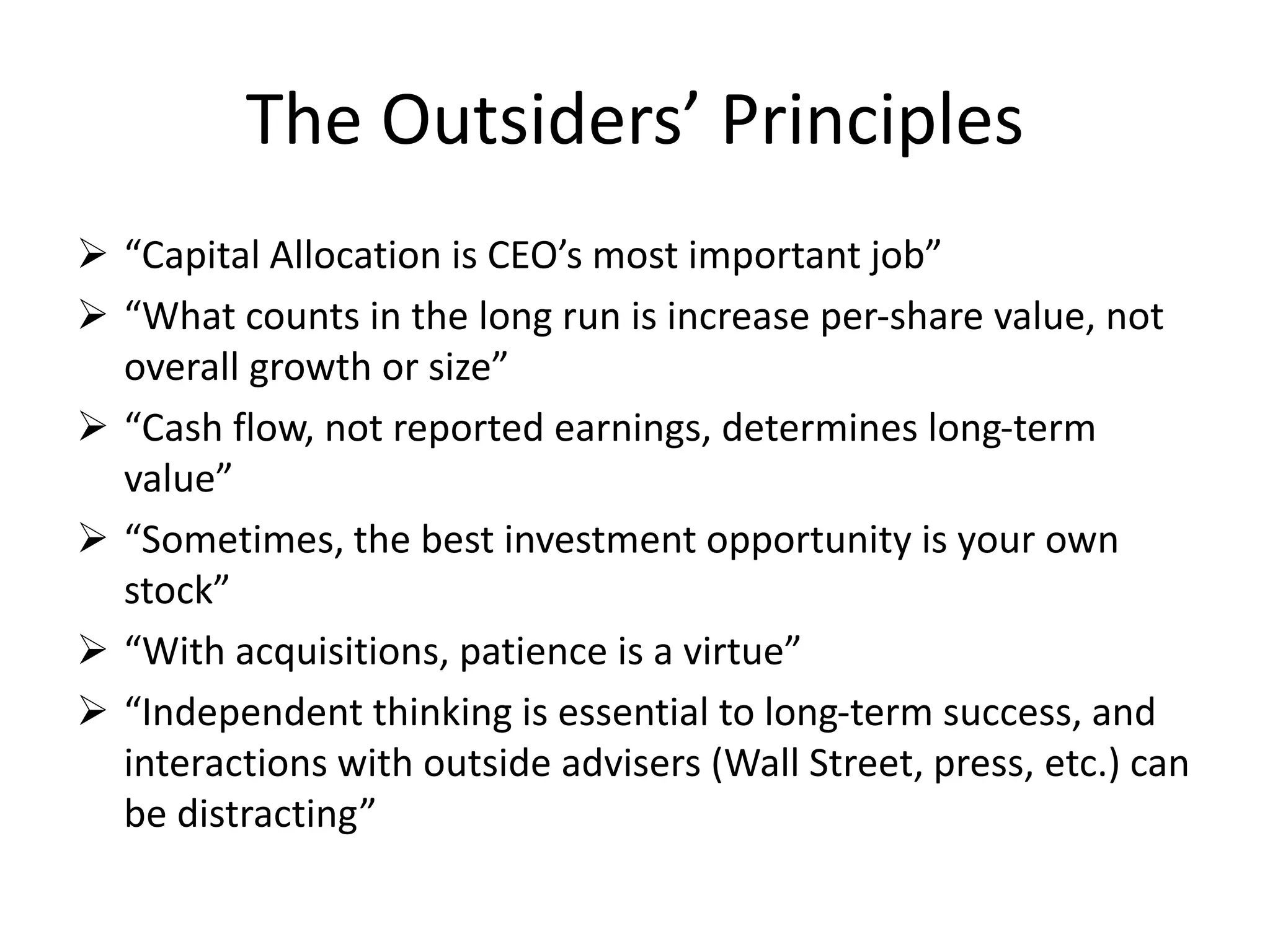
The Outsiders’ Principles 
 “Capital Allocation is CEO’s most important job” 
 “What counts in the long run is increase per-share value, not 
overall growth or size” 
 “Cash flow, not reported earnings, determines long-term 
value” 
 “Sometimes, the best investment opportunity is your own 
stock” 
 “With acquisitions, patience is a virtue” 
 “Independent thinking is essential to long-term success, and 
interactions with outside advisers (Wall Street, press, etc.) can 
be distracting”

Balance Sheet Presentation

  • 1.
    Accounting: Balance Sheet By Cameron Fen and Jeffery Cherkin
  • 2.
    Balance Sheet •Snapshot of everything the company owns and owes Assets = Liabilities + Equity
  • 3.
    • Assets arethe total amount a firm owns • Liabilities are the total debts and obligations owed • Equity is the net assets the owners of the company have a claim to (ie the amount that doesn’t belong to the liabilities holders)
  • 4.
  • 5.
    Assets • Assetsare divided into Current Assets and Non-Current Assets • Current Assets can be turned into cash in less than a year. Non-current cannot.
  • 6.
    Current Assets •Cash is self-explanatory • Trading Assets are short term investments that the company is actively trading in and out of • Accounts receivables are short term IOU’s where the company already provides the service or product and is yet to be paid
  • 7.
    Inventories • Ifa company is selling things, like phones, the company needs to keep a stock of them so customers can buy • LIFO, FIFO, or Weighted Average inventory accounting methods
  • 8.
    Goodwill • Whena company buys another company, often they will pay more for the company than the value of the company’s equity (remember they pay for the assets but have to assume responsibility for the liabilities) • The amount paid above and beyond net asset value (equity) is capitalized as goodwill • If the value of the acquired company goes down, (i.e. the company does worse than anticipated) goodwill has to be written off • Goodwill is an intangible asset
  • 9.
    Property Plant andEquipment • When you own stuff often time when you use it a lot or over a long period of time it wears out and is worth less – Remember: PPE is initially valued at the cost to acquire these assets • We try to estimate the reduction in value of these assets due to getting older or wear and tear by depreciating the assets
  • 10.
    Capital Expenditures •Funds used by a company to acquire or upgrade physical assets - property, industrial buildings or equipment. This type of outlay is made by companies to maintain or increase the scope of their operations. These expenditures can include everything from repairing a roof to building a brand new factory.
  • 11.
    Liabilities • Liabilitiesare separated into current liabilities and non-current liabilities – Same as current and non-current assets • Important liabilities accounts include debt, accounts payable, accrued expenses, unearned revenue, and deferred taxes
  • 12.
    Accounts Payable &Accrued expenses • Like accounts receivable except these are the IOU’s that the company owes to others – Perhaps the company got a shipment of iPhones and pays for the shipment monthly • Accrued expenses are expenses for services the company has already used but has yet to pay for – For example using electricity and then paying for it later after the month is over • Accounts payable and Accrued expenses are very similar
  • 13.
    Unearned Revenue •Unearned Revenue is revenue that has been collected but the services have not been provided – Example: Subscriptions – Since the company hasn’t provided the services which will lead to expenses the revenue cannot be recognized yet – Thus since the company has already collected the revenue in the form of cash or accounts receivable, the company has to balance the increase in assets with an increase in liabilities (because the company still owes the service)
  • 14.
    Debt • Thisis loans that the company gets from the bank or from selling bonds • Separated into short and long term debt • The interest the company pays is treated as an expense (*pre-tax) • Principle on the debt is treated as a liability
  • 15.
    Equity • Thisis the amount of assets that belong to the owners of the company • Also known as the net asset value
  • 16.
    Retained Earnings •Retained earnings measure the earnings the company reinvests in itself – If a company makes one dollar in profit, equity holder should theoretically be one dollar richer and if the company does not pay the money out to stockholders, retained earnings and therefore equity goes up by one • Dividends and stock buybacks make retained earnings go down
  • 17.
    Capital Allocation Usesof Cash/Earnings • R&D – Invest in current business • Acquisitions • Pay down debt • Return to Shareholders – Pay Dividend – Stock Buyback
  • 18.
    Buybacks • Whena share of a stock is bought back it is no longer on the market and the total number of shares outstanding goes down – Current stockholders own a slightly larger percentage of the company • Suppose the stock is overvalued – The intrinsic value of a share of the company is $1 and the stock costs two dollars – If the company buys back shares it is distributing $1 of intrinsic value to the rest of the shareholders for $2 in cash, destroying value for shareholders • Undervalued the opposite is the case – It costs the company less to distribute more
  • 19.
    Management is theDifference Maker
  • 21.
    The Outsider CEOsProduced returns over 20x S&P 500 and 7x peers
  • 22.
    The Outsiders’ Principles  “Capital Allocation is CEO’s most important job”  “What counts in the long run is increase per-share value, not overall growth or size”  “Cash flow, not reported earnings, determines long-term value”  “Sometimes, the best investment opportunity is your own stock”  “With acquisitions, patience is a virtue”  “Independent thinking is essential to long-term success, and interactions with outside advisers (Wall Street, press, etc.) can be distracting”