Plate TectonicsPlate Tectonics
What is Plate TectonicsWhat is Plate Tectonics
• The Earth’s crust and upper
mantle are broken into
sections called plates
• Plates move around on top of
the mantle like rafts
2 Types of Plates2 Types of Plates
• Ocean plates - plates below
the oceans
• Continental plates - plates
below the continents
Plate BoundariesPlate Boundaries
Divergent BoundariesDivergent Boundaries
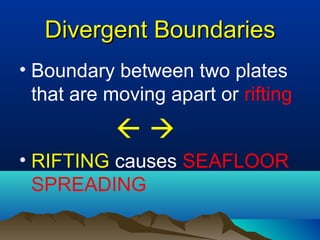
• Boundary between two plates
that are moving apart or rifting
 
• RIFTING causes SEAFLOOR
SPREADING
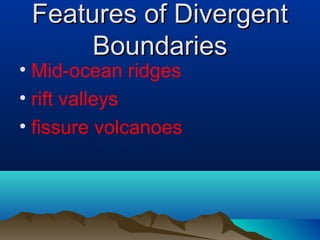
Features of DivergentFeatures of Divergent
BoundariesBoundaries
• Mid-ocean ridges
• rift valleys
• fissure volcanoes
Convergent BoundariesConvergent Boundaries
• Boundaries between two
plates that are colliding
 
• There are 3 types…
Type 1Type 1
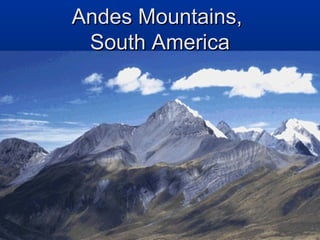
• Ocean plate colliding with a
less dense continental plate
• Subduction Zone: where the
less dense plate slides under
the more dense plate
• VOLCANOES occur at
subduction zones
Andes Mountains,Andes Mountains,
South AmericaSouth America
Type 2Type 2
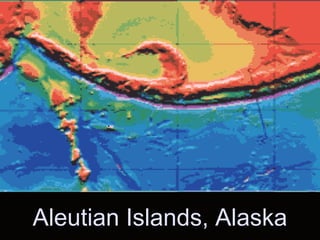
• Ocean plate colliding with
another ocean plate
• The less dense plate slides
under the more dense plate
creating a subduction zone
called a TRENCH
Aleutian Islands, AlaskaAleutian Islands, Alaska
Type 3Type 3
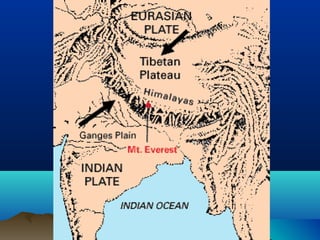
• A continental plate colliding
with another continental plate
• Have Collision Zones:
–a place where folded and thrust
faulted mountains form.
Transform Fault BoundariesTransform Fault Boundaries
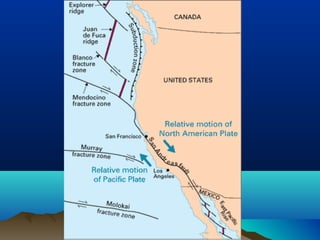
• Boundary between two plates
that are sliding past each other
• EARTHQUAKES along faults
San Andreas Fault, CASan Andreas Fault, CA
Causes of PlateCauses of Plate
TectonicsTectonics
Convection CurrentsConvection Currents
• Hot magma in the Earth
moves toward the surface,
cools, then sinks again.
• Creates convection currents
beneath the plates that cause
the plates to move.
Plate tectonics

Plate tectonics