Adaptations
By Alyssandra
What is Adaptation?
๏‚›   Every type of organism needs a special
    place/specific place to survive and reproduce
    properly. Itโ€™s environment in called a habitat; it is
    where all animals live where it is supposed to.
๏‚›   There are many things that the animalsโ€™ habitat,
    affects its survival and where it is found.
๏‚›   All living things has a specific place and needs; to
    survive. There are different types of animals that
    can adapt to different conditions and
    environments but only for a short period of time.
    Mostly all animals have to stay in their own habitat
    to survive.
Frogs!!
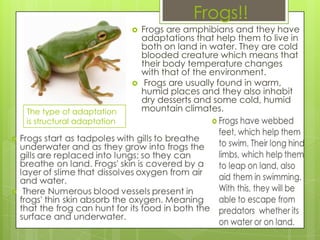
                           ๏‚›   Frogs are amphibians and they have
                               adaptations that help them to live in
                               both on land in water. They are cold
                               blooded creature which means that
                               their body temperature changes
                               with that of the environment.
                           ๏‚›    Frogs are usually found in warm,
                               humid places and they also inhabit
                               dry desserts and some cold, humid
The type of adaptation         mountain climates.
is structural adaptation
Rose Bush
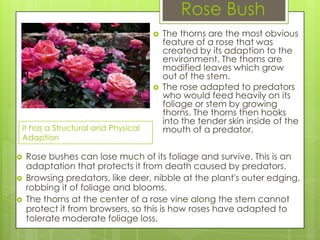
                                   ๏‚›   The thorns are the most obvious
                                       feature of a rose that was
                                       created by its adaption to the
                                       environment. The thorns are
                                       modified leaves which grow
                                       out of the stem.
                                   ๏‚›   The rose adapted to predators
                                       who would feed heavily on its
                                       foliage or stem by growing
                                       thorns. The thorns then hooks
                                       into the tender skin inside of the
It has a Structural and Physical       mouth of a predator.
Adaption

๏‚›   Rose bushes can lose much of its foliage and survive. This is an
    adaptation that protects it from death caused by predators.
๏‚›   Browsing predators, like deer, nibble at the plant's outer edging,
    robbing it of foliage and blooms.
๏‚›   The thorns at the center of a rose vine along the stem cannot
    protect it from browsers, so this is how roses have adapted to
    tolerate moderate foliage loss.

Adaptations powerpoint-science

  • 1.
  • 2.
    What is Adaptation? ๏‚› Every type of organism needs a special place/specific place to survive and reproduce properly. Itโ€™s environment in called a habitat; it is where all animals live where it is supposed to. ๏‚› There are many things that the animalsโ€™ habitat, affects its survival and where it is found. ๏‚› All living things has a specific place and needs; to survive. There are different types of animals that can adapt to different conditions and environments but only for a short period of time. Mostly all animals have to stay in their own habitat to survive.
  • 3.
    Frogs!! ๏‚› Frogs are amphibians and they have adaptations that help them to live in both on land in water. They are cold blooded creature which means that their body temperature changes with that of the environment. ๏‚› Frogs are usually found in warm, humid places and they also inhabit dry desserts and some cold, humid The type of adaptation mountain climates. is structural adaptation
  • 4.
    Rose Bush ๏‚› The thorns are the most obvious feature of a rose that was created by its adaption to the environment. The thorns are modified leaves which grow out of the stem. ๏‚› The rose adapted to predators who would feed heavily on its foliage or stem by growing thorns. The thorns then hooks into the tender skin inside of the It has a Structural and Physical mouth of a predator. Adaption ๏‚› Rose bushes can lose much of its foliage and survive. This is an adaptation that protects it from death caused by predators. ๏‚› Browsing predators, like deer, nibble at the plant's outer edging, robbing it of foliage and blooms. ๏‚› The thorns at the center of a rose vine along the stem cannot protect it from browsers, so this is how roses have adapted to tolerate moderate foliage loss.