DISEASES CASE
STUDIES
Alana W.
Infectious Disease
INFLUENZA
Cause and transmission






Influenza is caused by a virus which attacks
the body’s cells
The virus mutates often and new strains arise.
Unfortunately immunity against one strain
does not protect against other strains.
Influenza virus may be transmitted among
humans in three ways:
 By

direct contact with infected individuals
 By contact with contaminated objects
 By inhalation of virus-laden aerosols
Symptoms








High fever
Severe aches and pains (often in the back and
muscles)
Severe headache
Cough
Intermittent sweating and shivering
Sometimes vomiting or diarrhoea
Treatment
For most people it is best to treat the symptoms
of influenza and await natural recovery.
 Take symptom relief eg. paracetamol or aspirin
to help with fever and aches and pains
There are now three influenza treatments
licensed for use in the UK:
 Amantadine, taken by mouth
 Oseltamivir, taken by mouth
 Zanamivir, a powder that is inhaled
Prevention
There are many influenza viruses. Only one or
two tend to reach epidemic proportions each
year. By monitoring the progress of these
worldwide, the World Health Organisation decide
on the best mixture of influenza types to be
included in that year’s vaccine.
It is advised that people at high risk of infection
are vaccinated yearly.
Incidence
Influenza is more common during winter, peaking in August
as shown in this map.
Incidence
Influenza is most common in children younger than 5 and
adults aged 65+, as shown in this map from Western
Australia
Non-infectious Disease
ANOREXIA NERVOSA
Causes
The exact cause of anorexia remains unclear.
However, there are links between becoming
anorexic and:
 Deep anxiety
 Unhappiness
 Low self-esteem
Symptoms
















Lowered resistance to
illnesses
Physical weakness
Extreme weight loss
Dizzy spells and
fainting
Women stop having
monthly periods
Constipation and
abdominal pain
Swollen stomach, face
and ankles
Downy hair on the
body
Poor blood circulation










Feeling cold
Loss of bone mass
Osteoporosis
Infertility
Depression
Distorted body image
Personality changes
Inability to concentrate
Treatment








Most anorexics go into hospital when they
become extremely ill. Here, the first goal of
treatment is to increase and stabilise their
weight.
Behaviour therapy – encouraging the person
to eat by giving privileges (eg. telephone
calls, visits, watching TV) for eating.
Keeping a diary recording food intake, activity
and thoughts and feelings. This may uncover
deeper emotional problems.
Therapy
Prevention






There is no certain method of preventing
anorexia.
Parents should ensure that their daughters
have a healthy attitude about themselves, their
bodies and their diets.
It is important to watch for early signs of eating
disorders.
Incidence
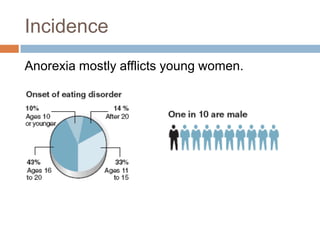
Anorexia mostly afflicts young women.
Books/ websites used
http://www.medinfo.co.uk/conditions/influenza.html
http://www.who.int/influenza
Eating disorders : detection & treatment
by: Bulik, Cynthia
Diseases Vol. 1

Diseases case studies

  • 1.
  • 2.
  • 3.
    Cause and transmission    Influenzais caused by a virus which attacks the body’s cells The virus mutates often and new strains arise. Unfortunately immunity against one strain does not protect against other strains. Influenza virus may be transmitted among humans in three ways:  By direct contact with infected individuals  By contact with contaminated objects  By inhalation of virus-laden aerosols
  • 4.
    Symptoms       High fever Severe achesand pains (often in the back and muscles) Severe headache Cough Intermittent sweating and shivering Sometimes vomiting or diarrhoea
  • 5.
    Treatment For most peopleit is best to treat the symptoms of influenza and await natural recovery.  Take symptom relief eg. paracetamol or aspirin to help with fever and aches and pains There are now three influenza treatments licensed for use in the UK:  Amantadine, taken by mouth  Oseltamivir, taken by mouth  Zanamivir, a powder that is inhaled
  • 6.
    Prevention There are manyinfluenza viruses. Only one or two tend to reach epidemic proportions each year. By monitoring the progress of these worldwide, the World Health Organisation decide on the best mixture of influenza types to be included in that year’s vaccine. It is advised that people at high risk of infection are vaccinated yearly.
  • 7.
    Incidence Influenza is morecommon during winter, peaking in August as shown in this map.
  • 8.
    Incidence Influenza is mostcommon in children younger than 5 and adults aged 65+, as shown in this map from Western Australia
  • 9.
  • 10.
    Causes The exact causeof anorexia remains unclear. However, there are links between becoming anorexic and:  Deep anxiety  Unhappiness  Low self-esteem
  • 11.
    Symptoms          Lowered resistance to illnesses Physicalweakness Extreme weight loss Dizzy spells and fainting Women stop having monthly periods Constipation and abdominal pain Swollen stomach, face and ankles Downy hair on the body Poor blood circulation         Feeling cold Loss of bone mass Osteoporosis Infertility Depression Distorted body image Personality changes Inability to concentrate
  • 12.
    Treatment     Most anorexics gointo hospital when they become extremely ill. Here, the first goal of treatment is to increase and stabilise their weight. Behaviour therapy – encouraging the person to eat by giving privileges (eg. telephone calls, visits, watching TV) for eating. Keeping a diary recording food intake, activity and thoughts and feelings. This may uncover deeper emotional problems. Therapy
  • 13.
    Prevention    There is nocertain method of preventing anorexia. Parents should ensure that their daughters have a healthy attitude about themselves, their bodies and their diets. It is important to watch for early signs of eating disorders.
  • 14.
  • 15.