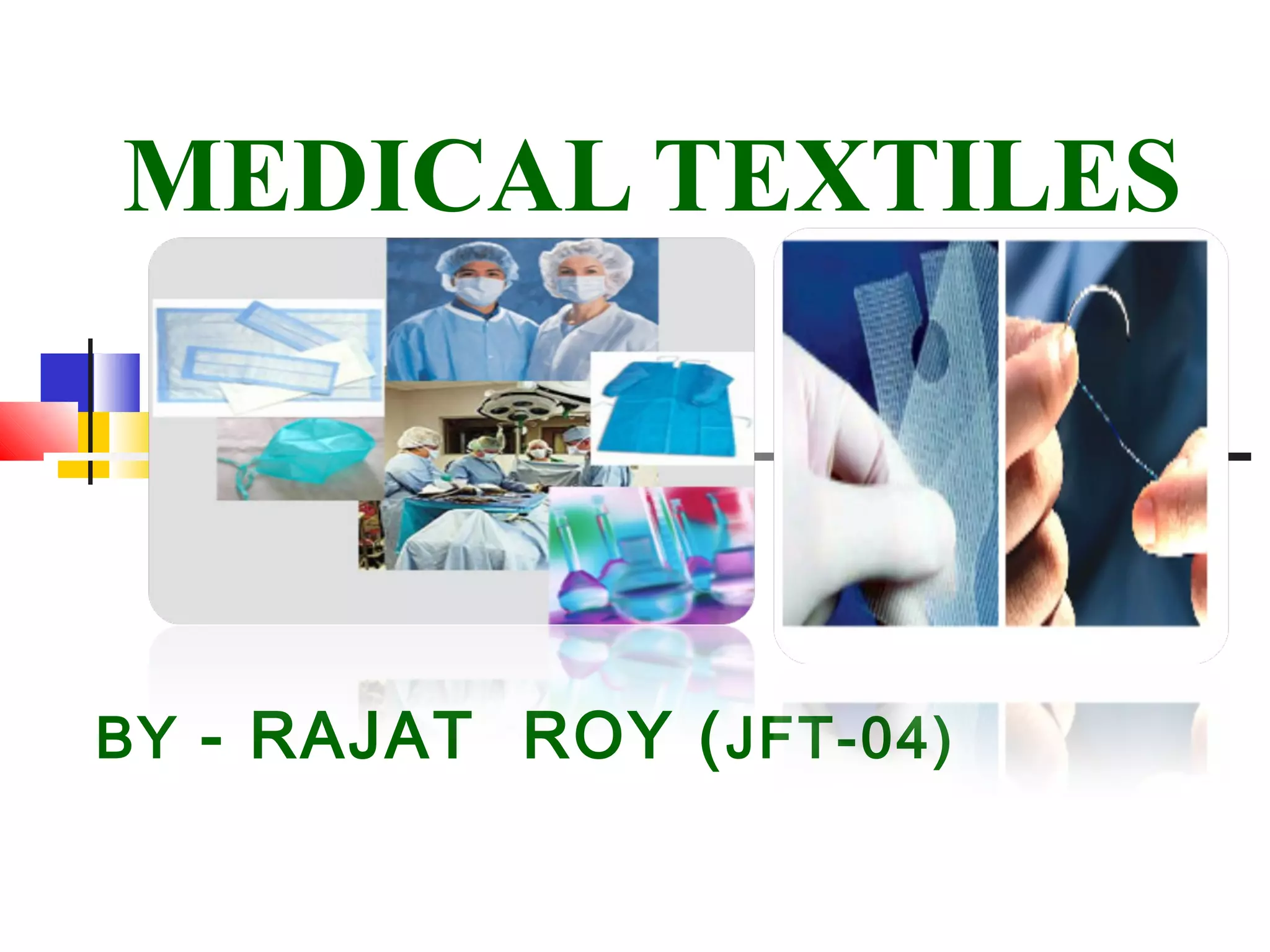
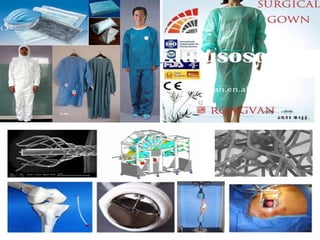
MEDICAL TEXTILES
BY - RAJAT ROY (JFT-04)
INTRODUCTION
 Textile has always been a part of healthcare.
 Combination of Textile Technology and Medical
Sciences has resulted into MEDICAL TEXTILES.
 Medical Textiles are one of the faster growing sectors
of the global Technical Textile industry.
 Latest innovation ie., wide variety of woven, non
woven, knitted forms of textile increasingly finding
their way into a variety of surgical procedures.
Materials used
 monofilament and multifilament yarns
 woven
 knitted
 nonwoven fabrics
 composite structures.
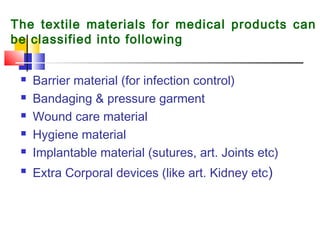
The textile materials for medical products can
be classified into following
 Barrier material (for infection control) 
 Bandaging & pressure garment 
 Wound care material  
 Hygiene material 
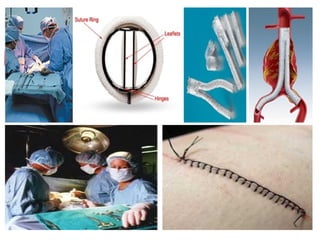
 Implantable material (sutures, art. Joints etc) 
 Extra Corporal devices (like art. Kidney etc)
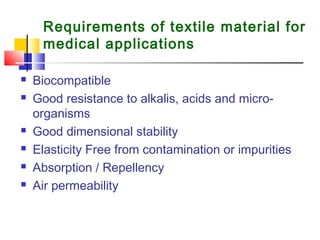
Requirements of textile material for
medical applications
 Biocompatible
 Good resistance to alkalis, acids and micro-
organisms
 Good dimensional stability
 Elasticity Free from contamination or impurities
 Absorption / Repellency
 Air permeability
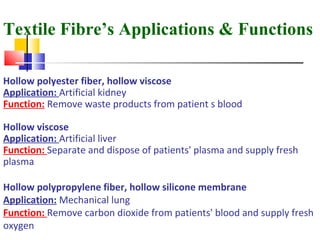
Textile Fibre’s Applications & Functions
Hollow polyester fiber, hollow viscose
Application: Artificial kidney
Function: Remove waste products from patient s blood
Hollow viscose
Application: Artificial liver
Function: Separate and dispose of patients' plasma and supply fresh
plasma
Hollow polypropylene fiber, hollow silicone membrane
Application: Mechanical lung
Function: Remove carbon dioxide from patients' blood and supply fresh
oxygen
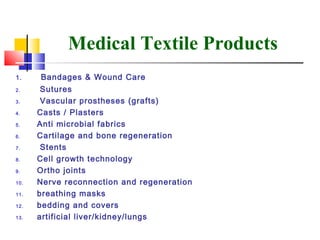
Medical Textile Products
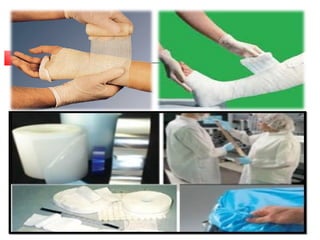
1. Bandages & Wound Care
2. Sutures
3. Vascular prostheses (grafts)
4. Casts / Plasters
5. Anti microbial fabrics
6. Cartilage and bone regeneration
7. Stents
8. Cell growth technology
9. Ortho joints
10. Nerve reconnection and regeneration
11. breathing masks
12. bedding and covers
13. artificial liver/kidney/lungs
Conclusion
 Medical Textiles are one of the dynamically expanding
sectors and development of same is to convert pain full
days of patients into comfortable days.
 As medical procedures continue and transform, the
demand for textile materials is bound to grow and grow.
THANKS TO ALL….

Medical textiles

  • 1.
    MEDICAL TEXTILES BY -RAJAT ROY (JFT-04)
  • 2.
    INTRODUCTION  Textile hasalways been a part of healthcare.  Combination of Textile Technology and Medical Sciences has resulted into MEDICAL TEXTILES.  Medical Textiles are one of the faster growing sectors of the global Technical Textile industry.  Latest innovation ie., wide variety of woven, non woven, knitted forms of textile increasingly finding their way into a variety of surgical procedures.
  • 3.
    Materials used  monofilamentand multifilament yarns  woven  knitted  nonwoven fabrics  composite structures.
  • 4.
    The textile materialsfor medical products can be classified into following  Barrier material (for infection control)   Bandaging & pressure garment   Wound care material    Hygiene material   Implantable material (sutures, art. Joints etc)   Extra Corporal devices (like art. Kidney etc)
  • 6.
    Requirements of textilematerial for medical applications  Biocompatible  Good resistance to alkalis, acids and micro- organisms  Good dimensional stability  Elasticity Free from contamination or impurities  Absorption / Repellency  Air permeability
  • 7.
    Textile Fibre’s Applications& Functions Hollow polyester fiber, hollow viscose Application: Artificial kidney Function: Remove waste products from patient s blood Hollow viscose Application: Artificial liver Function: Separate and dispose of patients' plasma and supply fresh plasma Hollow polypropylene fiber, hollow silicone membrane Application: Mechanical lung Function: Remove carbon dioxide from patients' blood and supply fresh oxygen
  • 9.
    Medical Textile Products 1.Bandages & Wound Care 2. Sutures 3. Vascular prostheses (grafts) 4. Casts / Plasters 5. Anti microbial fabrics 6. Cartilage and bone regeneration 7. Stents 8. Cell growth technology 9. Ortho joints 10. Nerve reconnection and regeneration 11. breathing masks 12. bedding and covers 13. artificial liver/kidney/lungs
  • 11.
    Conclusion  Medical Textilesare one of the dynamically expanding sectors and development of same is to convert pain full days of patients into comfortable days.  As medical procedures continue and transform, the demand for textile materials is bound to grow and grow.
  • 12.