DR. B. R. AMBEDKAR NIT 
JALANDHAR 
SEMINAR REPORT ON 
MEDICAL TEXTILE 
SUBMITTED BY - VICKY RAJ (11110079) 
TEXTILE TECHNOLOGY 
7TH SEMESTER
INTRODUCTION 
Combination of textile technology and medical sciences has resulted 
into a new field called medical textiles. It is an important and growing 
part of the textile industry and is concerned with the medical and 
related healthcare and hygiene sector. The number of applications 
are huge and diverse, ranging from a single thread suture to the 
complex composite structures for bone replacement, and from the 
simple cleaning wipe to advanced barrier fabrics used in operating 
rooms.
CHARACTERISTICS OF MATERIAL FOR MEDICAL USE 
• Non toxicity 
• Nonallergenic response 
• Non carcinogenic 
• The ability to be sterilized 
• Strength 
• Elasticity 
• Durability 
• Biocompatibility
REQUIREMENT OF FIBRE CHARACTERISTICS 
FOR MEDICAL TEXTILE 
• Absorbancy 
• Tenacity 
• Softness 
• Flexibility 
• Biostatbility 
• Biodegradability (in certain cases)
CLASSFICATION BASED ON USAGE 
• Healthcare and Hygiene products 
• Extracorporeal devices 
• Implantable materials 
• Non-implantable materials
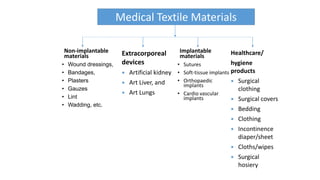
Non-implantable 
materials 
• Wound dressings, 
• Bandages, 
• Plasters 
• Gauzes 
• Lint 
• Wadding, etc. 
Implantable 
materials 
• Sutures 
• Soft-tissue implants 
• Orthopaedic 
implants 
• Cardio vascular 
implants 
Extracorporeal 
devices 
 Artificial kidney 
 Art Liver, and 
 Art Lungs 
Healthcare/ 
hygiene 
products 
 Surgical 
clothing 
 Surgical covers 
 Bedding 
 Clothing 
 Incontinence 
diaper/sheet 
 Cloths/wipes 
 Surgical 
hosiery 
Medical Textile Materials
NON IMPLANTABLE MATERIALS 
• Used for external application on body. 
• This includes wound care, bandages, plasters, pressure garments, 
orthopaedic belts etc. 
Function of the material is to 
Protection against infection 
Absorb blood 
Promote healing 
Hold dressing in place of wounds.
EXTRACORPORIAL DEVICE 
• Used as mechanical organ in human body. 
• This includes artificial kidney, liver, mechanical lung. 
APPLICATION 
Artficial kidney – Achieved by circulating blood through a membrane which act as 
filter. 
Mechanical lung – it have micro porous membrane permeable to gases but low 
permeability for liquids 
Artificial liver – Hollow fibre or membrane same as kidney
IMPLANTABLE MATERIAL 
• These materials are used in effecting repair to the body whether it be wound 
closure or replacement surgery. 
• Biocompatibility is of prime importance if textile materials are to be accepted by 
the body. 
• Textile implant is used due to – 
Biocompatible material 
2D and 3D structure 
Adjustable macroscopic structure 
Material combination
HEALTHCARE/ HYGIENE PRODUCT 
• A vast range of products are available under this category. 
• It is typically used in operation theatre , hospital ward etc. 
FUNCTION SERVED 
Control of infection 
Filtering 
Absorbant
CONSTRAINT 
• Most of the implants are imported 
• Indian standards are not available 
• Currently research and development are less.
CONCLUSION 
Textiles are more and more developing into interdisciplinary high-tech 
products with interesting changes in the market. Medical Textile 
Competence Centres are being established to make the most of 
knowledge, expertise and existing collaboration with medical 
researchers, microbiologists, physiologists and textile scientists. Each 
country has its own regulations and standards for medical textiles. As 
medical procedures continue to develop, the demand for textile 
materials is bound to grow.
REFERENCE 
HANDBOOK OF TECHNICAL TEXTILE 
http://www.fibre2fashion.com/industry-article/4/330/medical-textiles9. 
asp

Medical textile 1

  • 1.
    DR. B. R.AMBEDKAR NIT JALANDHAR SEMINAR REPORT ON MEDICAL TEXTILE SUBMITTED BY - VICKY RAJ (11110079) TEXTILE TECHNOLOGY 7TH SEMESTER
  • 2.
    INTRODUCTION Combination oftextile technology and medical sciences has resulted into a new field called medical textiles. It is an important and growing part of the textile industry and is concerned with the medical and related healthcare and hygiene sector. The number of applications are huge and diverse, ranging from a single thread suture to the complex composite structures for bone replacement, and from the simple cleaning wipe to advanced barrier fabrics used in operating rooms.
  • 3.
    CHARACTERISTICS OF MATERIALFOR MEDICAL USE • Non toxicity • Nonallergenic response • Non carcinogenic • The ability to be sterilized • Strength • Elasticity • Durability • Biocompatibility
  • 4.
    REQUIREMENT OF FIBRECHARACTERISTICS FOR MEDICAL TEXTILE • Absorbancy • Tenacity • Softness • Flexibility • Biostatbility • Biodegradability (in certain cases)
  • 5.
    CLASSFICATION BASED ONUSAGE • Healthcare and Hygiene products • Extracorporeal devices • Implantable materials • Non-implantable materials
  • 6.
    Non-implantable materials •Wound dressings, • Bandages, • Plasters • Gauzes • Lint • Wadding, etc. Implantable materials • Sutures • Soft-tissue implants • Orthopaedic implants • Cardio vascular implants Extracorporeal devices  Artificial kidney  Art Liver, and  Art Lungs Healthcare/ hygiene products  Surgical clothing  Surgical covers  Bedding  Clothing  Incontinence diaper/sheet  Cloths/wipes  Surgical hosiery Medical Textile Materials
  • 7.
    NON IMPLANTABLE MATERIALS • Used for external application on body. • This includes wound care, bandages, plasters, pressure garments, orthopaedic belts etc. Function of the material is to Protection against infection Absorb blood Promote healing Hold dressing in place of wounds.
  • 8.
    EXTRACORPORIAL DEVICE •Used as mechanical organ in human body. • This includes artificial kidney, liver, mechanical lung. APPLICATION Artficial kidney – Achieved by circulating blood through a membrane which act as filter. Mechanical lung – it have micro porous membrane permeable to gases but low permeability for liquids Artificial liver – Hollow fibre or membrane same as kidney
  • 9.
    IMPLANTABLE MATERIAL •These materials are used in effecting repair to the body whether it be wound closure or replacement surgery. • Biocompatibility is of prime importance if textile materials are to be accepted by the body. • Textile implant is used due to – Biocompatible material 2D and 3D structure Adjustable macroscopic structure Material combination
  • 10.
    HEALTHCARE/ HYGIENE PRODUCT • A vast range of products are available under this category. • It is typically used in operation theatre , hospital ward etc. FUNCTION SERVED Control of infection Filtering Absorbant
  • 11.
    CONSTRAINT • Mostof the implants are imported • Indian standards are not available • Currently research and development are less.
  • 12.
    CONCLUSION Textiles aremore and more developing into interdisciplinary high-tech products with interesting changes in the market. Medical Textile Competence Centres are being established to make the most of knowledge, expertise and existing collaboration with medical researchers, microbiologists, physiologists and textile scientists. Each country has its own regulations and standards for medical textiles. As medical procedures continue to develop, the demand for textile materials is bound to grow.
  • 13.
    REFERENCE HANDBOOK OFTECHNICAL TEXTILE http://www.fibre2fashion.com/industry-article/4/330/medical-textiles9. asp