OVERVIEW OF BIOMEDICAL
TEXTILES
Betemariam Limenewu
My Chinese Name is Ge liming
Ethiopia
Textile Engineering (Masters)
ID No: 320023
April, 2021
1
Outline of presentation
Introduction
Classification of Medical Textile
Characteristics of Medical Textile
Surface modification of medical Textile
Application
2
1. Introduction
 Medical textiles are also known as Healthcare Textiles. It
has diversified with new materials and innovative designs.
 The Medical textile products are obtainable in woven, knitted
and non- woven structure based on the area of application.
Increasingly, synthetic fiber is being utilized in the
manufacturing of these products.
3
Conti.
 Bio textiles are structures composed of textile fibers designed for use in
specific biological environments where their performance depends on
biocompatibility and bio stability with cells and biological fluids.
 Its include implantable devices such as
 Surgical sutures
 Hernia repair fabrics,
 Arterial grafts,
 Artificial skin and parts of artificial hearts.
4
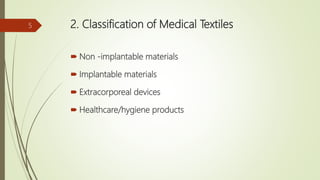
2. Classification of Medical Textiles
 Non -implantable materials
 Implantable materials
 Extracorporeal devices
 Healthcare/hygiene products
5
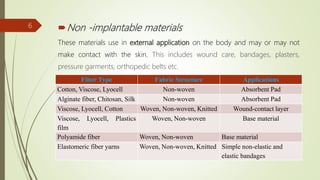
Non -implantable materials
These materials use in external application on the body and may or may not
make contact with the skin. This includes wound care, bandages, plasters,
pressure garments, orthopedic belts etc.
6
Fiber Type Fabric Structure Applications
Cotton, Viscose, Lyocell Non-woven Absorbent Pad
Alginate fiber, Chitosan, Silk Non-woven Absorbent Pad
Viscose, Lyocell, Cotton Woven, Non-woven, Knitted Wound-contact layer
Viscose, Lyocell, Plastics
film
Woven, Non-woven Base material
Polyamide fiber Woven, Non-woven Base material
Elastomeric fiber yarns Woven, Non-woven, Knitted Simple non-elastic and
elastic bandages
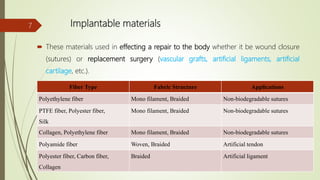
Implantable materials
 These materials used in effecting a repair to the body whether it be wound closure
(sutures) or replacement surgery (vascular grafts, artificial ligaments, artificial
cartilage, etc.).
7
Fiber Type Fabric Structure Applications
Polyethylene fiber Mono filament, Braided Non-biodegradable sutures
PTFE fiber, Polyester fiber,
Silk
Mono filament, Braided Non-biodegradable sutures
Collagen, Polyethylene fiber Mono filament, Braided Non-biodegradable sutures
Polyamide fiber Woven, Braided Artificial tendon
Polyester fiber, Carbon fiber,
Collagen
Braided Artificial ligament
Extracorporeal devices
 These are extra corporeally mounted devices used to support the
function of vital organs, such as
Kidney
Liver
Lung and
Heart pacer
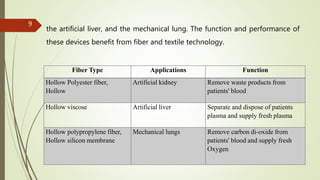
The extracorporeal devices are mechanical organs that are used for
blood purification and include the artificial kidney,
8
the artificial liver, and the mechanical lung. The function and performance of
these devices benefit from fiber and textile technology.
9
Fiber Type Applications Function
Hollow Polyester fiber,
Hollow
Artificial kidney Remove waste products from
patients' blood
Hollow viscose Artificial liver Separate and dispose of patients
plasma and supply fresh plasma
Hollow polypropylene fiber,
Hollow silicon membrane
Mechanical lungs Remove carbon di-oxide from
patients' blood and supply fresh
Oxygen
Healthcare/hygiene products
Healthcare and hygiene products are a rising sector in the
field of medicine and surgery. The range of products
available is vast, but typically they are used either in the
operating or on the hospital ward for the hygiene, care,
and safety of staff and patients.
10
Conti.
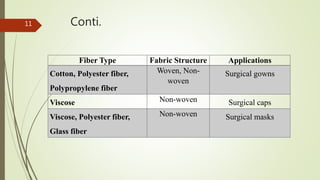
Fiber Type Fabric Structure Applications
Cotton, Polyester fiber,
Polypropylene fiber
Woven, Non-
woven
Surgical gowns
Viscose Non-woven Surgical caps
Viscose, Polyester fiber,
Glass fiber
Non-woven Surgical masks
11
3. Characteristics of Medical Textile
 Mechanical properties: This properties include durability and any
Elasticity of fiber used in the materials.
 Non-toxicity: This the most important properties consider during
the production of medical textiles. It is ensured the materials
used should not caused rising the body temperature and
should not –toxicity in nature.
 Ability to sterilized: This properties deals the clean ability of the
materials us a the bacteria.
12
Conti.
 Biocompatibility and optical properties: The materials used
should be bio inert and bioactive.
 Diffusion properties: it is an essential property for control
delivery system like artificial kidney.
13
4. Surface modification of biomaterials with proteins
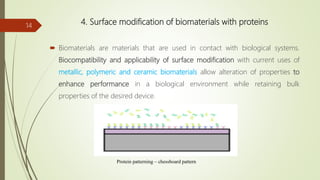
 Biomaterials are materials that are used in contact with biological systems.
Biocompatibility and applicability of surface modification with current uses of
metallic, polymeric and ceramic biomaterials allow alteration of properties to
enhance performance in a biological environment while retaining bulk
properties of the desired device.
14
Protein patterning – chessboard pattern
Conti.
 Surface modification involves the fundamentals of
physicochemical interactions between the biomaterial and the
physiological environment at the molecular, cellular and tissue
levels (reduce bacterial adhesion, promote cell adhesion).
Currently, there are various methods of characterization and
surface modification of biomaterials and useful applications of
fundamental concepts in several biomedical solutions.
15
Conti.
 The function of surface modification is to change the
physical and chemical properties of surfaces to improve
the functionality of the original material.
 Protein surface modification of various types’ biomaterials
(ceramics, polymers, metals, composites) is performed to
ultimately increase biocompatibility of the material and
interact as a bioactive material for specific applications.
16
Fabrication techniques
 Physical modification Edit
Physical immobilization is simply coating a material with a
biomimetic material without changing the structure of either.
Various biomimetic materials with cell adhesive proteins (such as
collagen or laminin) have been used in vitro to direct new tissue
formation and cell growth.
 Cell adhesion and proliferation occurs much better on protein-
coated surfaces.
17
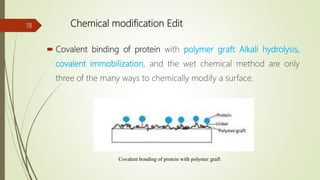
Chemical modification Edit
 Covalent binding of protein with polymer graft Alkali hydrolysis,
covalent immobilization, and the wet chemical method are only
three of the many ways to chemically modify a surface.
18
Covalent bonding of protein with polymer graft
5. Application of Medical Textiles
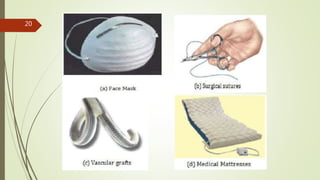
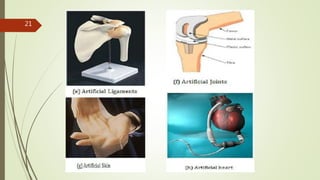
The number of applications is enormous and diverse,
ranging from a single thread suture to the complex
composite structures for bone replacement and from the
simple cleaning wipe to advanced barrier fabrics used in
Operation Theater.
19
20
21
Conclusion
 The importance of medical textile for the healthier life and benefit
of human being is great. The development of new technologies
and new item will help the patients to overcome their suffering in
previous days. To get correct, hygienic products we should put the
concentration to develop new technologies as well as we should
put concentration on the price of the products.
22
23

Biomedical textile (name 葛利明, id 320023 )

  • 1.
    OVERVIEW OF BIOMEDICAL TEXTILES BetemariamLimenewu My Chinese Name is Ge liming Ethiopia Textile Engineering (Masters) ID No: 320023 April, 2021 1
  • 2.
    Outline of presentation Introduction Classificationof Medical Textile Characteristics of Medical Textile Surface modification of medical Textile Application 2
  • 3.
    1. Introduction  Medicaltextiles are also known as Healthcare Textiles. It has diversified with new materials and innovative designs.  The Medical textile products are obtainable in woven, knitted and non- woven structure based on the area of application. Increasingly, synthetic fiber is being utilized in the manufacturing of these products. 3
  • 4.
    Conti.  Bio textilesare structures composed of textile fibers designed for use in specific biological environments where their performance depends on biocompatibility and bio stability with cells and biological fluids.  Its include implantable devices such as  Surgical sutures  Hernia repair fabrics,  Arterial grafts,  Artificial skin and parts of artificial hearts. 4
  • 5.
    2. Classification ofMedical Textiles  Non -implantable materials  Implantable materials  Extracorporeal devices  Healthcare/hygiene products 5
  • 6.
    Non -implantable materials Thesematerials use in external application on the body and may or may not make contact with the skin. This includes wound care, bandages, plasters, pressure garments, orthopedic belts etc. 6 Fiber Type Fabric Structure Applications Cotton, Viscose, Lyocell Non-woven Absorbent Pad Alginate fiber, Chitosan, Silk Non-woven Absorbent Pad Viscose, Lyocell, Cotton Woven, Non-woven, Knitted Wound-contact layer Viscose, Lyocell, Plastics film Woven, Non-woven Base material Polyamide fiber Woven, Non-woven Base material Elastomeric fiber yarns Woven, Non-woven, Knitted Simple non-elastic and elastic bandages
  • 7.
    Implantable materials  Thesematerials used in effecting a repair to the body whether it be wound closure (sutures) or replacement surgery (vascular grafts, artificial ligaments, artificial cartilage, etc.). 7 Fiber Type Fabric Structure Applications Polyethylene fiber Mono filament, Braided Non-biodegradable sutures PTFE fiber, Polyester fiber, Silk Mono filament, Braided Non-biodegradable sutures Collagen, Polyethylene fiber Mono filament, Braided Non-biodegradable sutures Polyamide fiber Woven, Braided Artificial tendon Polyester fiber, Carbon fiber, Collagen Braided Artificial ligament
  • 8.
    Extracorporeal devices  Theseare extra corporeally mounted devices used to support the function of vital organs, such as Kidney Liver Lung and Heart pacer The extracorporeal devices are mechanical organs that are used for blood purification and include the artificial kidney, 8
  • 9.
    the artificial liver,and the mechanical lung. The function and performance of these devices benefit from fiber and textile technology. 9 Fiber Type Applications Function Hollow Polyester fiber, Hollow Artificial kidney Remove waste products from patients' blood Hollow viscose Artificial liver Separate and dispose of patients plasma and supply fresh plasma Hollow polypropylene fiber, Hollow silicon membrane Mechanical lungs Remove carbon di-oxide from patients' blood and supply fresh Oxygen
  • 10.
    Healthcare/hygiene products Healthcare andhygiene products are a rising sector in the field of medicine and surgery. The range of products available is vast, but typically they are used either in the operating or on the hospital ward for the hygiene, care, and safety of staff and patients. 10
  • 11.
    Conti. Fiber Type FabricStructure Applications Cotton, Polyester fiber, Polypropylene fiber Woven, Non- woven Surgical gowns Viscose Non-woven Surgical caps Viscose, Polyester fiber, Glass fiber Non-woven Surgical masks 11
  • 12.
    3. Characteristics ofMedical Textile  Mechanical properties: This properties include durability and any Elasticity of fiber used in the materials.  Non-toxicity: This the most important properties consider during the production of medical textiles. It is ensured the materials used should not caused rising the body temperature and should not –toxicity in nature.  Ability to sterilized: This properties deals the clean ability of the materials us a the bacteria. 12
  • 13.
    Conti.  Biocompatibility andoptical properties: The materials used should be bio inert and bioactive.  Diffusion properties: it is an essential property for control delivery system like artificial kidney. 13
  • 14.
    4. Surface modificationof biomaterials with proteins  Biomaterials are materials that are used in contact with biological systems. Biocompatibility and applicability of surface modification with current uses of metallic, polymeric and ceramic biomaterials allow alteration of properties to enhance performance in a biological environment while retaining bulk properties of the desired device. 14 Protein patterning – chessboard pattern
  • 15.
    Conti.  Surface modificationinvolves the fundamentals of physicochemical interactions between the biomaterial and the physiological environment at the molecular, cellular and tissue levels (reduce bacterial adhesion, promote cell adhesion). Currently, there are various methods of characterization and surface modification of biomaterials and useful applications of fundamental concepts in several biomedical solutions. 15
  • 16.
    Conti.  The functionof surface modification is to change the physical and chemical properties of surfaces to improve the functionality of the original material.  Protein surface modification of various types’ biomaterials (ceramics, polymers, metals, composites) is performed to ultimately increase biocompatibility of the material and interact as a bioactive material for specific applications. 16
  • 17.
    Fabrication techniques  Physicalmodification Edit Physical immobilization is simply coating a material with a biomimetic material without changing the structure of either. Various biomimetic materials with cell adhesive proteins (such as collagen or laminin) have been used in vitro to direct new tissue formation and cell growth.  Cell adhesion and proliferation occurs much better on protein- coated surfaces. 17
  • 18.
    Chemical modification Edit Covalent binding of protein with polymer graft Alkali hydrolysis, covalent immobilization, and the wet chemical method are only three of the many ways to chemically modify a surface. 18 Covalent bonding of protein with polymer graft
  • 19.
    5. Application ofMedical Textiles The number of applications is enormous and diverse, ranging from a single thread suture to the complex composite structures for bone replacement and from the simple cleaning wipe to advanced barrier fabrics used in Operation Theater. 19
  • 20.
  • 21.
  • 22.
    Conclusion  The importanceof medical textile for the healthier life and benefit of human being is great. The development of new technologies and new item will help the patients to overcome their suffering in previous days. To get correct, hygienic products we should put the concentration to develop new technologies as well as we should put concentration on the price of the products. 22
  • 23.