LANDING GEAR DESIGN
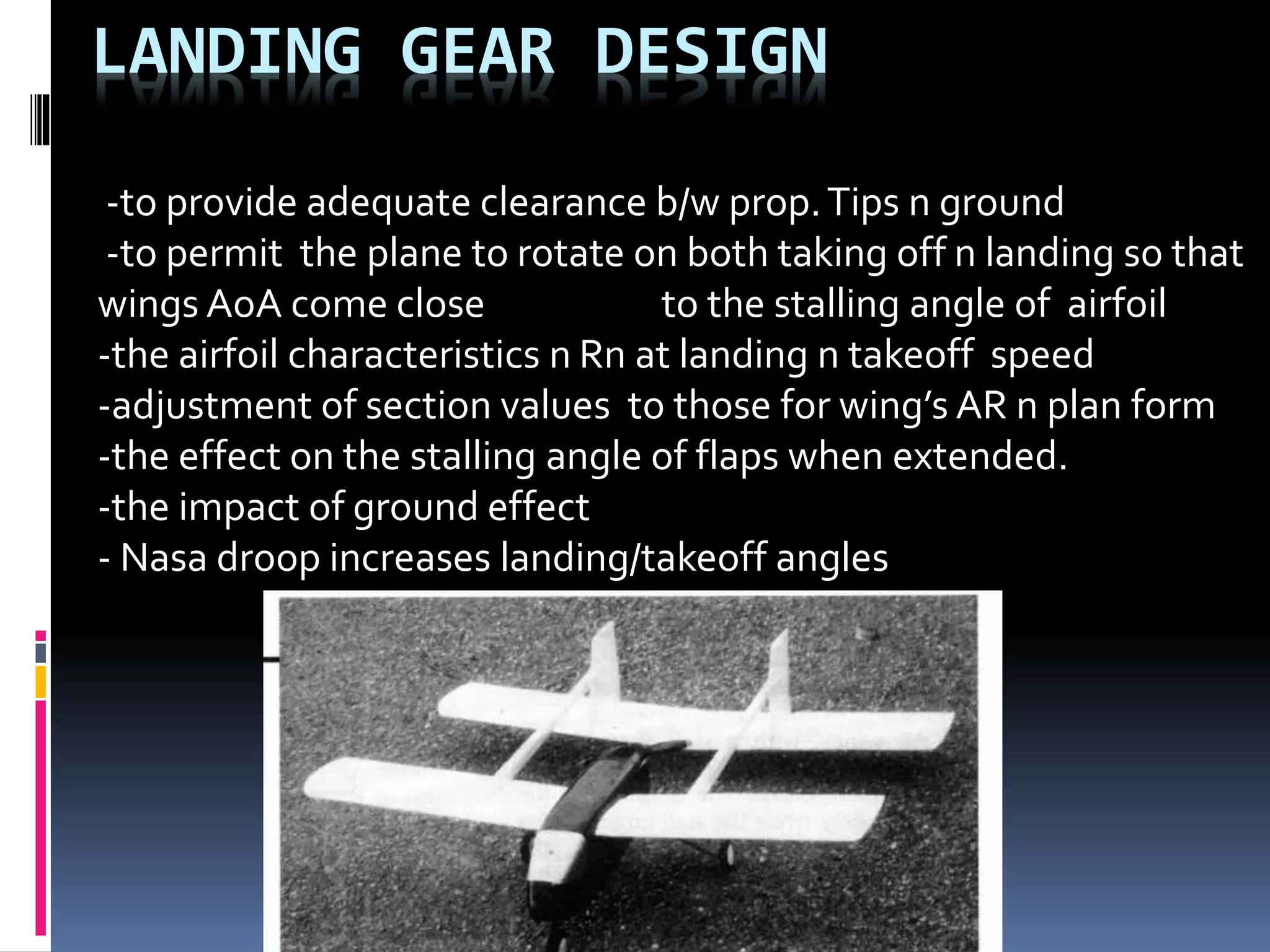
-to provide adequate clearance b/w prop.Tips n ground
-to permit the plane to rotate on both taking off n landing so that
wings AoA come close to the stalling angle of airfoil
-the airfoil characteristics n Rn at landing n takeoff speed
-adjustment of section values to those for wing’s AR n plan form
-the effect on the stalling angle of flaps when extended.
-the impact of ground effect
- Nasa droop increases landing/takeoff angles
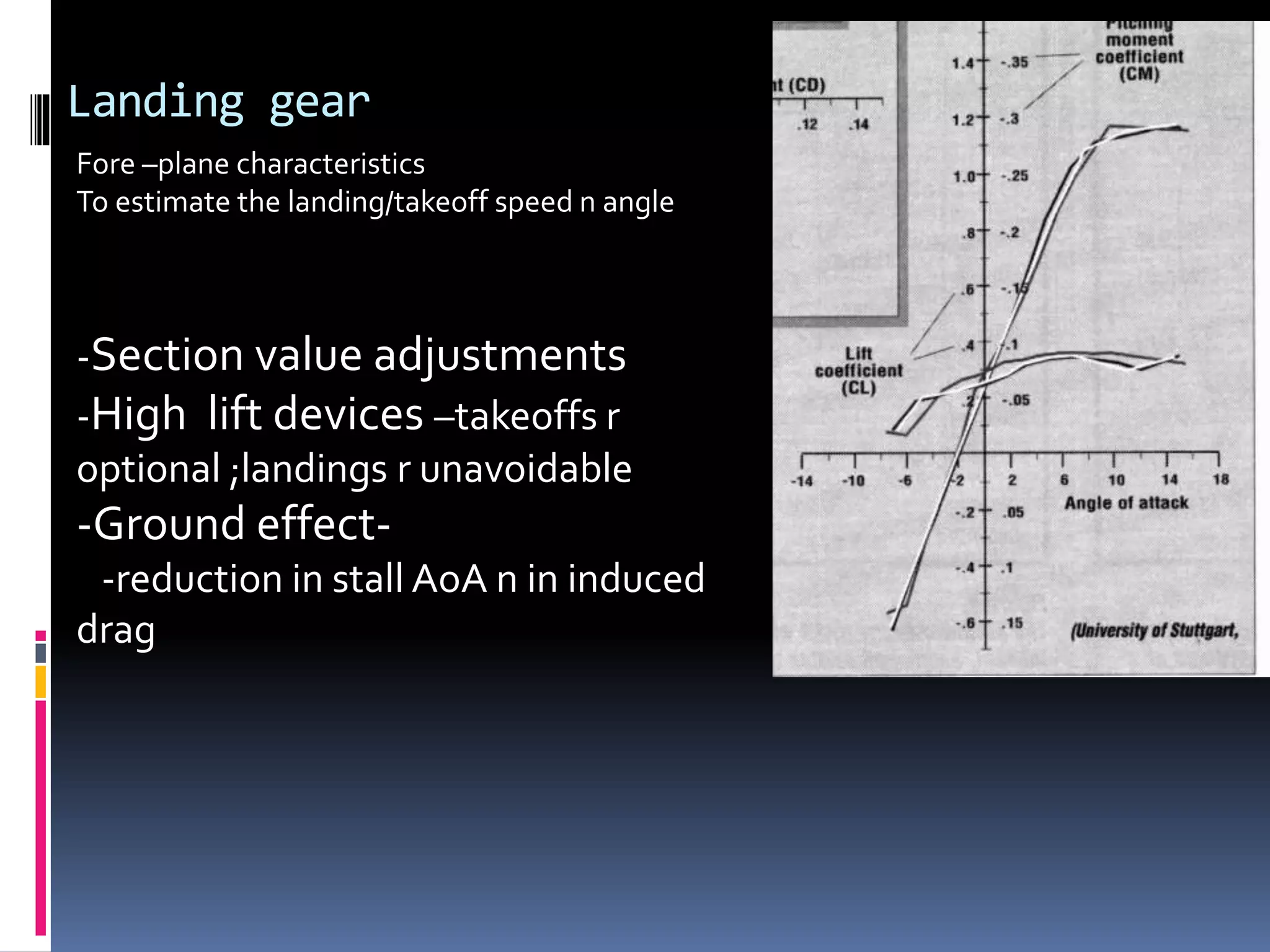
Landing gear
Fore –plane characteristics
To estimate the landing/takeoff speed n angle
-Section value adjustments
-High lift devices –takeoffs r
optional ;landings r unavoidable
-Ground effect-
-reduction in stall AoA n in induced
drag
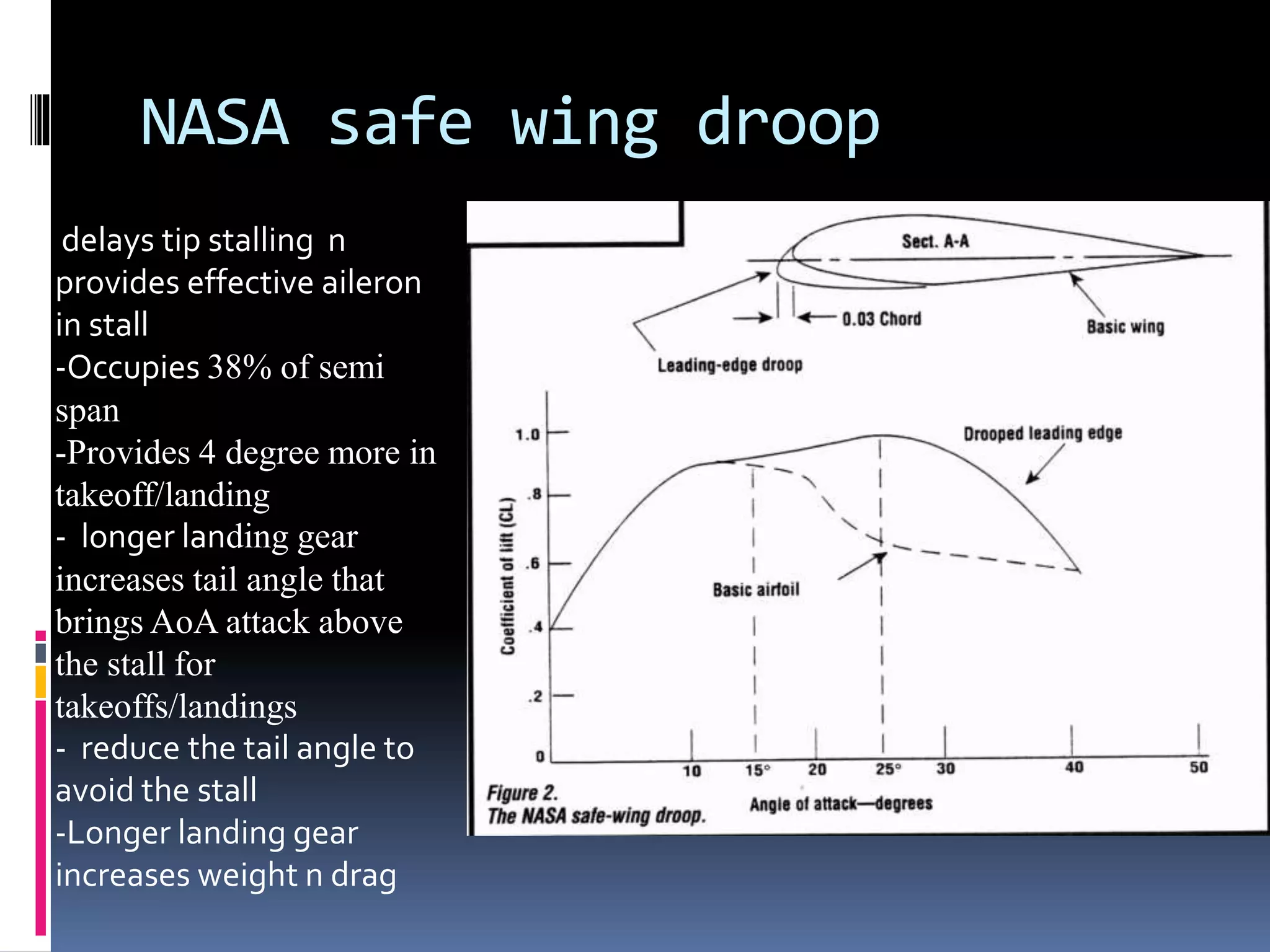
NASA safe wing droop
delays tip stalling n
provides effective aileron
in stall
-Occupies 38% of semi
span
-Provides 4 degree more in
takeoff/landing
- longer landing gear
increases tail angle that
brings AoA attack above
the stall for
takeoffs/landings
- reduce the tail angle to
avoid the stall
-Longer landing gear
increases weight n drag
Power loading
-cid- cubic inch of engine displacement
CG & Landing gear
-CG shifts :combustion of fuel
-types of LG-
-tricycle-front wheel steerable
-tail dragger-tail wheel steerable
Landing gear dynamic
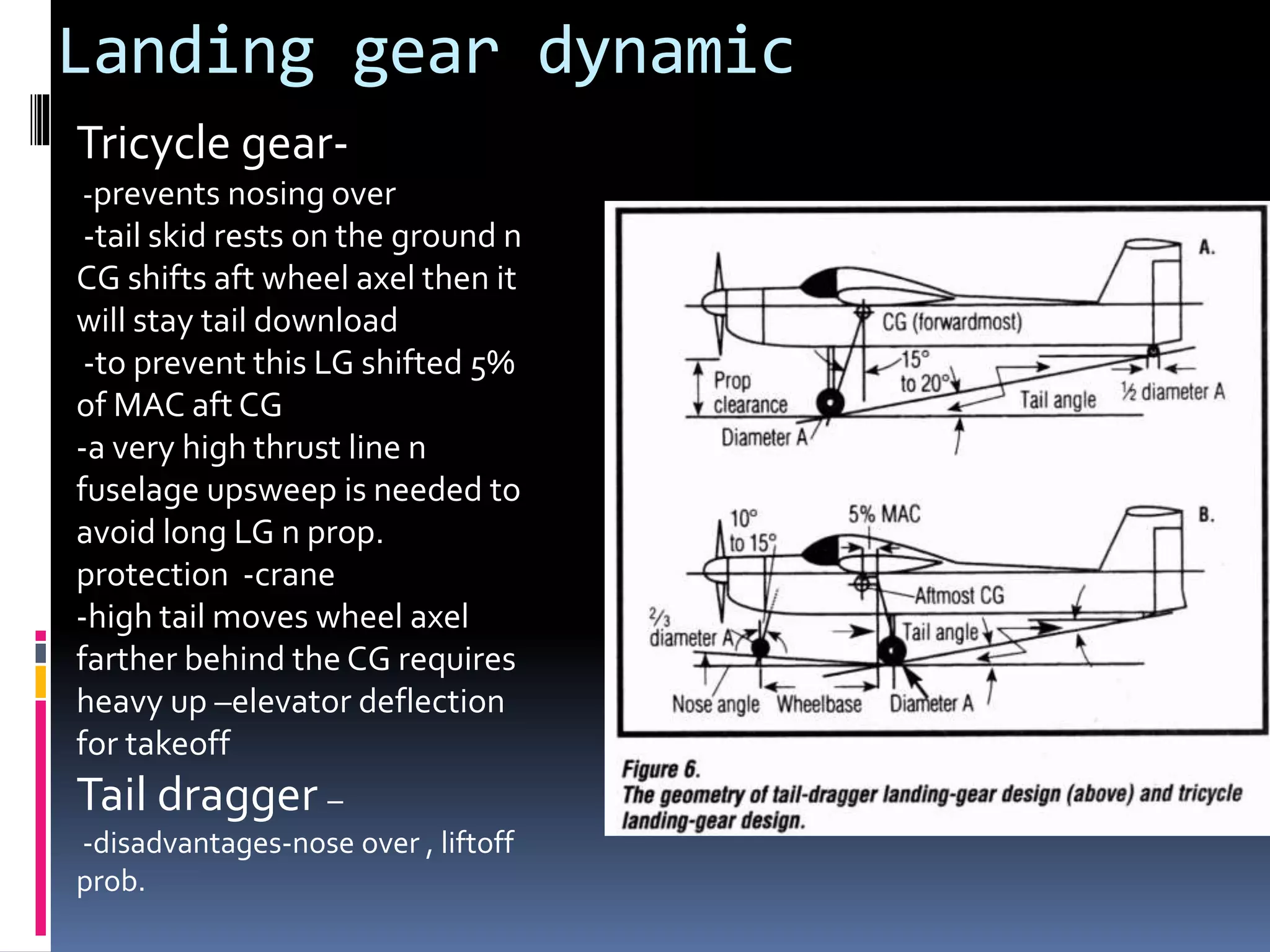
Tricycle gear-
-prevents nosing over
-tail skid rests on the ground n
CG shifts aft wheel axel then it
will stay tail download
-to prevent this LG shifted 5%
of MAC aft CG
-a very high thrust line n
fuselage upsweep is needed to
avoid long LG n prop.
protection -crane
-high tail moves wheel axel
farther behind the CG requires
heavy up –elevator deflection
for takeoff
Tail dragger –
-disadvantages-nose over , liftoff
prob.
Detail design
 To locate LG
 Tricycle gear
 Tail dragger
Tread width
-wheel tread is 25% of AR 6 span
-Static load squat
-Wheel diameter for paved runways 2
inch,grass-2.25 or 3
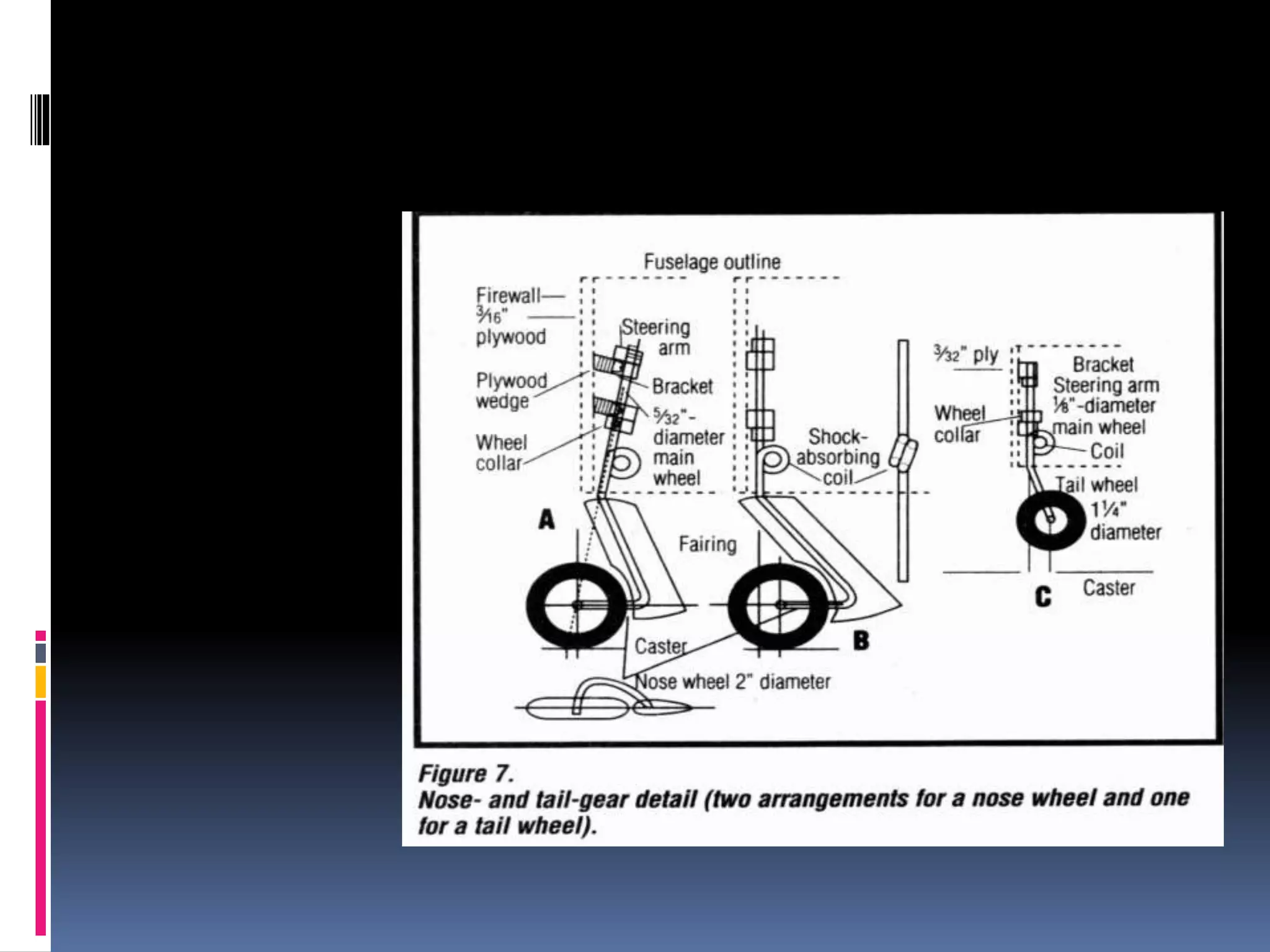
Nose n tail wheel design
-
Main LG legs
-should be continuous
piece of metal from
wheel to wheel so that
bending loads do not hv
to b absorbed by
fuselage
Landing gear design

Landing gear design

  • 1.
    LANDING GEAR DESIGN -toprovide adequate clearance b/w prop.Tips n ground -to permit the plane to rotate on both taking off n landing so that wings AoA come close to the stalling angle of airfoil -the airfoil characteristics n Rn at landing n takeoff speed -adjustment of section values to those for wing’s AR n plan form -the effect on the stalling angle of flaps when extended. -the impact of ground effect - Nasa droop increases landing/takeoff angles
  • 2.
    Landing gear Fore –planecharacteristics To estimate the landing/takeoff speed n angle -Section value adjustments -High lift devices –takeoffs r optional ;landings r unavoidable -Ground effect- -reduction in stall AoA n in induced drag
  • 3.
    NASA safe wingdroop delays tip stalling n provides effective aileron in stall -Occupies 38% of semi span -Provides 4 degree more in takeoff/landing - longer landing gear increases tail angle that brings AoA attack above the stall for takeoffs/landings - reduce the tail angle to avoid the stall -Longer landing gear increases weight n drag
  • 5.
    Power loading -cid- cubicinch of engine displacement CG & Landing gear -CG shifts :combustion of fuel -types of LG- -tricycle-front wheel steerable -tail dragger-tail wheel steerable
  • 6.
    Landing gear dynamic Tricyclegear- -prevents nosing over -tail skid rests on the ground n CG shifts aft wheel axel then it will stay tail download -to prevent this LG shifted 5% of MAC aft CG -a very high thrust line n fuselage upsweep is needed to avoid long LG n prop. protection -crane -high tail moves wheel axel farther behind the CG requires heavy up –elevator deflection for takeoff Tail dragger – -disadvantages-nose over , liftoff prob.
  • 7.
    Detail design  Tolocate LG  Tricycle gear  Tail dragger Tread width -wheel tread is 25% of AR 6 span -Static load squat -Wheel diameter for paved runways 2 inch,grass-2.25 or 3
  • 8.
    Nose n tailwheel design - Main LG legs -should be continuous piece of metal from wheel to wheel so that bending loads do not hv to b absorbed by fuselage