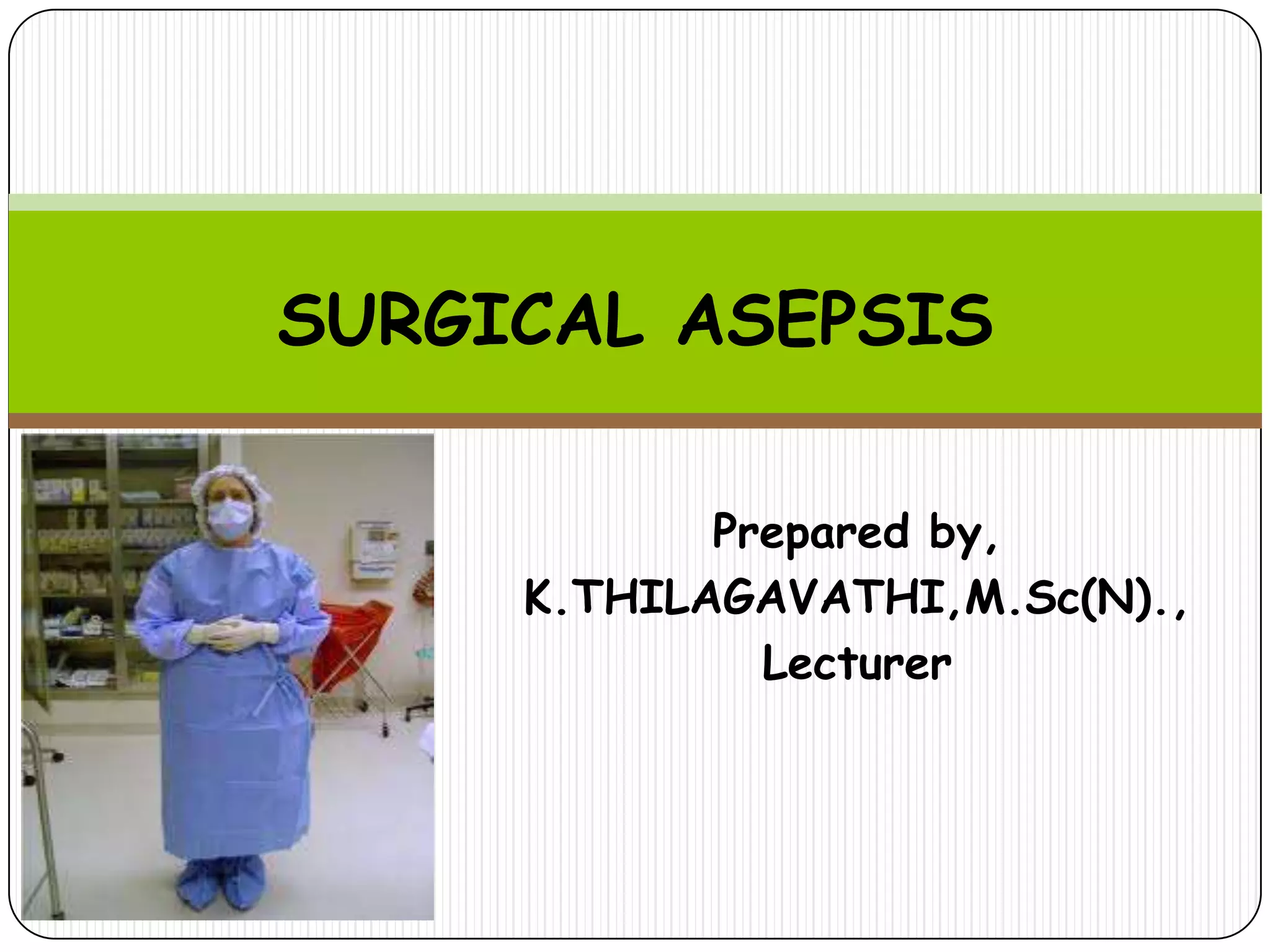
SURGICAL ASEPSIS
Prepared by,
K.THILAGAVATHI,M.Sc(N).,
Lecturer
SURGICAL ASEPSIS
 Refers to the procedures used to keep the

object or areas sterile or completely free
from micro organisms.
 In surgical asepsis all practices are

directed to the elimination of both
pathogenic and nonpathogenic microorganisms.
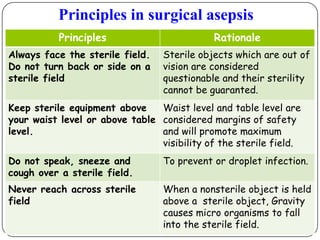
Principles in surgical asepsis
Principles
Always face the sterile field.
Do not turn back or side on a
sterile field

Rationale
Sterile objects which are out of
vision are considered
questionable and their sterility
cannot be guaranted.

Keep sterile equipment above
Waist level and table level are
your waist level or above table considered margins of safety
level.
and will promote maximum
visibility of the sterile field.
Do not speak, sneeze and
cough over a sterile field.

To prevent or droplet infection.

Never reach across sterile
field

When a nonsterile object is held
above a sterile object, Gravity
causes micro organisms to fall
into the sterile field.
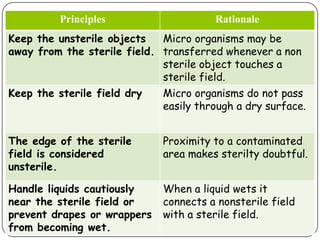
Principles

Rationale

Keep the unsterile objects
Micro organisms may be
away from the sterile field. transferred whenever a non
sterile object touches a
sterile field.
Keep the sterile field dry

Micro organisms do not pass
easily through a dry surface.

The edge of the sterile
field is considered
unsterile.

Proximity to a contaminated
area makes sterilty doubtful.

Handle liquids cautiously
near the sterile field or
prevent drapes or wrappers
from becoming wet.

When a liquid wets it
connects a nonsterile field
with a sterile field.
Principles
Rationale
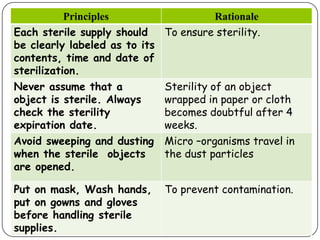
Each sterile supply should
To ensure sterility.
be clearly labeled as to its
contents, time and date of
sterilization.

Never assume that a
object is sterile. Always
check the sterility
expiration date.
Avoid sweeping and dusting
when the sterile objects
are opened.

Sterility of an object
wrapped in paper or cloth
becomes doubtful after 4
weeks.
Micro –organisms travel in
the dust particles

Put on mask, Wash hands,
put on gowns and gloves
before handling sterile
supplies.

To prevent contamination.
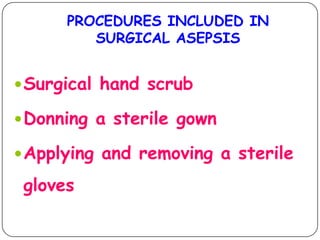
PROCEDURES INCLUDED IN
SURGICAL ASEPSIS

 Surgical hand scrub
 Donning a sterile gown

 Applying and removing a sterile

gloves
1.Surgical hand scrub
Purpose :
Remove as many micro organisms

from the hands as possible before the
sterile procedure.
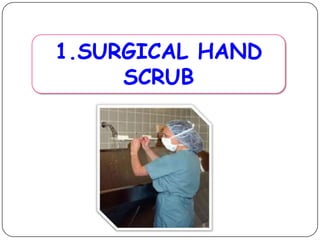
1.SURGICAL HAND
SCRUB
Equipment
 Warm running water

 Antiseptic Soap Solution
 Hand brush stored in a sterile

container
 Transferring forceps

 Sterile towel
Steps of the procedure
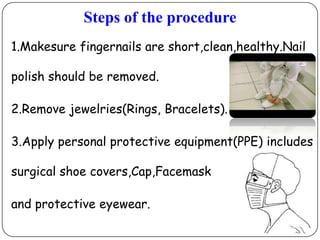
1.Makesure fingernails are short,clean,healthy.Nail
polish should be removed.
2.Remove jewelries(Rings, Bracelets).
3.Apply personal protective equipment(PPE) includes
surgical shoe covers,Cap,Facemask

and protective eyewear.
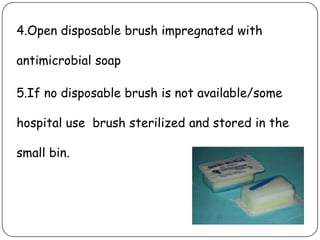
4.Open disposable brush impregnated with
antimicrobial soap

5.If no disposable brush is not available/some
hospital use brush sterilized and stored in the
small bin.
6.Use a transferring forceps to
pick up the brush from the
sterile bin.
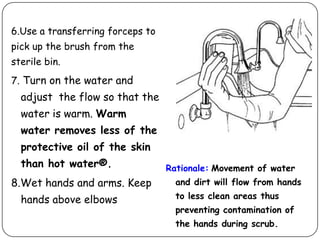
7. Turn on the water and

adjust the flow so that the
water is warm. Warm
water removes less of the
protective oil of the skin
than hot water®.
8.Wet hands and arms. Keep
hands above elbows

Rationale: Movement of water
and dirt will flow from hands

to less clean areas thus
preventing contamination of
the hands during scrub.
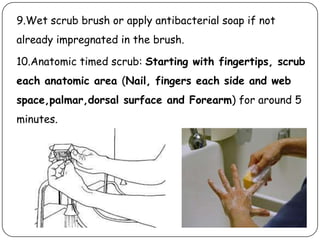
9.Wet scrub brush or apply antibacterial soap if not
already impregnated in the brush.
10.Anatomic timed scrub: Starting with fingertips, scrub

each anatomic area (Nail, fingers each side and web
space,palmar,dorsal surface and Forearm) for around 5
minutes.
11.Scrub vigorously using vertical strokes in a
circular manner. Repeat with other hand.
Rationale: Ensures that all surfaces will be
systematically scrubbed to remove transient
and resident micro organisms.

12.Counted brush stroke method: Starting
finger tips, scrub each anatomic area for the
designated number of strokes. Scrub
vigorously using vertical strokes.
13.Rinse hands thoroughly under warm running
water, holding hands upward. This is to allow water
to drain towards the flexed elbows.

Rationale : Prevents contamination of the hands
from dirtier areas. Remember do not touch

anything before and after rinsing hands.
Touching non sterile objects would mean the
surgical scrub need to be repeated.
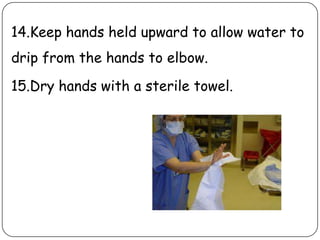
14.Keep hands held upward to allow water to
drip from the hands to elbow.

15.Dry hands with a sterile towel.
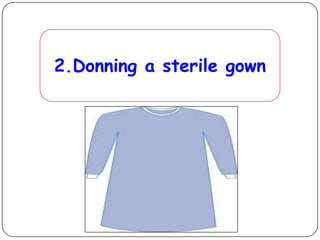
2.Donning a sterile gown
Purpose :
To apply entire necessary to safely
carryout sterile procedures usually in the
operating room and delivery room.
Donning a sterile gown
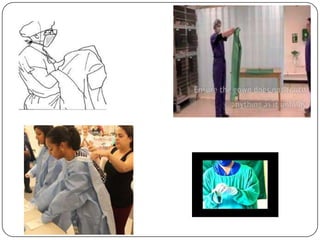
1.Grasp folded sterile gown at the neckline

and step away from the sterile field.
Allow gown to gently unfold, being careful

that does not touch the floor. The inside of
the gown is towards the user.
Rationale: Maintains sterility of the gown
and positions it for donning.
2.Holding the arms at the shoulder level, grasp
the sterile gown just below the neckband near
the shoulders and slide arms in the sleeves
until the fingers are at the end of the cuffs
but not through the cuffs.

Rationale : The finger remain in the cuffs to
protect the sterility of the gown and

prepared for closed gloving.
3.Have someone tie the back of the gown
,taking care that only the ties are touched
and not the sides of the gown.
Rationale: Maintains sterility of the gown.
Gowns are considered sterile in front of
the shoulders sterile from 2 inches above
the elbow to the wrist.
3.APPLYING AND REMOVING
STERILE GLOVES
Donning a glove
Purpose :
Prevent transfer of micro organisms

from hands to sterile objects or open
wounds.
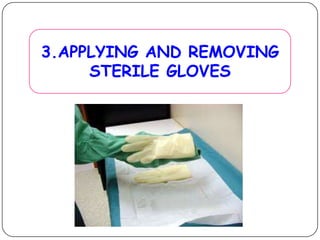
A.Applying gloves
1.With fingers still within the cuff of the gown, open
the inner sterile glove package and pick up the first

glove by the cuff, using the nondominant hand.
Rationale :Maintains the sterility of the gloves.
2.Position the glove over the cuff of the gown so the
fingers are in alignment and stretch the entire glove
over the cuff of the gown, being careful not to touch

its edge. Finger remain within the cuff of the gown.
3.Use the sterile gloved hand to pick up the second
glove, placing it over the cuff of the gown of the
other hand and repeat the glove application

process.
4.Adjust gloves for comfort and fit, taking care to

keep gloved hands above waist level at all times.
Rationale : If gloved hands fall below the waist
level,there are no longer Sterile.
B.Removing gloves:

1.Wash gloved hands first.
2.With dominant hand,grasp outer surface of non

dominat glove just below thumb. Peel off glove
insideout,without touching exposed wrist.
Rationale :After use, outer surface of gloves is
contaminated and could transfer micro organisms to
the nurse’s wrist.
3.Placed ungloved hand under thumb side of second
cuff and peel off the fingers holding first glove
inside second glove. Discard into appropriate bin

Rationale: Folding contaminated glove surfaces
toward the inside minimize the chance to

transfer of micro organisms. Use glove to glove
skin to skin technique when removing gloves.
4.Wash hands before and after removing gloves to
prevent contamination of hands.
2.surgical asepsis

2.surgical asepsis

  • 1.
  • 2.
    SURGICAL ASEPSIS  Refersto the procedures used to keep the object or areas sterile or completely free from micro organisms.  In surgical asepsis all practices are directed to the elimination of both pathogenic and nonpathogenic microorganisms.
  • 3.
    Principles in surgicalasepsis Principles Always face the sterile field. Do not turn back or side on a sterile field Rationale Sterile objects which are out of vision are considered questionable and their sterility cannot be guaranted. Keep sterile equipment above Waist level and table level are your waist level or above table considered margins of safety level. and will promote maximum visibility of the sterile field. Do not speak, sneeze and cough over a sterile field. To prevent or droplet infection. Never reach across sterile field When a nonsterile object is held above a sterile object, Gravity causes micro organisms to fall into the sterile field.
  • 4.
    Principles Rationale Keep the unsterileobjects Micro organisms may be away from the sterile field. transferred whenever a non sterile object touches a sterile field. Keep the sterile field dry Micro organisms do not pass easily through a dry surface. The edge of the sterile field is considered unsterile. Proximity to a contaminated area makes sterilty doubtful. Handle liquids cautiously near the sterile field or prevent drapes or wrappers from becoming wet. When a liquid wets it connects a nonsterile field with a sterile field.
  • 5.
    Principles Rationale Each sterile supplyshould To ensure sterility. be clearly labeled as to its contents, time and date of sterilization. Never assume that a object is sterile. Always check the sterility expiration date. Avoid sweeping and dusting when the sterile objects are opened. Sterility of an object wrapped in paper or cloth becomes doubtful after 4 weeks. Micro –organisms travel in the dust particles Put on mask, Wash hands, put on gowns and gloves before handling sterile supplies. To prevent contamination.
  • 6.
    PROCEDURES INCLUDED IN SURGICALASEPSIS  Surgical hand scrub  Donning a sterile gown  Applying and removing a sterile gloves
  • 7.
    1.Surgical hand scrub Purpose: Remove as many micro organisms from the hands as possible before the sterile procedure.
  • 8.
  • 9.
    Equipment  Warm runningwater  Antiseptic Soap Solution  Hand brush stored in a sterile container  Transferring forceps  Sterile towel
  • 10.
    Steps of theprocedure 1.Makesure fingernails are short,clean,healthy.Nail polish should be removed. 2.Remove jewelries(Rings, Bracelets). 3.Apply personal protective equipment(PPE) includes surgical shoe covers,Cap,Facemask and protective eyewear.
  • 11.
    4.Open disposable brushimpregnated with antimicrobial soap 5.If no disposable brush is not available/some hospital use brush sterilized and stored in the small bin.
  • 12.
    6.Use a transferringforceps to pick up the brush from the sterile bin. 7. Turn on the water and adjust the flow so that the water is warm. Warm water removes less of the protective oil of the skin than hot water®. 8.Wet hands and arms. Keep hands above elbows Rationale: Movement of water and dirt will flow from hands to less clean areas thus preventing contamination of the hands during scrub.
  • 13.
    9.Wet scrub brushor apply antibacterial soap if not already impregnated in the brush. 10.Anatomic timed scrub: Starting with fingertips, scrub each anatomic area (Nail, fingers each side and web space,palmar,dorsal surface and Forearm) for around 5 minutes.
  • 14.
    11.Scrub vigorously usingvertical strokes in a circular manner. Repeat with other hand. Rationale: Ensures that all surfaces will be systematically scrubbed to remove transient and resident micro organisms. 12.Counted brush stroke method: Starting finger tips, scrub each anatomic area for the designated number of strokes. Scrub vigorously using vertical strokes.
  • 15.
    13.Rinse hands thoroughlyunder warm running water, holding hands upward. This is to allow water to drain towards the flexed elbows. Rationale : Prevents contamination of the hands from dirtier areas. Remember do not touch anything before and after rinsing hands. Touching non sterile objects would mean the surgical scrub need to be repeated.
  • 16.
    14.Keep hands heldupward to allow water to drip from the hands to elbow. 15.Dry hands with a sterile towel.
  • 17.
  • 18.
    2.Donning a sterilegown Purpose : To apply entire necessary to safely carryout sterile procedures usually in the operating room and delivery room.
  • 19.
    Donning a sterilegown 1.Grasp folded sterile gown at the neckline and step away from the sterile field. Allow gown to gently unfold, being careful that does not touch the floor. The inside of the gown is towards the user. Rationale: Maintains sterility of the gown and positions it for donning.
  • 20.
    2.Holding the armsat the shoulder level, grasp the sterile gown just below the neckband near the shoulders and slide arms in the sleeves until the fingers are at the end of the cuffs but not through the cuffs. Rationale : The finger remain in the cuffs to protect the sterility of the gown and prepared for closed gloving.
  • 21.
    3.Have someone tiethe back of the gown ,taking care that only the ties are touched and not the sides of the gown. Rationale: Maintains sterility of the gown. Gowns are considered sterile in front of the shoulders sterile from 2 inches above the elbow to the wrist.
  • 23.
  • 24.
    Donning a glove Purpose: Prevent transfer of micro organisms from hands to sterile objects or open wounds.
  • 25.
    A.Applying gloves 1.With fingersstill within the cuff of the gown, open the inner sterile glove package and pick up the first glove by the cuff, using the nondominant hand. Rationale :Maintains the sterility of the gloves. 2.Position the glove over the cuff of the gown so the fingers are in alignment and stretch the entire glove over the cuff of the gown, being careful not to touch its edge. Finger remain within the cuff of the gown.
  • 26.
    3.Use the sterilegloved hand to pick up the second glove, placing it over the cuff of the gown of the other hand and repeat the glove application process. 4.Adjust gloves for comfort and fit, taking care to keep gloved hands above waist level at all times. Rationale : If gloved hands fall below the waist level,there are no longer Sterile.
  • 27.
    B.Removing gloves: 1.Wash glovedhands first. 2.With dominant hand,grasp outer surface of non dominat glove just below thumb. Peel off glove insideout,without touching exposed wrist. Rationale :After use, outer surface of gloves is contaminated and could transfer micro organisms to the nurse’s wrist.
  • 28.
    3.Placed ungloved handunder thumb side of second cuff and peel off the fingers holding first glove inside second glove. Discard into appropriate bin Rationale: Folding contaminated glove surfaces toward the inside minimize the chance to transfer of micro organisms. Use glove to glove skin to skin technique when removing gloves. 4.Wash hands before and after removing gloves to prevent contamination of hands.