DR.ANJALATCHI M.SC(N) MD(AM)
VICE PRINCIPAL ECON
NURSING SUPERINTENDENT,
ERAS LUCKNOW MEDICAL COLLEGE AND HOSPITAL,
AFFIALATED FROM ERAS UNIVERSITY.
LEARNING OBJECTIVES:
 Introduction
 Definition
 Aim
 Objective
 Purpose
 Basic principle
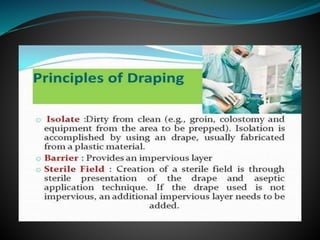
 Principle of draping
 Standards of surgical draping
 Importance
 Types of drapes sheet
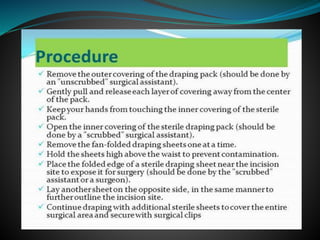
 Procedure for surgical draping
 Position used for draping
 Draping rules
 Warning during drapes.
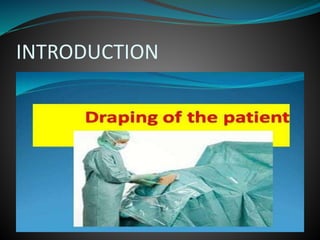
INTRODUCTION
Surgical draping
IMPORTANCES
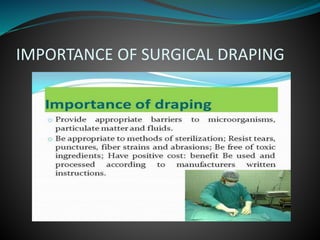
 Sterile surgical drapes are used during surgery to
prevent contact with unprepared surfaces and to
maintain the sterility of environmental surfaces,
equipment and the patient’s surroundings. Similarly,
sterile surgical gowns are worn over the scrub suit of
the operating team during surgical procedures to
maintain a sterile surgical field and reduce the risk of
transmission of pathogens to both patients and staff.
CONTINUED
 Surgical gowns and drapes are fabricated from either
multiple- or single-use materials. There is considerable
variation in design and performance characteristics
within each of these two broad categories, which
reflects the necessary trade-offs in economy, comfort
and degree of protection required for particular
surgical procedures.
CONTINUED
 During surgical procedures, the risk of pathogen
transmission increases if the barrier materials become wet.
Consequently, the multiple- or single-use materials of the
drapes and gowns used in a surgical procedure should
prevent the penetration of liquids. Reusable materials are
typically composed of different tightly-woven textiles
and/or knitted cotton, or other fabrics possibly blended
with polyester and/or chemically treated. These products
have to be durable and provide protection after many cycles
of processing and treatment. Disposable surgical drapes
and gowns are typically composed of non-woven materials
of synthetic and/or natural origin, possibly combined with
chemical treatment
CONTINUED
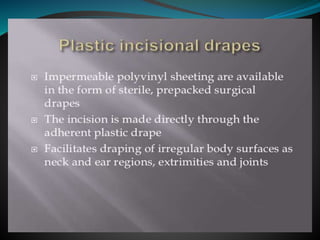
 Adhesive plastic incise drapes, plain or impregnated
with an antimicrobial agent (mostly an iodophor), are
used on the patient’s skin after the completion of
surgical site preparation. The film adheres to the skin
and the surgeon cuts through the skin and the drape
itself . Such a drape is theoretically believed to
represent a mechanical and/or microbial barrier to
prevent the migration of microorganisms from the
skin to the operative site . However, some reports
showed an increased recolonization of the skin
following antiseptic preparation underneath adhesive
drapes compared to the use of no drapes .
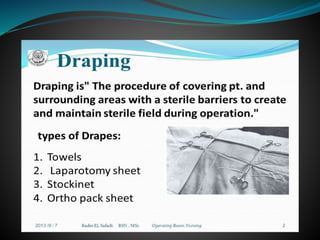
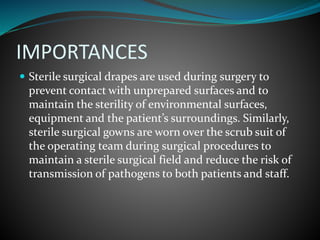
Definition
 Sterile fabric or fabric-like material used to isolate
the surgical site from the rest of the body and other
possible sources of contamination.
 Other names Surgical
Drape; Drapes, Surgical; Drape, Surgical.
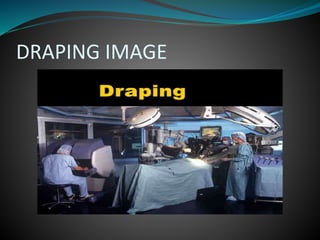
DRAPING IMAGE
AIM OF SURGICAL DRAPING
 To prevent contamination of the wound
 To maintain sterility in surgical field
IMPORTANCE OF SURGICAL DRAPING
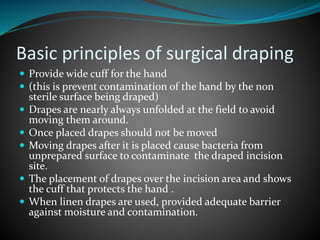
Basic principles of surgical draping
 Provide wide cuff for the hand
 (this is prevent contamination of the hand by the non
sterile surface being draped)
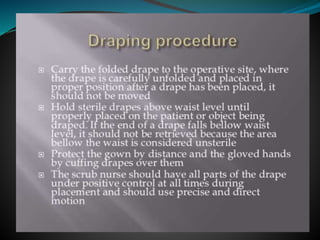
 Drapes are nearly always unfolded at the field to avoid
moving them around.
 Once placed drapes should not be moved
 Moving drapes after it is placed cause bacteria from
unprepared surface to contaminate the draped incision
site.
 The placement of drapes over the incision area and shows
the cuff that protects the hand .
 When linen drapes are used, provided adequate barrier
against moisture and contamination.
PURPOSE
 To create a sterile field by means of the appropriate
and careful placement of linen before surgery begins.
 To maintain the sterility of surface on which sterile
instruments and gloved hands may be placed during
the operation.
SURGICAL DRAPING
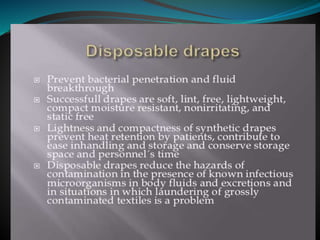
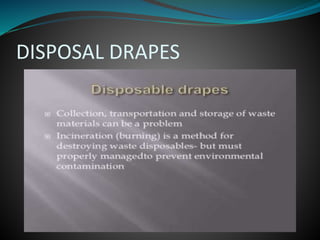
DISPOSAL DRAPES
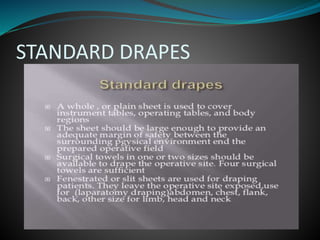
STANDARD DRAPES
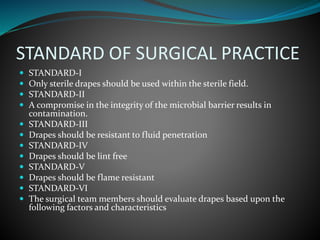
STANDARD OF SURGICAL PRACTICE
 STANDARD-I
 Only sterile drapes should be used within the sterile field.
 STANDARD-II
 A compromise in the integrity of the microbial barrier results in
contamination.
 STANDARD-III
 Drapes should be resistant to fluid penetration
 STANDARD-IV
 Drapes should be lint free
 STANDARD-V
 Drapes should be flame resistant
 STANDARD-VI
 The surgical team members should evaluate drapes based upon the
following factors and characteristics
Continued
 STANDARD-VII
 Drapes made of reusable woven fabric should have the
same barrier characteristic as single use nonwoven
disposable fabrics
 STANDARD –VIII
 The surgical team should take the proper precausions in
the application of drapes when the surgical procedure calls
for the use of a laser
 STANDARD-IX
 Surgical team members should be involved in the selection
process of drapes to be used in the OT
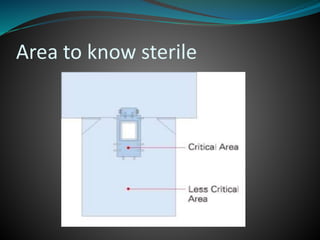
Area to know sterile
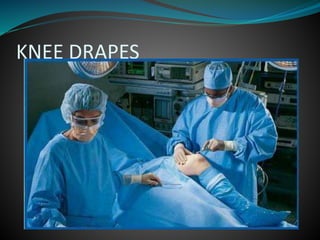
KNEE DRAPES
DRAPING RULES
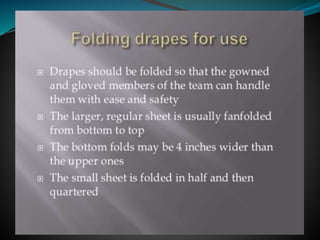
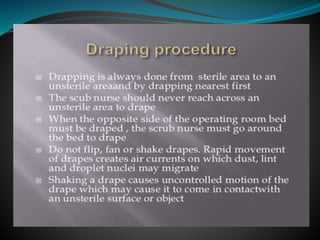
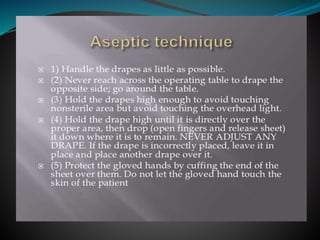
 Handle the drapes as little as possible
 Never flourish drapes(dust and lint are released into the air
creating a vehicle for airborne bacteria.
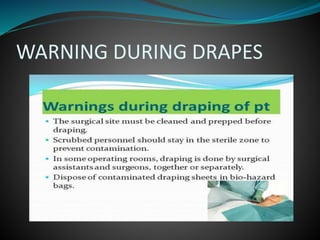
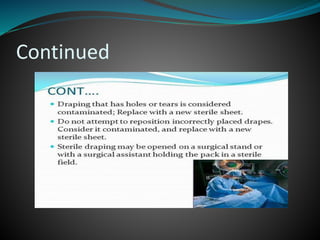
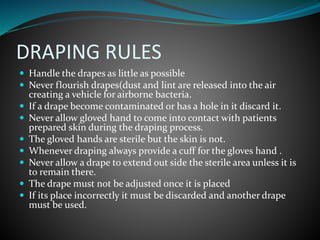
 If a drape become contaminated or has a hole in it discard it.
 Never allow gloved hand to come into contact with patients
prepared skin during the draping process.
 The gloved hands are sterile but the skin is not.
 Whenever draping always provide a cuff for the gloves hand .
 Never allow a drape to extend out side the sterile area unless it is
to remain there.
 The drape must not be adjusted once it is placed
 If its place incorrectly it must be discarded and another drape
must be used.
continue
 Do not allow the drape to touch the floor or become
tangled in floor equipment
 If the drape is so large that it touches the floor the
bottom may be taped to form a make shift items
 Plan a head have the drapes ready before the
procedure begins.
WARNING DURING DRAPES
Continued
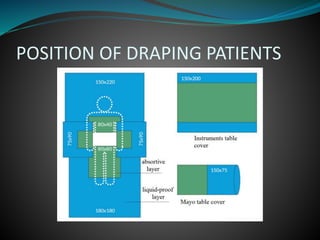
POSITION OF DRAPING PATIENTS
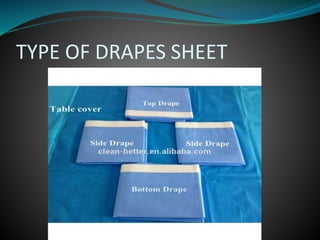
TYPE OF DRAPES SHEET
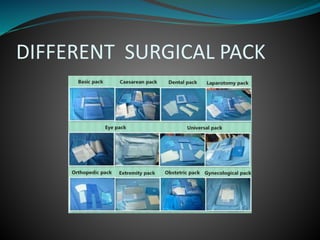
DIFFERENT SURGICAL PACK
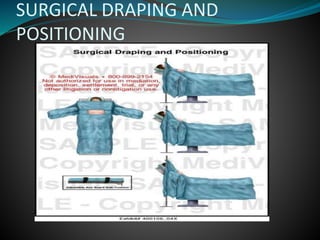
SURGICAL DRAPING AND
POSITIONING
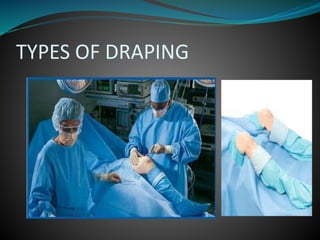
TYPES OF DRAPING
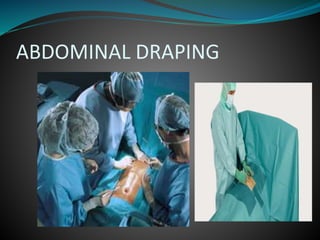
ABDOMINAL DRAPING
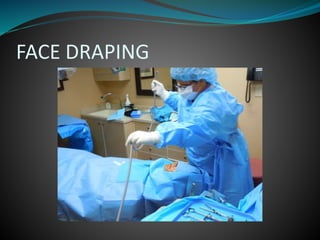
FACE DRAPING
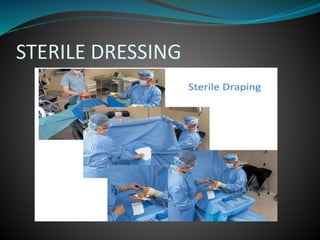
STERILE DRESSING
Summary
 Till now we discussed about surgical draping like
introduction, definition, aim , objective, purpose,
importances, draping rules, type of drapes, procedure,
warning/precausions while draping the procedure,
standard of draping rules etc.
conclusion
 I hope you all understood about surgical draping like
materials, procedure, warning etc. if you got chance to
work in operation theatre complex will you able to
apply and work the above mention knowledge
confidently without fail.
 To prevent the surgical site infection and promote
wound healing as early as possible
Question related to topic
 Define drapes?
 Define surgical drapes?
 Aim of draping?
 Purpose of draping?
THANK YOU
Surgical draping

Surgical draping

  • 1.
    DR.ANJALATCHI M.SC(N) MD(AM) VICEPRINCIPAL ECON NURSING SUPERINTENDENT, ERAS LUCKNOW MEDICAL COLLEGE AND HOSPITAL, AFFIALATED FROM ERAS UNIVERSITY.
  • 2.
    LEARNING OBJECTIVES:  Introduction Definition  Aim  Objective  Purpose  Basic principle  Principle of draping  Standards of surgical draping  Importance  Types of drapes sheet  Procedure for surgical draping  Position used for draping  Draping rules  Warning during drapes.
  • 3.
  • 5.
  • 6.
    IMPORTANCES  Sterile surgicaldrapes are used during surgery to prevent contact with unprepared surfaces and to maintain the sterility of environmental surfaces, equipment and the patient’s surroundings. Similarly, sterile surgical gowns are worn over the scrub suit of the operating team during surgical procedures to maintain a sterile surgical field and reduce the risk of transmission of pathogens to both patients and staff.
  • 7.
    CONTINUED  Surgical gownsand drapes are fabricated from either multiple- or single-use materials. There is considerable variation in design and performance characteristics within each of these two broad categories, which reflects the necessary trade-offs in economy, comfort and degree of protection required for particular surgical procedures.
  • 8.
    CONTINUED  During surgicalprocedures, the risk of pathogen transmission increases if the barrier materials become wet. Consequently, the multiple- or single-use materials of the drapes and gowns used in a surgical procedure should prevent the penetration of liquids. Reusable materials are typically composed of different tightly-woven textiles and/or knitted cotton, or other fabrics possibly blended with polyester and/or chemically treated. These products have to be durable and provide protection after many cycles of processing and treatment. Disposable surgical drapes and gowns are typically composed of non-woven materials of synthetic and/or natural origin, possibly combined with chemical treatment
  • 9.
    CONTINUED  Adhesive plasticincise drapes, plain or impregnated with an antimicrobial agent (mostly an iodophor), are used on the patient’s skin after the completion of surgical site preparation. The film adheres to the skin and the surgeon cuts through the skin and the drape itself . Such a drape is theoretically believed to represent a mechanical and/or microbial barrier to prevent the migration of microorganisms from the skin to the operative site . However, some reports showed an increased recolonization of the skin following antiseptic preparation underneath adhesive drapes compared to the use of no drapes .
  • 10.
    Definition  Sterile fabricor fabric-like material used to isolate the surgical site from the rest of the body and other possible sources of contamination.  Other names Surgical Drape; Drapes, Surgical; Drape, Surgical.
  • 11.
  • 12.
    AIM OF SURGICALDRAPING  To prevent contamination of the wound  To maintain sterility in surgical field
  • 13.
  • 16.
    Basic principles ofsurgical draping  Provide wide cuff for the hand  (this is prevent contamination of the hand by the non sterile surface being draped)  Drapes are nearly always unfolded at the field to avoid moving them around.  Once placed drapes should not be moved  Moving drapes after it is placed cause bacteria from unprepared surface to contaminate the draped incision site.  The placement of drapes over the incision area and shows the cuff that protects the hand .  When linen drapes are used, provided adequate barrier against moisture and contamination.
  • 17.
    PURPOSE  To createa sterile field by means of the appropriate and careful placement of linen before surgery begins.  To maintain the sterility of surface on which sterile instruments and gloved hands may be placed during the operation.
  • 18.
  • 22.
  • 23.
  • 24.
    STANDARD OF SURGICALPRACTICE  STANDARD-I  Only sterile drapes should be used within the sterile field.  STANDARD-II  A compromise in the integrity of the microbial barrier results in contamination.  STANDARD-III  Drapes should be resistant to fluid penetration  STANDARD-IV  Drapes should be lint free  STANDARD-V  Drapes should be flame resistant  STANDARD-VI  The surgical team members should evaluate drapes based upon the following factors and characteristics
  • 25.
    Continued  STANDARD-VII  Drapesmade of reusable woven fabric should have the same barrier characteristic as single use nonwoven disposable fabrics  STANDARD –VIII  The surgical team should take the proper precausions in the application of drapes when the surgical procedure calls for the use of a laser  STANDARD-IX  Surgical team members should be involved in the selection process of drapes to be used in the OT
  • 27.
    Area to knowsterile
  • 36.
  • 38.
    DRAPING RULES  Handlethe drapes as little as possible  Never flourish drapes(dust and lint are released into the air creating a vehicle for airborne bacteria.  If a drape become contaminated or has a hole in it discard it.  Never allow gloved hand to come into contact with patients prepared skin during the draping process.  The gloved hands are sterile but the skin is not.  Whenever draping always provide a cuff for the gloves hand .  Never allow a drape to extend out side the sterile area unless it is to remain there.  The drape must not be adjusted once it is placed  If its place incorrectly it must be discarded and another drape must be used.
  • 39.
    continue  Do notallow the drape to touch the floor or become tangled in floor equipment  If the drape is so large that it touches the floor the bottom may be taped to form a make shift items  Plan a head have the drapes ready before the procedure begins.
  • 40.
  • 41.
  • 42.
  • 43.
  • 44.
  • 45.
  • 47.
  • 48.
  • 49.
  • 50.
  • 51.
    Summary  Till nowwe discussed about surgical draping like introduction, definition, aim , objective, purpose, importances, draping rules, type of drapes, procedure, warning/precausions while draping the procedure, standard of draping rules etc.
  • 52.
    conclusion  I hopeyou all understood about surgical draping like materials, procedure, warning etc. if you got chance to work in operation theatre complex will you able to apply and work the above mention knowledge confidently without fail.  To prevent the surgical site infection and promote wound healing as early as possible
  • 53.
    Question related totopic  Define drapes?  Define surgical drapes?  Aim of draping?  Purpose of draping?
  • 54.