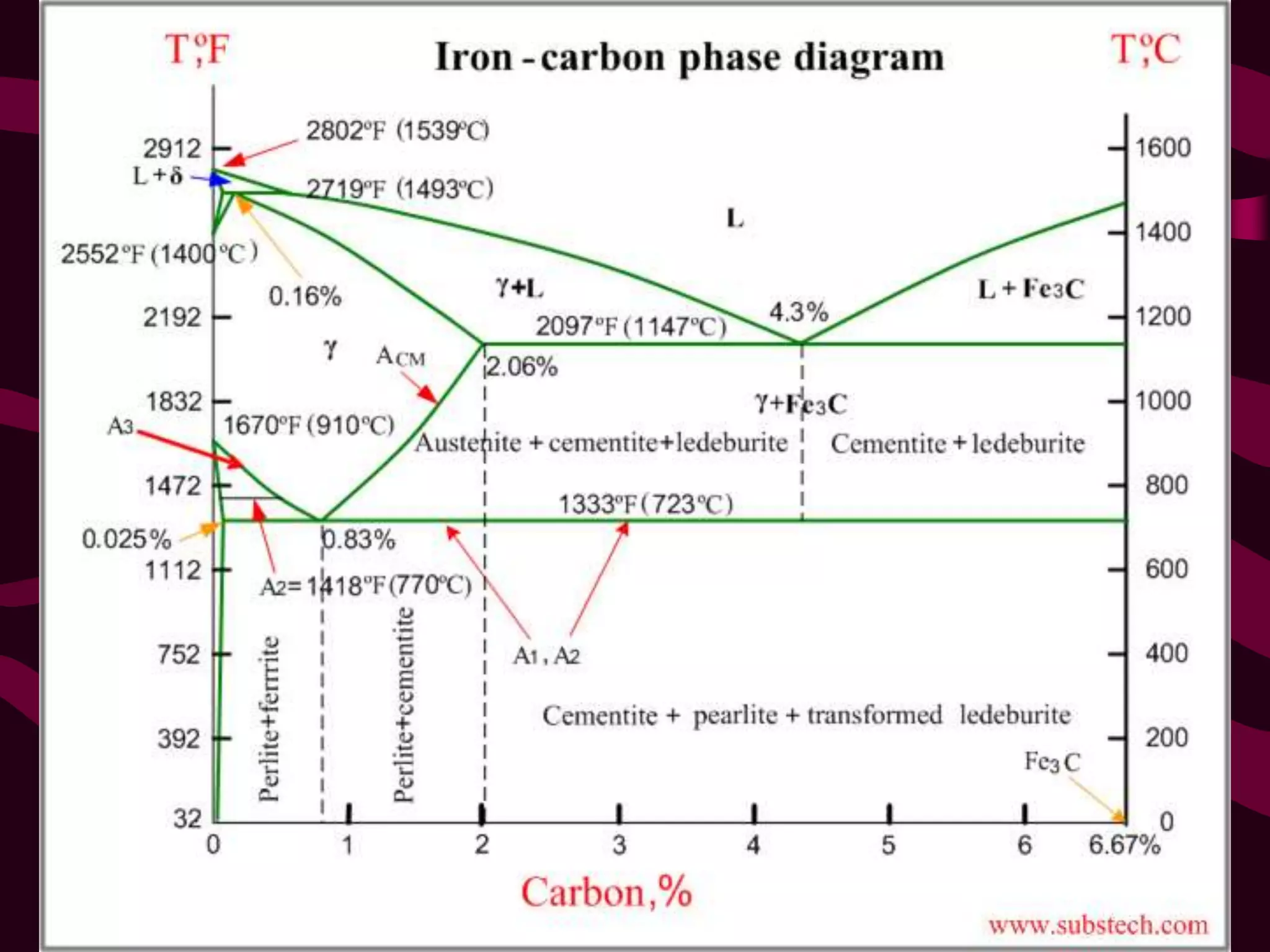
The Iron-Iron Carbide Phase Diagram
Heat Treatment of Steel
Features
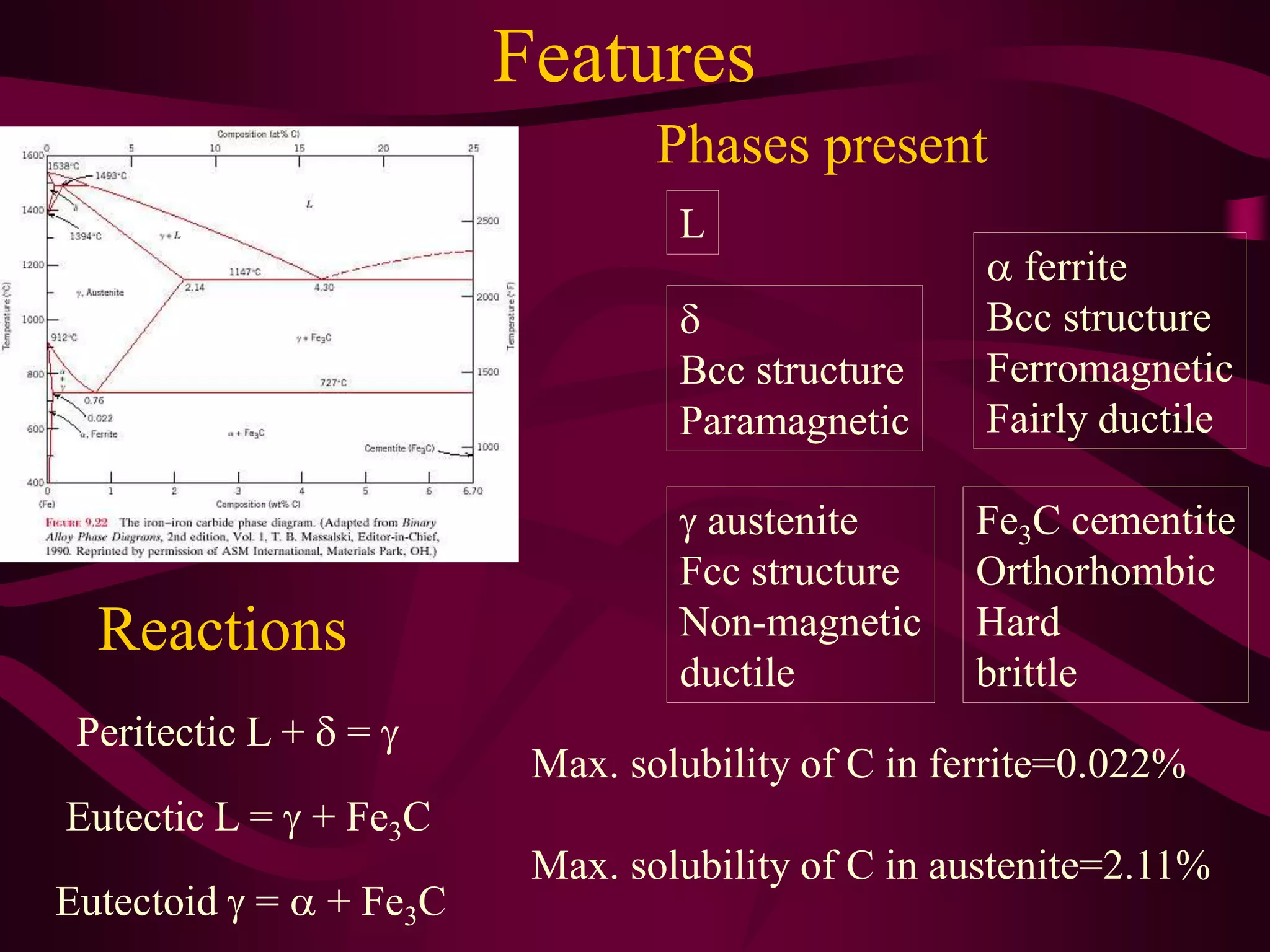
Peritectic L + d = g
Eutectic L = g + Fe3C
Eutectoid g = a + Fe3C
Phases present
L
Reactions
d
Bcc structure
Paramagnetic
g austenite
Fcc structure
Non-magnetic
ductile
a ferrite
Bcc structure
Ferromagnetic
Fairly ductile
Fe3C cementite
Orthorhombic
Hard
brittle
Max. solubility of C in ferrite=0.022%
Max. solubility of C in austenite=2.11%
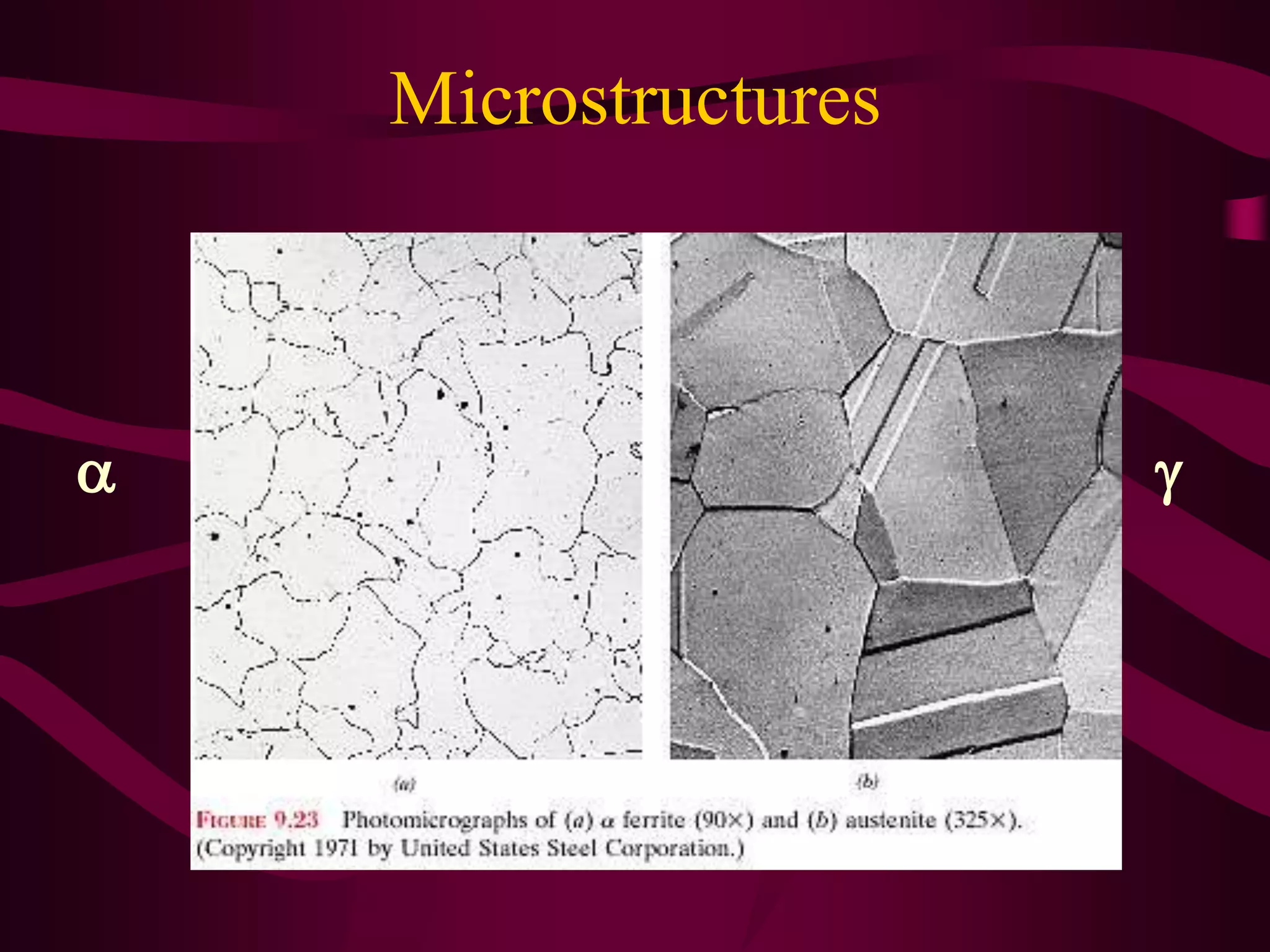
Microstructures
a g
Steels
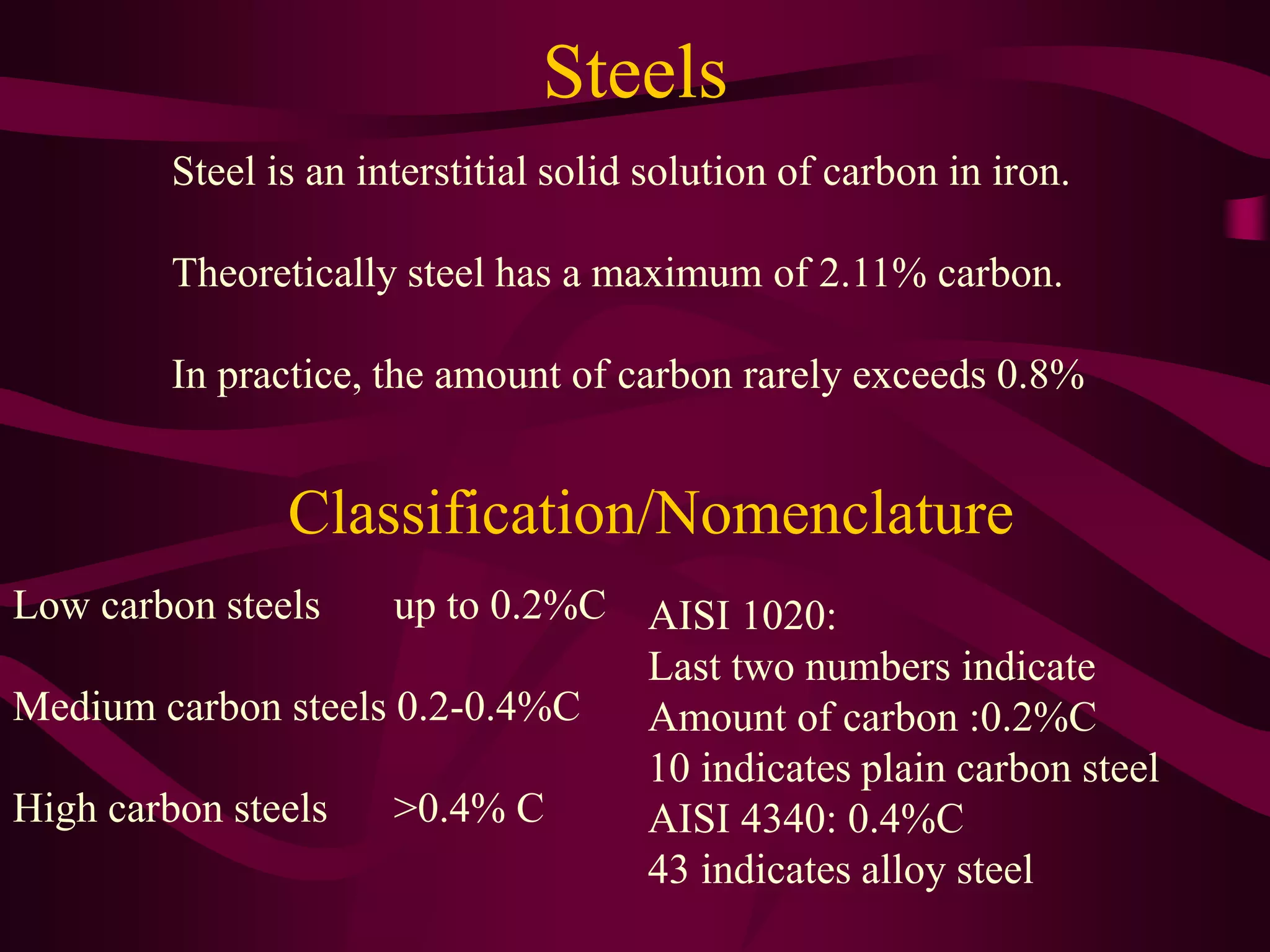
Steel is an interstitial solid solution of carbon in iron.
Theoretically steel has a maximum of 2.11% carbon.
In practice, the amount of carbon rarely exceeds 0.8%
Classification/Nomenclature
Low carbon steels up to 0.2%C
Medium carbon steels 0.2-0.4%C
High carbon steels >0.4% C
AISI 1020:
Last two numbers indicate
Amount of carbon :0.2%C
10 indicates plain carbon steel
AISI 4340: 0.4%C
43 indicates alloy steel
Microstructural changes in steel on
cooling for different compositions
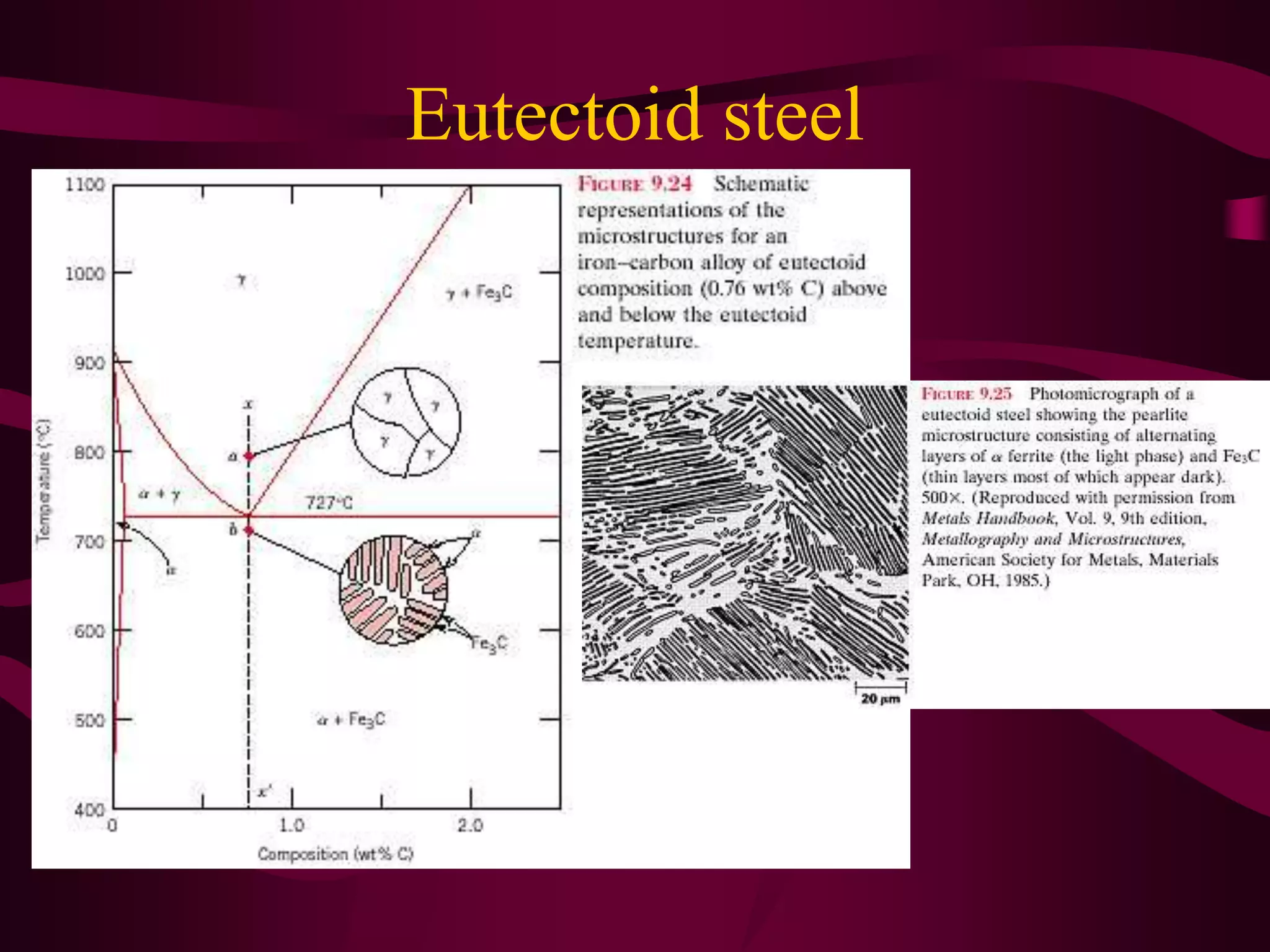
Eutectoid steel
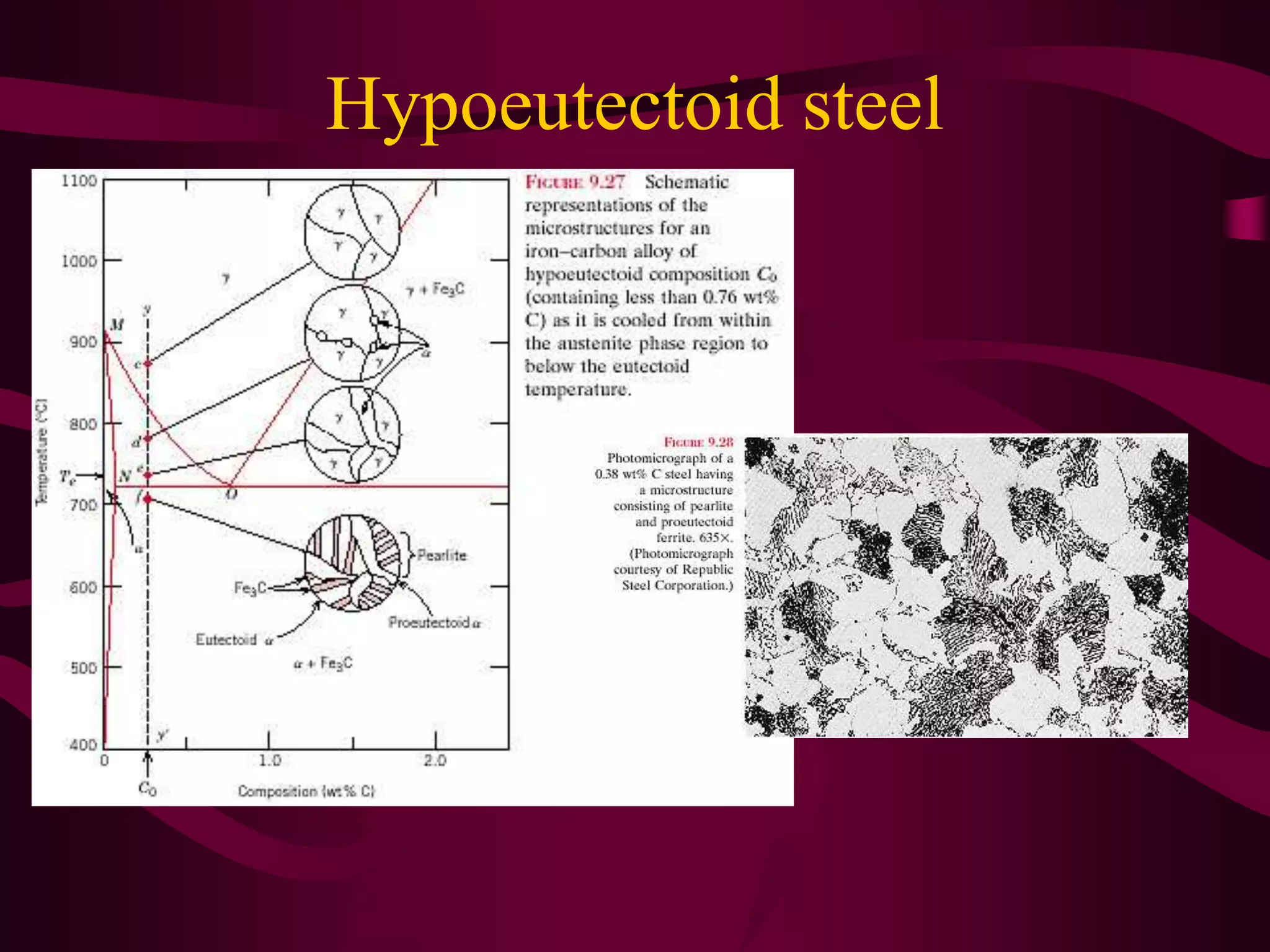
Hypoeutectoid steel
Hypereutectoid steel

Iron iron-carbide phase diagram

  • 1.
    The Iron-Iron CarbidePhase Diagram Heat Treatment of Steel
  • 4.
    Features Peritectic L +d = g Eutectic L = g + Fe3C Eutectoid g = a + Fe3C Phases present L Reactions d Bcc structure Paramagnetic g austenite Fcc structure Non-magnetic ductile a ferrite Bcc structure Ferromagnetic Fairly ductile Fe3C cementite Orthorhombic Hard brittle Max. solubility of C in ferrite=0.022% Max. solubility of C in austenite=2.11%
  • 5.
  • 6.
    Steels Steel is aninterstitial solid solution of carbon in iron. Theoretically steel has a maximum of 2.11% carbon. In practice, the amount of carbon rarely exceeds 0.8% Classification/Nomenclature Low carbon steels up to 0.2%C Medium carbon steels 0.2-0.4%C High carbon steels >0.4% C AISI 1020: Last two numbers indicate Amount of carbon :0.2%C 10 indicates plain carbon steel AISI 4340: 0.4%C 43 indicates alloy steel
  • 7.
    Microstructural changes insteel on cooling for different compositions
  • 8.
  • 9.
  • 10.