Adhesives and Grouts
Today’s Lesson
• Types of adhesives
• Properties of adhesives
• Applications of adhesives
• Types and uses of grout
• Health and Safety
Adhesive
• What is adhesive?
• Adhesive is a compound that adheres or
bonds two items together.
Types of tile adhesives
• In the tiling trade adhesives can be
categorised as the following.
• Cement Based
• Polymer Based
• Acrylic Based
Adhesives
• We are now going to discuss these adhesives
and look at
• What they consist of
• Where they are used
• How they are applied
• Health and safety
Cement based
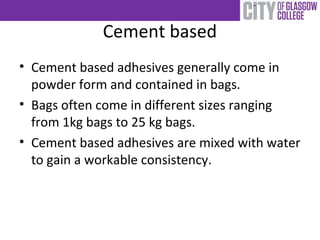
• Cement based adhesives generally come in
powder form and contained in bags.
• Bags often come in different sizes ranging
from 1kg bags to 25 kg bags.
• Cement based adhesives are mixed with water
to gain a workable consistency.
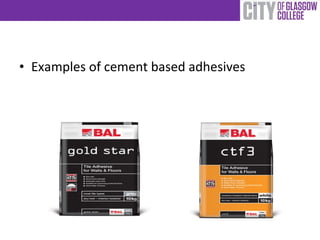
• Examples of cement based adhesives
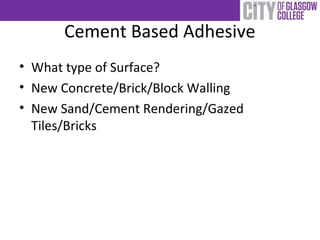
Cement Based Adhesive
• What type of Surface?
• New Concrete/Brick/Block Walling
• New Sand/Cement Rendering/Gazed
Tiles/Bricks
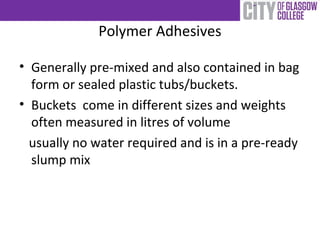
Polymer Adhesives
• Generally pre-mixed and also contained in bag
form or sealed plastic tubs/buckets.
• Buckets come in different sizes and weights
often measured in litres of volume
usually no water required and is in a pre-ready
slump mix
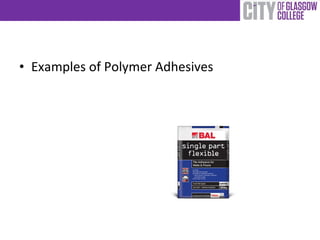
• Examples of Polymer Adhesives
Polymer Modified Adhesive
• What type of surfaces/backgrounds?
Acrylic Based Adhesive
• Acrylic Based are more commonly know as the
“ready mixed” adhesive.
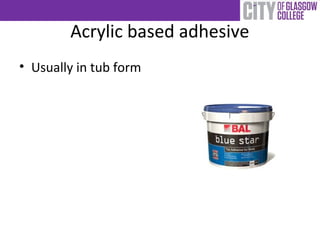
Acrylic based adhesive
• Usually in tub form
Ready Mixed
• What type of background/surfaces?
Using Tile Adhesives
• Always follow relative health and safety procedures
pertaining to manufactures instructions.
• Mix and apply adhesive following manufactures
instruction and specifications.
• Most of the information on the above can be found
on the back of the bucket or bag.
Application of adhesive
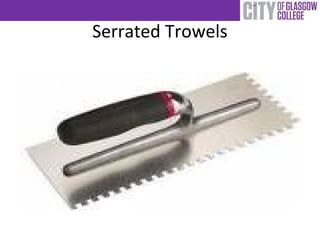
• A serrated/notch edge trowel is used to apply
the adhesive
• Trowels come in different sizes and notch
widths for different surfaces and tile formats
(size)
Serrated Trowels
Fixing to adhesive
• Wall tiles should be fixed using the twist and
slide method “pressed home” and floor tiles
“beaten down”
Grouts
• We are now going to discuss grouts used in
the Wall and Floor Tiling Industry
• We are going to discuss types of grout and
their suitable applications
Grouts
• What is Grout?
• Grout is a component used in construction to
infill between the joints of tiles.
• Tiling grouts usually come in three categories
• 1.cement based
• 2. epoxy
• 3. acrylic.
Grouts
• Cement based grouts are like cement based
adhesives usually come in powder form and
normally contained in bags.
• Water is added to the powder and is mixed to
a workable consistency
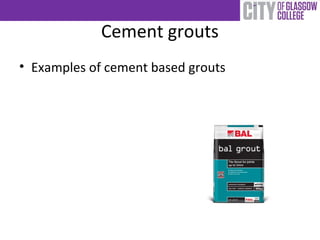
Cement grouts
• Examples of cement based grouts
Grouts
• Epoxy grout is usually used for areas of constant
water or high levels of chemicals such as
swimming pools, areas where food is served and
garages etc.
• Generally comes in two parts and is contained in
bucket form.
• Grouting by epoxy is usually slow and time
consuming.
• This product can cause allergic reactions to skin
and breathing and all H+S must be adhered to
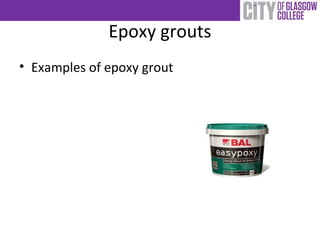
Epoxy grouts
• Examples of epoxy grout
Using tile grout
• All grouts should be used inconjuction with
manufactures specifications.
• Health and safety should be adhered to at all times.
• Details on application, specifications and health and
safety are usually found on the back of bags or
containers. You should refer to manufactures COSHH
or data sheets as only the basic Health and Safety is
give on packaging.
Application of grout
• Once prepared the grout is applied by the use
of a grouting trowel, scrappers and even
Skeleton gun depending on type of grout
used.
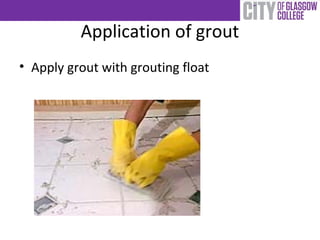
• Most common is the grouting float often
referred to as a squeegee
Application of grout
• Apply grout with grouting float
Summary
• Both adhesives and grouts share similar ingredients
and compounds but are used for entirely different
reasons.
• Additives for both can be used for
strengthening,flexibilty and enhance adhesives and
grouts.
• Since the advent of modern day tiling adhesives and
grouts, the trade has exploded and made it even
more accessible for people. As advances occur the
tiler must adapt and use all types of adhesives from
many new manufactures.

yujskooookkth

  • 1.
  • 2.
    Today’s Lesson • Typesof adhesives • Properties of adhesives • Applications of adhesives • Types and uses of grout • Health and Safety
  • 3.
    Adhesive • What isadhesive? • Adhesive is a compound that adheres or bonds two items together.
  • 4.
    Types of tileadhesives • In the tiling trade adhesives can be categorised as the following. • Cement Based • Polymer Based • Acrylic Based
  • 5.
    Adhesives • We arenow going to discuss these adhesives and look at • What they consist of • Where they are used • How they are applied • Health and safety
  • 6.
    Cement based • Cementbased adhesives generally come in powder form and contained in bags. • Bags often come in different sizes ranging from 1kg bags to 25 kg bags. • Cement based adhesives are mixed with water to gain a workable consistency.
  • 7.
    • Examples ofcement based adhesives
  • 8.
    Cement Based Adhesive •What type of Surface? • New Concrete/Brick/Block Walling • New Sand/Cement Rendering/Gazed Tiles/Bricks
  • 9.
    Polymer Adhesives • Generallypre-mixed and also contained in bag form or sealed plastic tubs/buckets. • Buckets come in different sizes and weights often measured in litres of volume usually no water required and is in a pre-ready slump mix
  • 10.
    • Examples ofPolymer Adhesives
  • 11.
    Polymer Modified Adhesive •What type of surfaces/backgrounds?
  • 12.
    Acrylic Based Adhesive •Acrylic Based are more commonly know as the “ready mixed” adhesive.
  • 13.
    Acrylic based adhesive •Usually in tub form
  • 14.
    Ready Mixed • Whattype of background/surfaces?
  • 15.
    Using Tile Adhesives •Always follow relative health and safety procedures pertaining to manufactures instructions. • Mix and apply adhesive following manufactures instruction and specifications. • Most of the information on the above can be found on the back of the bucket or bag.
  • 16.
    Application of adhesive •A serrated/notch edge trowel is used to apply the adhesive • Trowels come in different sizes and notch widths for different surfaces and tile formats (size)
  • 17.
  • 18.
    Fixing to adhesive •Wall tiles should be fixed using the twist and slide method “pressed home” and floor tiles “beaten down”
  • 19.
    Grouts • We arenow going to discuss grouts used in the Wall and Floor Tiling Industry • We are going to discuss types of grout and their suitable applications
  • 20.
    Grouts • What isGrout? • Grout is a component used in construction to infill between the joints of tiles. • Tiling grouts usually come in three categories • 1.cement based • 2. epoxy • 3. acrylic.
  • 21.
    Grouts • Cement basedgrouts are like cement based adhesives usually come in powder form and normally contained in bags. • Water is added to the powder and is mixed to a workable consistency
  • 22.
    Cement grouts • Examplesof cement based grouts
  • 23.
    Grouts • Epoxy groutis usually used for areas of constant water or high levels of chemicals such as swimming pools, areas where food is served and garages etc. • Generally comes in two parts and is contained in bucket form. • Grouting by epoxy is usually slow and time consuming. • This product can cause allergic reactions to skin and breathing and all H+S must be adhered to
  • 24.
  • 25.
    Using tile grout •All grouts should be used inconjuction with manufactures specifications. • Health and safety should be adhered to at all times. • Details on application, specifications and health and safety are usually found on the back of bags or containers. You should refer to manufactures COSHH or data sheets as only the basic Health and Safety is give on packaging.
  • 26.
    Application of grout •Once prepared the grout is applied by the use of a grouting trowel, scrappers and even Skeleton gun depending on type of grout used. • Most common is the grouting float often referred to as a squeegee
  • 27.
    Application of grout •Apply grout with grouting float
  • 28.
    Summary • Both adhesivesand grouts share similar ingredients and compounds but are used for entirely different reasons. • Additives for both can be used for strengthening,flexibilty and enhance adhesives and grouts. • Since the advent of modern day tiling adhesives and grouts, the trade has exploded and made it even more accessible for people. As advances occur the tiler must adapt and use all types of adhesives from many new manufactures.