GLASS
BLOCKS
Riya Naik
Sem VII
• The silico-sodo-calcium glass used is
obtained by fusion at approximately
1150°c of a silica mixture, sodium and
lime.
• Glass block is an unique building material and was developed in the 1900’s to provide
natural light in manufacturing plants.
• It has a dynamic relationship with light—both natural and artificial. As light changes so do
the material’s appearance and the surrounding environment. Basically, glass blocks are
architectural elements which consist of glass.
Description
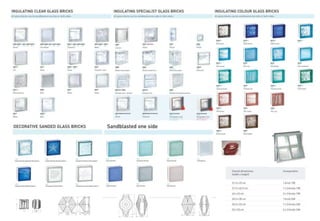
• The unit can be hollow or solid and comes in a wide variety of sizes,
dimensions, styles, colors, opacity, and construction depending on the
intended application. They come in individual blocks or pre-assembled
panels.
• The most commonly used units are square (6-, 8-, or 12-inch sizes).
Rectangular units (4x8-inch and 6x8-inch) are also available, as are bull-
nosed edge blocks for finishing horizontal and vertical panels, and various
corner and angular blocks.
• TYPES
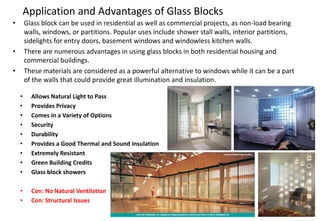
• Allows Natural Light to Pass
• Provides Privacy
• Comes in a Variety of Options
• Security
• Durability
• Provides a Good Thermal and Sound Insulation
• Extremely Resistant
• Green Building Credits
• Glass block showers
• Con: No Natural Ventilation
• Con: Structural Issues
Application and Advantages of Glass Blocks
• Glass block can be used in residential as well as commercial projects, as non-load bearing
walls, windows, or partitions. Popular uses include shower stall walls, interior partitions,
sidelights for entry doors, basement windows and windowless kitchen walls.
• There are numerous advantages in using glass blocks in both residential housing and
commercial buildings.
• These materials are considered as a powerful alternative to windows while it can be a part
of the walls that could provide great illumination and insulation.
• One important factor to consider is that glass block is NOT load bearing. There needs to be
structural support below, above, and on both sides of the glass block panel, in addition to
any necessary anchors or reinforcing rods.
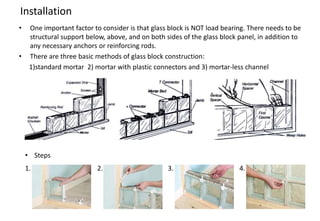
• There are three basic methods of glass block construction:
1)standard mortar 2) mortar with plastic connectors and 3) mortar-less channel
Installation
1. 2. 3. 4.
• Steps
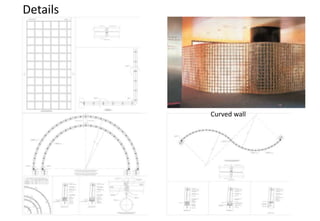
Details
Curved wall
Details
Examples
• Ravi Malde Architects, Mumbai
Office – Glass blocks used for the partition wall.
• Optical Glass House, Japan
by Hiroshi Nakamura and his studio NAP
• Maastricht's Academy of Arts & Architecture, Netherlands by Wiel Arets.
• Glass blocks used for the exterior walls and flooring.
• Structure that houses workshops and offices, a shopping space, exhibition areas and multimedia
quarters.
• Maison Hermes, Japan.
by Renzo Piano
• http://www.larochere-bati.com/uploads/pdf/BV_16p_english_210715.pdf
• http://www.lifeofanarchitect.com/la-mort-aux-blocs-de-verre-death-to-glass-blocks/
• https://www.slideshare.net/latestfashionindia/glass-bricks-meaning-usage-and-
advantages?qid=ce4f773d-ef47-40f5-ac30-74a8ae9006dd&v=&b=&from_search=1
• http://www.lislehomeinspection.com/repair-tips/installing-glass-block/#mortar-with-plastic
• https://www.slideshare.net/chicagoglassblocks/why-do-you-need-glass-blocks-for-you-home
• https://www.slideshare.net/chicagoglassblocks/arque-glass-blocks-icescape-best-design-for-shower-wall
• https://continuingeducation.bnpmedia.com/courses/pittsburgh-corning/designing-with-glass-block-
abundant-applications-provide-practical-aesthetic-and-green-solutions/1/
• https://www.researchgate.net/profile/Kristel_De_Vis/publication/271523784_The_use_of_glass_bricks_i
n_architecture_in_the_19th_and_20th_centuries_a_case_study/links/54cb709f0cf2240c27e7e0cd.pdf
• http://www.designboom.com/architecture/hiroshi-nakamura-nap-optical-glass-house/
• http://www.archaic-mag.com/academy-of-art-architecture-wiel-arets-architects/
• https://en.wikipedia.org/wiki/Glass_brick
• http://www.glassblockproducts.com/installationguide.html
• https://www.fastrackcad.com/CADFrame.asp?Company_id=107&LevelEC=0&Level0=Glassblock
References

Glass blocks

  • 1.
  • 2.
    • The silico-sodo-calciumglass used is obtained by fusion at approximately 1150°c of a silica mixture, sodium and lime. • Glass block is an unique building material and was developed in the 1900’s to provide natural light in manufacturing plants. • It has a dynamic relationship with light—both natural and artificial. As light changes so do the material’s appearance and the surrounding environment. Basically, glass blocks are architectural elements which consist of glass. Description • The unit can be hollow or solid and comes in a wide variety of sizes, dimensions, styles, colors, opacity, and construction depending on the intended application. They come in individual blocks or pre-assembled panels. • The most commonly used units are square (6-, 8-, or 12-inch sizes). Rectangular units (4x8-inch and 6x8-inch) are also available, as are bull- nosed edge blocks for finishing horizontal and vertical panels, and various corner and angular blocks.
  • 3.
  • 4.
    • Allows NaturalLight to Pass • Provides Privacy • Comes in a Variety of Options • Security • Durability • Provides a Good Thermal and Sound Insulation • Extremely Resistant • Green Building Credits • Glass block showers • Con: No Natural Ventilation • Con: Structural Issues Application and Advantages of Glass Blocks • Glass block can be used in residential as well as commercial projects, as non-load bearing walls, windows, or partitions. Popular uses include shower stall walls, interior partitions, sidelights for entry doors, basement windows and windowless kitchen walls. • There are numerous advantages in using glass blocks in both residential housing and commercial buildings. • These materials are considered as a powerful alternative to windows while it can be a part of the walls that could provide great illumination and insulation.
  • 5.
    • One importantfactor to consider is that glass block is NOT load bearing. There needs to be structural support below, above, and on both sides of the glass block panel, in addition to any necessary anchors or reinforcing rods. • There are three basic methods of glass block construction: 1)standard mortar 2) mortar with plastic connectors and 3) mortar-less channel Installation 1. 2. 3. 4. • Steps
  • 6.
  • 7.
  • 8.
    Examples • Ravi MaldeArchitects, Mumbai Office – Glass blocks used for the partition wall.
  • 9.
    • Optical GlassHouse, Japan by Hiroshi Nakamura and his studio NAP
  • 10.
    • Maastricht's Academyof Arts & Architecture, Netherlands by Wiel Arets. • Glass blocks used for the exterior walls and flooring.
  • 11.
    • Structure thathouses workshops and offices, a shopping space, exhibition areas and multimedia quarters. • Maison Hermes, Japan. by Renzo Piano
  • 12.
    • http://www.larochere-bati.com/uploads/pdf/BV_16p_english_210715.pdf • http://www.lifeofanarchitect.com/la-mort-aux-blocs-de-verre-death-to-glass-blocks/ •https://www.slideshare.net/latestfashionindia/glass-bricks-meaning-usage-and- advantages?qid=ce4f773d-ef47-40f5-ac30-74a8ae9006dd&v=&b=&from_search=1 • http://www.lislehomeinspection.com/repair-tips/installing-glass-block/#mortar-with-plastic • https://www.slideshare.net/chicagoglassblocks/why-do-you-need-glass-blocks-for-you-home • https://www.slideshare.net/chicagoglassblocks/arque-glass-blocks-icescape-best-design-for-shower-wall • https://continuingeducation.bnpmedia.com/courses/pittsburgh-corning/designing-with-glass-block- abundant-applications-provide-practical-aesthetic-and-green-solutions/1/ • https://www.researchgate.net/profile/Kristel_De_Vis/publication/271523784_The_use_of_glass_bricks_i n_architecture_in_the_19th_and_20th_centuries_a_case_study/links/54cb709f0cf2240c27e7e0cd.pdf • http://www.designboom.com/architecture/hiroshi-nakamura-nap-optical-glass-house/ • http://www.archaic-mag.com/academy-of-art-architecture-wiel-arets-architects/ • https://en.wikipedia.org/wiki/Glass_brick • http://www.glassblockproducts.com/installationguide.html • https://www.fastrackcad.com/CADFrame.asp?Company_id=107&LevelEC=0&Level0=Glassblock References