Contents 
•Introduction 
•Types 
•Application Procedure 
•Efficiency 
•Advantages 
•Disadvantages 
•Conclusion
Introduction 
• Origin 
• Development 
• Growth 
• Scope 
• Features
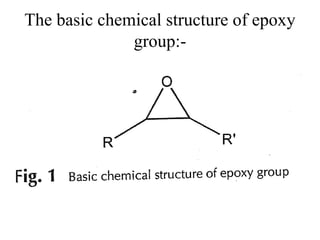
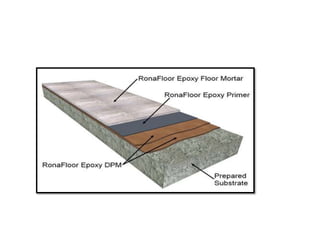
The basic chemical structure of epoxy 
group:-
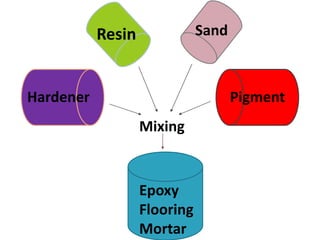
Resin Sand 
Hardener Pigment 
Mixing 
Epoxy 
Flooring 
Mortar
Types 
•Epoxy Flooring 
•Polyurethane Flooring(PU Flooring) 
•Antistatic Flooring 
•Anti Skid Flooring
Application 
Procedure
HOW TO START?????
Procedure 
1. Surface Preparation 
2. Priming Of Surface 
3. Mixing 
4. Application 
5. Clean up
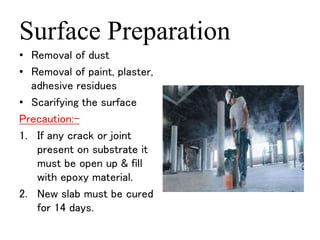
Surface Preparation 
• Removal of dust 
• Removal of paint, plaster, 
adhesive residues 
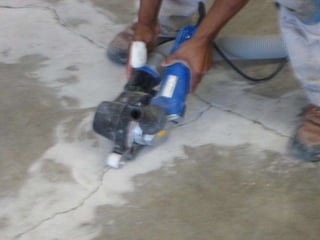
• Scarifying the surface 
Precaution:- 
1. If any crack or joint 
present on substrate it 
must be open up & fill 
with epoxy material. 
2. New slab must be cured 
for 14 days.
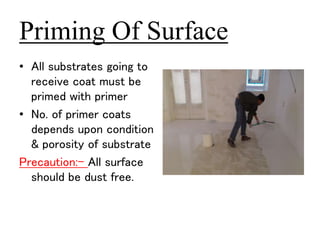
Priming Of Surface 
• All substrates going to 
receive coat must be 
primed with primer 
• No. of primer coats 
depends upon condition 
& porosity of substrate 
Precaution:- All surface 
should be dust free.
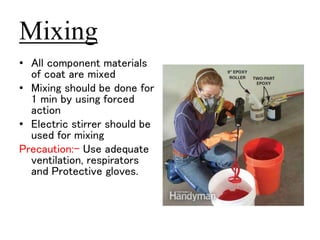
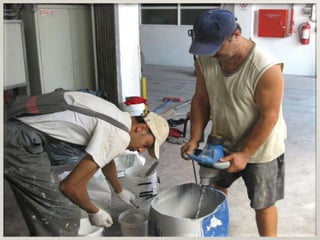
Mixing 
• All component materials 
of coat are mixed 
• Mixing should be done for 
1 min by using forced 
action 
• Electric stirrer should be 
used for mixing 
Precaution:- Use adequate 
ventilation, respirators 
and Protective gloves.
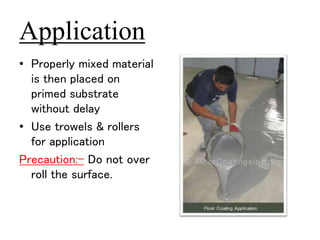
Application 
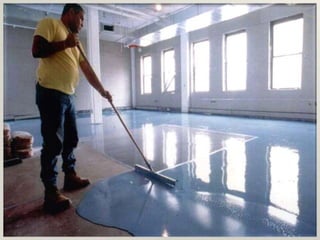
• Properly mixed material 
is then placed on 
primed substrate 
without delay 
• Use trowels & rollers 
for application 
Precaution:- Do not over 
roll the surface.
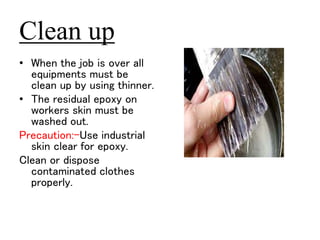
Clean up 
• When the job is over all 
equipments must be 
clean up by using thinner. 
• The residual epoxy on 
workers skin must be 
washed out. 
Precaution:-Use industrial 
skin clear for epoxy. 
Clean or dispose 
contaminated clothes 
properly.
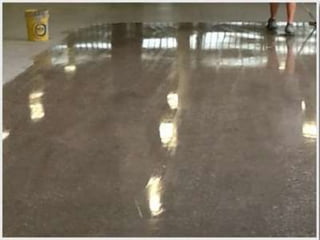
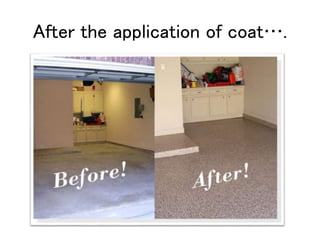
After the application of coat….
Efficiency 
• Joint less flooring 
• Provides more clean and hygienic condition 
• 5-6 mm thick PU flooring has same bearing 
strength as concrete 
• Saves manpower and time efficiently.
Advantages 
• Long lasting surface 
• Very low maintenance cost 
• Very much resistant to hard wearing, abrasion 
• Resistant to a wide chemicals & liquids 
• Seamless-easily cleaned to maintain high 
standards of hygiene 
• Much suitable in food & drinks production 
environment
Disadvantages 
• High initial cost. 
For ex. Depending upon thickness (mm) cost 
is 700 Rs./Sq. Mt to 2000 Rs/sq. Mt 
• Require skilled labor and guidance.
Conclusion 
• Epoxy flooring is a modern technique. 
• It can be prove more reliable than 
conventional flooring. 
• It has wide range of scope in Indian 
industries. 
• More research has to be made so that to 
make it much affordable.
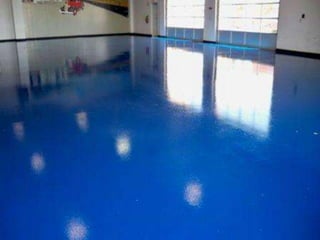
Epoxy Flooring

Epoxy Flooring

  • 3.
    Contents •Introduction •Types •Application Procedure •Efficiency •Advantages •Disadvantages •Conclusion
  • 4.
    Introduction • Origin • Development • Growth • Scope • Features
  • 5.
    The basic chemicalstructure of epoxy group:-
  • 6.
    Resin Sand HardenerPigment Mixing Epoxy Flooring Mortar
  • 7.
    Types •Epoxy Flooring •Polyurethane Flooring(PU Flooring) •Antistatic Flooring •Anti Skid Flooring
  • 8.
  • 9.
  • 10.
    Procedure 1. SurfacePreparation 2. Priming Of Surface 3. Mixing 4. Application 5. Clean up
  • 12.
    Surface Preparation •Removal of dust • Removal of paint, plaster, adhesive residues • Scarifying the surface Precaution:- 1. If any crack or joint present on substrate it must be open up & fill with epoxy material. 2. New slab must be cured for 14 days.
  • 14.
    Priming Of Surface • All substrates going to receive coat must be primed with primer • No. of primer coats depends upon condition & porosity of substrate Precaution:- All surface should be dust free.
  • 16.
    Mixing • Allcomponent materials of coat are mixed • Mixing should be done for 1 min by using forced action • Electric stirrer should be used for mixing Precaution:- Use adequate ventilation, respirators and Protective gloves.
  • 18.
    Application • Properlymixed material is then placed on primed substrate without delay • Use trowels & rollers for application Precaution:- Do not over roll the surface.
  • 20.
    Clean up •When the job is over all equipments must be clean up by using thinner. • The residual epoxy on workers skin must be washed out. Precaution:-Use industrial skin clear for epoxy. Clean or dispose contaminated clothes properly.
  • 21.
  • 22.
    Efficiency • Jointless flooring • Provides more clean and hygienic condition • 5-6 mm thick PU flooring has same bearing strength as concrete • Saves manpower and time efficiently.
  • 23.
    Advantages • Longlasting surface • Very low maintenance cost • Very much resistant to hard wearing, abrasion • Resistant to a wide chemicals & liquids • Seamless-easily cleaned to maintain high standards of hygiene • Much suitable in food & drinks production environment
  • 24.
    Disadvantages • Highinitial cost. For ex. Depending upon thickness (mm) cost is 700 Rs./Sq. Mt to 2000 Rs/sq. Mt • Require skilled labor and guidance.
  • 25.
    Conclusion • Epoxyflooring is a modern technique. • It can be prove more reliable than conventional flooring. • It has wide range of scope in Indian industries. • More research has to be made so that to make it much affordable.