ACTIVITY 1.1 Edible Plant Parts: “What’s for Lunch? 
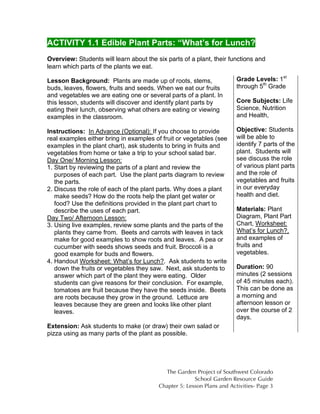
Overview: Students will learn about the six parts of a plant, their functions and 
learn which parts of the plants we eat. 
Lesson Background: Plants are made up of roots, stems, 
buds, leaves, flowers, fruits and seeds. When we eat our fruits 
and vegetables we are eating one or several parts of a plant. In 
this lesson, students will discover and identify plant parts by 
eating their lunch, observing what others are eating or viewing 
examples in the classroom. 
Instructions: In Advance (Optional): If you choose to provide 
real examples either bring in examples of fruit or vegetables (see 
examples in the plant chart), ask students to bring in fruits and 
vegetables from home or take a trip to your school salad bar. 
Day One/ Morning Lesson: 
1. Start by reviewing the parts of a plant and review the 
purposes of each part. Use the plant parts diagram to review 
the parts. 
2. Discuss the role of each of the plant parts. Why does a plant 
make seeds? How do the roots help the plant get water or 
food? Use the definitions provided in the plant part chart to 
describe the uses of each part. 
Day Two/ Afternoon Lesson: 
3. Using live examples, review some plants and the parts of the 
plants they came from. Beets and carrots with leaves in tack 
make for good examples to show roots and leaves. A pea or 
cucumber with seeds shows seeds and fruit. Broccoli is a 
good example for buds and flowers. 
4. Handout Worksheet: What’s for Lunch?. Ask students to write 
down the fruits or vegetables they saw. Next, ask students to 
answer which part of the plant they were eating. Older 
students can give reasons for their conclusion. For example, 
tomatoes are fruit because they have the seeds inside. Beets 
are roots because they grow in the ground. Lettuce are 
leaves because they are green and looks like other plant 
leaves. 
Extension: Ask students to make (or draw) their own salad or 
pizza using as many parts of the plant as possible. 
Grade Levels: 1st 
through 5th Grade 
Core Subjects: Life 
Science, Nutrition 
and Health, 
Objective: Students 
will be able to 
identify 7 parts of the 
plant. Students will 
see discuss the role 
of various plant parts 
and the role of 
vegetables and fruits 
in our everyday 
health and diet. 
Materials: Plant 
Diagram, Plant Part 
Chart, Worksheet: 
What’s for Lunch?, 
and examples of 
fruits and 
vegetables. 
Duration: 90 
minutes (2 sessions 
of 45 minutes each). 
This can be done as 
a morning and 
afternoon lesson or 
over the course of 2 
days. 
The Garden Project of Southwest Colorado 
School Garden Resource Guide 
Chapter 5: Lesson Plans and Activities- Page 3
The Garden Project of Southwest Colorado 
School Garden Resource Guide 
Chapter 5: Lesson Plans and Activities- Page 4 
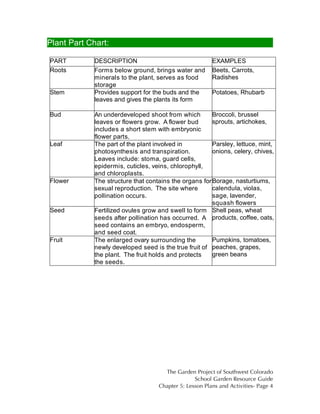
Plant Part Chart: 
PART DESCRIPTION EXAMPLES 
Roots Forms below ground, brings water and 
minerals to the plant, serves as food 
storage 
Beets, Carrots, 
Radishes 
Stem Provides support for the buds and the 
leaves and gives the plants its form 
Potatoes, Rhubarb 
Bud An underdeveloped shoot from which 
leaves or flowers grow. A flower bud 
includes a short stem with embryonic 
flower parts. 
Broccoli, brussel 
sprouts, artichokes, 
Leaf The part of the plant involved in 
photosynthesis and transpiration. 
Leaves include: stoma, guard cells, 
epidermis, cuticles, veins, chlorophyll, 
and chloroplasts. 
Parsley, lettuce, mint, 
onions, celery, chives, 
Flower The structure that contains the organs for 
sexual reproduction. The site where 
pollination occurs. 
Borage, nasturtiums, 
calendula, violas, 
sage, lavender, 
squash flowers 
Seed Fertilized ovules grow and swell to form 
seeds after pollination has occurred. A 
seed contains an embryo, endosperm, 
and seed coat. 
Shell peas, wheat 
products, coffee, oats, 
Fruit The enlarged ovary surrounding the 
newly developed seed is the true fruit of 
the plant. The fruit holds and protects 
the seeds. 
Pumpkins, tomatoes, 
peaches, grapes, 
green beans
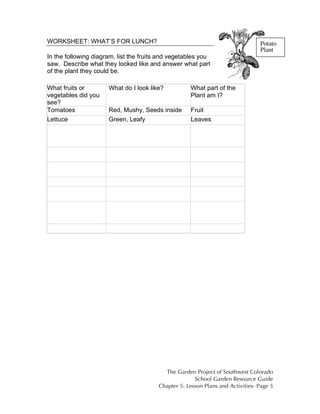
WORKSHEET: WHAT’S FOR LUNCH? 
In the following diagram, list the fruits and vegetables you 
saw. Describe what they looked like and answer what part 
of the plant they could be. 
The Garden Project of Southwest Colorado 
School Garden Resource Guide 
Chapter 5: Lesson Plans and Activities- Page 5 
What fruits or 
vegetables did you 
see? 
What do I look like? What part of the 
Plant am I? 
Tomatoes Red, Mushy, Seeds inside Fruit 
Lettuce Green, Leafy Leaves 
Potato 
Plant

Colorado School Garden Lesson Plan a1: Edible Plant Parts: What’s for Lunch

  • 1.
    ACTIVITY 1.1 EdiblePlant Parts: “What’s for Lunch? Overview: Students will learn about the six parts of a plant, their functions and learn which parts of the plants we eat. Lesson Background: Plants are made up of roots, stems, buds, leaves, flowers, fruits and seeds. When we eat our fruits and vegetables we are eating one or several parts of a plant. In this lesson, students will discover and identify plant parts by eating their lunch, observing what others are eating or viewing examples in the classroom. Instructions: In Advance (Optional): If you choose to provide real examples either bring in examples of fruit or vegetables (see examples in the plant chart), ask students to bring in fruits and vegetables from home or take a trip to your school salad bar. Day One/ Morning Lesson: 1. Start by reviewing the parts of a plant and review the purposes of each part. Use the plant parts diagram to review the parts. 2. Discuss the role of each of the plant parts. Why does a plant make seeds? How do the roots help the plant get water or food? Use the definitions provided in the plant part chart to describe the uses of each part. Day Two/ Afternoon Lesson: 3. Using live examples, review some plants and the parts of the plants they came from. Beets and carrots with leaves in tack make for good examples to show roots and leaves. A pea or cucumber with seeds shows seeds and fruit. Broccoli is a good example for buds and flowers. 4. Handout Worksheet: What’s for Lunch?. Ask students to write down the fruits or vegetables they saw. Next, ask students to answer which part of the plant they were eating. Older students can give reasons for their conclusion. For example, tomatoes are fruit because they have the seeds inside. Beets are roots because they grow in the ground. Lettuce are leaves because they are green and looks like other plant leaves. Extension: Ask students to make (or draw) their own salad or pizza using as many parts of the plant as possible. Grade Levels: 1st through 5th Grade Core Subjects: Life Science, Nutrition and Health, Objective: Students will be able to identify 7 parts of the plant. Students will see discuss the role of various plant parts and the role of vegetables and fruits in our everyday health and diet. Materials: Plant Diagram, Plant Part Chart, Worksheet: What’s for Lunch?, and examples of fruits and vegetables. Duration: 90 minutes (2 sessions of 45 minutes each). This can be done as a morning and afternoon lesson or over the course of 2 days. The Garden Project of Southwest Colorado School Garden Resource Guide Chapter 5: Lesson Plans and Activities- Page 3
  • 2.
    The Garden Projectof Southwest Colorado School Garden Resource Guide Chapter 5: Lesson Plans and Activities- Page 4 Plant Part Chart: PART DESCRIPTION EXAMPLES Roots Forms below ground, brings water and minerals to the plant, serves as food storage Beets, Carrots, Radishes Stem Provides support for the buds and the leaves and gives the plants its form Potatoes, Rhubarb Bud An underdeveloped shoot from which leaves or flowers grow. A flower bud includes a short stem with embryonic flower parts. Broccoli, brussel sprouts, artichokes, Leaf The part of the plant involved in photosynthesis and transpiration. Leaves include: stoma, guard cells, epidermis, cuticles, veins, chlorophyll, and chloroplasts. Parsley, lettuce, mint, onions, celery, chives, Flower The structure that contains the organs for sexual reproduction. The site where pollination occurs. Borage, nasturtiums, calendula, violas, sage, lavender, squash flowers Seed Fertilized ovules grow and swell to form seeds after pollination has occurred. A seed contains an embryo, endosperm, and seed coat. Shell peas, wheat products, coffee, oats, Fruit The enlarged ovary surrounding the newly developed seed is the true fruit of the plant. The fruit holds and protects the seeds. Pumpkins, tomatoes, peaches, grapes, green beans
  • 3.
    WORKSHEET: WHAT’S FORLUNCH? In the following diagram, list the fruits and vegetables you saw. Describe what they looked like and answer what part of the plant they could be. The Garden Project of Southwest Colorado School Garden Resource Guide Chapter 5: Lesson Plans and Activities- Page 5 What fruits or vegetables did you see? What do I look like? What part of the Plant am I? Tomatoes Red, Mushy, Seeds inside Fruit Lettuce Green, Leafy Leaves Potato Plant