Soft tissue swellings
• Lipoma
• Sebaceous cysts
• Warts
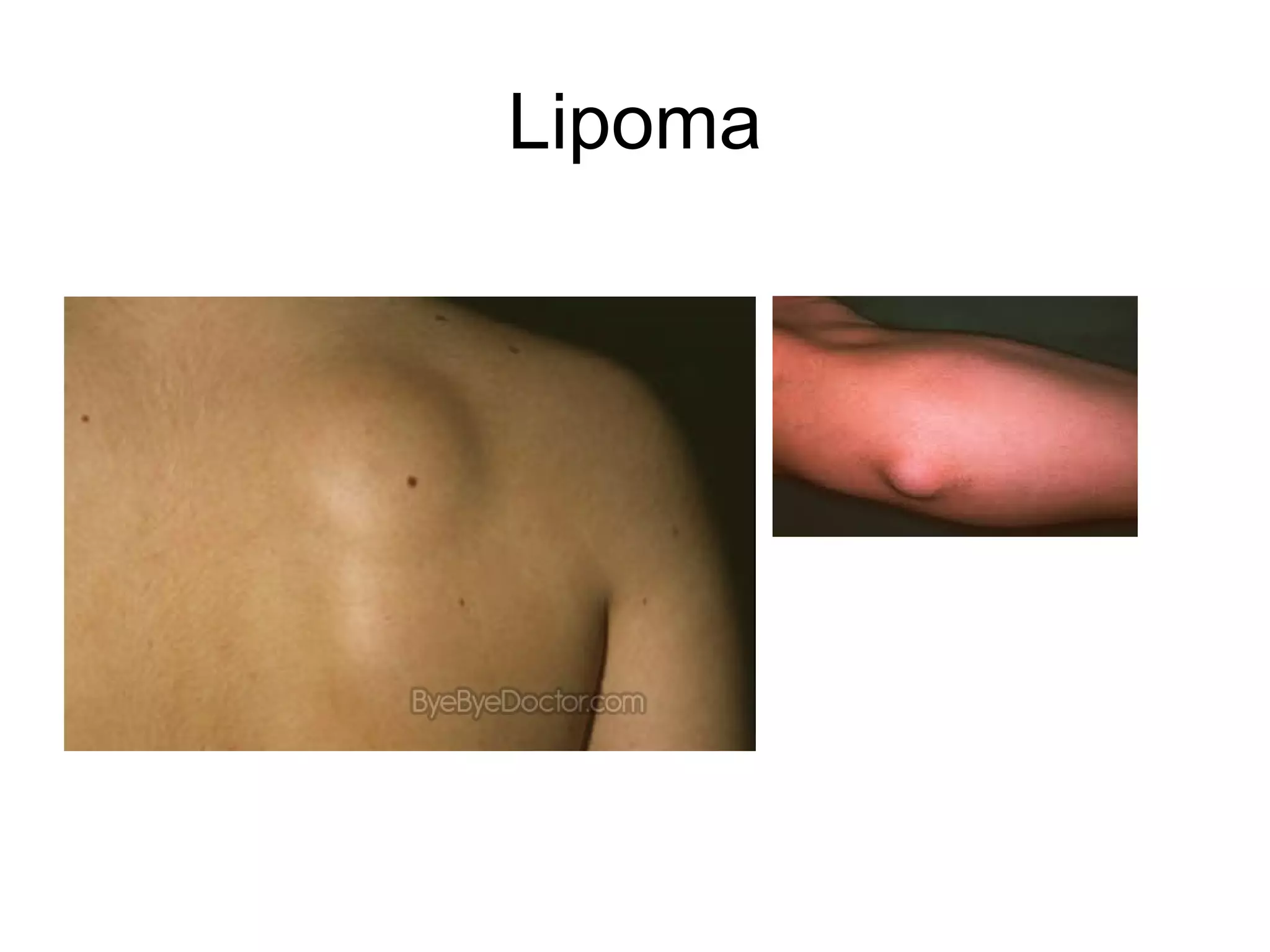
Lipoma
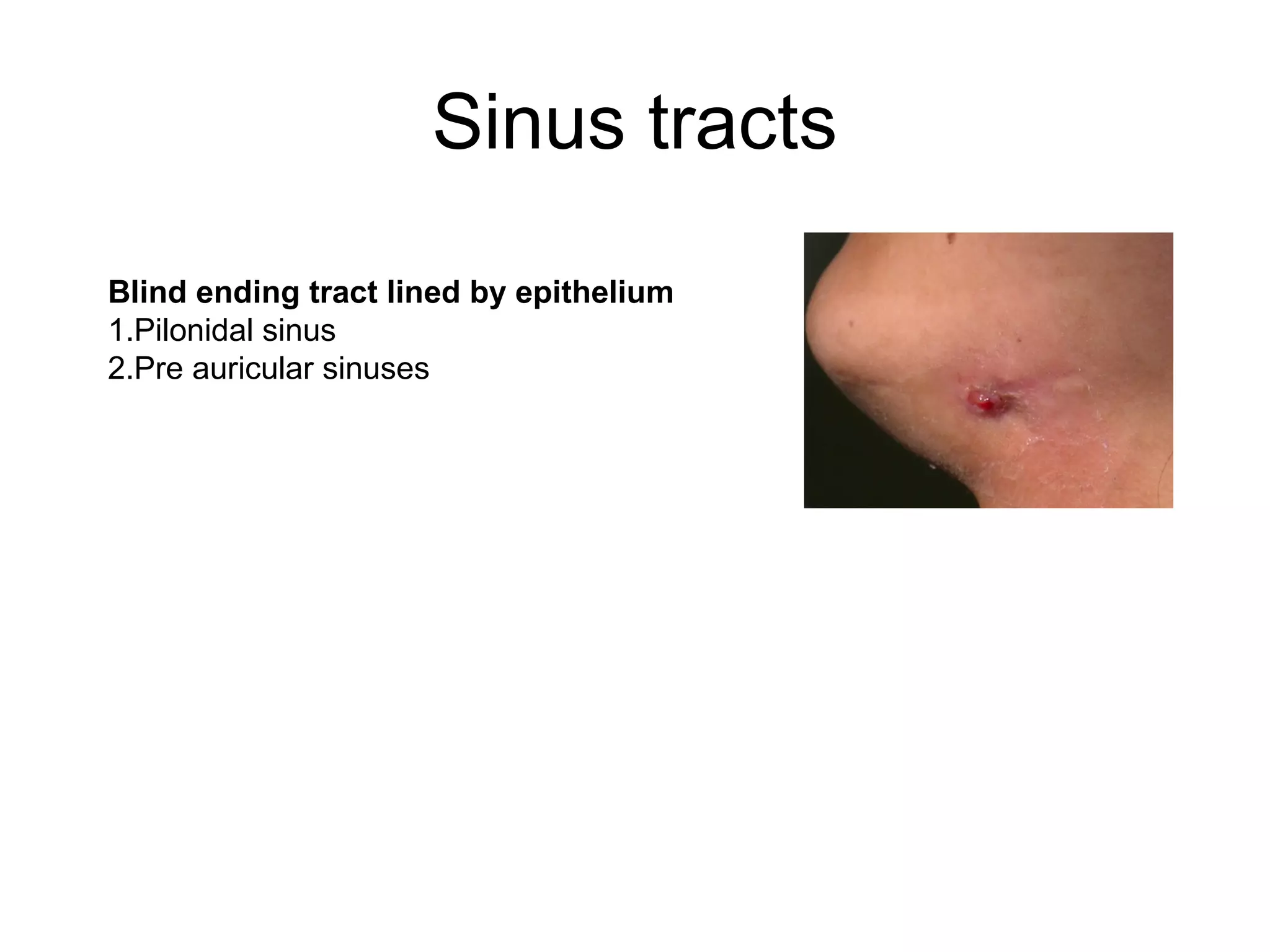
Sinus tracts
Blind ending tract lined by epithelium
1.Pilonidal sinus
2.Pre auricular sinuses
Sinus Tracts
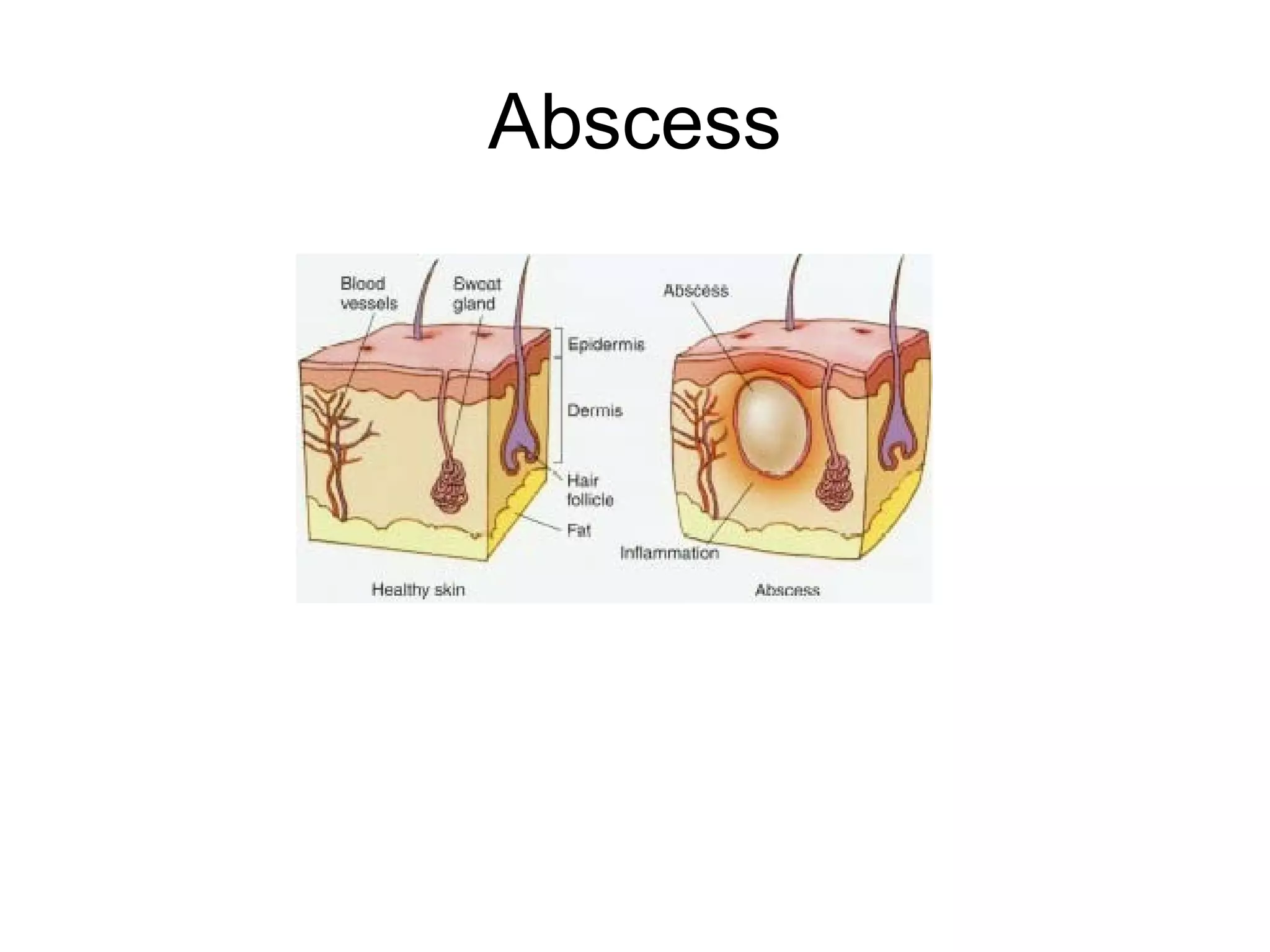
Abscess
DEFINITION
• Abcesses are localized infections of tissue marked
by a collection of pus and surrounded by inflamed
tissue.
• They may be found in any area of the body, but most
present on the extremities, buttocks, breast, perianal
area or from the base of a hair follicle.
• Abcesses begin when normal skin barrier is
breached and microorganisms invade the underlying
tissue and also in immunecompromised patients
such as diabetes and chemotherapy patients .
INDICATIONS
• A fluctulant abcess on the skin that is papable
• It does not resolve with conservative measures, e.g.
warm compress and antibiotics
• Causative organisms commonly include
streptococcous, staphylococcus, enteric bacteria
and gram – negative organisms
• Extremely large abscesses which require extensive incision,
debridement, or irrigation; they are best done in Operation
room.
• Deep abscesses in very sensitive areas - supralevator,
ischiorectal, perirectal - these require general anesthetic to
obtain proper exposure
• Palmar space abscesses, or abscesses in the deep plantar
spaces
• Abscesses in the nasolabial folds – they may drain to
cavernous sinus and this area is known as dangerous area.
• intra abdominal abscesses and bone abscesses known as
osteomilitis are difficult to treat.
MATERIALS
• Universal precautions materials i.e. gloves, surgical mask,
surgical gown
• 2% lidocaine WITH epinephrine for local anesthesia, 10 cc
syringe and 25 gauge needle for infiltration
• Skin prep solution ( pyodine)
• #11 scalpel blade with handle
• Draping
• Guaze
• Hemostat, scissors, packing
• Tape
• Culture swab
PROCEDURE
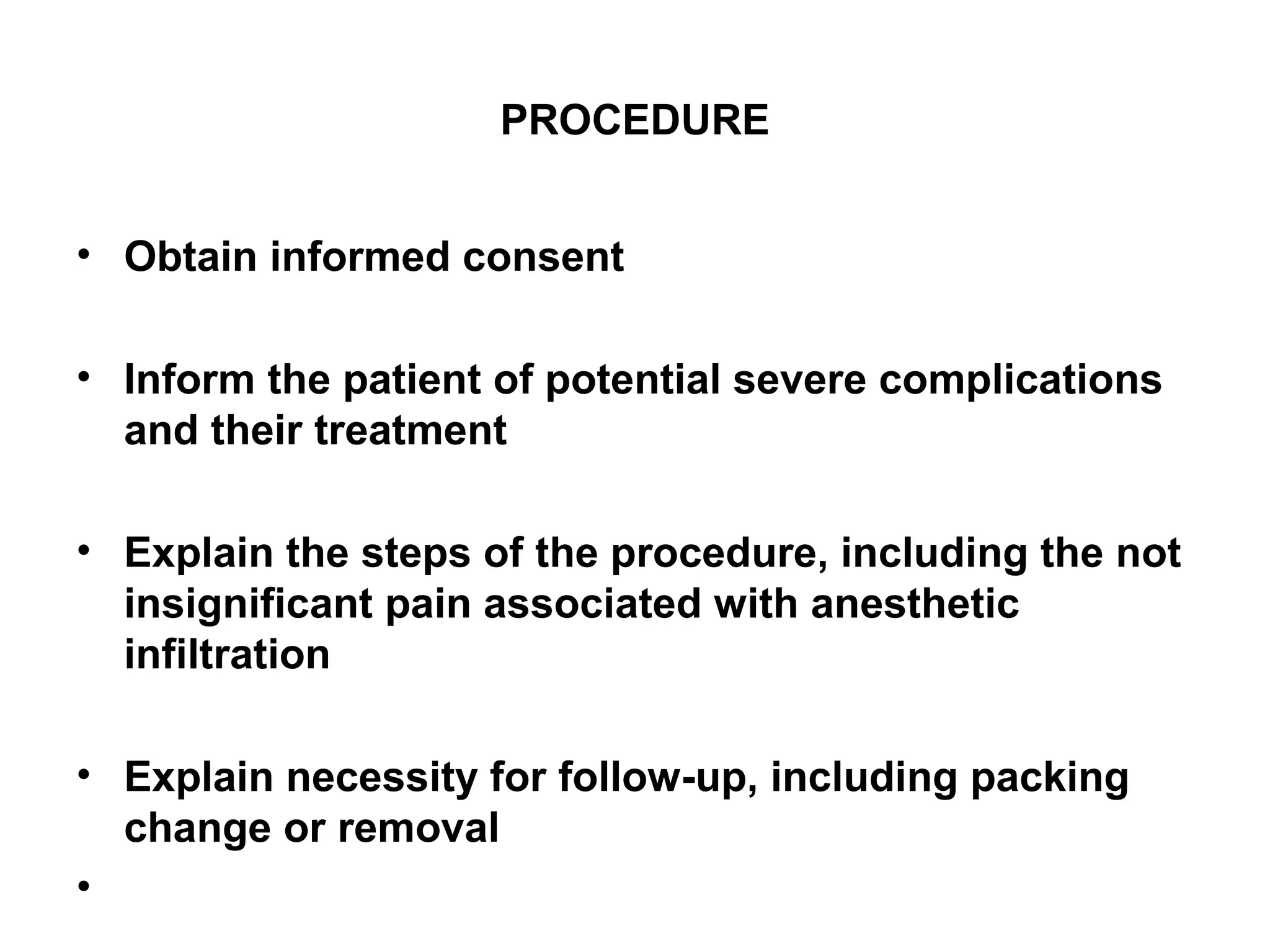
• Obtain informed consent
• Inform the patient of potential severe complications
and their treatment
• Explain the steps of the procedure, including the not
insignificant pain associated with anesthetic
infiltration
• Explain necessity for follow-up, including packing
change or removal
•
PROCEDURE CONTINUED
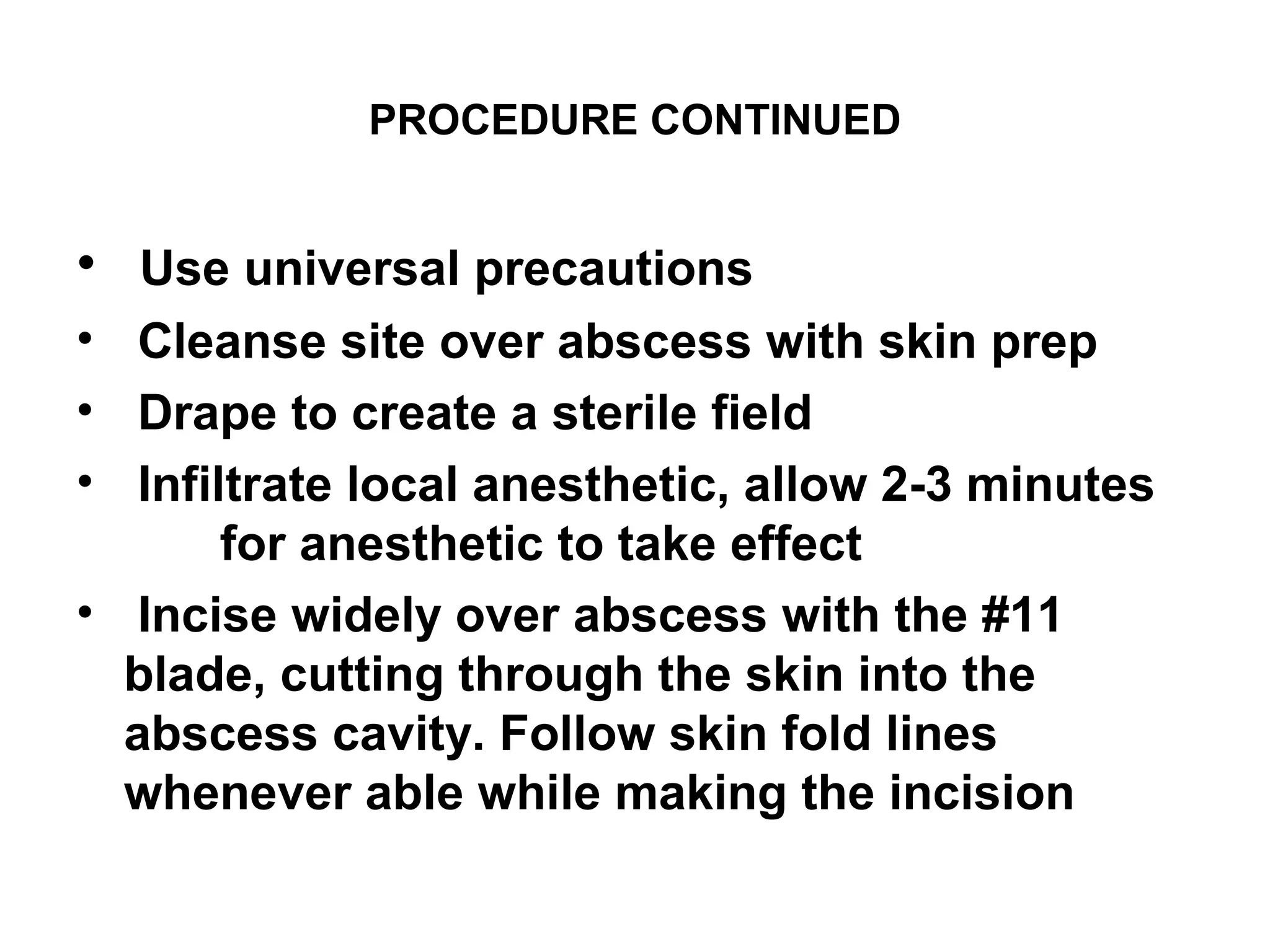
• Use universal precautions
• Cleanse site over abscess with skin prep
• Drape to create a sterile field
• Infiltrate local anesthetic, allow 2-3 minutes
for anesthetic to take effect
• Incise widely over abscess with the #11
blade, cutting through the skin into the
abscess cavity. Follow skin fold lines
whenever able while making the incision
PROCEDURE CONTINUED
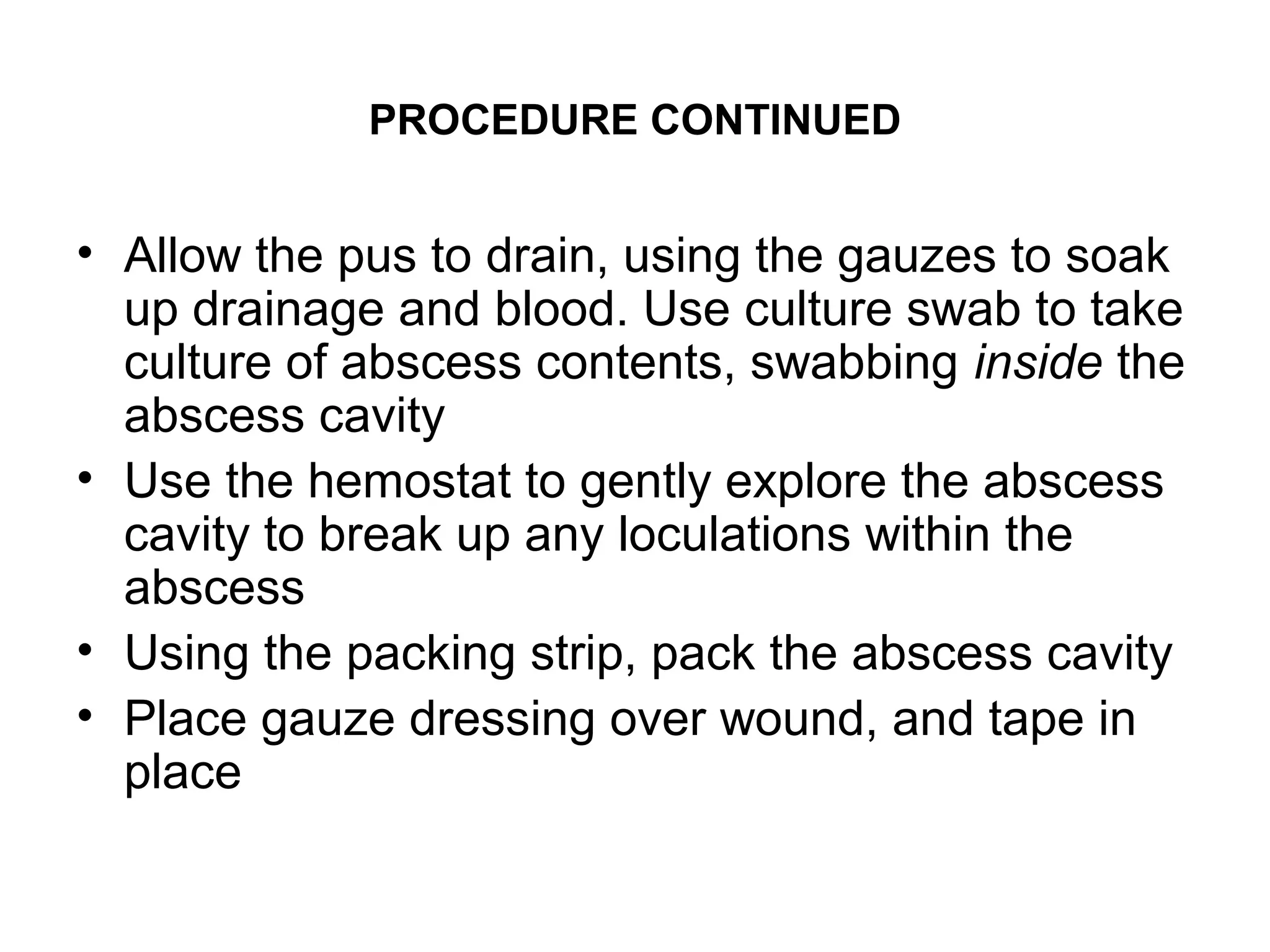
• Allow the pus to drain, using the gauzes to soak
up drainage and blood. Use culture swab to take
culture of abscess contents, swabbing inside the
abscess cavity
• Use the hemostat to gently explore the abscess
cavity to break up any loculations within the
abscess
• Using the packing strip, pack the abscess cavity
• Place gauze dressing over wound, and tape in
place
COMPLICATIONS AND MANAGEMENT
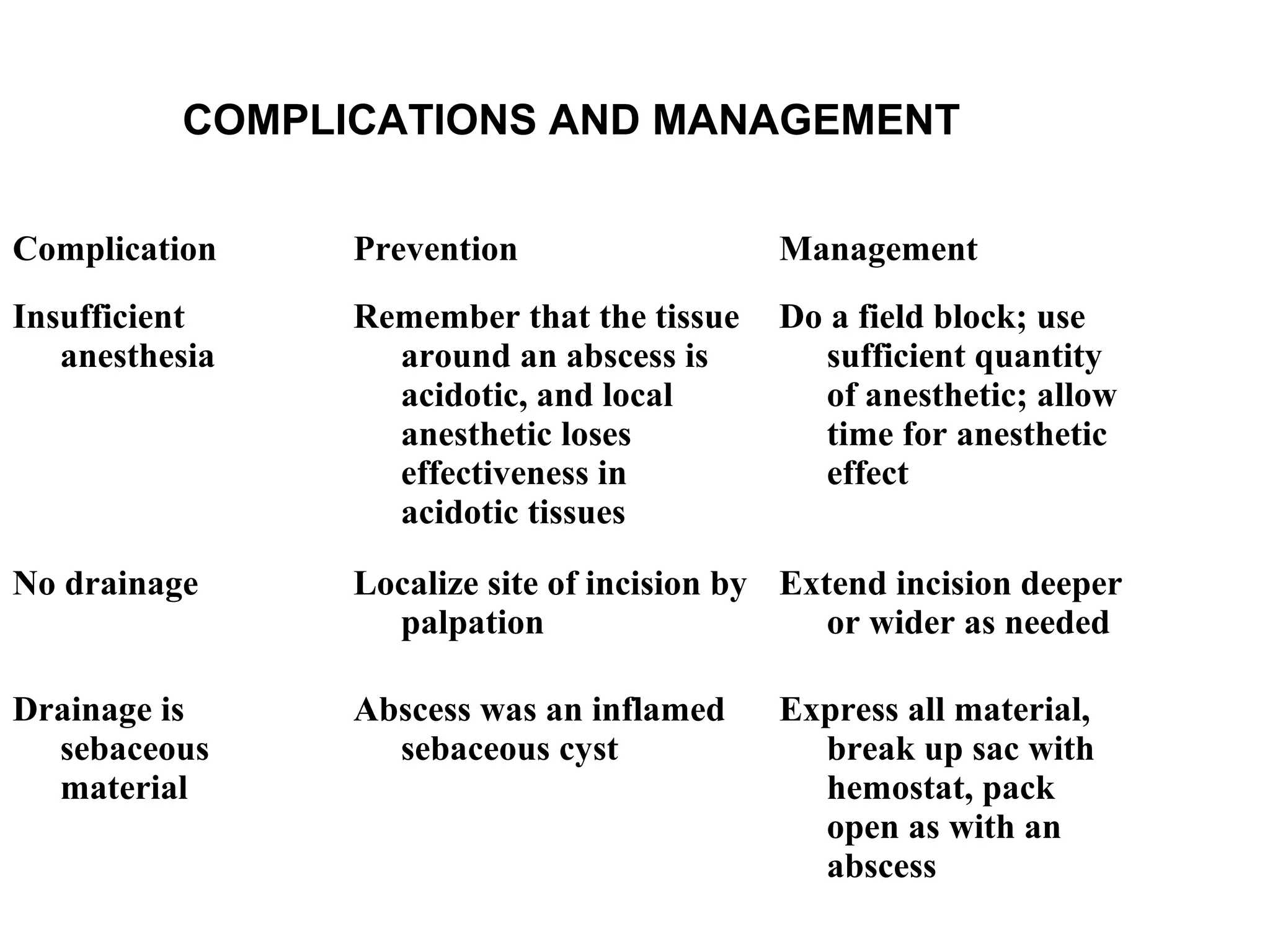
Complication Prevention Management
Insufficient
anesthesia
Remember that the tissue
around an abscess is
acidotic, and local
anesthetic loses
effectiveness in
acidotic tissues
Do a field block; use
sufficient quantity
of anesthetic; allow
time for anesthetic
effect
No drainage Localize site of incision by
palpation
Extend incision deeper
or wider as needed
Drainage is
sebaceous
material
Abscess was an inflamed
sebaceous cyst
Express all material,
break up sac with
hemostat, pack
open as with an
abscess
FOLLOW UP
• Arrange at least one follow up with the patient to check for
proper healing

Abcess+incision+and+drainage

  • 1.
    Soft tissue swellings •Lipoma • Sebaceous cysts • Warts
  • 2.
  • 4.
    Sinus tracts Blind endingtract lined by epithelium 1.Pilonidal sinus 2.Pre auricular sinuses
  • 5.
  • 6.
  • 7.
    DEFINITION • Abcesses arelocalized infections of tissue marked by a collection of pus and surrounded by inflamed tissue. • They may be found in any area of the body, but most present on the extremities, buttocks, breast, perianal area or from the base of a hair follicle. • Abcesses begin when normal skin barrier is breached and microorganisms invade the underlying tissue and also in immunecompromised patients such as diabetes and chemotherapy patients .
  • 8.
    INDICATIONS • A fluctulantabcess on the skin that is papable • It does not resolve with conservative measures, e.g. warm compress and antibiotics • Causative organisms commonly include streptococcous, staphylococcus, enteric bacteria and gram – negative organisms
  • 9.
    • Extremely largeabscesses which require extensive incision, debridement, or irrigation; they are best done in Operation room. • Deep abscesses in very sensitive areas - supralevator, ischiorectal, perirectal - these require general anesthetic to obtain proper exposure • Palmar space abscesses, or abscesses in the deep plantar spaces • Abscesses in the nasolabial folds – they may drain to cavernous sinus and this area is known as dangerous area. • intra abdominal abscesses and bone abscesses known as osteomilitis are difficult to treat.
  • 10.
    MATERIALS • Universal precautionsmaterials i.e. gloves, surgical mask, surgical gown • 2% lidocaine WITH epinephrine for local anesthesia, 10 cc syringe and 25 gauge needle for infiltration • Skin prep solution ( pyodine) • #11 scalpel blade with handle • Draping • Guaze • Hemostat, scissors, packing • Tape • Culture swab
  • 12.
    PROCEDURE • Obtain informedconsent • Inform the patient of potential severe complications and their treatment • Explain the steps of the procedure, including the not insignificant pain associated with anesthetic infiltration • Explain necessity for follow-up, including packing change or removal •
  • 13.
    PROCEDURE CONTINUED • Useuniversal precautions • Cleanse site over abscess with skin prep • Drape to create a sterile field • Infiltrate local anesthetic, allow 2-3 minutes for anesthetic to take effect • Incise widely over abscess with the #11 blade, cutting through the skin into the abscess cavity. Follow skin fold lines whenever able while making the incision
  • 14.
    PROCEDURE CONTINUED • Allowthe pus to drain, using the gauzes to soak up drainage and blood. Use culture swab to take culture of abscess contents, swabbing inside the abscess cavity • Use the hemostat to gently explore the abscess cavity to break up any loculations within the abscess • Using the packing strip, pack the abscess cavity • Place gauze dressing over wound, and tape in place
  • 16.
    COMPLICATIONS AND MANAGEMENT ComplicationPrevention Management Insufficient anesthesia Remember that the tissue around an abscess is acidotic, and local anesthetic loses effectiveness in acidotic tissues Do a field block; use sufficient quantity of anesthetic; allow time for anesthetic effect No drainage Localize site of incision by palpation Extend incision deeper or wider as needed Drainage is sebaceous material Abscess was an inflamed sebaceous cyst Express all material, break up sac with hemostat, pack open as with an abscess
  • 17.
    FOLLOW UP • Arrangeat least one follow up with the patient to check for proper healing