Valuing Industrial Water
For Sustainable
Development
BY WATER CARE SERVICES PAKISTAN
Industrial Usage of Water in Pakistan
 While industry consumes only 2-3% of fresh water resources of Pakistan, it
contributes a substantial amount of the pollution load in the fresh water
resources of Pakistan.
 Estimated wastewater discharges in the sea is 2-3 million cubic meters
(MCM) per day, of which 0.50-0.75 MCM per day is from industrial sources.
 Estimated inland wastewater discharges are 6-9 MCM per day, of which
industrial wastewater discharges are 2-3 MCM per day.
What is Water Footprint?
 The idea of a water footprint draws on the concept of virtual water which is a
measure of the volume of water used in the production process irrespective of
locations of water use. The water footprint of a process, product or a
geographically delineated area is the total water used (either evaporated or lost
from the system by means of incorporation into the product, or physical transfers)
measured along its whole value chain, and is often expressed as a volumetric
figure with spatial and temporal distribution.
Water Footprint in Food Industry in
Pakistan
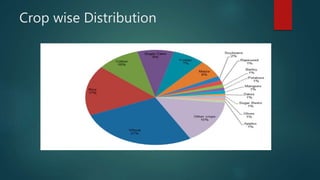
 Approximately 75% of the global unsustainable blue WF is related to the
production of only six crops. These are wheat, rice, cotton, sugar cane, fodder, and
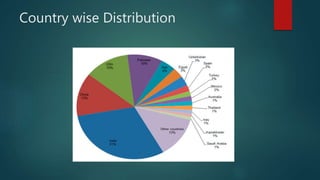
maize. Five countries account for about 70% of the unsustainable blue WF India,
China, the US, Pakistan, and Iran.
Crop wise Distribution
Country wise Distribution
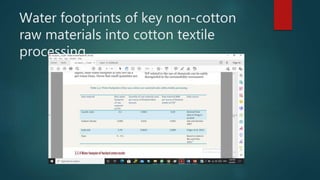
Water footprints of key non-cotton
raw materials into cotton textile
processing
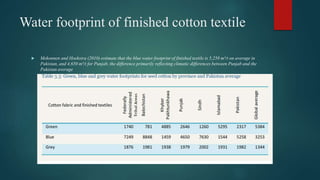
Water footprint of finished cotton textile
 Mekonnen and Hoekstra (2010) estimate that the blue water footprint of finished textile is 5,258 m³/t on average in
Pakistan, and 4,650 m³/t for Punjab, the difference primarily reflecting climatic differences between Punjab and the
Pakistan average
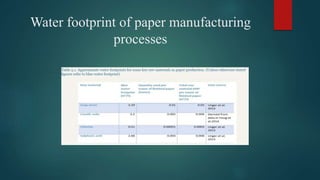
Water footprint of paper manufacturing
processes
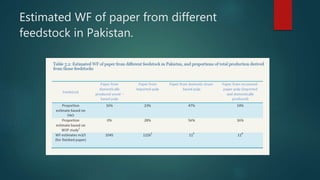
Estimated WF of paper from different
feedstock in Pakistan.
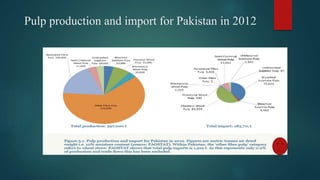
Pulp production and import for Pakistan in 2012
Industrial Water treatment and Water Care
Services
Whenever it comes to water and its treatment water care services is there to help. In case
of water treatment of industrial water our firm provides the following services.
 Industrial Water Management
 Zero Liquid Discharge
 Electrocoagulation
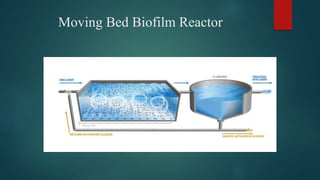
 Moving Bed Biofilm Reactor
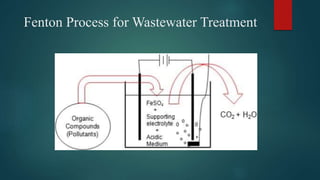
 Fenton Process for Wastewater Treatment
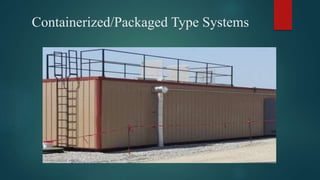
 Containerized/Packaged Type Systems
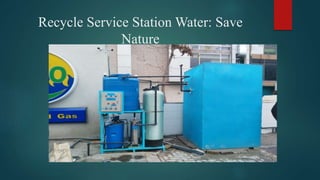
 Recycle Service Station Water: Save Nature

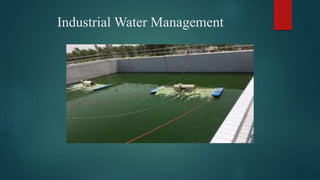
Industrial Water Management
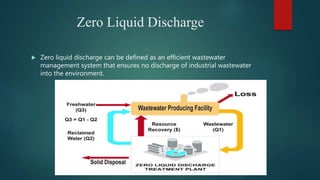
Zero Liquid Discharge
 Zero liquid discharge can be defined as an efficient wastewater
management system that ensures no discharge of industrial wastewater
into the environment.
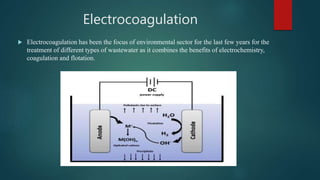
Electrocoagulation
 Electrocoagulation has been the focus of environmental sector for the last few years for the
treatment of different types of wastewater as it combines the benefits of electrochemistry,
coagulation and flotation.
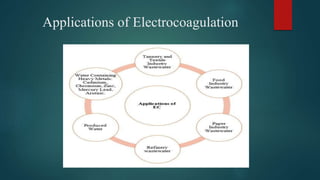
Applications of Electrocoagulation
Moving Bed Biofilm Reactor
Fenton Process for Wastewater Treatment
Containerized/Packaged Type Systems
Recycle Service Station Water: Save
Nature
Key Points
 Water is a precious and valued item
 We need water conservation , with smart technologies
 For waste water reuse, simple and low operational cost , are best for
industrial applications.
 Water recycling and reuse , is need of time.
 More you save water more you bless to mother planet.

World water day

  • 1.
    Valuing Industrial Water ForSustainable Development BY WATER CARE SERVICES PAKISTAN
  • 2.
    Industrial Usage ofWater in Pakistan  While industry consumes only 2-3% of fresh water resources of Pakistan, it contributes a substantial amount of the pollution load in the fresh water resources of Pakistan.  Estimated wastewater discharges in the sea is 2-3 million cubic meters (MCM) per day, of which 0.50-0.75 MCM per day is from industrial sources.  Estimated inland wastewater discharges are 6-9 MCM per day, of which industrial wastewater discharges are 2-3 MCM per day.
  • 3.
    What is WaterFootprint?  The idea of a water footprint draws on the concept of virtual water which is a measure of the volume of water used in the production process irrespective of locations of water use. The water footprint of a process, product or a geographically delineated area is the total water used (either evaporated or lost from the system by means of incorporation into the product, or physical transfers) measured along its whole value chain, and is often expressed as a volumetric figure with spatial and temporal distribution.
  • 4.
    Water Footprint inFood Industry in Pakistan  Approximately 75% of the global unsustainable blue WF is related to the production of only six crops. These are wheat, rice, cotton, sugar cane, fodder, and maize. Five countries account for about 70% of the unsustainable blue WF India, China, the US, Pakistan, and Iran.
  • 5.
  • 6.
  • 7.
    Water footprints ofkey non-cotton raw materials into cotton textile processing
  • 8.
    Water footprint offinished cotton textile  Mekonnen and Hoekstra (2010) estimate that the blue water footprint of finished textile is 5,258 m³/t on average in Pakistan, and 4,650 m³/t for Punjab, the difference primarily reflecting climatic differences between Punjab and the Pakistan average
  • 9.
    Water footprint ofpaper manufacturing processes
  • 10.
    Estimated WF ofpaper from different feedstock in Pakistan.
  • 11.
    Pulp production andimport for Pakistan in 2012
  • 12.
    Industrial Water treatmentand Water Care Services Whenever it comes to water and its treatment water care services is there to help. In case of water treatment of industrial water our firm provides the following services.  Industrial Water Management  Zero Liquid Discharge  Electrocoagulation  Moving Bed Biofilm Reactor  Fenton Process for Wastewater Treatment  Containerized/Packaged Type Systems  Recycle Service Station Water: Save Nature 
  • 13.
  • 14.
    Zero Liquid Discharge Zero liquid discharge can be defined as an efficient wastewater management system that ensures no discharge of industrial wastewater into the environment.
  • 15.
    Electrocoagulation  Electrocoagulation hasbeen the focus of environmental sector for the last few years for the treatment of different types of wastewater as it combines the benefits of electrochemistry, coagulation and flotation.
  • 16.
  • 17.
  • 18.
    Fenton Process forWastewater Treatment
  • 19.
  • 20.
    Recycle Service StationWater: Save Nature
  • 21.
    Key Points  Wateris a precious and valued item  We need water conservation , with smart technologies  For waste water reuse, simple and low operational cost , are best for industrial applications.  Water recycling and reuse , is need of time.  More you save water more you bless to mother planet.