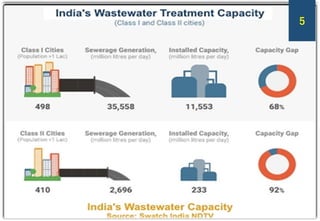
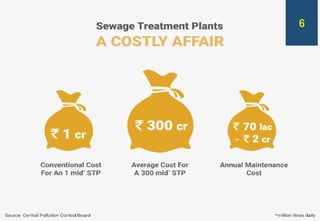
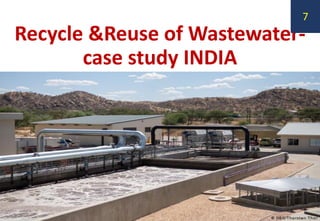
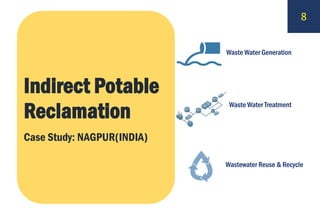
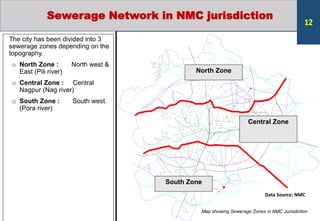
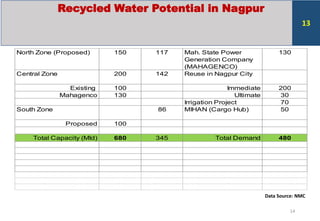
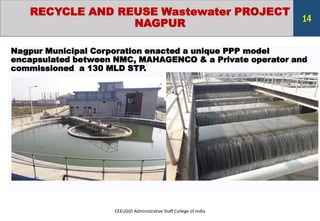
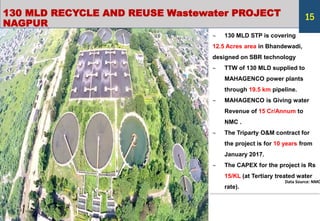
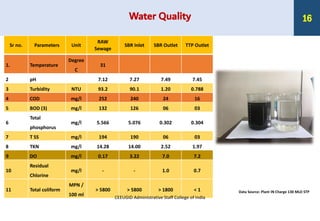
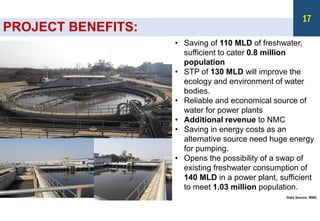
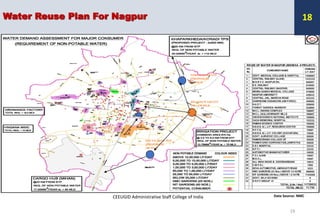
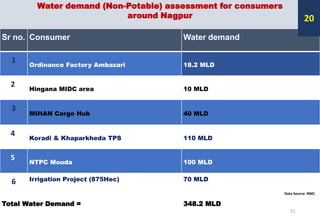
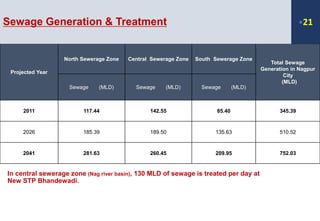
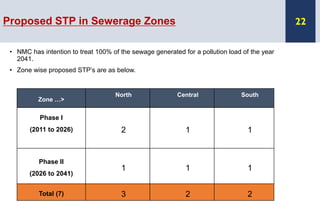
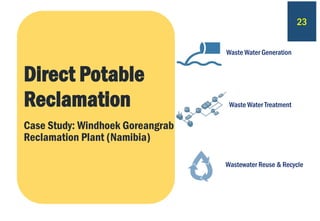
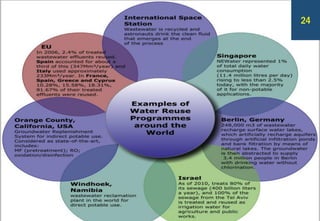
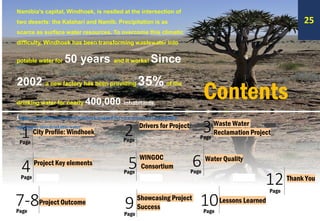
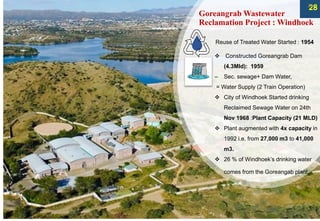
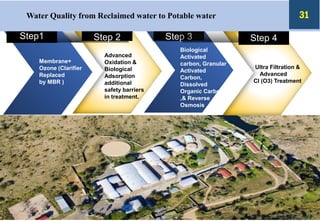
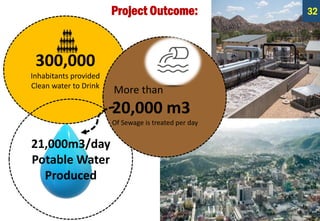
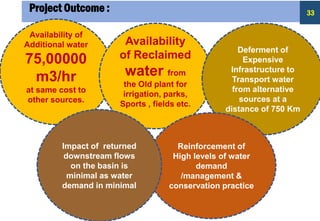
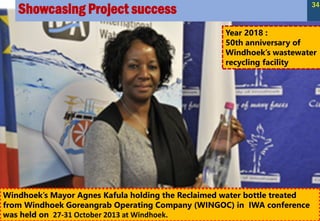
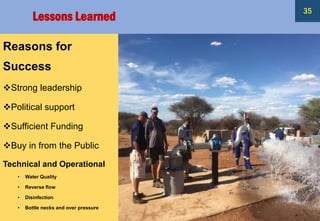

The document discusses direct and indirect potable water reclamation through case studies in Nagpur, India and Windhoek, Namibia. In Nagpur, a 130 MLD sewage treatment plant treats wastewater which is then supplied to a power plant. This project saves freshwater and generates revenue for the municipal corporation. In Windhoek, a water reclamation plant treats over 20,000 cubic meters of sewage per day to produce 21,000 cubic meters of drinking water per day, supplying over 300,000 inhabitants and accounting for 35% of the city's water supply. The multi-barrier treatment process and public education were keys to the success of direct potable reuse in Windhoek.


