Listening
Speaking
Reading
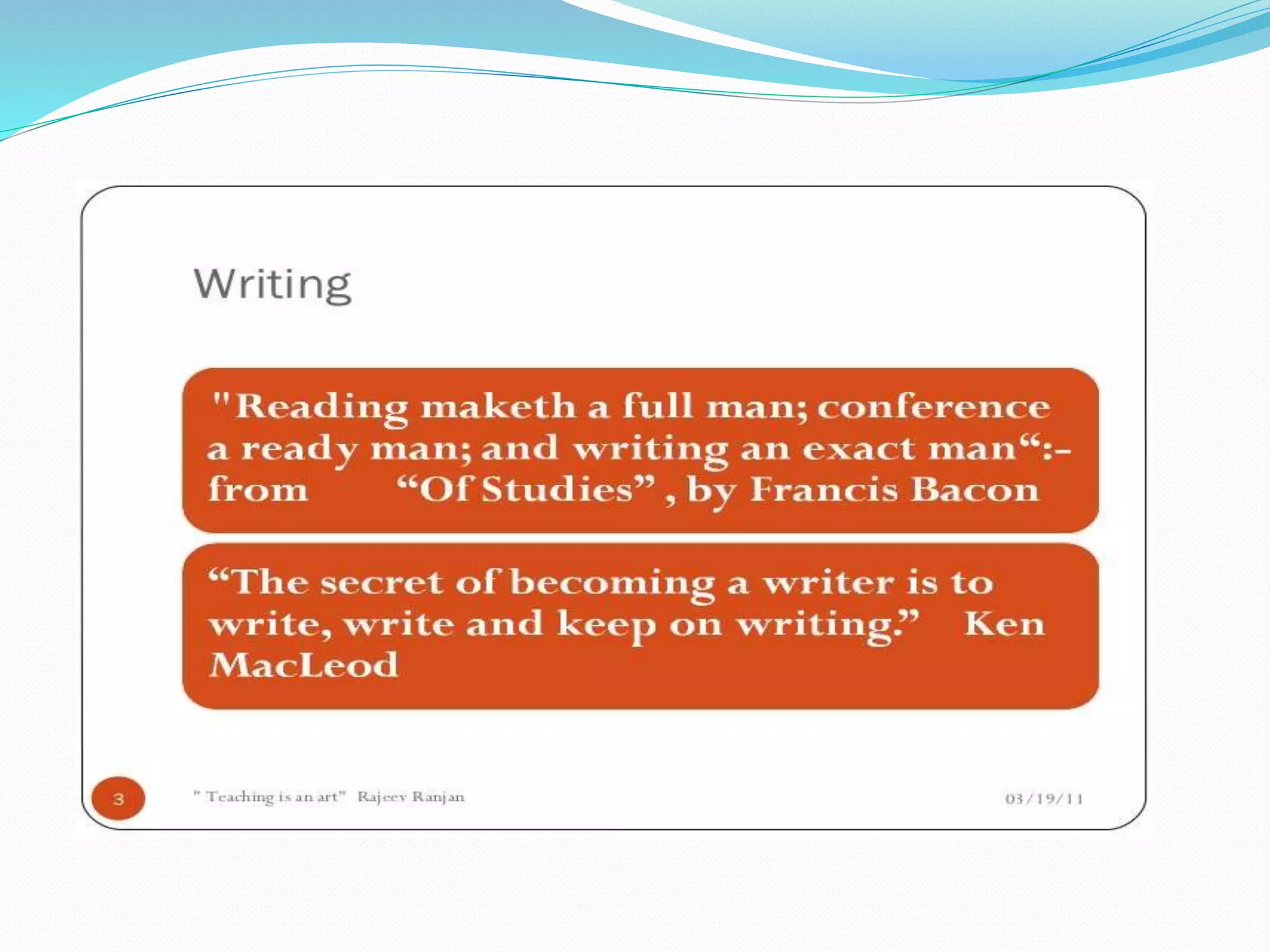
Writing
Punctuation &
Capitalization
Vocabulary & Spelling
Basic Grammatical
Rules
Conducted By:
Monir Hossen
Lecturer
Department of English
CCN University of Science and Technology
Email: monir.eng.cou@gmail.com
E
What is Language?
Language is the medium of communication.
Language is a human system of communication that
uses arbitrary signals, such as voice sounds, gestures,
and/or written symbols.
Language is the spontaneous overflow of powerful
feelings that recollected in tranquility.
"A language consists of symbols that convey meaning,
plus rules for combining those symbols, that can be
used to generate an infinite variety of messages."
(Wayne Weiten, Psychology: Themes And Variations, 7th ed. Thomson Wadsworth, 2007)
Four Skills
Listening
Speaking
Writing
Reading
Listening
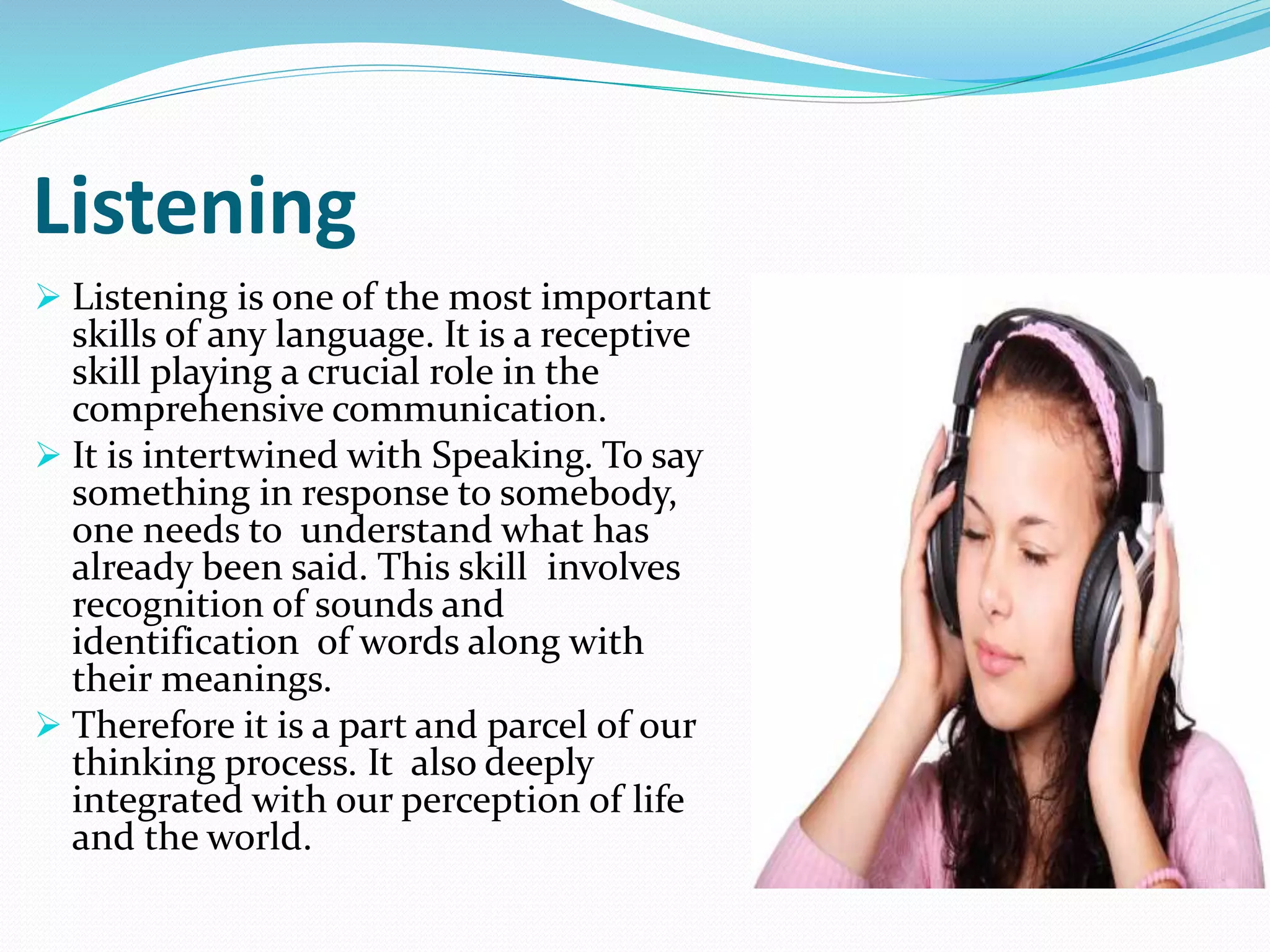
 Listening is one of the most important
skills of any language. It is a receptive
skill playing a crucial role in the
comprehensive communication.
 It is intertwined with Speaking. To say
something in response to somebody,
one needs to understand what has
already been said. This skill involves
recognition of sounds and
identification of words along with
their meanings.
 Therefore it is a part and parcel of our
thinking process. It also deeply
integrated with our perception of life
and the world.
Continued
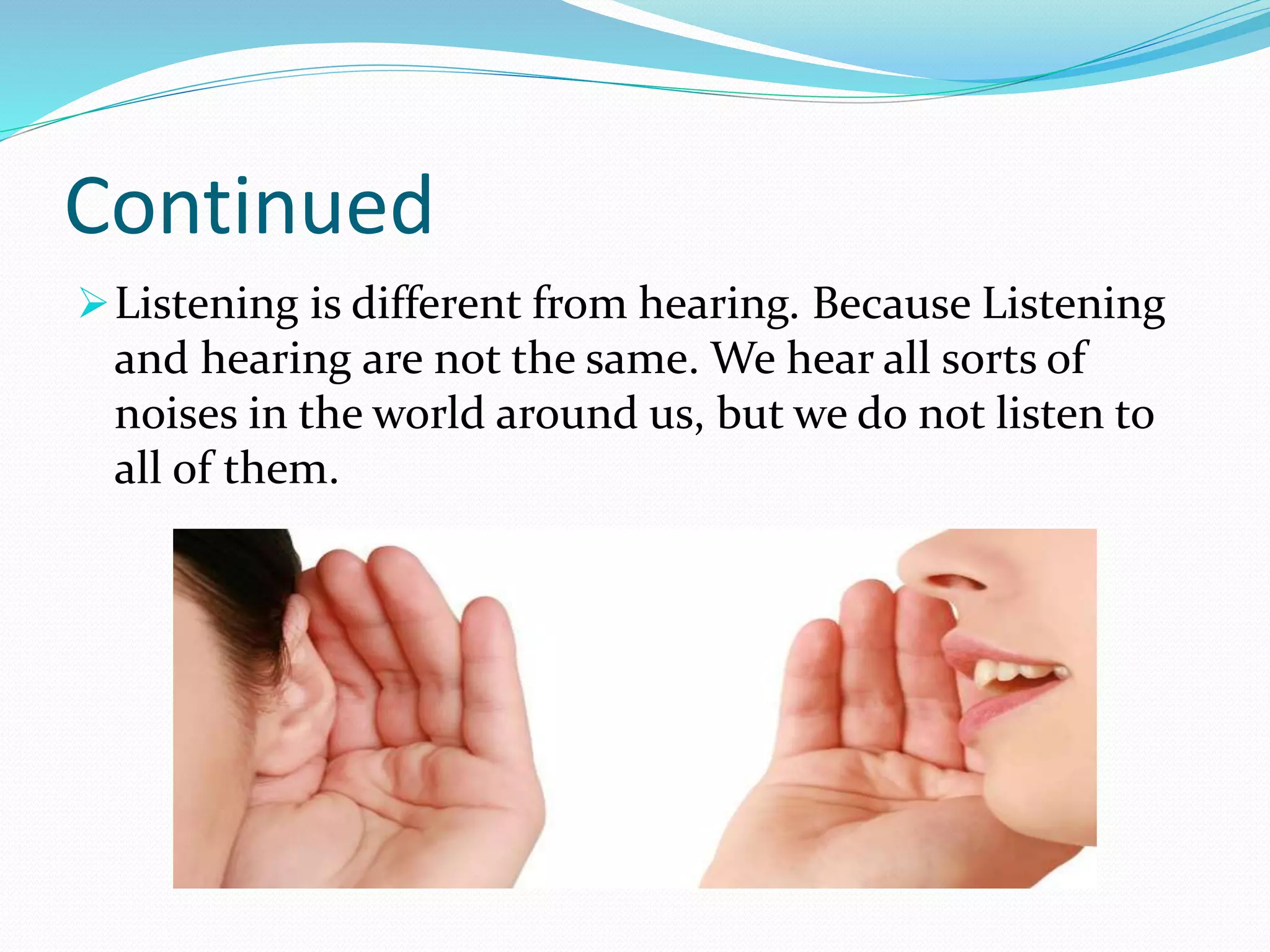
Listening is different from hearing. Because Listening
and hearing are not the same. We hear all sorts of
noises in the world around us, but we do not listen to
all of them.
Importance of Listening
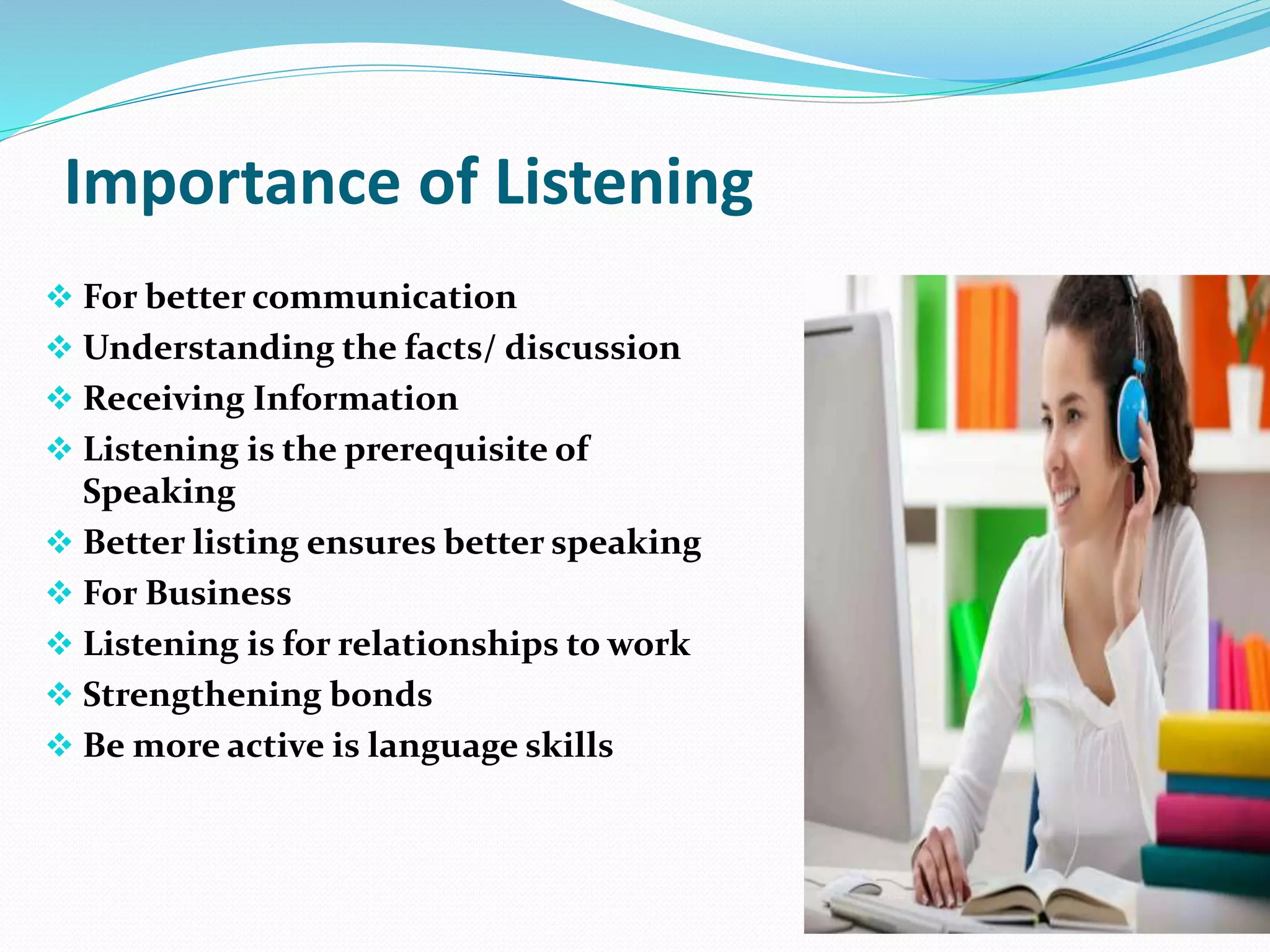
 For better communication
 Understanding the facts/ discussion
 Receiving Information
 Listening is the prerequisite of
Speaking
 Better listing ensures better speaking
 For Business
 Listening is for relationships to work
 Strengthening bonds
 Be more active is language skills
What things to listen to improve Listening Skill
Various recorded text
Monologue or Dialogue
Lecture or Delivering Speech
Telephone Conversation
Free discussion or free conversation
Delivering Reports or Survey
Information’s and various types of News
Narrating story or different types of articles
The Best way to do well in Listening:
While you are listening, the most important thing comes to you
that are listening. A good listener can be a good speaker too. As it
are the first steps for linguistic communication. However, one
should have some fundamental ideas for improving his or her
listening skill. Such as:
Interest for Listening
Deep attention
Enhanced Vocabulary
Recognize Intonation Patters
Do Practice Listening
Pronunciation, Stress and Unstressed
Follow different Perspective Discussion
Continued
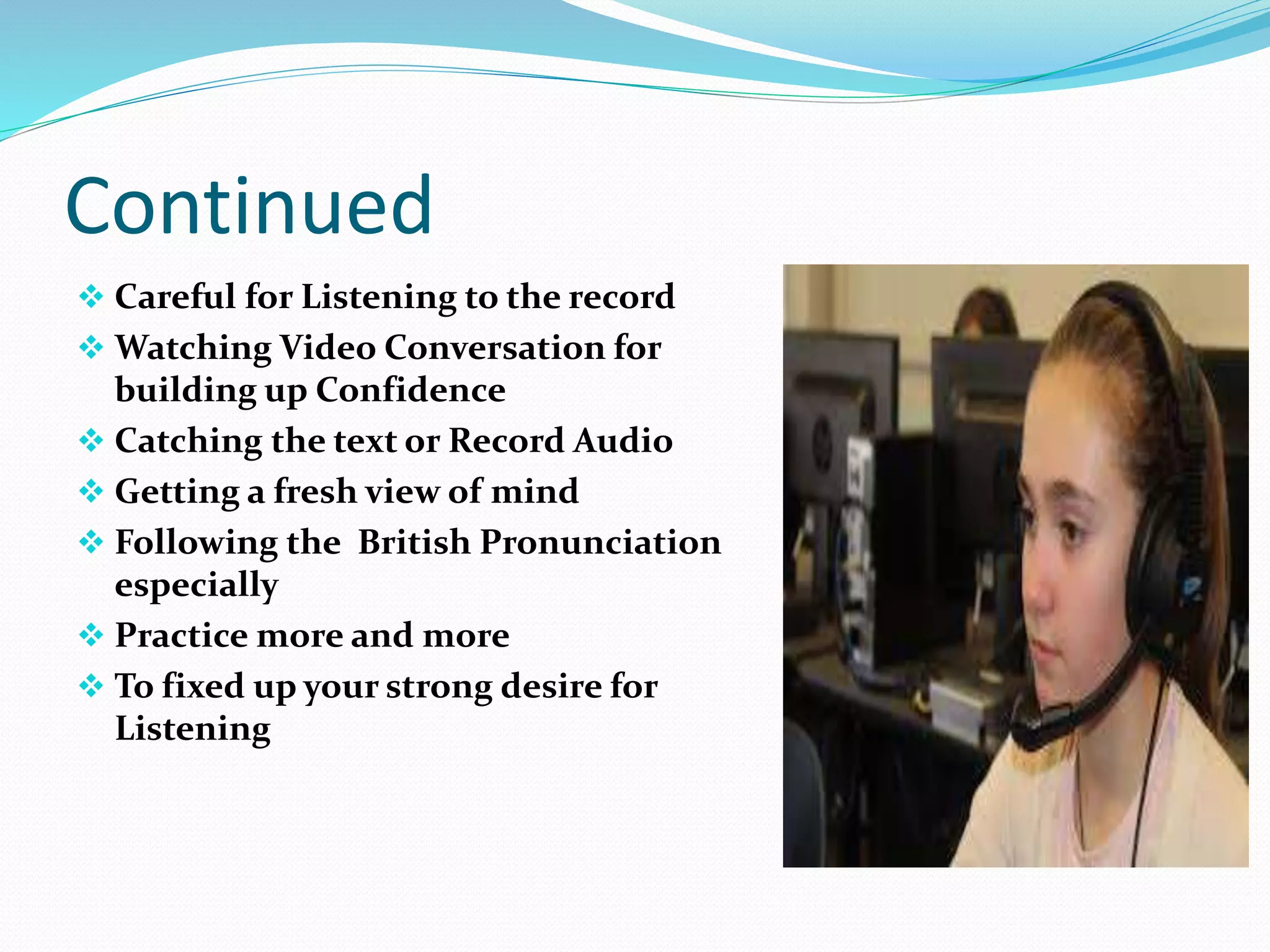
 Careful for Listening to the record
 Watching Video Conversation for
building up Confidence
 Catching the text or Record Audio
 Getting a fresh view of mind
 Following the British Pronunciation
especially
 Practice more and more
 To fixed up your strong desire for
Listening
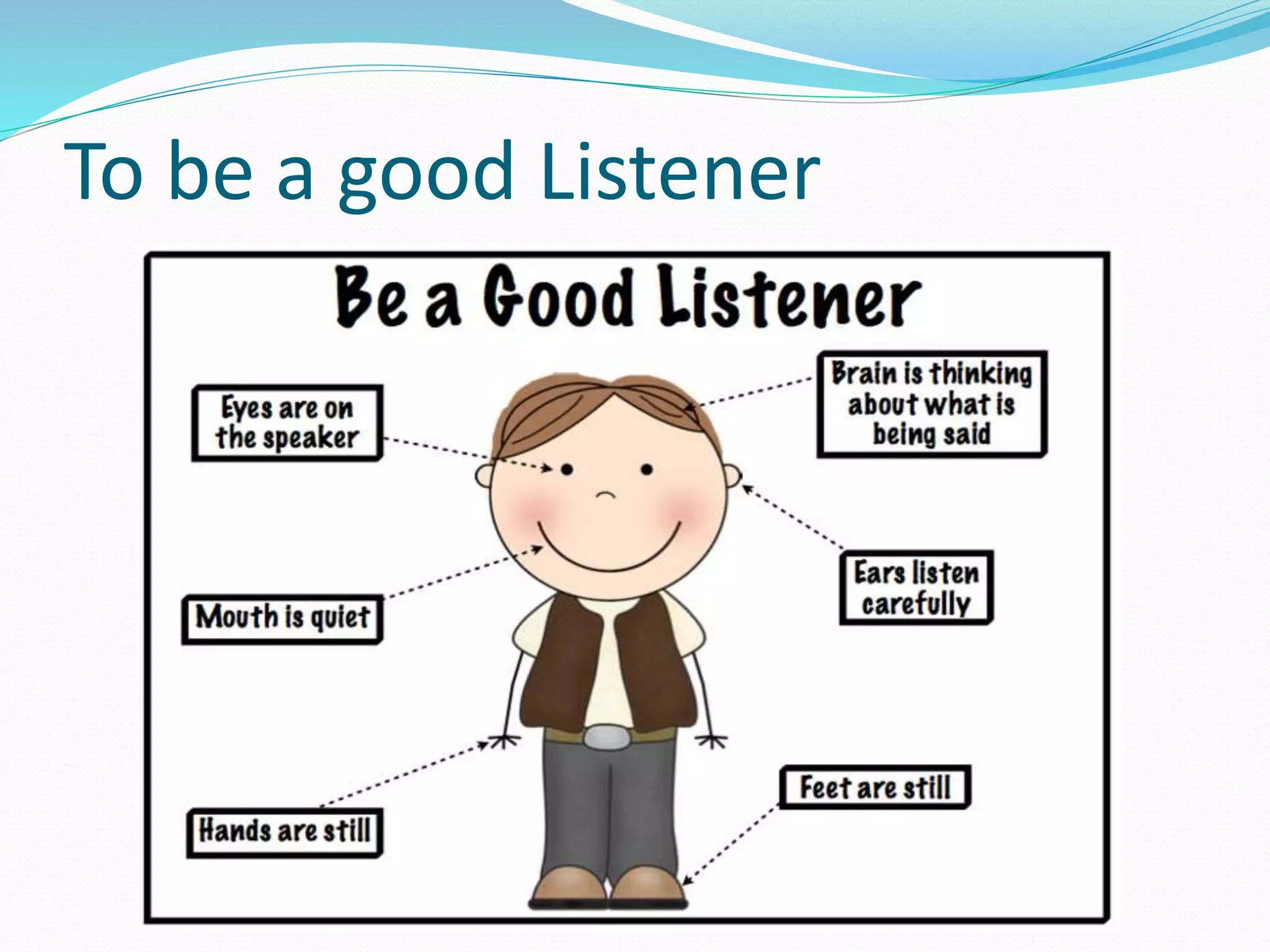
To be a good Listener
Some tips for developing Listening Skills
 Practice Listening From Cambridge Series
 Listening BBC news or Other British News
 Watch English Movie
 Listening English songs
 Listening to the British
 Having conversation with native English speaker if you can
 watch reports on anything in English
 Try to imitate the speech of the British/ American
 Follow accent and unaccented, Stress and Unstressed
carefully
 Finally try to pronounce the correct pronunciation for
getting speech very properly.
English Language Club, CCNUST
“Speaking is an art by which
You can touch the heart”
Speaking
Speaking
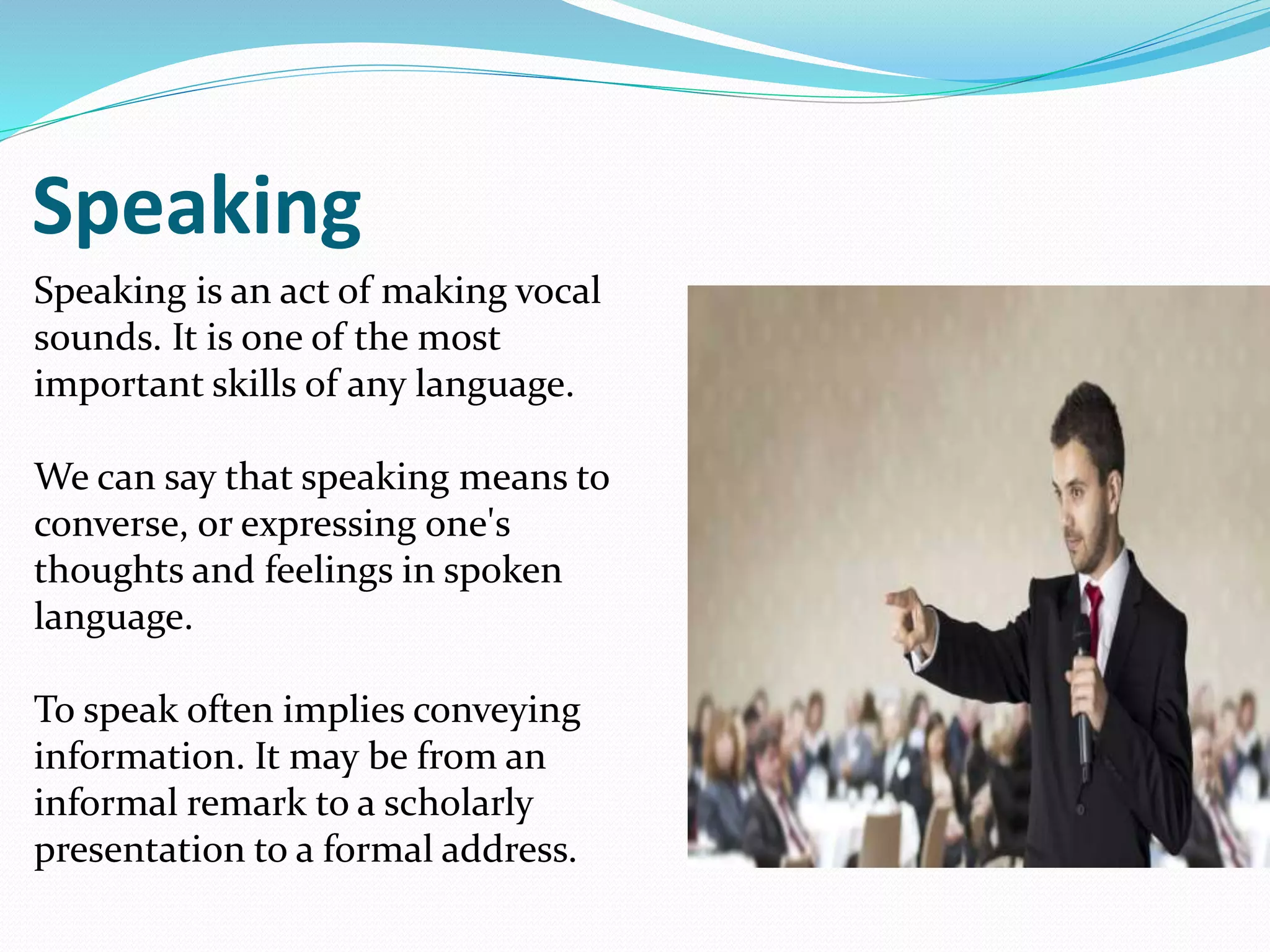
Speaking is an act of making vocal
sounds. It is one of the most
important skills of any language.
We can say that speaking means to
converse, or expressing one's
thoughts and feelings in spoken
language.
To speak often implies conveying
information. It may be from an
informal remark to a scholarly
presentation to a formal address.
Speaking
Public Speaking
Some rules for establishing Better Speaking:
Actually, everything has a process in which way the things are
organized. The process of speaking is called the Art of Speaking.
Those who can speak very artistically are the successful persons
in the society or in any organization. However, one must follow
something in his better speaking. For example:
 Fresh mood of speaking
 Body language
 Eye contacts
 Pronunciation and fluency
 Grammatical range and proper arrange of Sentences
 Easy and Simple words
 Using some sorts of Idioms and Phrase
Continued
 Following the British/American style of Speaking
 Follow the British/American Pronunciation
 Logical representation of answers
 Not More or Less of the Answers
 Getting the Questions Properly
 Be Modest and Polite while you speak
 Ask if you can’t understand the questions with manner
 Don’t raise your hands over your head
 Be positive in every response
 You must say gradually
Continued
 Don’t stop in the middle of speaking
 Give fresh information
 Don’t deliver from your memorized memory
 Be liberal in speaking
 Have a better confidence on any topic for speaking
 Give the informative answers when they ask about that
 Have a good preparation for speaking
 Listening to BBC news and Watch English Movies
Continued
 Try to follow some recommended topics for discussion
 Make a proper environment of speaking English with
your friends, colleagues
 Observe the surroundings and give example from
there
 Observing the present and the past situations
 Move shy of speaking
 Don’t hesitate to speak
 Free discussion and Usual speaking
 Practice Speaking at your home
Speaking skill needs these four criteria mainly
 Fluency and Coherence
 Lexical Resource
 Grammatical Range
 and Accuracy and Pronunciation
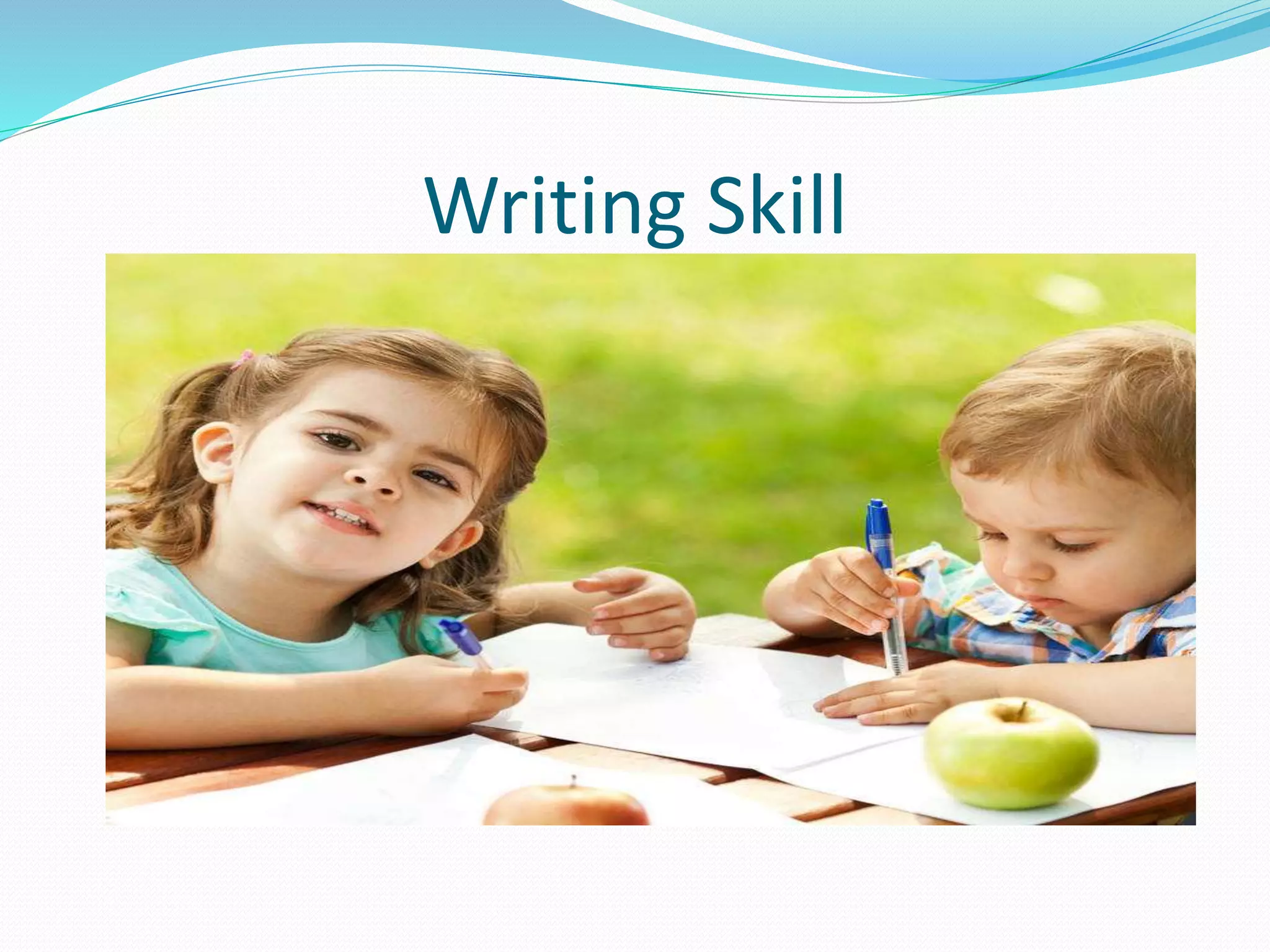
Writing Skill
Types of Writing
Academic Writing
General Writing
Formal Writing
Informal Writing
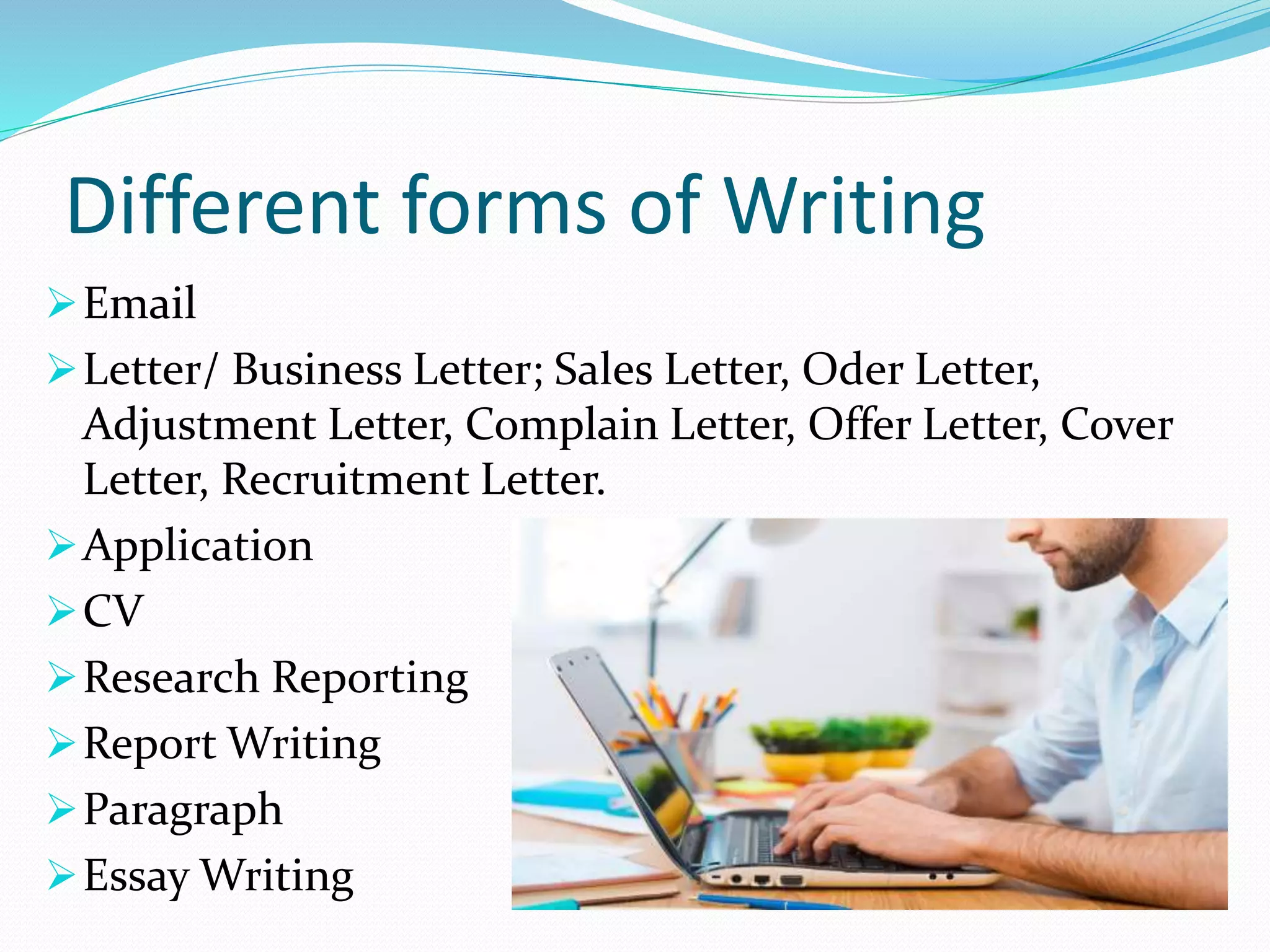
Different forms of Writing
Email
Letter/ Business Letter; Sales Letter, Oder Letter,
Adjustment Letter, Complain Letter, Offer Letter, Cover
Letter, Recruitment Letter.
Application
CV
Research Reporting
Report Writing
Paragraph
Essay Writing
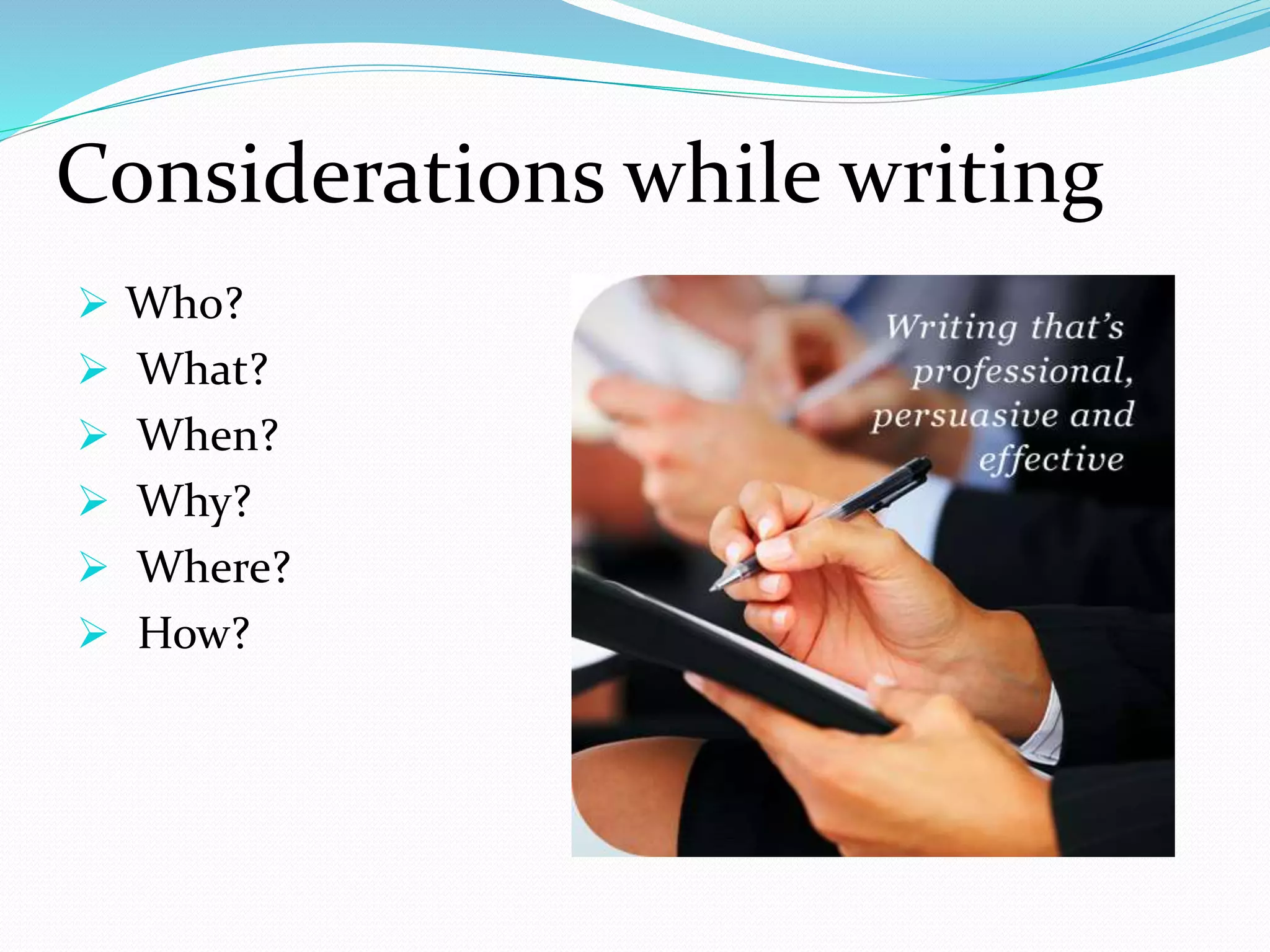
 Who?
 What?
 When?
 Why?
 Where?
 How?
Considerations while writing
Things to follow in Writing
Write Grammatically correct
Use Conjunction or Connectives
Provide Logical references
Follow structures of Sentences
Consider about the tense
Give Introduction and topic sentence
Compare and Contrast
Explain cause and effects
Give conclusion
Thank you

Workshop on "How to Develop English Language Skills" By Monir Hossen

  • 2.
  • 3.
    Conducted By: Monir Hossen Lecturer Departmentof English CCN University of Science and Technology Email: monir.eng.cou@gmail.com E
  • 4.
    What is Language? Languageis the medium of communication. Language is a human system of communication that uses arbitrary signals, such as voice sounds, gestures, and/or written symbols. Language is the spontaneous overflow of powerful feelings that recollected in tranquility. "A language consists of symbols that convey meaning, plus rules for combining those symbols, that can be used to generate an infinite variety of messages." (Wayne Weiten, Psychology: Themes And Variations, 7th ed. Thomson Wadsworth, 2007)
  • 5.
  • 7.
    Listening  Listening isone of the most important skills of any language. It is a receptive skill playing a crucial role in the comprehensive communication.  It is intertwined with Speaking. To say something in response to somebody, one needs to understand what has already been said. This skill involves recognition of sounds and identification of words along with their meanings.  Therefore it is a part and parcel of our thinking process. It also deeply integrated with our perception of life and the world.
  • 8.
    Continued Listening is differentfrom hearing. Because Listening and hearing are not the same. We hear all sorts of noises in the world around us, but we do not listen to all of them.
  • 9.
    Importance of Listening For better communication  Understanding the facts/ discussion  Receiving Information  Listening is the prerequisite of Speaking  Better listing ensures better speaking  For Business  Listening is for relationships to work  Strengthening bonds  Be more active is language skills
  • 10.
    What things tolisten to improve Listening Skill Various recorded text Monologue or Dialogue Lecture or Delivering Speech Telephone Conversation Free discussion or free conversation Delivering Reports or Survey Information’s and various types of News Narrating story or different types of articles
  • 11.
    The Best wayto do well in Listening: While you are listening, the most important thing comes to you that are listening. A good listener can be a good speaker too. As it are the first steps for linguistic communication. However, one should have some fundamental ideas for improving his or her listening skill. Such as: Interest for Listening Deep attention Enhanced Vocabulary Recognize Intonation Patters Do Practice Listening Pronunciation, Stress and Unstressed Follow different Perspective Discussion
  • 12.
    Continued  Careful forListening to the record  Watching Video Conversation for building up Confidence  Catching the text or Record Audio  Getting a fresh view of mind  Following the British Pronunciation especially  Practice more and more  To fixed up your strong desire for Listening
  • 13.
    To be agood Listener
  • 14.
    Some tips fordeveloping Listening Skills  Practice Listening From Cambridge Series  Listening BBC news or Other British News  Watch English Movie  Listening English songs  Listening to the British  Having conversation with native English speaker if you can  watch reports on anything in English  Try to imitate the speech of the British/ American  Follow accent and unaccented, Stress and Unstressed carefully  Finally try to pronounce the correct pronunciation for getting speech very properly.
  • 15.
    English Language Club,CCNUST “Speaking is an art by which You can touch the heart” Speaking
  • 16.
    Speaking Speaking is anact of making vocal sounds. It is one of the most important skills of any language. We can say that speaking means to converse, or expressing one's thoughts and feelings in spoken language. To speak often implies conveying information. It may be from an informal remark to a scholarly presentation to a formal address.
  • 17.
  • 18.
    Some rules forestablishing Better Speaking: Actually, everything has a process in which way the things are organized. The process of speaking is called the Art of Speaking. Those who can speak very artistically are the successful persons in the society or in any organization. However, one must follow something in his better speaking. For example:  Fresh mood of speaking  Body language  Eye contacts  Pronunciation and fluency  Grammatical range and proper arrange of Sentences  Easy and Simple words  Using some sorts of Idioms and Phrase
  • 19.
    Continued  Following theBritish/American style of Speaking  Follow the British/American Pronunciation  Logical representation of answers  Not More or Less of the Answers  Getting the Questions Properly  Be Modest and Polite while you speak  Ask if you can’t understand the questions with manner  Don’t raise your hands over your head  Be positive in every response  You must say gradually
  • 20.
    Continued  Don’t stopin the middle of speaking  Give fresh information  Don’t deliver from your memorized memory  Be liberal in speaking  Have a better confidence on any topic for speaking  Give the informative answers when they ask about that  Have a good preparation for speaking  Listening to BBC news and Watch English Movies
  • 21.
    Continued  Try tofollow some recommended topics for discussion  Make a proper environment of speaking English with your friends, colleagues  Observe the surroundings and give example from there  Observing the present and the past situations  Move shy of speaking  Don’t hesitate to speak  Free discussion and Usual speaking  Practice Speaking at your home
  • 22.
    Speaking skill needsthese four criteria mainly  Fluency and Coherence  Lexical Resource  Grammatical Range  and Accuracy and Pronunciation
  • 23.
  • 24.
    Types of Writing AcademicWriting General Writing Formal Writing Informal Writing
  • 25.
    Different forms ofWriting Email Letter/ Business Letter; Sales Letter, Oder Letter, Adjustment Letter, Complain Letter, Offer Letter, Cover Letter, Recruitment Letter. Application CV Research Reporting Report Writing Paragraph Essay Writing
  • 26.
     Who?  What? When?  Why?  Where?  How? Considerations while writing
  • 28.
    Things to followin Writing Write Grammatically correct Use Conjunction or Connectives Provide Logical references Follow structures of Sentences Consider about the tense Give Introduction and topic sentence Compare and Contrast Explain cause and effects Give conclusion
  • 29.