Listening skills and
Speaking Skills
Listening:
Definition
Listening is a process of
receiving, and reacting to
a message from
interpreting the speaker
No communication
process is complete
without listening
Listening is an important skill. Listening
is quite similar to reading as it involves
reception and decoding of the verbal
message from the other person.
Hearing is solely depends on the
ears, is a physical act, everyone
can hear without deliberate effort.
Hearing is merely vibration of
sounds on the ear drum followed
by electrochemical response
Listening requires voluntary
attention and then making
sense of what is being said.
Hearing and listening
are not the same
People may often use
these words
interchangeably
Listening vs.
Hearing
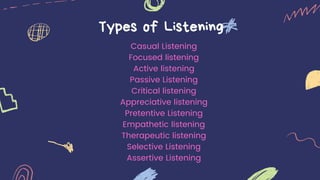
Types of Listening
Casual Listening
Focused listening
Active listening
Passive Listening
Critical listening
Appreciative listening
Pretentive Listening
Empathetic listening
Therapeutic listening
Selective Listening
Assertive Listening
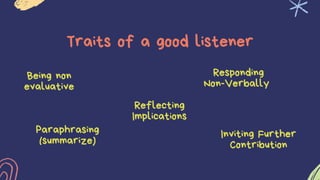
Traits of a good listener
Reflecting
Implications
Responding
Non-Verbally
Inviting Further
Contribution
Paraphrasing
(summarize)
Being non
evaluative
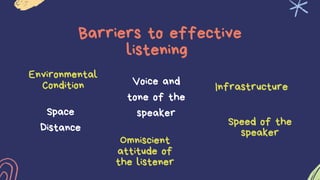
Barriers to effective
listening
Omniscient
attitude of
the listener
Infrastructure
Speed of the
speaker
Environmental
Condition
Space
Distance
Voice and
tone of the
speaker
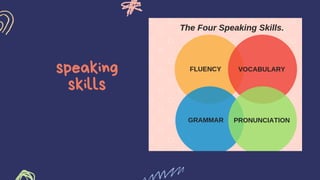
speaking
skills
It is a common desire for all of us
to speak a second language well. To
do this we need to know what
skills are required to become a
good speaker.
FLUENCY
Fluency is about how comfortable and confident you
are in speaking English. If you can speak for an
extended period of time, that is an indicator of strong
fluency. It is also about showing a clear connection
between each point that you are trying to make. This
skill means that the listener can follow what you are
saying and does not get lost.
VOCABULARY
Of course, if you don’t have the words to say what you want
to say, then you cannot say it. Being a good speaker means
constantly growing you’re vocabulary. The more interesting
words you know, the stronger your speaking skills. The best
way to grow your vocabulary is to read in English and make a
note of any new words that you encounter in a vocabulary
notebook.
GRAMMAR
The dreaded G word! Grammar does matter and
the fewer mistakes you make, the better your
speaking skill will be. However, do not worry about
making mistakes either! A good speaker does not
have to use perfect grammar. Certainly, though, it is
a good idea to make sure that you have mastered
the major tenses.
PRONUNCIATION
Pronunciation is a complex area, with a lot of sub skills that
can be practiced. The basic rule of thumb is that an average
speaker can speak and be understood. A skilled speaker can
use the sub skills of pronunciation to emphasise and make
the communicative effect of their speech more impactful.
The sub skills of pronunciation include: word and sentence
stress, intonation, rhythm and the use of the individual
sounds of a language. A good way to practice your
pronunciation is to copy! Simply listen to how someone with
good pronunciation speaks, and try to imitate them as
closely as possible.
LESSON 2-Listening & Speaking Skills.pdf

LESSON 2-Listening & Speaking Skills.pdf

  • 1.
  • 2.
    Listening: Definition Listening is aprocess of receiving, and reacting to a message from interpreting the speaker No communication process is complete without listening
  • 3.
    Listening is animportant skill. Listening is quite similar to reading as it involves reception and decoding of the verbal message from the other person.
  • 4.
    Hearing is solelydepends on the ears, is a physical act, everyone can hear without deliberate effort. Hearing is merely vibration of sounds on the ear drum followed by electrochemical response Listening requires voluntary attention and then making sense of what is being said. Hearing and listening are not the same People may often use these words interchangeably Listening vs. Hearing
  • 5.
    Types of Listening CasualListening Focused listening Active listening Passive Listening Critical listening Appreciative listening Pretentive Listening Empathetic listening Therapeutic listening Selective Listening Assertive Listening
  • 6.
    Traits of agood listener Reflecting Implications Responding Non-Verbally Inviting Further Contribution Paraphrasing (summarize) Being non evaluative
  • 7.
    Barriers to effective listening Omniscient attitudeof the listener Infrastructure Speed of the speaker Environmental Condition Space Distance Voice and tone of the speaker
  • 8.
  • 9.
    It is acommon desire for all of us to speak a second language well. To do this we need to know what skills are required to become a good speaker.
  • 10.
    FLUENCY Fluency is abouthow comfortable and confident you are in speaking English. If you can speak for an extended period of time, that is an indicator of strong fluency. It is also about showing a clear connection between each point that you are trying to make. This skill means that the listener can follow what you are saying and does not get lost.
  • 11.
    VOCABULARY Of course, ifyou don’t have the words to say what you want to say, then you cannot say it. Being a good speaker means constantly growing you’re vocabulary. The more interesting words you know, the stronger your speaking skills. The best way to grow your vocabulary is to read in English and make a note of any new words that you encounter in a vocabulary notebook.
  • 12.
    GRAMMAR The dreaded Gword! Grammar does matter and the fewer mistakes you make, the better your speaking skill will be. However, do not worry about making mistakes either! A good speaker does not have to use perfect grammar. Certainly, though, it is a good idea to make sure that you have mastered the major tenses.
  • 13.
    PRONUNCIATION Pronunciation is acomplex area, with a lot of sub skills that can be practiced. The basic rule of thumb is that an average speaker can speak and be understood. A skilled speaker can use the sub skills of pronunciation to emphasise and make the communicative effect of their speech more impactful. The sub skills of pronunciation include: word and sentence stress, intonation, rhythm and the use of the individual sounds of a language. A good way to practice your pronunciation is to copy! Simply listen to how someone with good pronunciation speaks, and try to imitate them as closely as possible.