SUBMITTED TO:
Sir Shehzad Anjum
SUBMITTED BY:
Shahzad Ali
BBA-19-68
ASSIGNMENT:
English II
ASSIGNMENT TOPIC:
Four Basic Skill
Class:
2nd semester
BBA Morning (B)
Skills Of Language Learning
 What is language ?
 Language a system of conventional spoken,
manual, or written symbols by means of
which human being, as members of a social
group and participants in its culture, express
themselves.The functions of language
include communication, the expression and
emotional release.
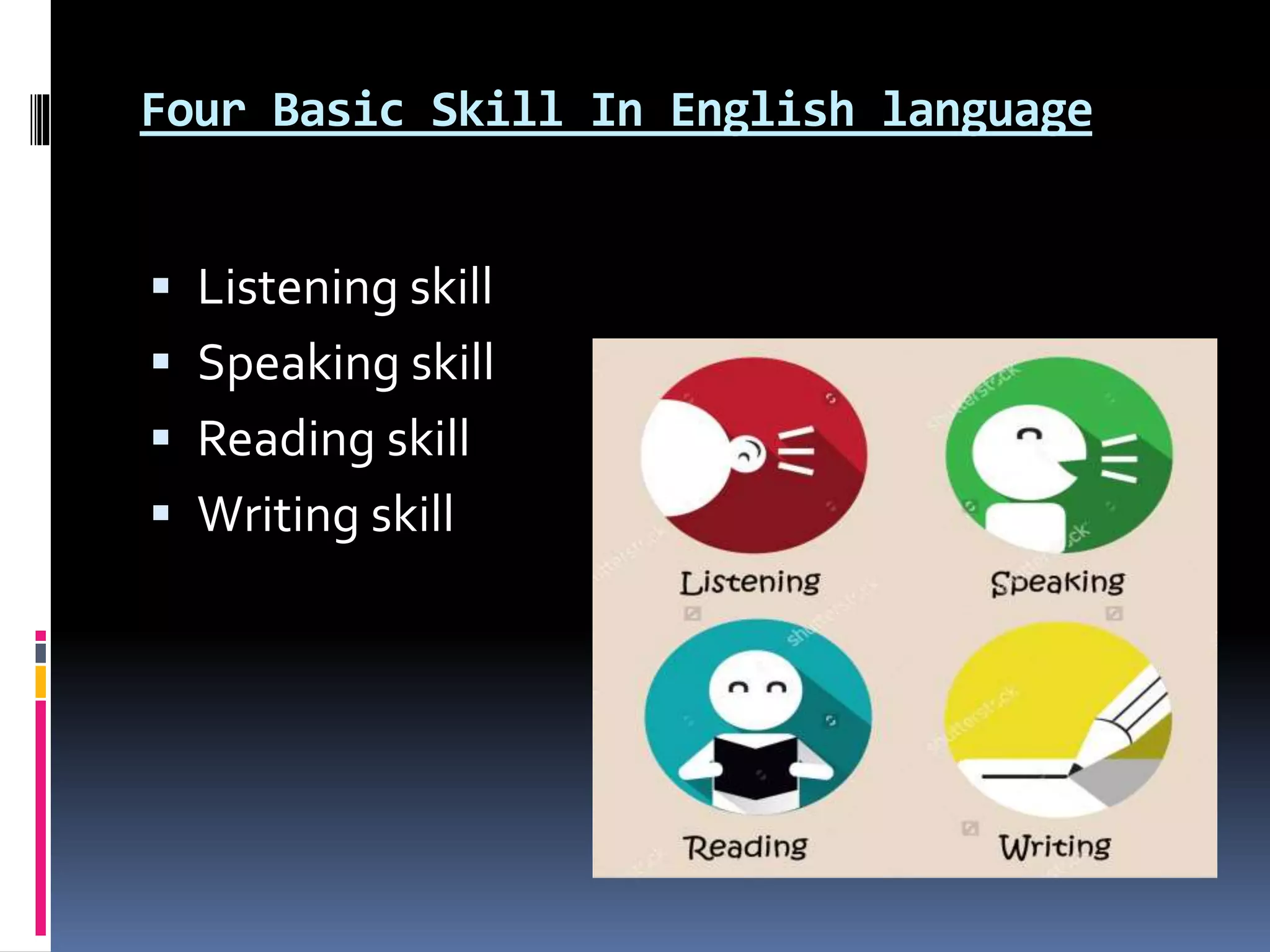
Four Basic Skill In English language
 Listening skill
 Speaking skill
 Reading skill
 Writing skill
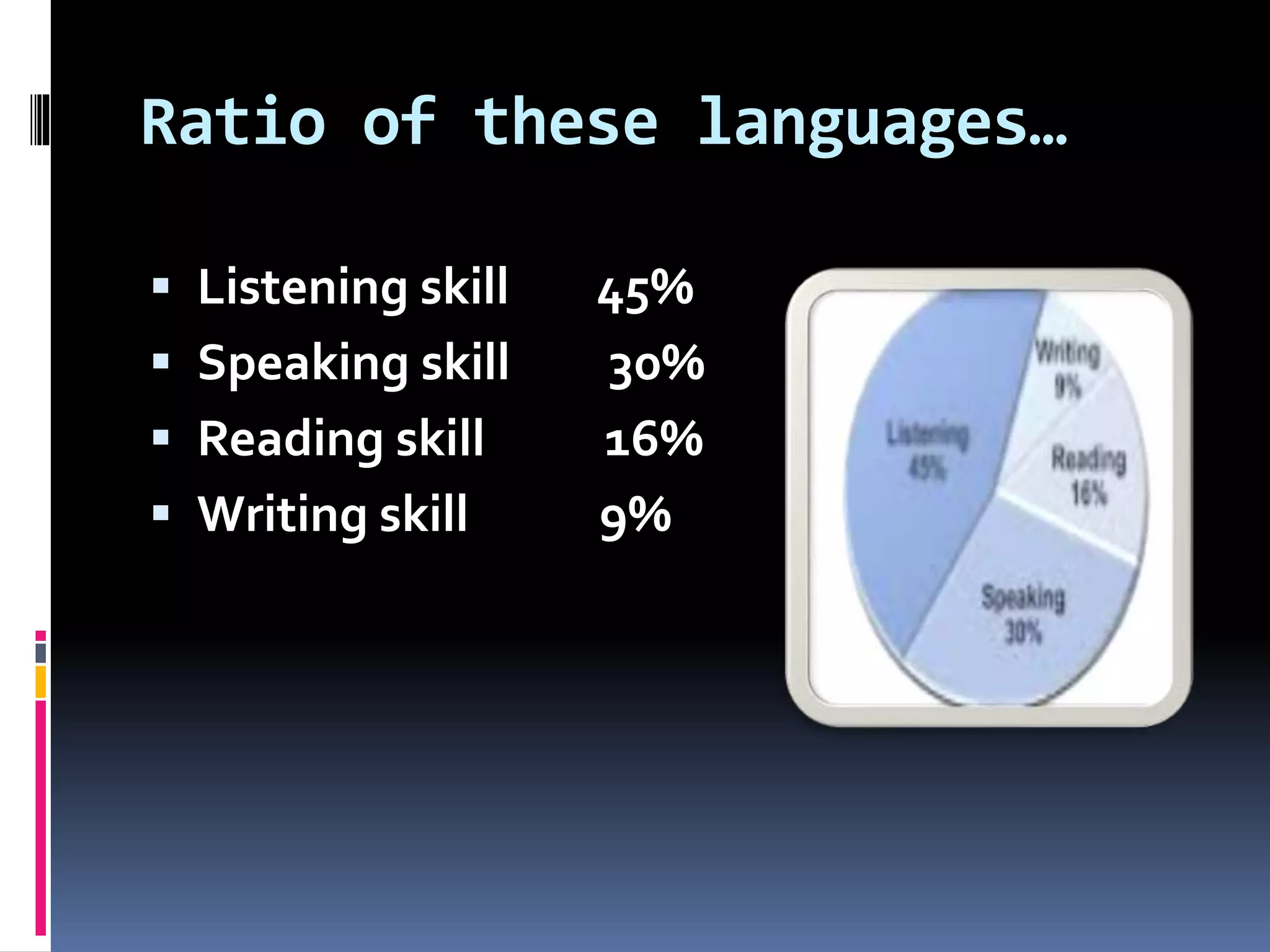
Ratio of these languages…
 Listening skill 45%
 Speaking skill 30%
 Reading skill 16%
 Writing skill 9%
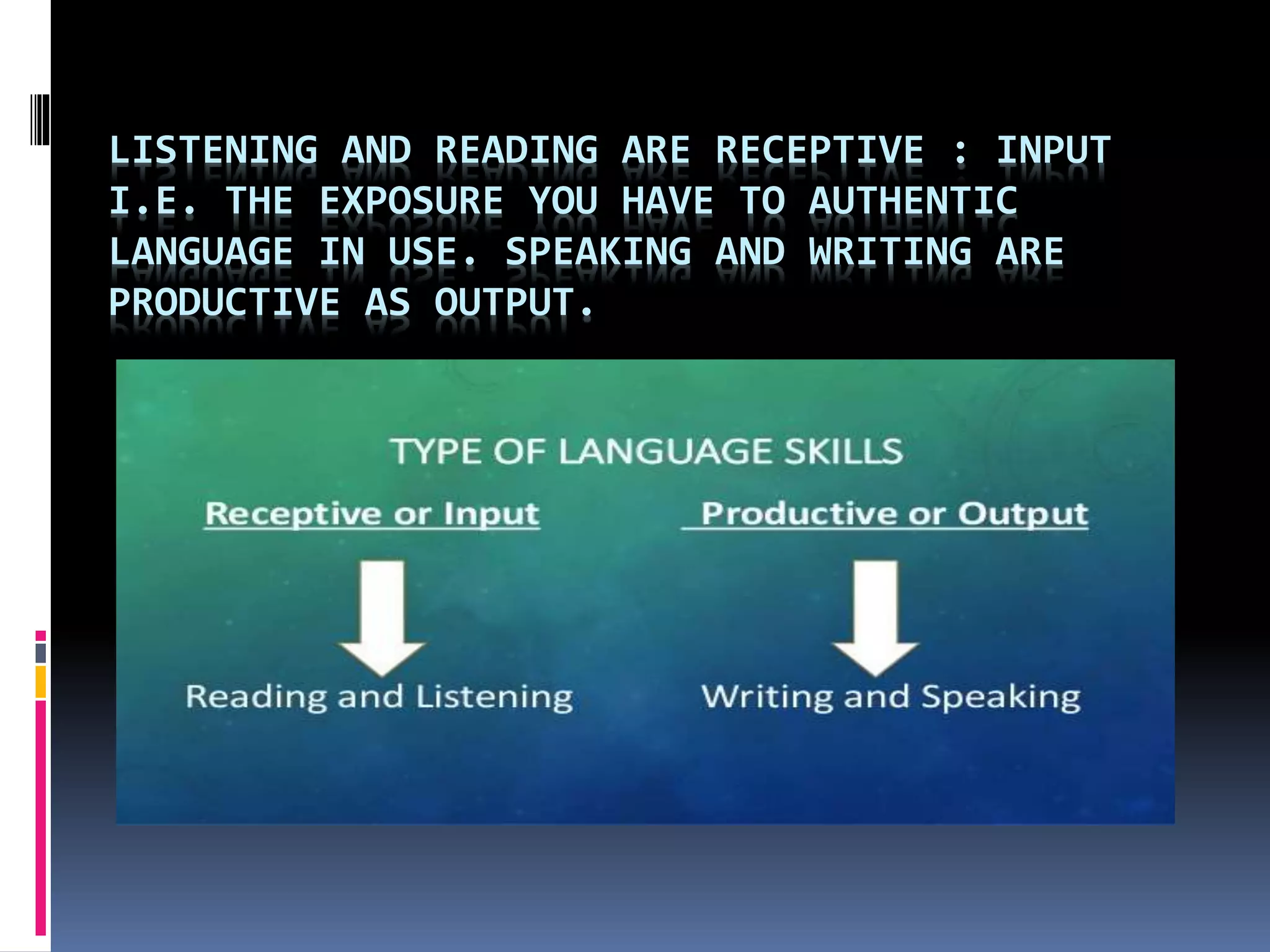
LISTENING AND READING ARE RECEPTIVE : INPUT
I.E. THE EXPOSURE YOU HAVE TO AUTHENTIC
LANGUAGE IN USE. SPEAKING AND WRITING ARE
PRODUCTIVE AS OUTPUT.
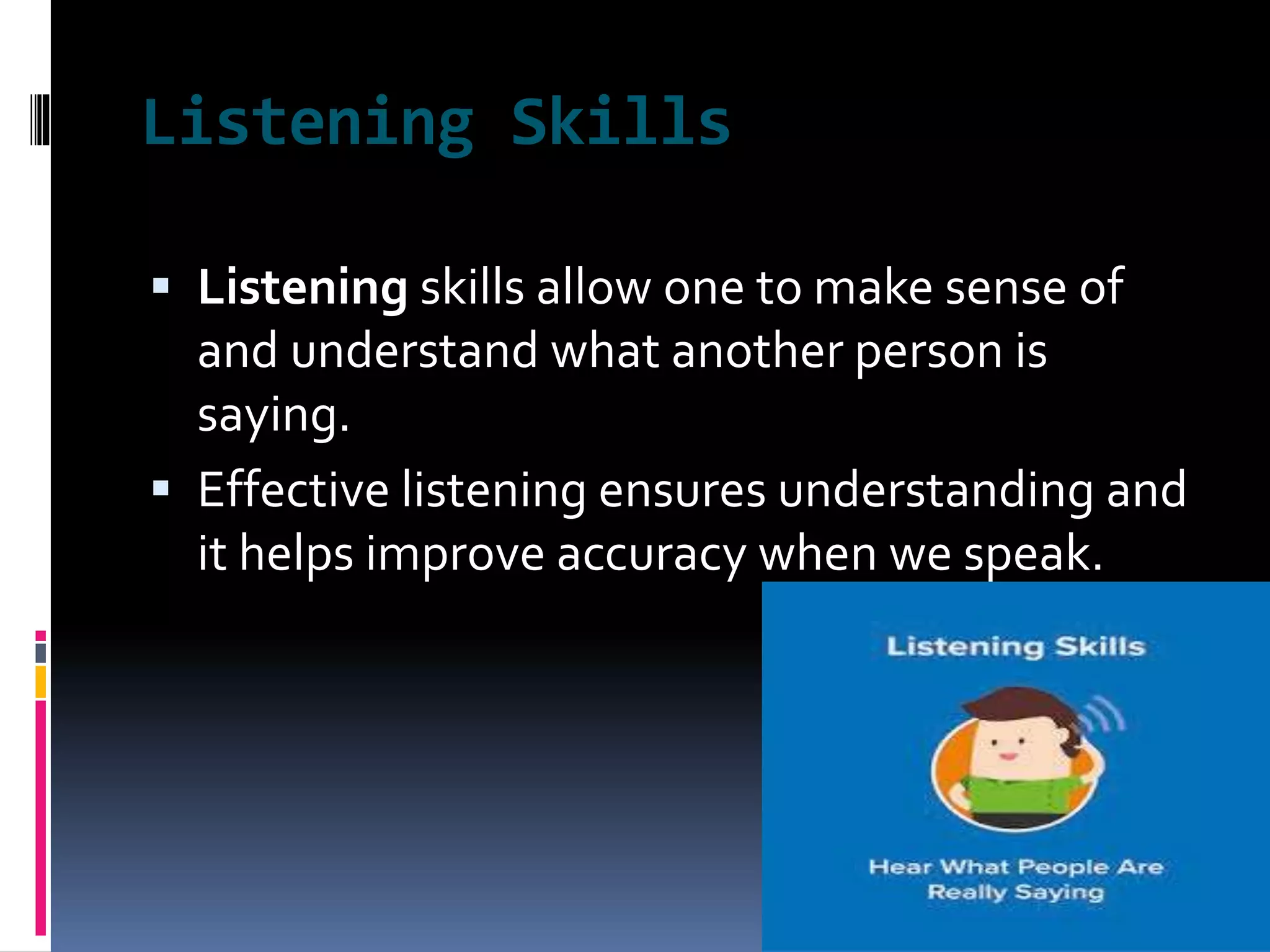
Listening Skills
 Listening skills allow one to make sense of
and understand what another person is
saying.
 Effective listening ensures understanding and
it helps improve accuracy when we speak.
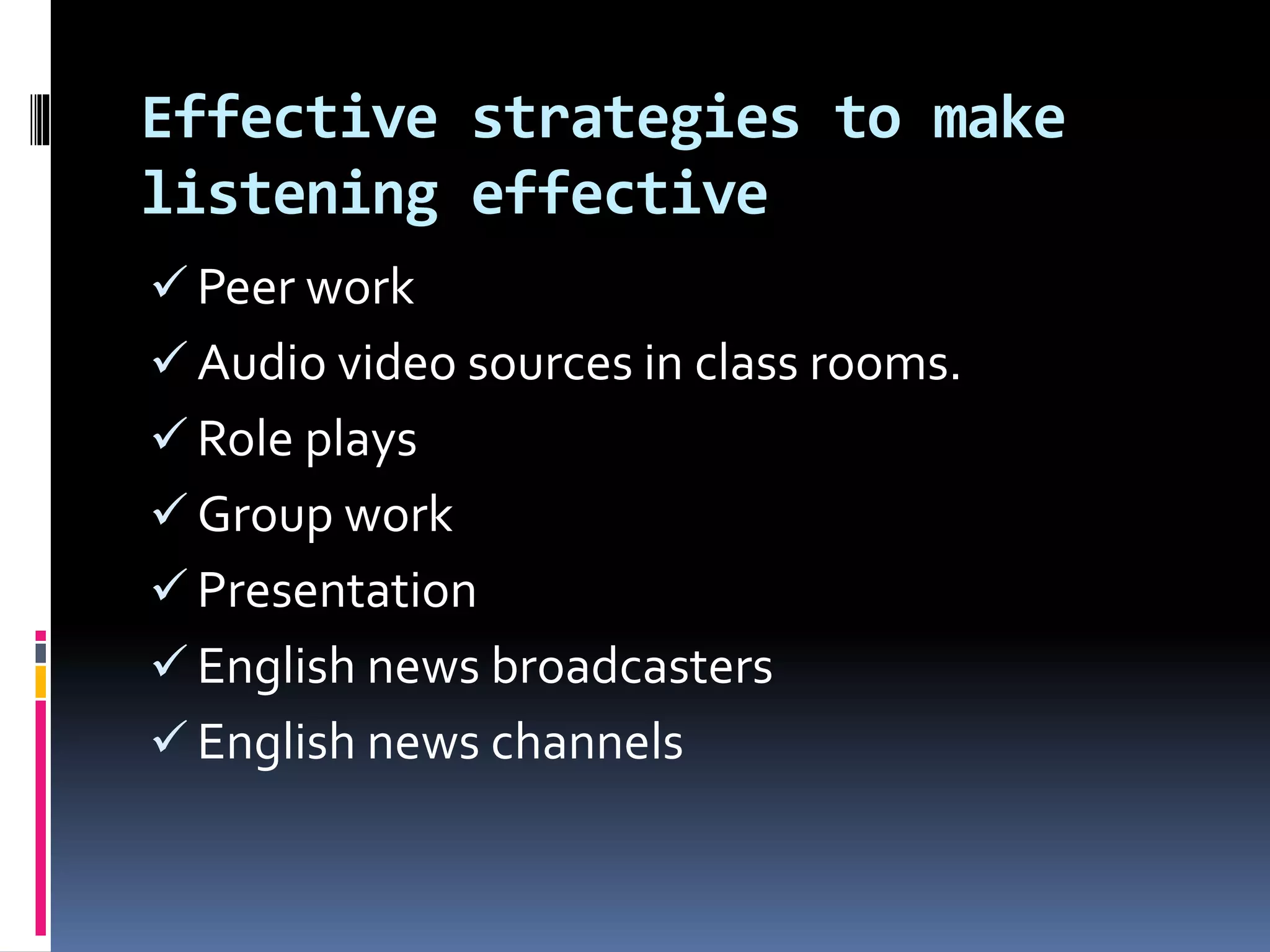
Effective strategies to make
listening effective
 Peer work
 Audio video sources in class rooms.
 Role plays
 Group work
 Presentation
 English news broadcasters
 English news channels
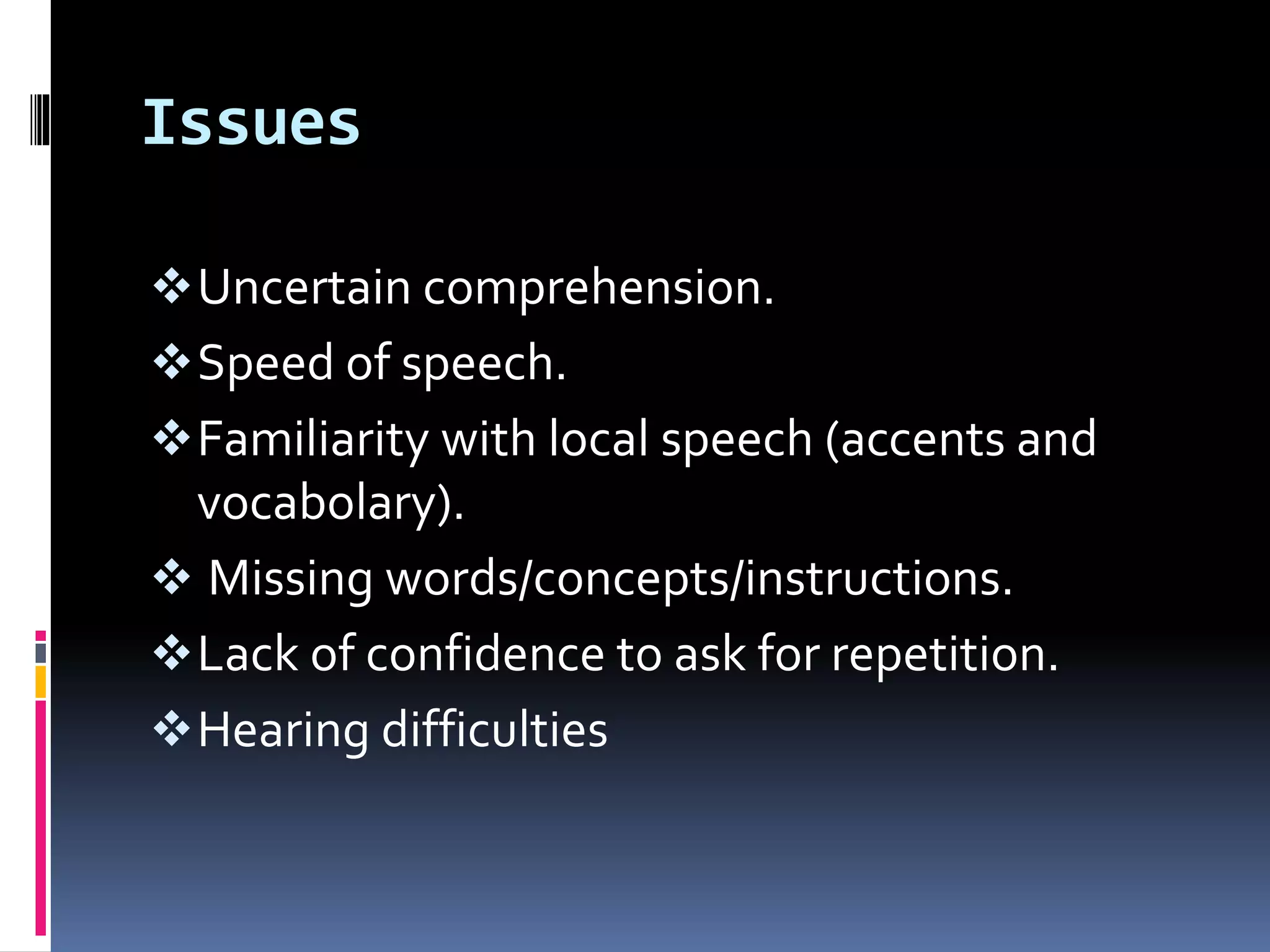
Issues
Uncertain comprehension.
Speed of speech.
Familiarity with local speech (accents and
vocabolary).
 Missing words/concepts/instructions.
Lack of confidence to ask for repetition.
Hearing difficulties
Speaking Skills
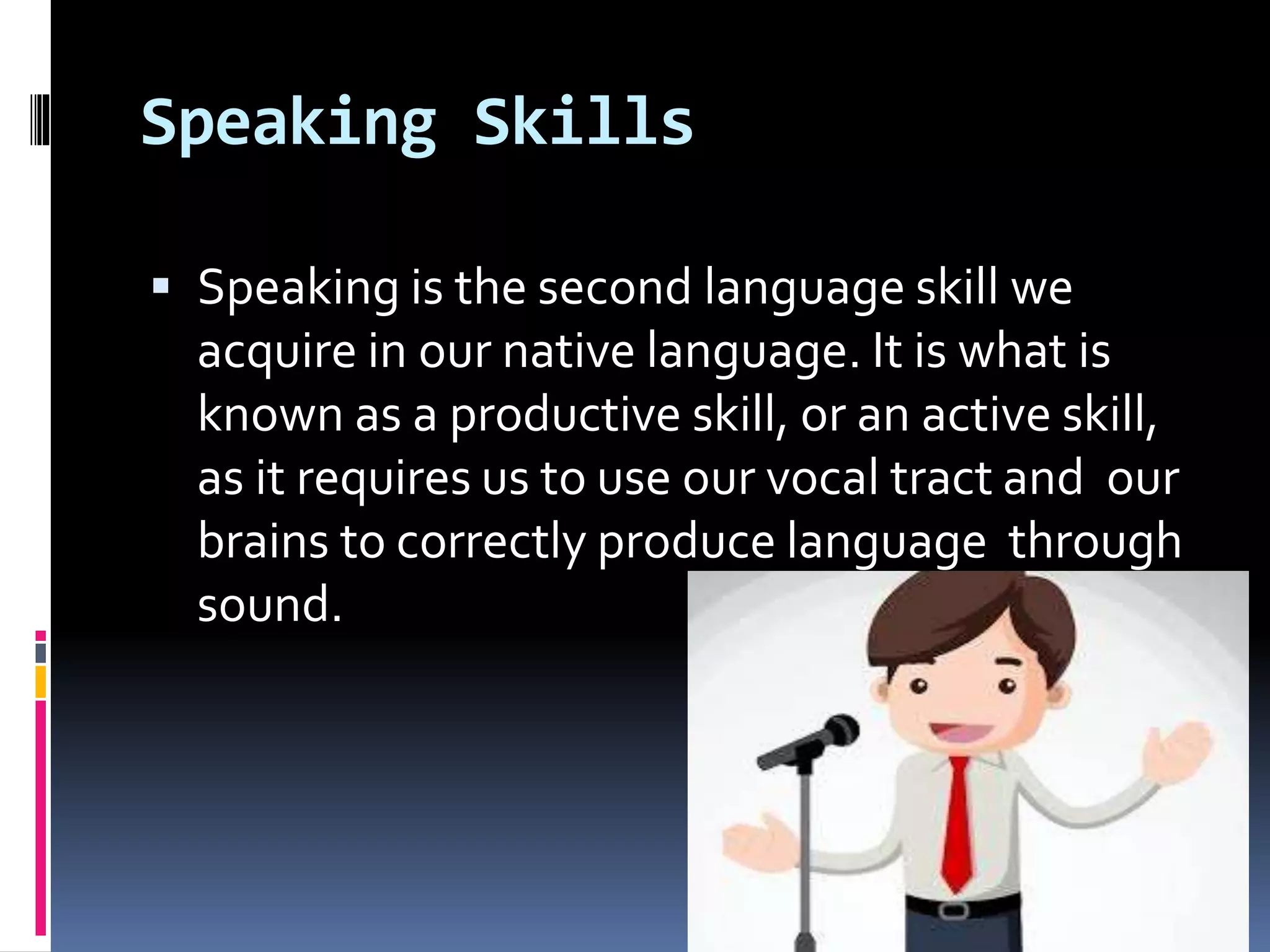
 Speaking is the second language skill we
acquire in our native language. It is what is
known as a productive skill, or an active skill,
as it requires us to use our vocal tract and our
brains to correctly produce language through
sound.
Speaking
 When do we speak?
 Class group discussions.
 Group task work.
 Seminars , Presentations.
 Q & A in lectures.
 One-to-one sessions
(personal tutor, doctor,
employer etc.)
Speaking
 Importance
 Most interactive skill.
 Most obvious skill.
 Develops understanding
through communication.
 Develops interpersonal skills
(Team working).
 Use in assessments.
Speaking
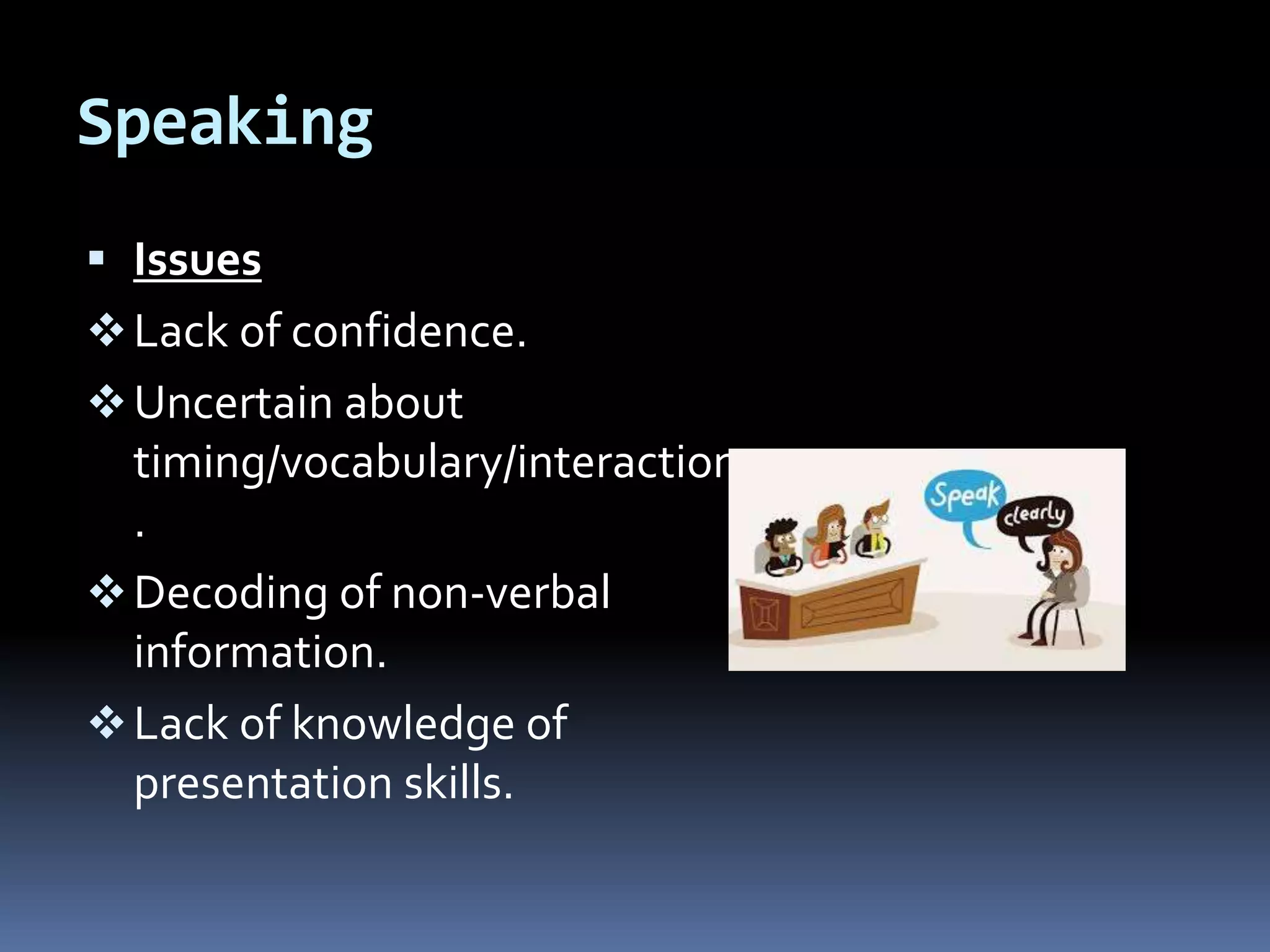
 Issues
Lack of confidence.
Uncertain about
timing/vocabulary/interaction
.
Decoding of non-verbal
information.
Lack of knowledge of
presentation skills.
Reading Skill
 It is a process of the brain and it takes time to
develop: your mind has to attach meaning to
the words, phrases and expressions
represented by symbols, plus get to
understand the grammar and structure of the
language used in the passage to read.
Reading
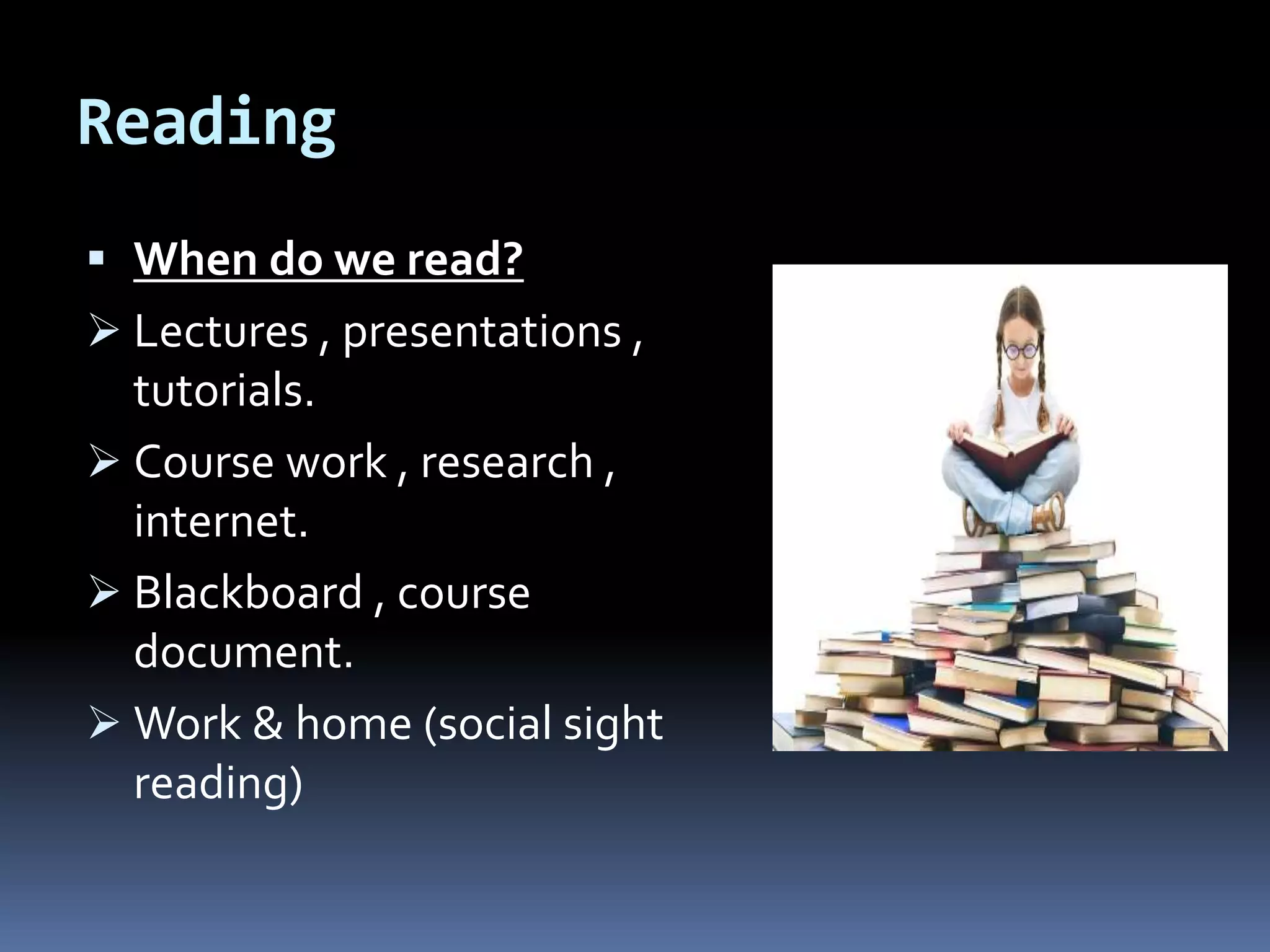
 When do we read?
 Lectures , presentations ,
tutorials.
 Course work , research ,
internet.
 Blackboard , course
document.
 Work & home (social sight
reading)
Reading
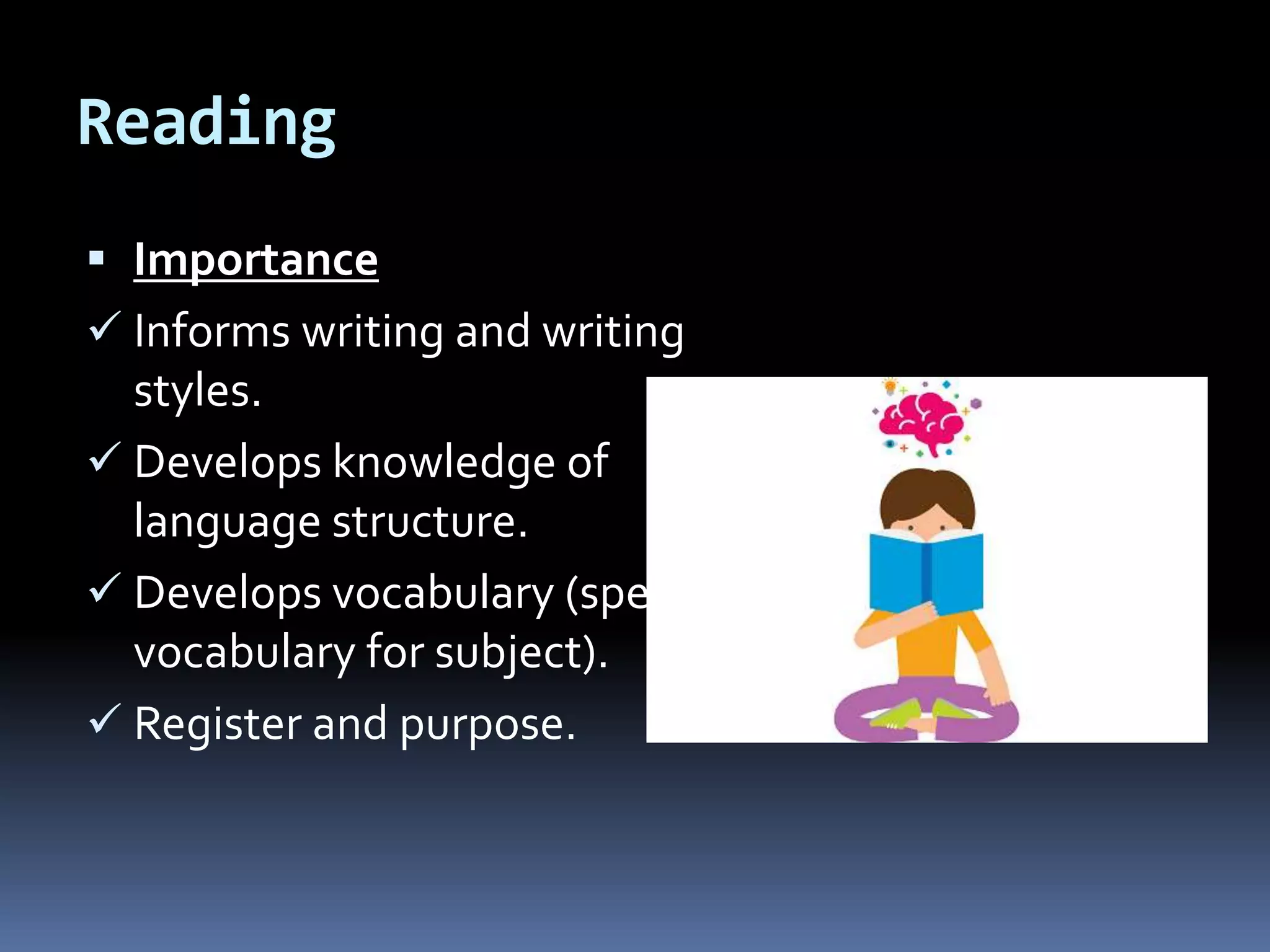
 Importance
 Informs writing and writing
styles.
 Develops knowledge of
language structure.
 Develops vocabulary (specific
vocabulary for subject).
 Register and purpose.
Reading
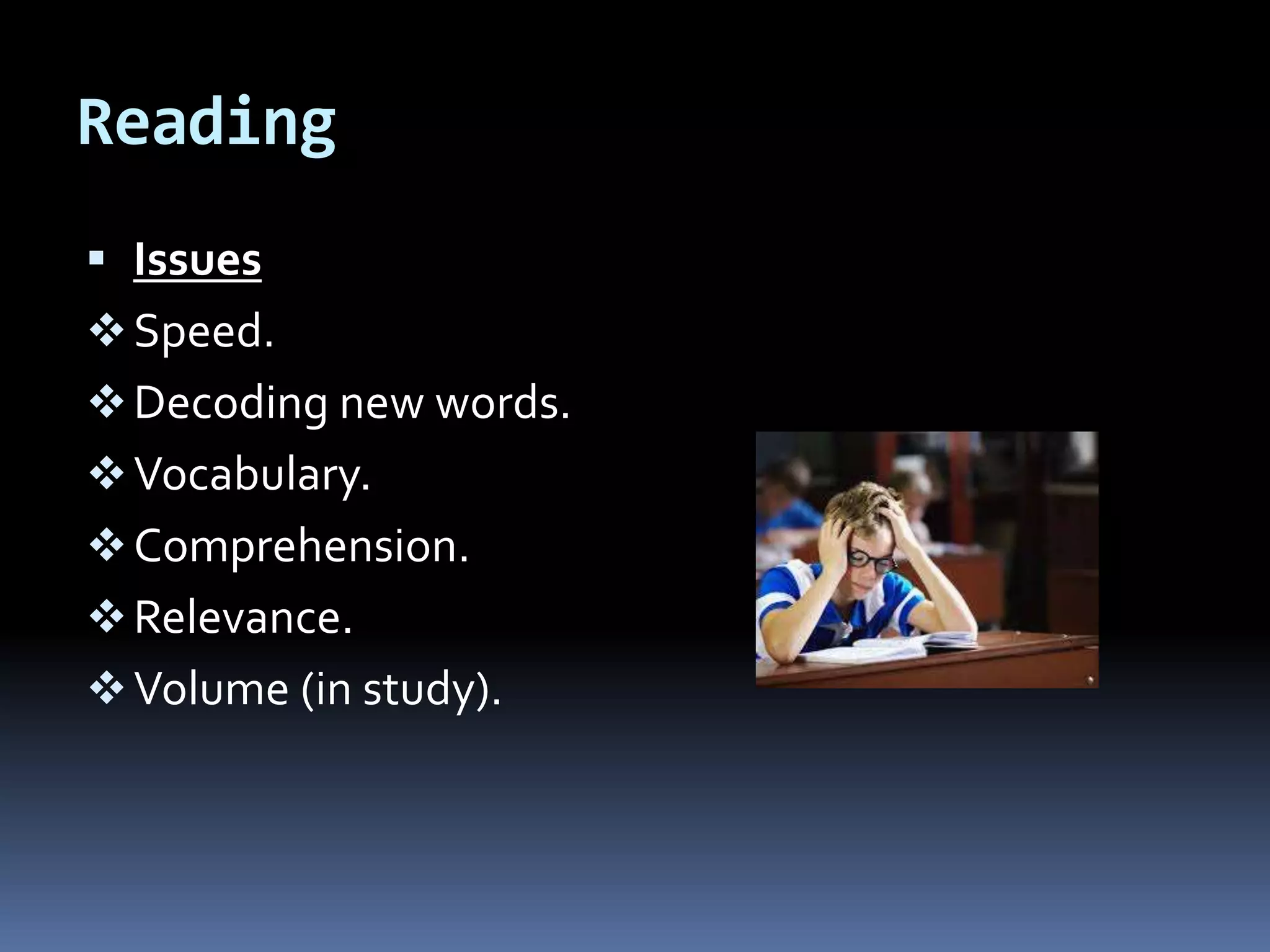
 Issues
Speed.
Decoding new words.
Vocabulary.
Comprehension.
Relevance.
Volume (in study).
Writing Skill
 As with speaking, it is a productive, or active
skill, as it requires us to use our hands and our
brains to produce the written symbols that
represent our spoken language.Along with
reading, it is one of the two artificial
language skills, as not all natural spoken
languages have a writing system.
Writing
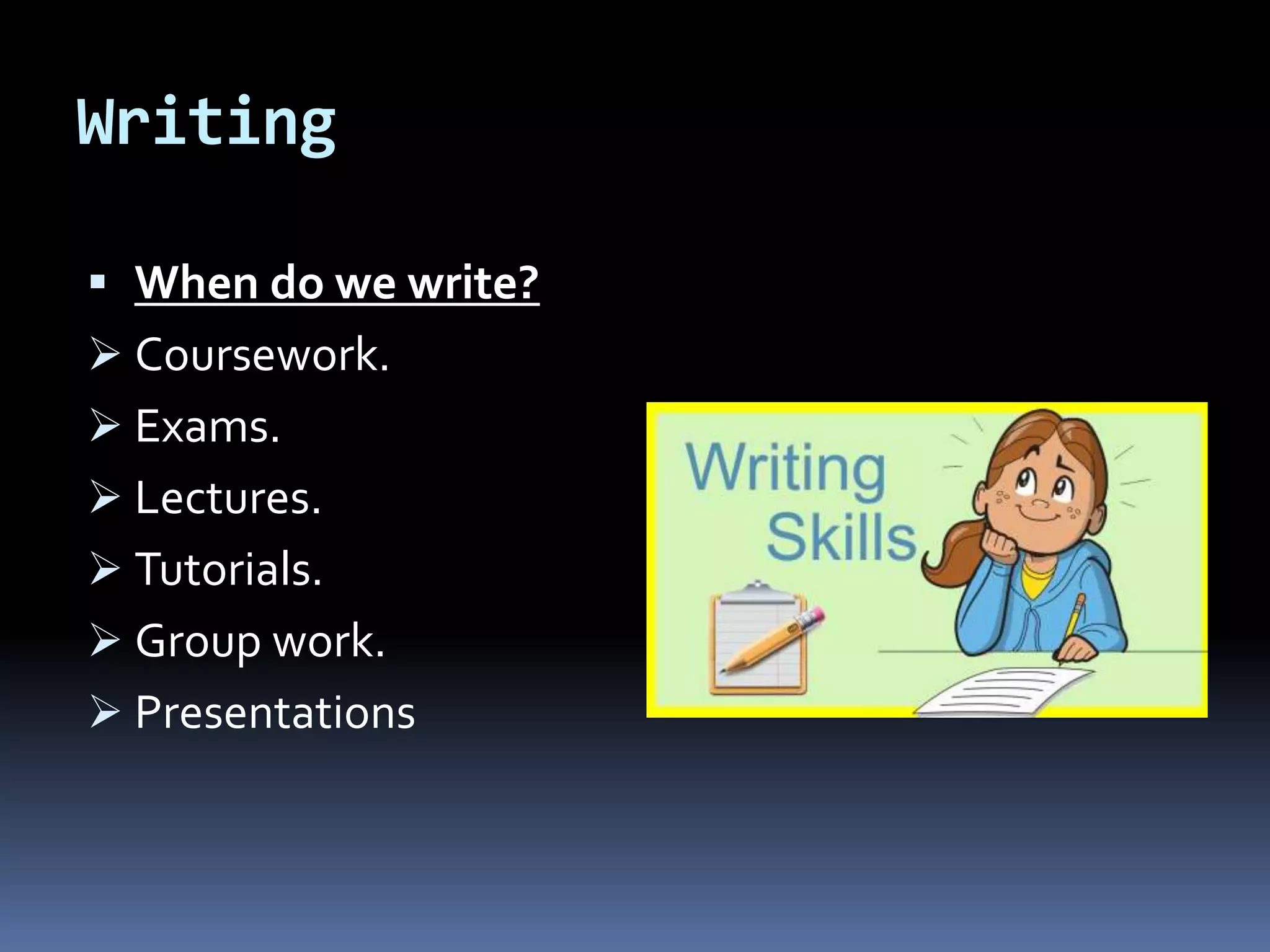
 When do we write?
 Coursework.
 Exams.
 Lectures.
 Tutorials.
 Group work.
 Presentations
Writing
 Issues
Lack of knowledge of key
language structures, words,
sentences, paragraphs ,
text.
Difference b/w style in
native country and UK.
Register and purpose.
Note taking.
Paraphrasing
Presentation

Presentation

  • 2.
    SUBMITTED TO: Sir ShehzadAnjum SUBMITTED BY: Shahzad Ali BBA-19-68 ASSIGNMENT: English II ASSIGNMENT TOPIC: Four Basic Skill Class: 2nd semester BBA Morning (B)
  • 3.
    Skills Of LanguageLearning  What is language ?  Language a system of conventional spoken, manual, or written symbols by means of which human being, as members of a social group and participants in its culture, express themselves.The functions of language include communication, the expression and emotional release.
  • 4.
    Four Basic SkillIn English language  Listening skill  Speaking skill  Reading skill  Writing skill
  • 5.
    Ratio of theselanguages…  Listening skill 45%  Speaking skill 30%  Reading skill 16%  Writing skill 9%
  • 6.
    LISTENING AND READINGARE RECEPTIVE : INPUT I.E. THE EXPOSURE YOU HAVE TO AUTHENTIC LANGUAGE IN USE. SPEAKING AND WRITING ARE PRODUCTIVE AS OUTPUT.
  • 7.
    Listening Skills  Listeningskills allow one to make sense of and understand what another person is saying.  Effective listening ensures understanding and it helps improve accuracy when we speak.
  • 8.
    Effective strategies tomake listening effective  Peer work  Audio video sources in class rooms.  Role plays  Group work  Presentation  English news broadcasters  English news channels
  • 9.
    Issues Uncertain comprehension. Speed ofspeech. Familiarity with local speech (accents and vocabolary).  Missing words/concepts/instructions. Lack of confidence to ask for repetition. Hearing difficulties
  • 10.
    Speaking Skills  Speakingis the second language skill we acquire in our native language. It is what is known as a productive skill, or an active skill, as it requires us to use our vocal tract and our brains to correctly produce language through sound.
  • 11.
    Speaking  When dowe speak?  Class group discussions.  Group task work.  Seminars , Presentations.  Q & A in lectures.  One-to-one sessions (personal tutor, doctor, employer etc.)
  • 12.
    Speaking  Importance  Mostinteractive skill.  Most obvious skill.  Develops understanding through communication.  Develops interpersonal skills (Team working).  Use in assessments.
  • 13.
    Speaking  Issues Lack ofconfidence. Uncertain about timing/vocabulary/interaction . Decoding of non-verbal information. Lack of knowledge of presentation skills.
  • 14.
    Reading Skill  Itis a process of the brain and it takes time to develop: your mind has to attach meaning to the words, phrases and expressions represented by symbols, plus get to understand the grammar and structure of the language used in the passage to read.
  • 15.
    Reading  When dowe read?  Lectures , presentations , tutorials.  Course work , research , internet.  Blackboard , course document.  Work & home (social sight reading)
  • 16.
    Reading  Importance  Informswriting and writing styles.  Develops knowledge of language structure.  Develops vocabulary (specific vocabulary for subject).  Register and purpose.
  • 17.
    Reading  Issues Speed. Decoding newwords. Vocabulary. Comprehension. Relevance. Volume (in study).
  • 18.
    Writing Skill  Aswith speaking, it is a productive, or active skill, as it requires us to use our hands and our brains to produce the written symbols that represent our spoken language.Along with reading, it is one of the two artificial language skills, as not all natural spoken languages have a writing system.
  • 19.
    Writing  When dowe write?  Coursework.  Exams.  Lectures.  Tutorials.  Group work.  Presentations
  • 20.
    Writing  Issues Lack ofknowledge of key language structures, words, sentences, paragraphs , text. Difference b/w style in native country and UK. Register and purpose. Note taking. Paraphrasing