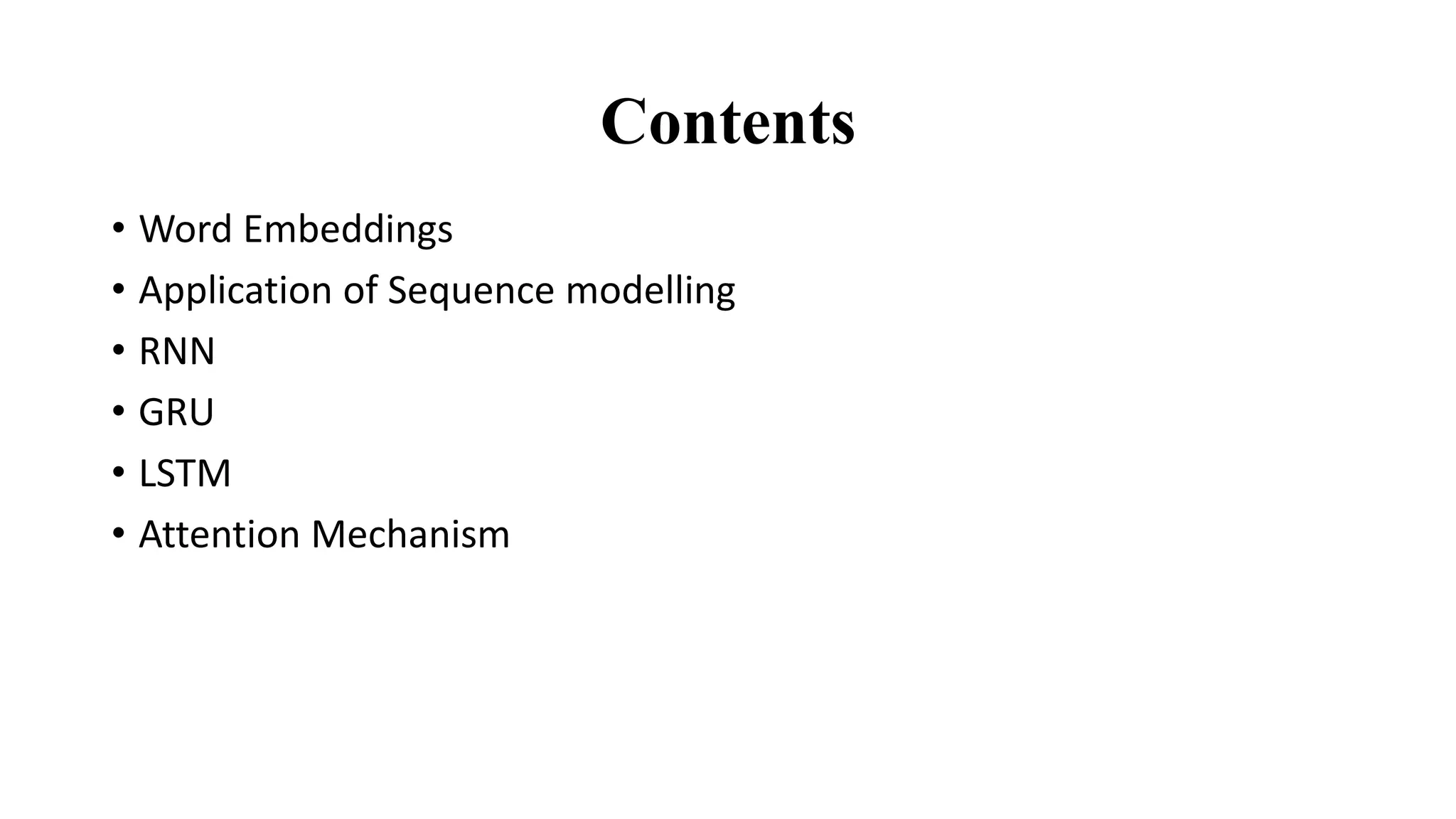
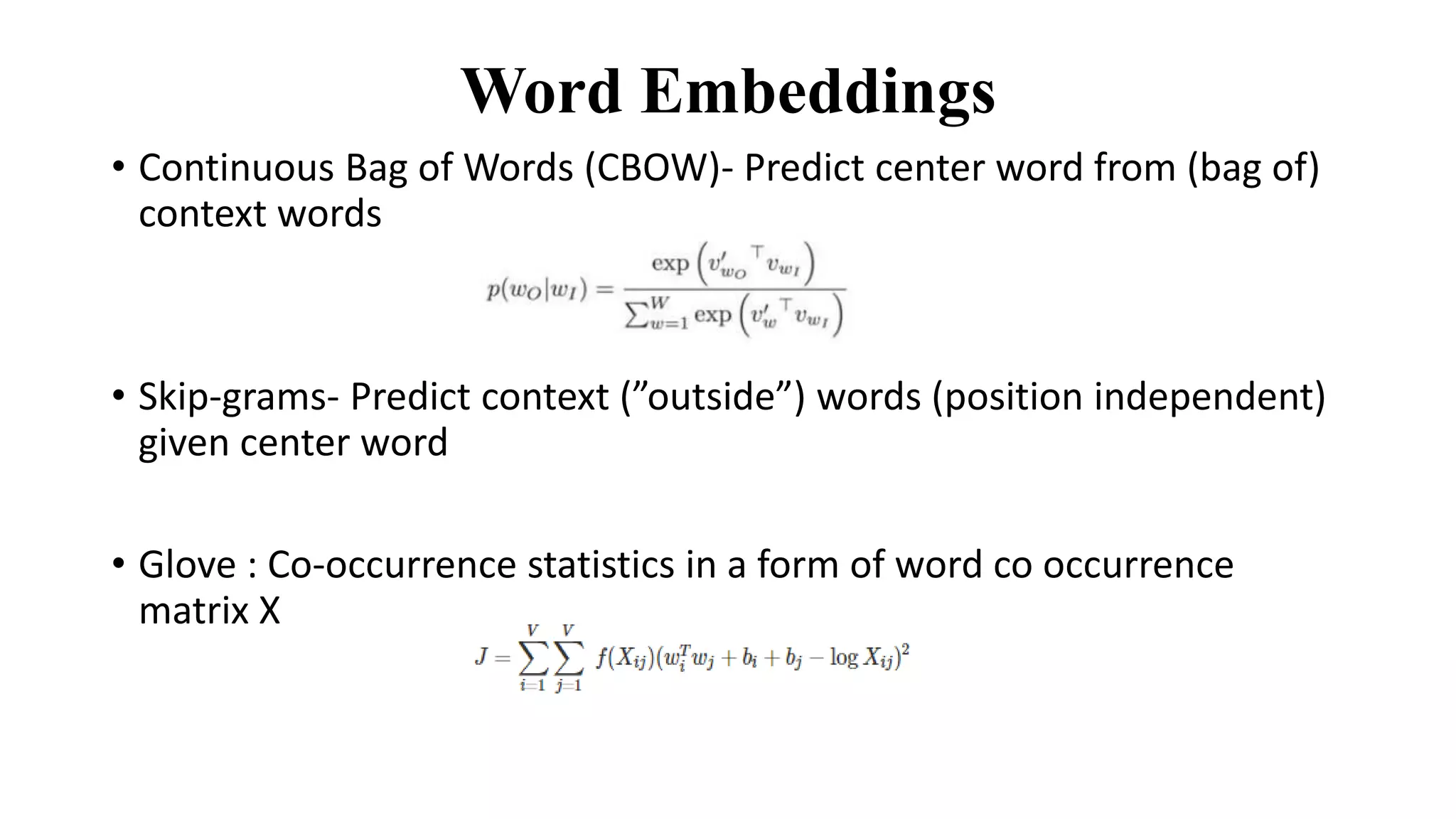
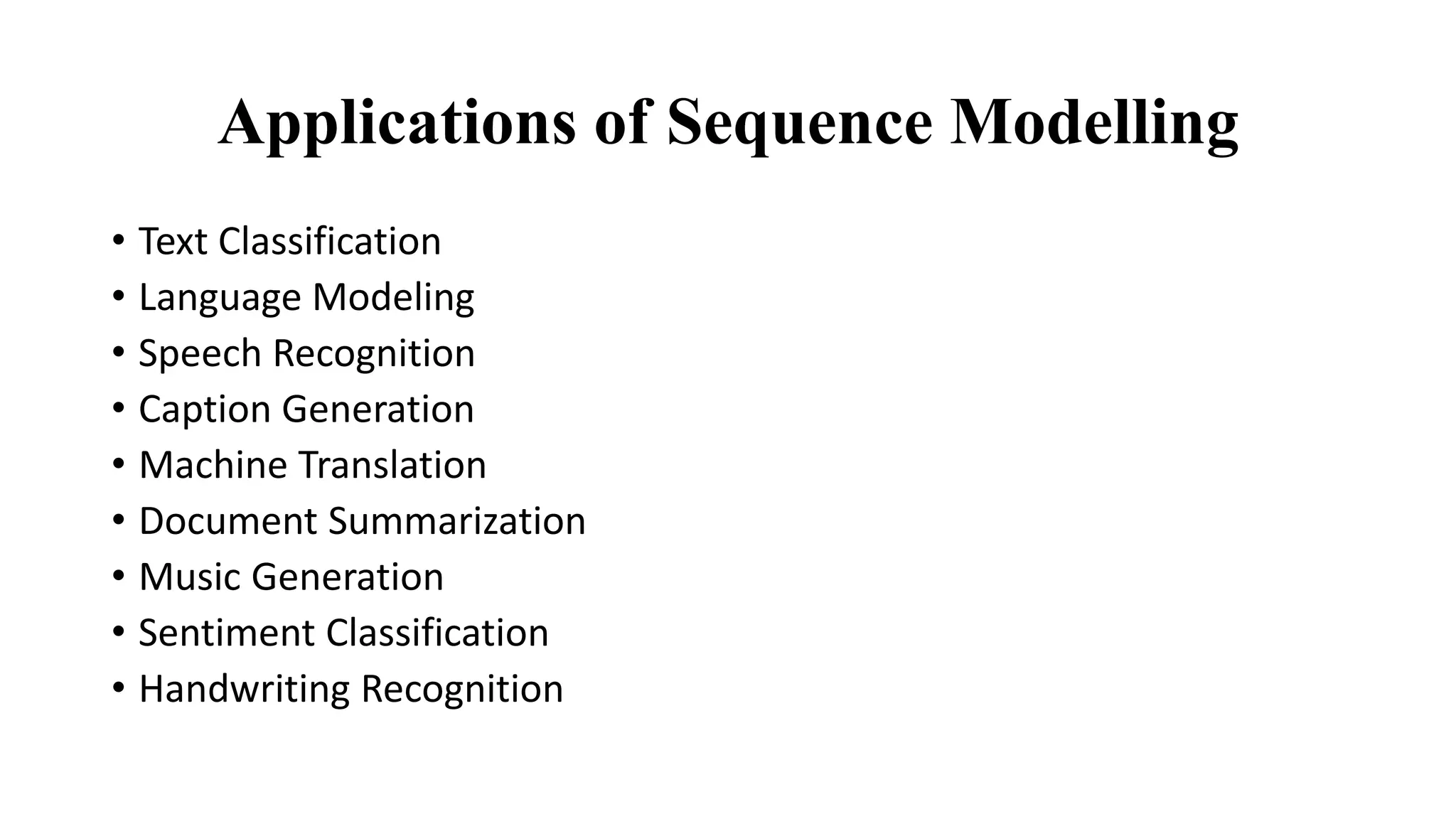
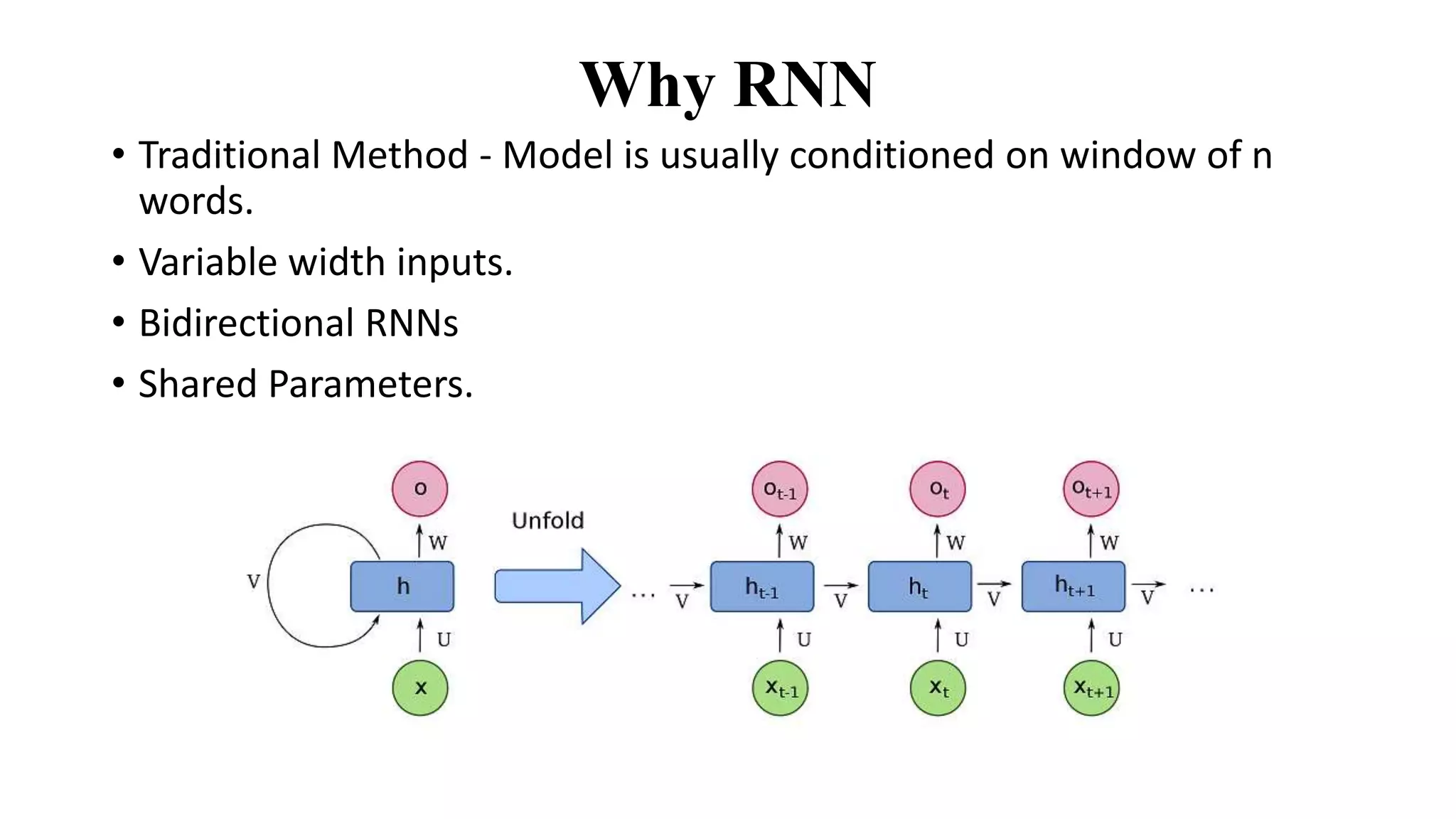
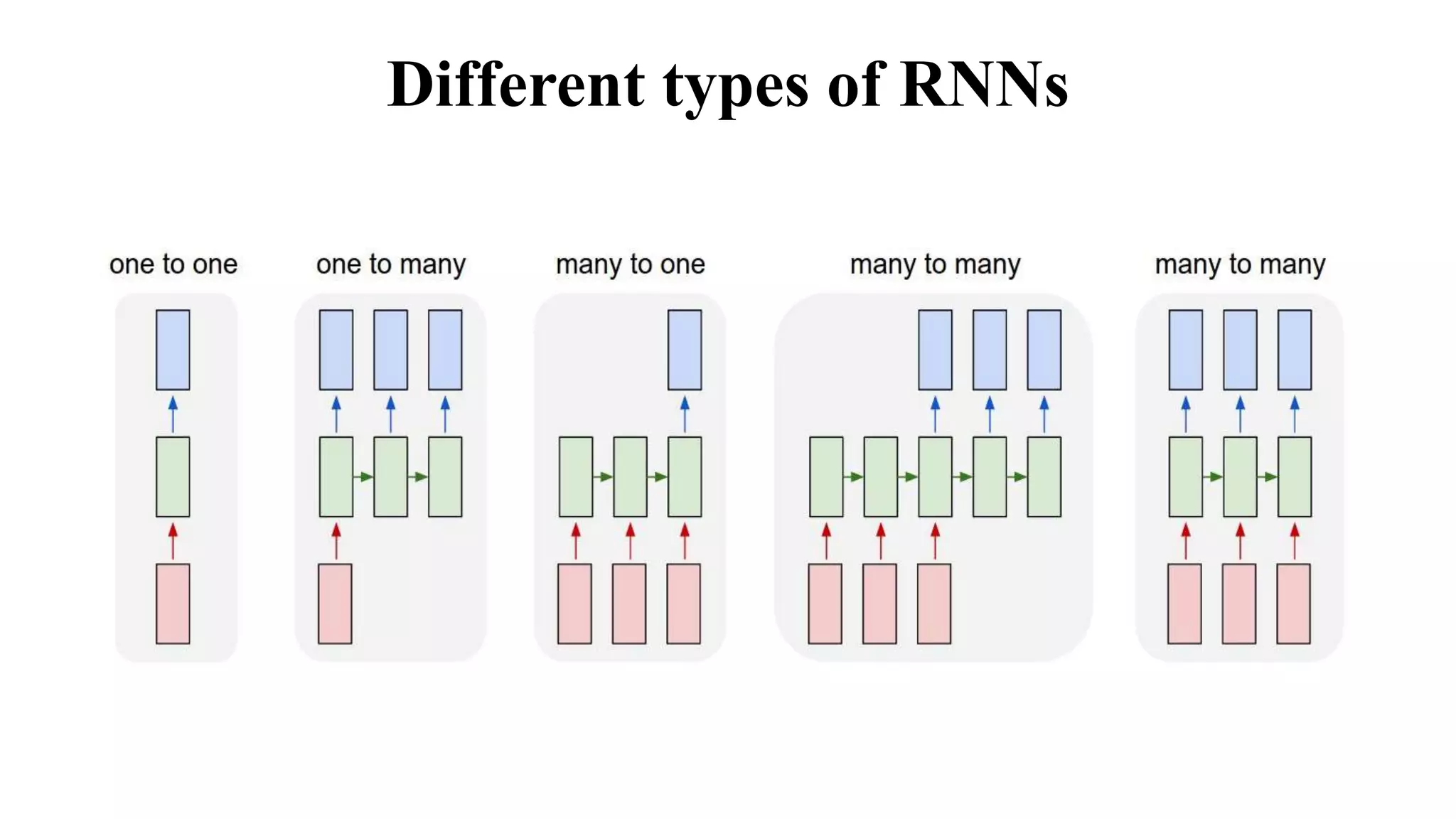
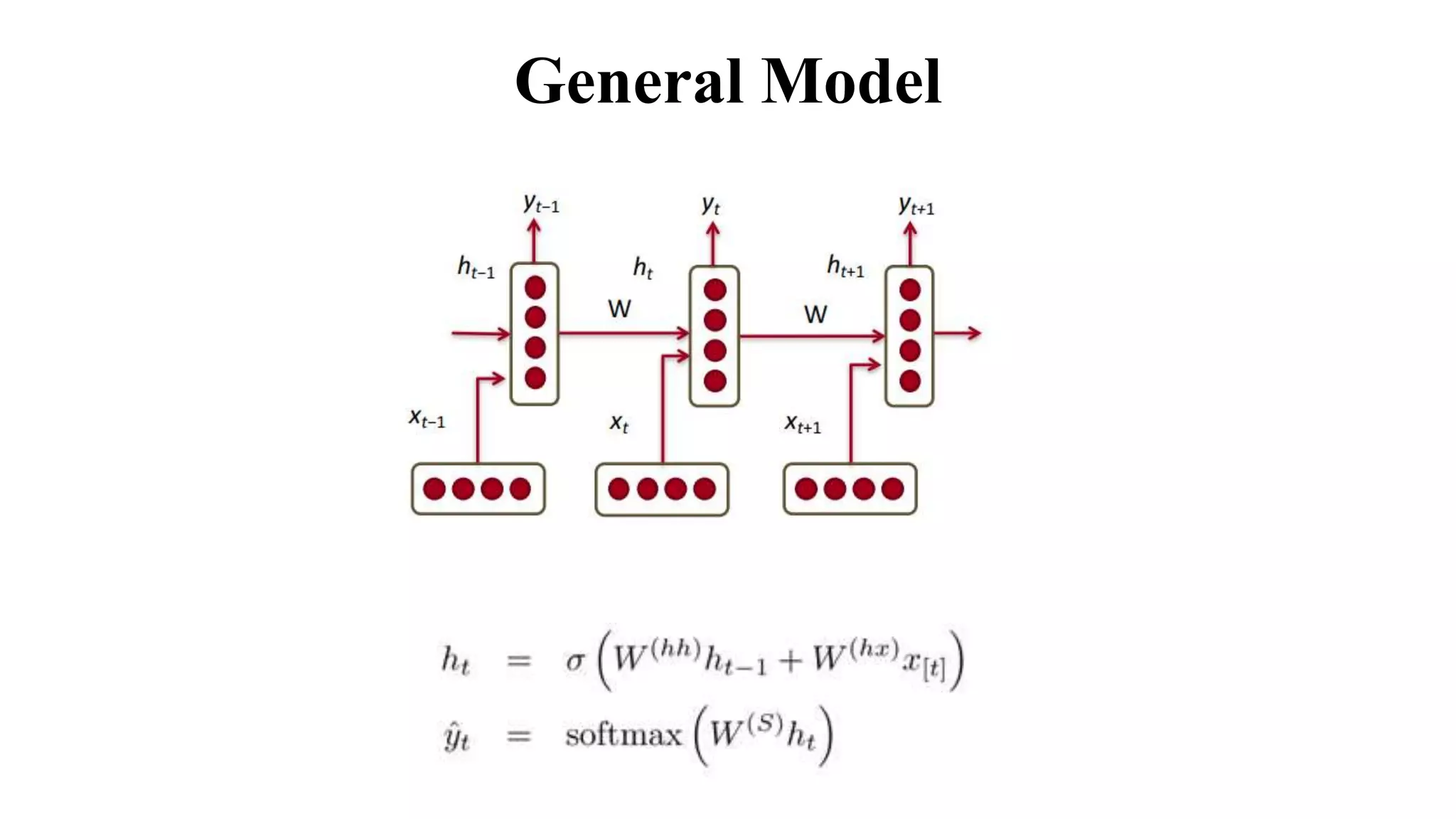
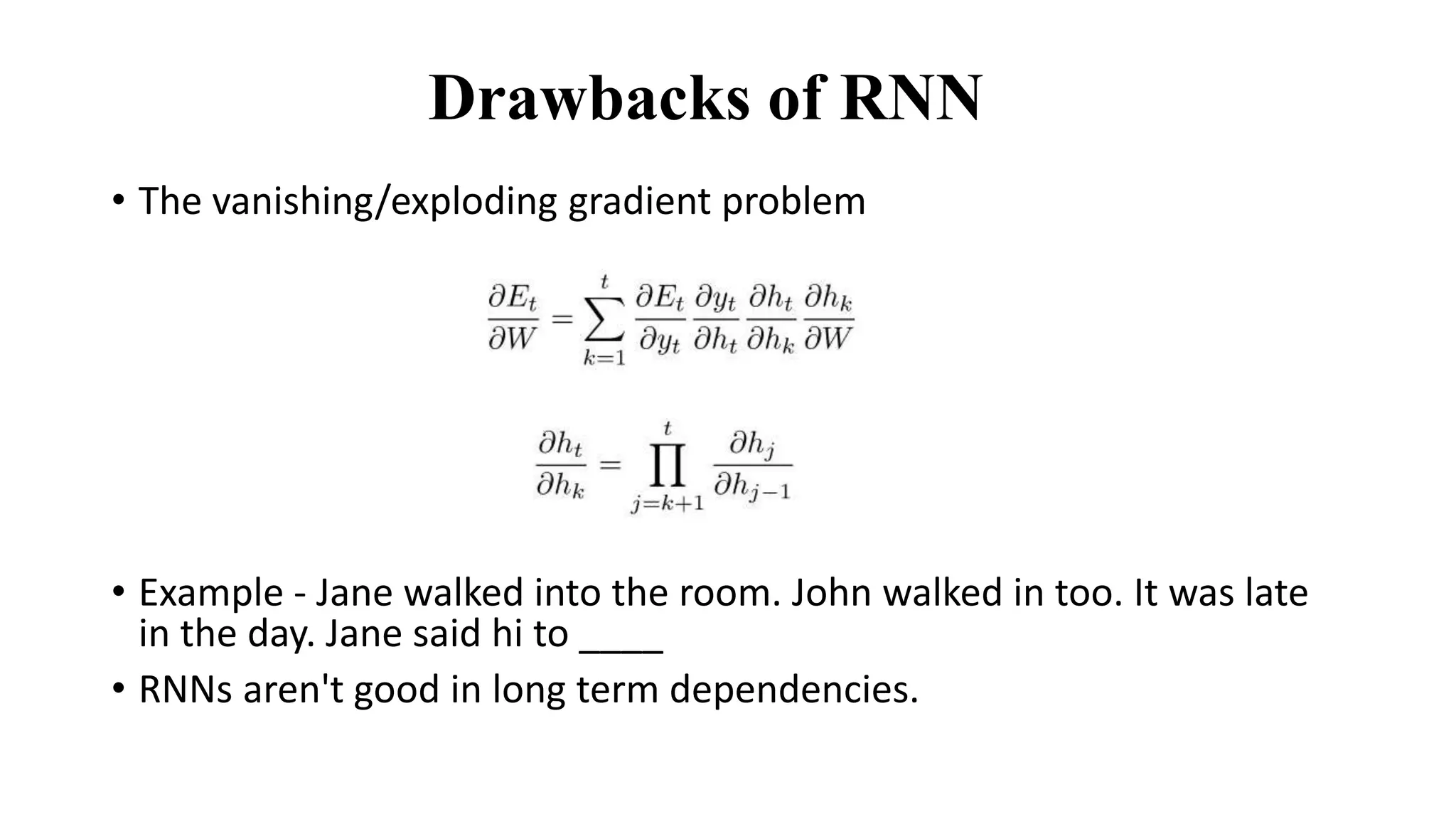
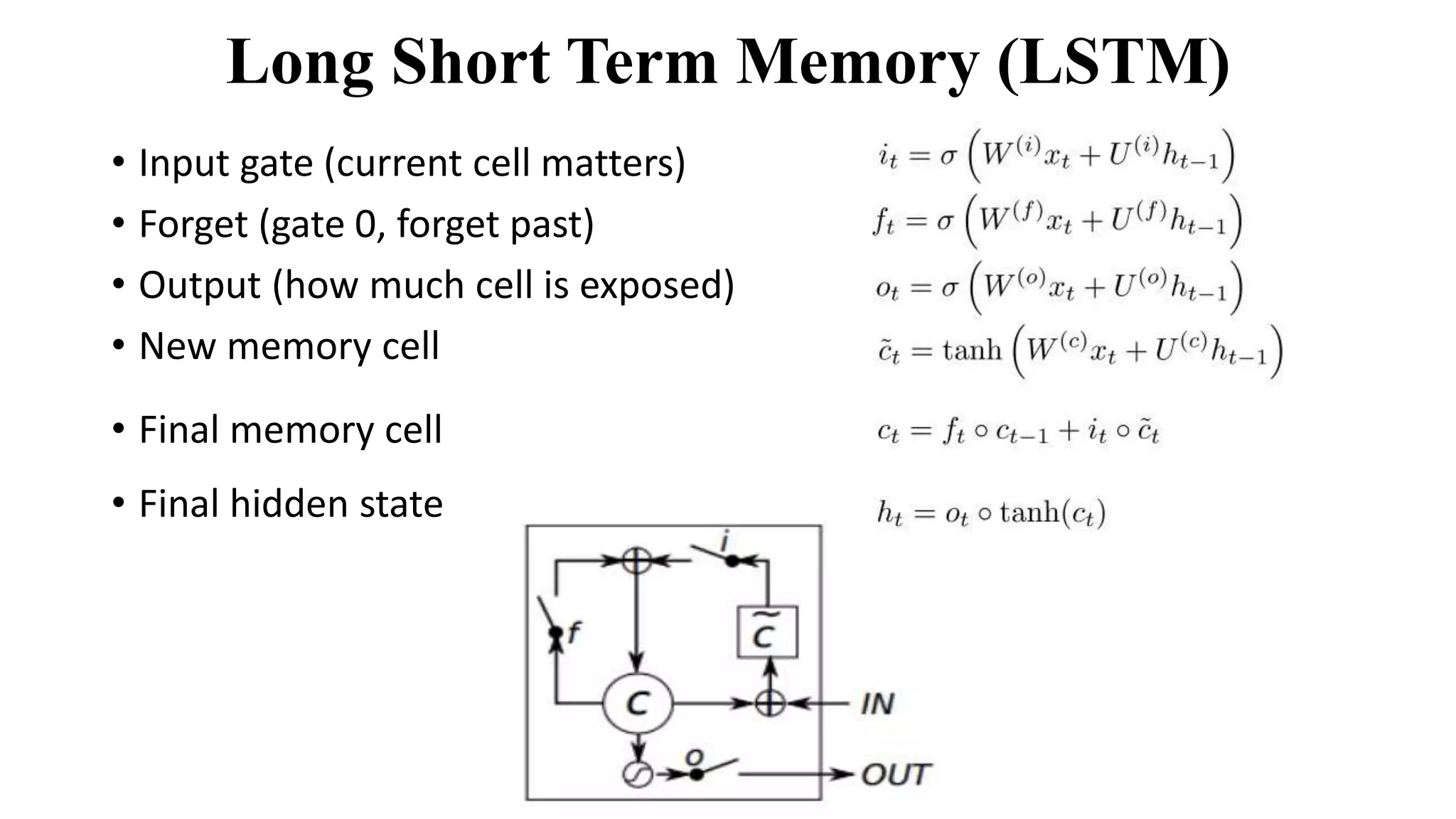
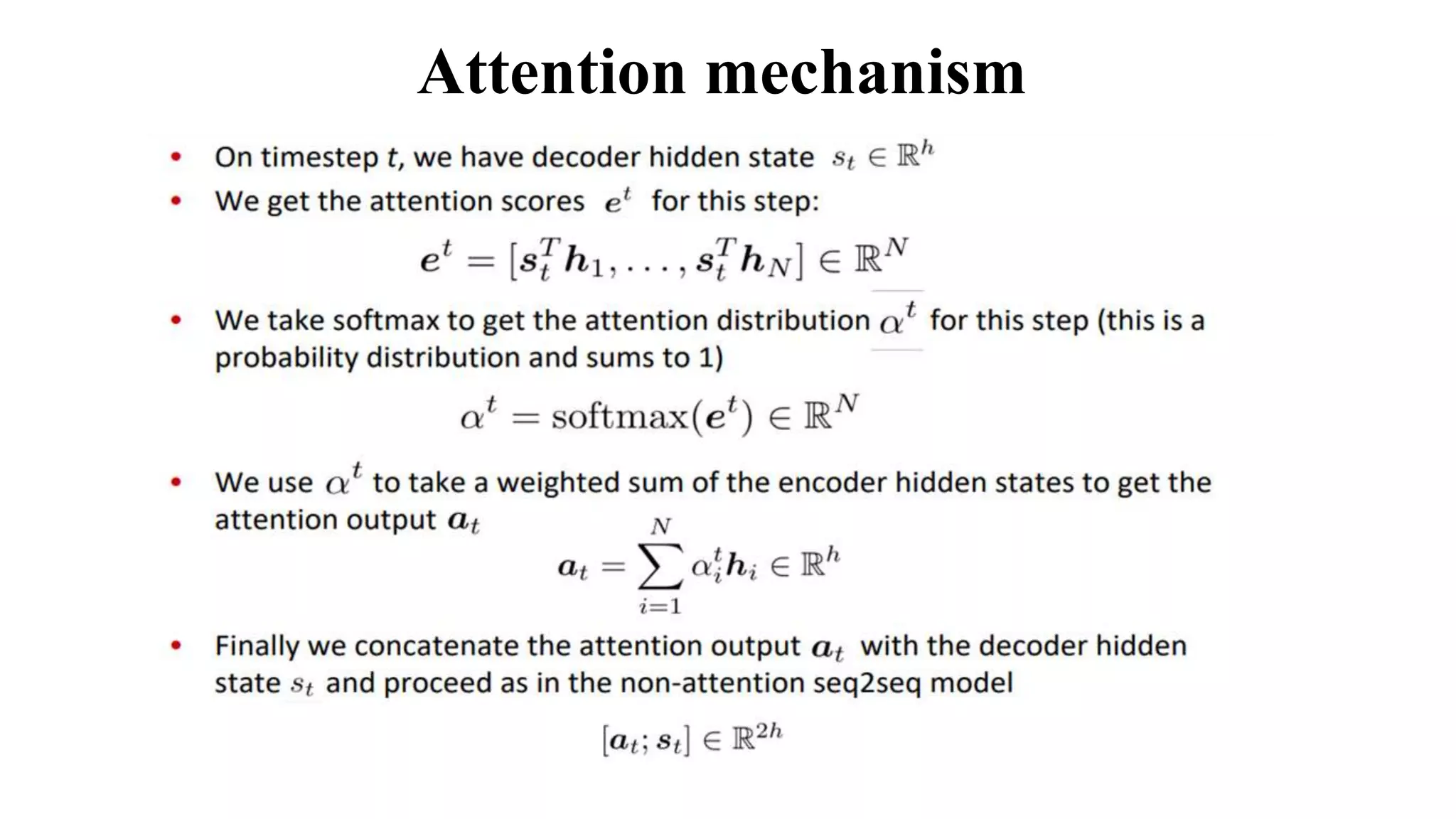
The document discusses word embeddings and various RNN techniques used in sequence modeling, including GRU and LSTM architectures. It details applications such as text classification, machine translation, and speech recognition, while also addressing the limitations of RNNs like the vanishing gradient problem. The document emphasizes the importance of attention mechanisms for improving long-term dependencies in sequence data.




![[AIoTLab]attention mechanism.pptx](https://cdn.slidesharecdn.com/ss_thumbnails/aiotlabattentionmechanism-230406114603-e5ba0365-thumbnail.jpg?width=640&height=640&fit=bounds)


![[Paper Reading] Attention is All You Need](https://cdn.slidesharecdn.com/ss_thumbnails/reading20181228-190111054908-thumbnail.jpg?width=640&height=640&fit=bounds)


![NextWordPrediction_ppt[1].pptx](https://cdn.slidesharecdn.com/ss_thumbnails/nextwordpredictionppt1-231219040932-5e3a49be-thumbnail.jpg?width=640&height=640&fit=bounds)


![[DSC Europe 25] Dusan Jovicic - AI Story: From on-prem to cloud and back agai...](https://cdn.slidesharecdn.com/ss_thumbnails/8kp49m6uq22ifnbwhfnk-2-251205085715-964d11a6-thumbnail.jpg?width=640&height=640&fit=bounds)


![[DSC Europe 25] Nikola Rajovic - Hardware Technologies Under the Hood: RISC-V...](https://cdn.slidesharecdn.com/ss_thumbnails/o2gptrmtoyqndgoshwgq-dsc2025-tenstorrent-rajovic-251205090438-814685f5-thumbnail.jpg?width=640&height=640&fit=bounds)


![[DSC Europe 25] Dragana Ilic - AI for Big Data in Astronomy.pptx](https://cdn.slidesharecdn.com/ss_thumbnails/8palya86qaatvjhva1ms-2-dragana-ilic-ai-ilic-251208151906-652b819c-thumbnail.jpg?width=640&height=640&fit=bounds)


![[DSC Europe 25] Andy Cotgreave - Nothing is new in analytics.pptx](https://cdn.slidesharecdn.com/ss_thumbnails/mba4vzcurvoh5lfrd5zw-6-251205194645-341bbbbe-thumbnail.jpg?width=640&height=640&fit=bounds)