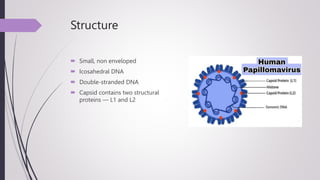
Structure
 Small, non enveloped
 Icosahedral DNA
 Double-stranded DNA
 Capsid contains two structural
proteins — L1 and L2
Human Papilloma virus
 Papilloma viruses were the first to be implicated in the etiology of any
human tumour.
 At least 70 genetically distinct types of HPV have been identified.
 Papilloma viruses are implicated in the etiology of following benign and
malignant tumours :
 HPV types 1,2,4 and 7 cause benign squamous papillomas
(warts) in humans.
 HPV types 6 and 11 genital warts (condyloma acuminata).
Genital warts have low malignant potential.
 HPV types 16 and 18 squamous cell carcinoma of the cervix and
anogenital region.
Mode of Transmission
 HPV is transmitted through intimate skin-to-skin contact
 It is most commonly spread during vaginal or anal sex.
 It can be passed even when an infected person has no signs or symptoms.
 It can develop symptoms years after being infected, making it hard to know when
you first became infected.
HPV Oncogenesis
 On persistence of infection with high risk HPV types, the viral DNA is integrated
into the target epithelial cells.
 This results in genomic instability of the host cell leading to loss of E2 viral
repressor and overexpression of viral oncoproteins E6 and E7.
 These oncoproteins (E6 and E7) from high risk HPVs have high affinity for target
hosts cell than these oncoproteins from low risk HPVs.
 Transforming effects of HPV are largely due to alteration in genes encoding E6 and
E7 oncoproteins as followings :
HPV-E6 Degrades TP53 Blocks apoptosis TERT overexpressed
(Tumor- suppressor
inhibited)
HPV-E7 Binding to RB Inactivates p21, p27 Activates cyclin D, C,CDK4
(RB- E2F
Displaced)
(CDK Inhibiters)
Oncogenic Effects of E6
Oncogenic Effects of E7
• Immortalization
• Excessive proliferation
• Genomic instability
• Immortalization
• Excessive proliferation
• Genomic instability
 To summarise, high risk HPV types express oncogenic proteins that inactivates
tumour suppressors, activate cyclins, inhibit apoptosis and combat cellular
senescence.
 Thus it is evident that HPV proteins promote many of the hallmarks of cancer.
 The primacy of HPV infection in the causation of cervical cancer is confirmed by the
effectiveness of HPV vaccines in preventing cervical cancer.
 In addition to transforming effects of E6 and E7 oncoproteins derived from
high risk HPVs, a few factors play role in development of cervical cancer.
 These include :-
1. Immunosuppression
2. Cigarette smoking
3. Other coexisting infections
4. Hormonal changes
5. Dietary deficiencies
Diagnosis
 The important methods to diagnose HPV infection are:
 Colposcopy and acetic acid test
 Biopsy
 DNA test (PCR, Southern Blot Hybridization, In Situ Hybridization)
 Pap smear
Prevention
 Avoid skin-to-skin contact by not having sex with strangers.
 Use condoms and/or dental dams every time.
 Vaccination :
 Three vaccines are available to prevent infection by some HPV types.
 All protect against initial infection with HPV types 16 and 18, which cause most of the HPV-
associated cancer cases.
i. Gardasil:
i. quadrivalent vaccine
ii. protects against HPV types 6 and 11, which cause 90% of genital warts.
ii. Cervarix:
i. bivalentis
ii. prepared from virus-like particles (VLP) of the L1 capsid protein.
iii. Gardasil 9:
i. non-avalent
ii. it has the potential to prevent about 90% of cervical, vulvar, vaginal, and anal cancers.

HPV virus.pptx

  • 1.
    Structure  Small, nonenveloped  Icosahedral DNA  Double-stranded DNA  Capsid contains two structural proteins — L1 and L2
  • 2.
    Human Papilloma virus Papilloma viruses were the first to be implicated in the etiology of any human tumour.  At least 70 genetically distinct types of HPV have been identified.  Papilloma viruses are implicated in the etiology of following benign and malignant tumours :  HPV types 1,2,4 and 7 cause benign squamous papillomas (warts) in humans.  HPV types 6 and 11 genital warts (condyloma acuminata). Genital warts have low malignant potential.  HPV types 16 and 18 squamous cell carcinoma of the cervix and anogenital region.
  • 3.
    Mode of Transmission HPV is transmitted through intimate skin-to-skin contact  It is most commonly spread during vaginal or anal sex.  It can be passed even when an infected person has no signs or symptoms.  It can develop symptoms years after being infected, making it hard to know when you first became infected.
  • 4.
    HPV Oncogenesis  Onpersistence of infection with high risk HPV types, the viral DNA is integrated into the target epithelial cells.  This results in genomic instability of the host cell leading to loss of E2 viral repressor and overexpression of viral oncoproteins E6 and E7.  These oncoproteins (E6 and E7) from high risk HPVs have high affinity for target hosts cell than these oncoproteins from low risk HPVs.  Transforming effects of HPV are largely due to alteration in genes encoding E6 and E7 oncoproteins as followings :
  • 5.
    HPV-E6 Degrades TP53Blocks apoptosis TERT overexpressed (Tumor- suppressor inhibited) HPV-E7 Binding to RB Inactivates p21, p27 Activates cyclin D, C,CDK4 (RB- E2F Displaced) (CDK Inhibiters) Oncogenic Effects of E6 Oncogenic Effects of E7 • Immortalization • Excessive proliferation • Genomic instability • Immortalization • Excessive proliferation • Genomic instability
  • 6.
     To summarise,high risk HPV types express oncogenic proteins that inactivates tumour suppressors, activate cyclins, inhibit apoptosis and combat cellular senescence.  Thus it is evident that HPV proteins promote many of the hallmarks of cancer.  The primacy of HPV infection in the causation of cervical cancer is confirmed by the effectiveness of HPV vaccines in preventing cervical cancer.
  • 7.
     In additionto transforming effects of E6 and E7 oncoproteins derived from high risk HPVs, a few factors play role in development of cervical cancer.  These include :- 1. Immunosuppression 2. Cigarette smoking 3. Other coexisting infections 4. Hormonal changes 5. Dietary deficiencies
  • 8.
    Diagnosis  The importantmethods to diagnose HPV infection are:  Colposcopy and acetic acid test  Biopsy  DNA test (PCR, Southern Blot Hybridization, In Situ Hybridization)  Pap smear
  • 9.
    Prevention  Avoid skin-to-skincontact by not having sex with strangers.  Use condoms and/or dental dams every time.  Vaccination :  Three vaccines are available to prevent infection by some HPV types.  All protect against initial infection with HPV types 16 and 18, which cause most of the HPV- associated cancer cases. i. Gardasil: i. quadrivalent vaccine ii. protects against HPV types 6 and 11, which cause 90% of genital warts. ii. Cervarix: i. bivalentis ii. prepared from virus-like particles (VLP) of the L1 capsid protein. iii. Gardasil 9: i. non-avalent ii. it has the potential to prevent about 90% of cervical, vulvar, vaginal, and anal cancers.