The Cervical Cancer VaccineFacts and Information
PresentationThese slides will discuss three topics:Cervical Cancer screening 	and Pap TestsInformation about Human	Papillomavirus (HPV) Information about the	Cervical Cancer Vaccine
Cervical Cancer Screening and Pap Tests
What is Cervical Cancer?Worldwide, cervical cancer is the second most common cause of cancer deaths among women.The central cause of cervical cancer is the  HPV. There is very good screening for cervical cancer which includes a Pap test and may include HPV testing if recommended by your healthcare provider.
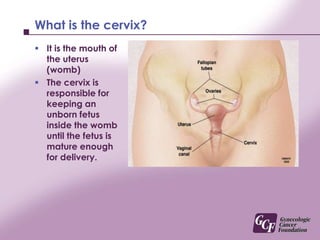
What is the cervix?It is the mouth of the uterus (womb)The cervix is responsible for keeping an unborn fetus inside the womb until the fetus is mature enough for delivery.
The Pap TestThe Pap test is an essential part of cervical cancer screening. The Pap test is a very simple and important test. The doctor uses the Pap test to see if there are any changes (abnormal cells) in the cervix that occur before you get cancer. Pap tests are important because these changes in your cervix may occur without you knowing it.If you have pain or discharge, it is not due to these changes.
Pap TestYour healthcare provider uses a tool called a speculum to hold the vagina open to see the upper part of the vagina and the cervix.Then the doctor uses a small brush to get some cells from the cervix and vagina.
When should I get the Pap test?You should start getting Pap tests three years after the onset of sexual intercourse, but no later than age 21.Even after a Pap test, it is important to report any symptoms of abnormal vaginal bleeding, discharge or pain to your doctor.
HPV Information
What is HPV?HPV stands for: Human PapillomavirusHPV is a sexually transmitted infection that can lead to cervical cancer. While most women will be exposed to HPV, very few will develop any cervical disease. Far fewer will ever develop cervical cancer.HPV also causes a variety of problems like common warts, genital warts and plantar warts.
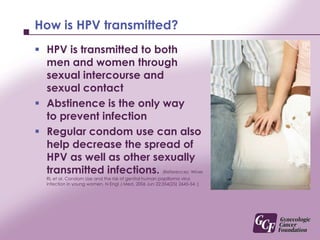
How is HPV transmitted? HPV is transmitted to both men and women through sexual intercourse and sexual contactAbstinence is the only way to prevent infectionRegular condom use can also help decrease the spread of HPV as well as other sexually transmitted infections. (References: Winer RL et al. Condom Use and the risk of genital human papilloma virus infection in young women. N Engl J Med. 2006 Jun 22:354(25) 2645-54. )
How common is HPV?Most men and women who have had sex have been exposed to HPV.More than 75% of sexually active women have been exposed to HPV by age 18-22.
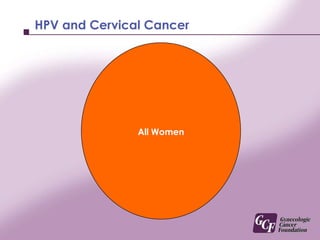
All WomenHPV and Cervical Cancer
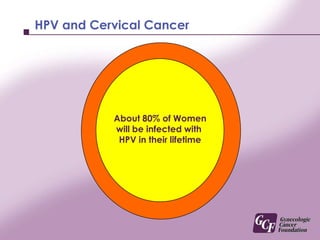
About 80% of Womenwill be infected with HPV in their lifetimeHPV and Cervical Cancer
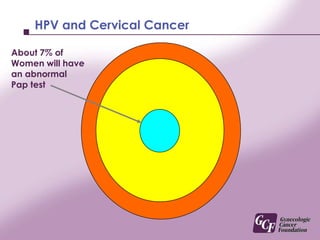
About 7% of Women will have an abnormal Pap testHPV and Cervical Cancer
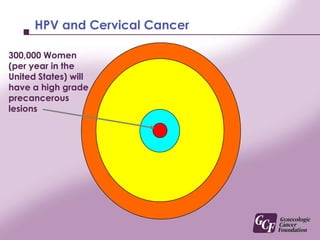
300,000 Women (per year in the United States) will have a high grade precancerous lesionsHPV and Cervical Cancer
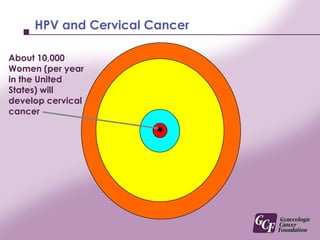
About 10,000 Women (per year in the United States) will develop cervical cancerHPV and Cervical Cancer
Who is at risk for HPV?Women who have ever had sexual contact.Women who have had more than one partner.Women whose partner(s) has had more than one sexual partner.Women who have been diagnosed with a sexually transmitted disease.
Who else is at risk for persistent HPV infection and potentially Cervical Cancer?Women who do not have Pap tests.Women with immune problems:Steroid medicationsTransplanted organsChemotherapyHIVWomen who smoke.
How do I lower my risk of HPV infection?Receive the Cervical Cancer Vaccine between the ages of 9–26.Delay onset of sexual activity.Know your sexual partner.Do not smoke.Maintain a healthy diet and lifestyle.Practice safe sex (condom use).
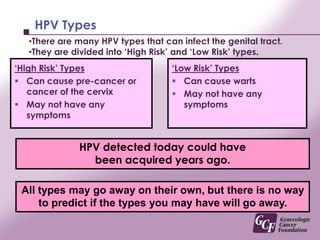
HPV Types	There are many HPV types that can infect the genital tract.
They are divided into ‘High Risk’ and ‘Low Risk’ types.‘High Risk’ TypesCan cause pre-cancer or cancer of the cervix
May not have any symptoms‘Low Risk’ TypesCan cause warts
May not have any symptomsHPV detected today could have been acquired years ago.All types may go away on their own, but there is no way to predict if the types you may have will go away.
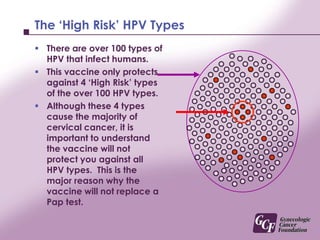
The ‘High Risk’ HPV TypesThere are over 100 types of HPV that infect humans.This vaccine only protects against 4 ‘High Risk’ types of the over 100 HPV types.Although these 4 types cause the majority of cervical cancer, it is important to understand the vaccine will not protect you against all HPV types.  This is the major reason why the vaccine will not replace a Pap test.
HPV SymptomsWhile most women will be exposed to HPV, there are generally no symptoms for the HPV types that cause cancer.If you have some symptoms related to your gynecological organs (examples: pain, irregular bleeding or discharge) it is unlikely that it is due to HPV and you need to discuss this with your health care provider.
The Cervical Cancer Vaccine
The Cervical Cancer VaccineThe cervical cancer vaccine (also called the Human Papillomavirus Vaccine or HPV vaccine) protects you from getting infected with the ‘High Risk’ HPV types that cause 70% of cervical cancer.The vaccine also provides protection against the HPV types that cause 90% of cervical warts.
Vaccine BenefitsWhile it is very exciting to have a vaccine that prevents cervical cancer, not everyone will have the same benefits or results.The benefits from the vaccine depend on your prior HPV exposure.The more HPV exposure you have had, the less likely the vaccine will work for you.The risk of HPV exposure increases with sexual activity.
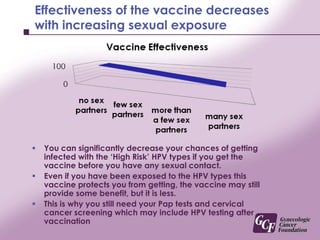
Effectiveness of the vaccine decreases with increasing sexual exposureYou can significantly decrease your chances of getting infected with the ‘High Risk’ HPV types if you get the vaccine before you have any sexual contact.Even if you have been exposed to the HPV types this vaccine protects you from getting, the vaccine may still provide some benefit, but it is less.This is why you still need your Pap tests and cervical cancer screening which may include HPV testing after vaccination
Previous HPV exposureIf you are already chronically infected with the ‘High Risk’ HPV types that the vaccine specifically targets, the vaccine will have minimal or no effect on you.The vaccine does not work to eliminate current chronic HPV infections, it only prevents you from getting specific types of HPV infection in the future.
What about HPV testing?Currently, there is no FDA approved test to see if you have the HPV types that this vaccine targets.You should not get the HPV test before vaccination because it will not help decide whether or not you should get the vaccine.
Who should get the vaccine?The FDA has recommended the following groups of women get vaccinated:Girls 11–12:  Recommended Age Group (can be started as young as age 9).Women 13–26:  the benefit of the vaccine may be lower depending on prior HPV exposure.You can discuss your exposure risk with your healthcare provider or nurse.
Abnormal Pap TestsIf you have ever had an abnormal Pap result, you have likely been exposed to HPV and may be chronically infected with HPV.While you can still receive the vaccine, the vaccine is not likely to be as effective.
Older than 26	The vaccine is not FDA approved for women over the age of 26 nor is it approved for men.Since there is no proven benefit in HPV vaccination for women over 26, your insurance carrier may not pay for the vaccine.Regular Pap tests and gynecology visits will still effectively reduce your risk for cervical cancer.
Side Effects of the VaccineThe risks of receiving the vaccine are minimal and similar to other vaccines.The most common reported side effects are:Redness and soreness where the shot is given.Headaches (like when you have a cold or fever).Fever.If you become pregnant soon, there may be risks to your unborn fetus.
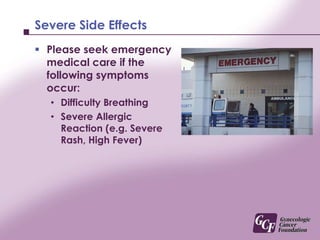
Severe Side EffectsPlease seek emergency medical care if the following symptoms occur:Difficulty BreathingSevere Allergic Reaction (e.g. Severe Rash, High Fever)
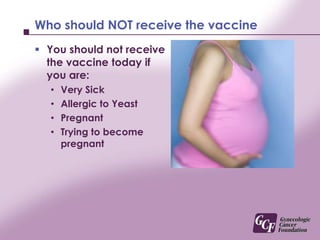
Who should NOT receive the vaccine	You should not receive the vaccine today if you are:Very SickAllergic to YeastPregnantTrying to become pregnant

Cervical Cancer

  • 1.
    The Cervical CancerVaccineFacts and Information
  • 2.
    PresentationThese slides willdiscuss three topics:Cervical Cancer screening and Pap TestsInformation about Human Papillomavirus (HPV) Information about the Cervical Cancer Vaccine
  • 3.
  • 4.
    What is CervicalCancer?Worldwide, cervical cancer is the second most common cause of cancer deaths among women.The central cause of cervical cancer is the HPV. There is very good screening for cervical cancer which includes a Pap test and may include HPV testing if recommended by your healthcare provider.
  • 5.
    What is thecervix?It is the mouth of the uterus (womb)The cervix is responsible for keeping an unborn fetus inside the womb until the fetus is mature enough for delivery.
  • 6.
    The Pap TestThePap test is an essential part of cervical cancer screening. The Pap test is a very simple and important test. The doctor uses the Pap test to see if there are any changes (abnormal cells) in the cervix that occur before you get cancer. Pap tests are important because these changes in your cervix may occur without you knowing it.If you have pain or discharge, it is not due to these changes.
  • 7.
    Pap TestYour healthcareprovider uses a tool called a speculum to hold the vagina open to see the upper part of the vagina and the cervix.Then the doctor uses a small brush to get some cells from the cervix and vagina.
  • 8.
    When should Iget the Pap test?You should start getting Pap tests three years after the onset of sexual intercourse, but no later than age 21.Even after a Pap test, it is important to report any symptoms of abnormal vaginal bleeding, discharge or pain to your doctor.
  • 9.
  • 10.
    What is HPV?HPVstands for: Human PapillomavirusHPV is a sexually transmitted infection that can lead to cervical cancer. While most women will be exposed to HPV, very few will develop any cervical disease. Far fewer will ever develop cervical cancer.HPV also causes a variety of problems like common warts, genital warts and plantar warts.
  • 11.
    How is HPVtransmitted? HPV is transmitted to both men and women through sexual intercourse and sexual contactAbstinence is the only way to prevent infectionRegular condom use can also help decrease the spread of HPV as well as other sexually transmitted infections. (References: Winer RL et al. Condom Use and the risk of genital human papilloma virus infection in young women. N Engl J Med. 2006 Jun 22:354(25) 2645-54. )
  • 12.
    How common isHPV?Most men and women who have had sex have been exposed to HPV.More than 75% of sexually active women have been exposed to HPV by age 18-22.
  • 13.
    All WomenHPV andCervical Cancer
  • 14.
    About 80% ofWomenwill be infected with HPV in their lifetimeHPV and Cervical Cancer
  • 15.
    About 7% ofWomen will have an abnormal Pap testHPV and Cervical Cancer
  • 16.
    300,000 Women (peryear in the United States) will have a high grade precancerous lesionsHPV and Cervical Cancer
  • 17.
    About 10,000 Women(per year in the United States) will develop cervical cancerHPV and Cervical Cancer
  • 18.
    Who is atrisk for HPV?Women who have ever had sexual contact.Women who have had more than one partner.Women whose partner(s) has had more than one sexual partner.Women who have been diagnosed with a sexually transmitted disease.
  • 19.
    Who else isat risk for persistent HPV infection and potentially Cervical Cancer?Women who do not have Pap tests.Women with immune problems:Steroid medicationsTransplanted organsChemotherapyHIVWomen who smoke.
  • 20.
    How do Ilower my risk of HPV infection?Receive the Cervical Cancer Vaccine between the ages of 9–26.Delay onset of sexual activity.Know your sexual partner.Do not smoke.Maintain a healthy diet and lifestyle.Practice safe sex (condom use).
  • 21.
    HPV Types There aremany HPV types that can infect the genital tract.
  • 22.
    They are dividedinto ‘High Risk’ and ‘Low Risk’ types.‘High Risk’ TypesCan cause pre-cancer or cancer of the cervix
  • 23.
    May not haveany symptoms‘Low Risk’ TypesCan cause warts
  • 24.
    May not haveany symptomsHPV detected today could have been acquired years ago.All types may go away on their own, but there is no way to predict if the types you may have will go away.
  • 25.
    The ‘High Risk’HPV TypesThere are over 100 types of HPV that infect humans.This vaccine only protects against 4 ‘High Risk’ types of the over 100 HPV types.Although these 4 types cause the majority of cervical cancer, it is important to understand the vaccine will not protect you against all HPV types. This is the major reason why the vaccine will not replace a Pap test.
  • 26.
    HPV SymptomsWhile mostwomen will be exposed to HPV, there are generally no symptoms for the HPV types that cause cancer.If you have some symptoms related to your gynecological organs (examples: pain, irregular bleeding or discharge) it is unlikely that it is due to HPV and you need to discuss this with your health care provider.
  • 27.
  • 28.
    The Cervical CancerVaccineThe cervical cancer vaccine (also called the Human Papillomavirus Vaccine or HPV vaccine) protects you from getting infected with the ‘High Risk’ HPV types that cause 70% of cervical cancer.The vaccine also provides protection against the HPV types that cause 90% of cervical warts.
  • 29.
    Vaccine BenefitsWhile itis very exciting to have a vaccine that prevents cervical cancer, not everyone will have the same benefits or results.The benefits from the vaccine depend on your prior HPV exposure.The more HPV exposure you have had, the less likely the vaccine will work for you.The risk of HPV exposure increases with sexual activity.
  • 30.
    Effectiveness of thevaccine decreases with increasing sexual exposureYou can significantly decrease your chances of getting infected with the ‘High Risk’ HPV types if you get the vaccine before you have any sexual contact.Even if you have been exposed to the HPV types this vaccine protects you from getting, the vaccine may still provide some benefit, but it is less.This is why you still need your Pap tests and cervical cancer screening which may include HPV testing after vaccination
  • 31.
    Previous HPV exposureIfyou are already chronically infected with the ‘High Risk’ HPV types that the vaccine specifically targets, the vaccine will have minimal or no effect on you.The vaccine does not work to eliminate current chronic HPV infections, it only prevents you from getting specific types of HPV infection in the future.
  • 32.
    What about HPVtesting?Currently, there is no FDA approved test to see if you have the HPV types that this vaccine targets.You should not get the HPV test before vaccination because it will not help decide whether or not you should get the vaccine.
  • 33.
    Who should getthe vaccine?The FDA has recommended the following groups of women get vaccinated:Girls 11–12: Recommended Age Group (can be started as young as age 9).Women 13–26: the benefit of the vaccine may be lower depending on prior HPV exposure.You can discuss your exposure risk with your healthcare provider or nurse.
  • 34.
    Abnormal Pap TestsIfyou have ever had an abnormal Pap result, you have likely been exposed to HPV and may be chronically infected with HPV.While you can still receive the vaccine, the vaccine is not likely to be as effective.
  • 35.
    Older than 26 Thevaccine is not FDA approved for women over the age of 26 nor is it approved for men.Since there is no proven benefit in HPV vaccination for women over 26, your insurance carrier may not pay for the vaccine.Regular Pap tests and gynecology visits will still effectively reduce your risk for cervical cancer.
  • 36.
    Side Effects ofthe VaccineThe risks of receiving the vaccine are minimal and similar to other vaccines.The most common reported side effects are:Redness and soreness where the shot is given.Headaches (like when you have a cold or fever).Fever.If you become pregnant soon, there may be risks to your unborn fetus.
  • 37.
    Severe Side EffectsPleaseseek emergency medical care if the following symptoms occur:Difficulty BreathingSevere Allergic Reaction (e.g. Severe Rash, High Fever)
  • 38.
    Who should NOTreceive the vaccine You should not receive the vaccine today if you are:Very SickAllergic to YeastPregnantTrying to become pregnant