Preapared by:
barham azad
 Introduction
 Pathogens
 Types
 Symptoms
 Diagnosis
 Screening
 Effect on (men & women)
 Risk factors
 Treatment
 Resource
 Question
outlineOutline
 Sexually transmitted diseases (STDs),also known as
sexually transmitted infections (STIs)or venereal diseases
(VD) are diseases that are passed on from one person to
another through sexual contact - the infection can be
passed on through vaginal intercourse, oral sex, and anal
sex.
 Some sexually transmitted infections can spread through
the use of unsterilized drug needles, from mother to baby
during childbirth, or breast-feeding, and blood
transfusions.
Introduction
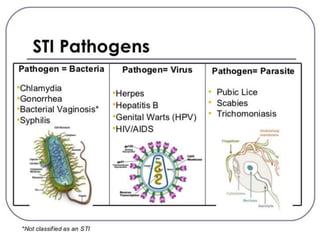
 Bacteria (gonorrhea, syphilis, chlamydia)
 Parasites (trichomoniasis)
 Viruses (human papillomavirus, genital herpes, HIV)
Pathogens
Types
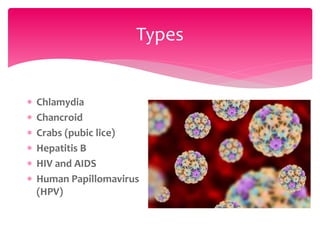
 Chlamydia
 Chancroid
 Crabs (pubic lice)
 Hepatitis B
 HIV and AIDS
 Human Papillomavirus
(HPV)
 Gonorrhea
 Nongonococcal Urethritis {NGU}
 Syphilis
 Trichomoniasis
 Herpes
 Pelvic Inflammatory disease
Types
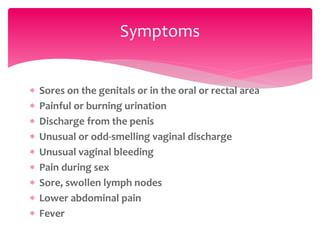
 Sores on the genitals or in the oral or rectal area
 Painful or burning urination
 Discharge from the penis
 Unusual or odd-smelling vaginal discharge
 Unusual vaginal bleeding
 Pain during sex
 Sore, swollen lymph nodes
 Lower abdominal pain
 Fever
Symptoms
 Blood tests
 Urine samples
 Fluid samples
Diagnosis
 Pregnant women
 People who have a new partner
 People with HIV
 Men who have sex with men
 Everyone born between 1945 and 1965
 Women age 21 and older
 Women under age 25 who are sexually active
Screening
 Men are more likely to notice unusual symptoms,
such as discharge
 Men are more likely notice lesions or sores
 Men infected with STDs rarely experience long-term
complications
 Men are often silent carriers of the Human
Papillomavirus (HPV)
Effect on men
 Pregnant women can pass STDs to their babies
 Genital lesions occur inside the vagina and go
unnoticed
 Untreated STDs in women can cause serious health
complications and infertility
 Bacteria and viral infections can penetrate the thin
lining of the vagina more easily than the penis
 Women can be infected with common STDs like
chlamydia and gonorrhea and have symptoms that
disappear
 HPV is the leading cause of cervical cancer in women
Effect on women
 Having unprotected sex
 Having sexual contact with multiple partners
 Having a history of STIs
 Injecting drugs
 Abusing alcohol or using recreational drugs
Risk factors
 Antibiotics
 Antiviral drugs
 Medication
Treatment
 http://www.medbroadcast.com/condition/getcondition/se
xually-transmitted-infection
 https://kidshealth.org/en/teens/std.html#
 https://www.stdcheck.com/std-symptoms-women.php
 https://www.medicinenet.com/stds_in_men_overview/arti
cle.htm
 https://www.sharecare.com/health/stds-sexually-
transmitted-diseases/what-causes-sexually-transmitted-
disease
Resource
Question

Std Sexually transmitted diseases

  • 1.
  • 2.
     Introduction  Pathogens Types  Symptoms  Diagnosis  Screening  Effect on (men & women)  Risk factors  Treatment  Resource  Question outlineOutline
  • 3.
     Sexually transmitteddiseases (STDs),also known as sexually transmitted infections (STIs)or venereal diseases (VD) are diseases that are passed on from one person to another through sexual contact - the infection can be passed on through vaginal intercourse, oral sex, and anal sex.  Some sexually transmitted infections can spread through the use of unsterilized drug needles, from mother to baby during childbirth, or breast-feeding, and blood transfusions. Introduction
  • 4.
     Bacteria (gonorrhea,syphilis, chlamydia)  Parasites (trichomoniasis)  Viruses (human papillomavirus, genital herpes, HIV) Pathogens
  • 6.
    Types  Chlamydia  Chancroid Crabs (pubic lice)  Hepatitis B  HIV and AIDS  Human Papillomavirus (HPV)
  • 7.
     Gonorrhea  NongonococcalUrethritis {NGU}  Syphilis  Trichomoniasis  Herpes  Pelvic Inflammatory disease Types
  • 8.
     Sores onthe genitals or in the oral or rectal area  Painful or burning urination  Discharge from the penis  Unusual or odd-smelling vaginal discharge  Unusual vaginal bleeding  Pain during sex  Sore, swollen lymph nodes  Lower abdominal pain  Fever Symptoms
  • 9.
     Blood tests Urine samples  Fluid samples Diagnosis
  • 10.
     Pregnant women People who have a new partner  People with HIV  Men who have sex with men  Everyone born between 1945 and 1965  Women age 21 and older  Women under age 25 who are sexually active Screening
  • 13.
     Men aremore likely to notice unusual symptoms, such as discharge  Men are more likely notice lesions or sores  Men infected with STDs rarely experience long-term complications  Men are often silent carriers of the Human Papillomavirus (HPV) Effect on men
  • 14.
     Pregnant womencan pass STDs to their babies  Genital lesions occur inside the vagina and go unnoticed  Untreated STDs in women can cause serious health complications and infertility  Bacteria and viral infections can penetrate the thin lining of the vagina more easily than the penis  Women can be infected with common STDs like chlamydia and gonorrhea and have symptoms that disappear  HPV is the leading cause of cervical cancer in women Effect on women
  • 15.
     Having unprotectedsex  Having sexual contact with multiple partners  Having a history of STIs  Injecting drugs  Abusing alcohol or using recreational drugs Risk factors
  • 16.
     Antibiotics  Antiviraldrugs  Medication Treatment
  • 17.
     http://www.medbroadcast.com/condition/getcondition/se xually-transmitted-infection  https://kidshealth.org/en/teens/std.html# https://www.stdcheck.com/std-symptoms-women.php  https://www.medicinenet.com/stds_in_men_overview/arti cle.htm  https://www.sharecare.com/health/stds-sexually- transmitted-diseases/what-causes-sexually-transmitted- disease Resource
  • 18.