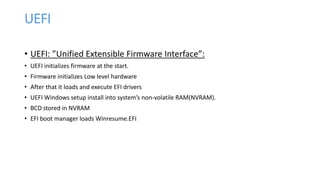
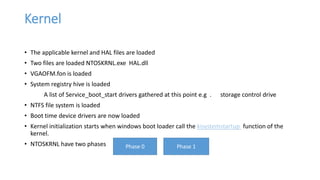
The boot process of Windows 10 begins with UEFI initializing low-level hardware and loading the Windows bootloader. The bootloader loads the kernel files and begins phase zero initialization, which sets up memory, processes, and core system components. Phase one initialization then prepares interrupt handling and loads remaining drivers before starting the SMSS process and displaying the login screen.