Wind Energy
A K S H AY B H AVA R
R IS H IK E S H K S H IR S A G A R
CONTENT
 PRINCIPLE
 TYPES OF TURBINE
 WORKING
 SIZE & APPLICATION
 ADVANTAGES
 LIMITATIONS
 FUTURE SCOPE
Principle of
Wind Energy
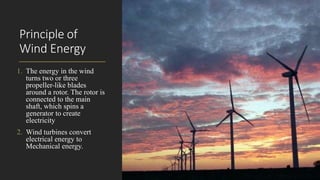
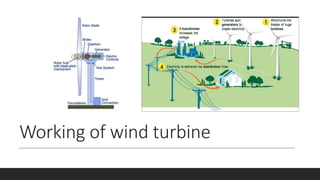
1. The energy in the wind
turns two or three
propeller-like blades
around a rotor. The rotor is
connected to the main
shaft, which spins a
generator to create
electricity
2. Wind turbines convert
electrical energy to
Mechanical energy.
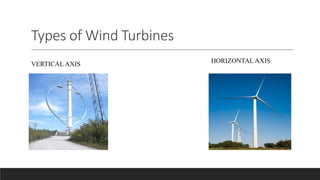
Types of Wind Turbines
VERTICAL AXIS HORIZONTAL AXIS
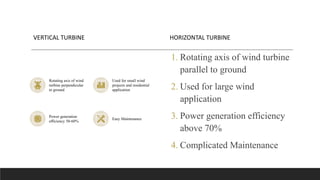
VERTICAL TURBINE
Rotating axis of wind
turbine perpendicular
to ground
Used for small wind
projects and residential
application
Power generation
efficiency 50-60%
Easy Maintenance
HORIZONTAL TURBINE
1. Rotating axis of wind turbine
parallel to ground
2. Used for large wind
application
3. Power generation efficiency
above 70%
4. Complicated Maintenance
Working of wind turbine
Advantages of wind Energy
1. Clean and renewable source of power
2. Cost effective
3. Rapid growth of industry, large potential
4. Wind is a domestic source of energy
5. Wind turbine can be built on existing farm
Limitations of
wind Energy
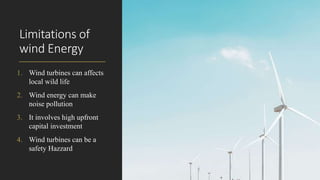
1. Wind turbines can affects
local wild life
2. Wind energy can make
noise pollution
3. It involves high upfront
capital investment
4. Wind turbines can be a
safety Hazzard
Future Scope
Future of wind energy can be
bright if government policies
subsidize and encourage its use.
Technology improvements
unlikely to have a major impact.
Can become cost competitive
for electricity generation if
fossil energy costs skyrocket.
Wind energy and Wind turbine

Wind energy and Wind turbine

  • 1.
    Wind Energy A KS H AY B H AVA R R IS H IK E S H K S H IR S A G A R
  • 2.
    CONTENT  PRINCIPLE  TYPESOF TURBINE  WORKING  SIZE & APPLICATION  ADVANTAGES  LIMITATIONS  FUTURE SCOPE
  • 3.
    Principle of Wind Energy 1.The energy in the wind turns two or three propeller-like blades around a rotor. The rotor is connected to the main shaft, which spins a generator to create electricity 2. Wind turbines convert electrical energy to Mechanical energy.
  • 4.
    Types of WindTurbines VERTICAL AXIS HORIZONTAL AXIS
  • 5.
    VERTICAL TURBINE Rotating axisof wind turbine perpendicular to ground Used for small wind projects and residential application Power generation efficiency 50-60% Easy Maintenance HORIZONTAL TURBINE 1. Rotating axis of wind turbine parallel to ground 2. Used for large wind application 3. Power generation efficiency above 70% 4. Complicated Maintenance
  • 6.
  • 8.
    Advantages of windEnergy 1. Clean and renewable source of power 2. Cost effective 3. Rapid growth of industry, large potential 4. Wind is a domestic source of energy 5. Wind turbine can be built on existing farm
  • 9.
    Limitations of wind Energy 1.Wind turbines can affects local wild life 2. Wind energy can make noise pollution 3. It involves high upfront capital investment 4. Wind turbines can be a safety Hazzard
  • 10.
    Future Scope Future ofwind energy can be bright if government policies subsidize and encourage its use. Technology improvements unlikely to have a major impact. Can become cost competitive for electricity generation if fossil energy costs skyrocket.