WILLIAM SHAKESPEARE
Adriana Chochelová 5.A
HIS LIFE
 Shakespeare was british playwright, poet and actor in English renaissance
 He was born in 1564 in Stratford upon Avon (John and Mary Shakespeare)
 His father was an alderman and successful glover
 At the age of 18 he married Anne Hathaway
 Thay had 3 children – Sussana, Judith and Hamnet
 He left after the birth of the twins and during his career he devided his time
between Startford and London
 He appears to have retired to Stratford around 1613 and died in 1616
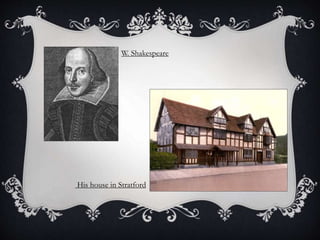
W. Shakespeare
His house in Stratford
HIS CAREER
 His career began about 1592 in London as an actor, writer and part-owner
of a playing company Lord Chamberlain‘s Men
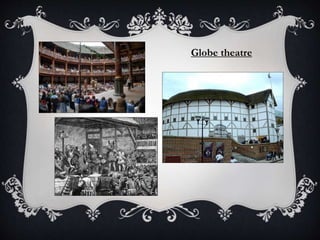
 In 1599 company built their own theatre Globe
 He became really famous after that and began to appear on title pages
 In Globe he was called „good Will“ and he played „kingly roles“
 He played for example Ghost of Hamlet‘s father, Adam in As you like it or
Chorus in Henry V.
Globe theatre
HIS WORK
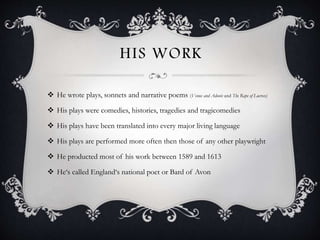
 He wrote plays, sonnets and narrative poems (Venus and Adonis and The Rape of Lucrece)
 His plays were comedies, histories, tragedies and tragicomedies
 His plays have been translated into every major living language
 His plays are performed more often then those of any other playwright
 He producted most of his work between 1589 and 1613
 He‘s called England‘s national poet or Bard of Avon
COMEDIES
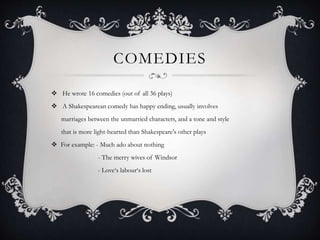
 He wrote 16 comedies (out of all 36 plays)
 A Shakespearean comedy has happy ending, usually involves
marriages between the unmarried characters, and a tone and style
that is more light-hearted than Shakespeare's other plays
 For example: - Much ado about nothing
- The merry wives of Windsor
- Love‘s labour‘s lost
TRAGEDIES
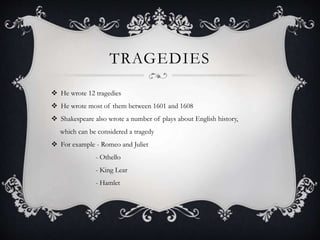
 He wrote 12 tragedies
 He wrote most of them between 1601 and 1608
 Shakespeare also wrote a number of plays about English history,
which can be considered a tragedy
 For example - Romeo and Juliet
- Othello
- King Lear
- Hamlet
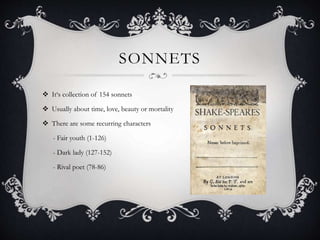
SONNETS
 It‘s collection of 154 sonnets
 Usually about time, love, beauty or mortality
 There are some recurring characters
- Fair youth (1-126)
- Dark lady (127-152)
- Rival poet (78-86)
INFLUENCE
 He was respected in his own day, but his reputation didn‘t rise to
its present heights until the 19th century
 He expanded the dramatic potential of characterisation, plot,
language and genre
 Until Romeo and Juliet romance had not been viewed as a worthy topic
for tragedy
 Shakespeare also influenced novelists such as Thomas Hardy, William Faulkner,
and Charles Dickens
SPECULATIONS
 About such matters as his physical appearance, sexuality, religious
beliefs or whether the works attributed to him were written by others
 During his lost years between 1585 and 1592 there are many
speculations about his travels around europe
 There‘s also story about him visiting Bohemia
HIS QUOTES
All the world‘s stage, and all the men and women merely players.
If music be the food of love, play on.
Love all, trust a few, do wrong to none.
…and much more…
THANKS FOR ATTENTION
http://www.youtube.com/watch?v=BMkuUADWW2A

William Shakespeare

  • 1.
  • 2.
    HIS LIFE  Shakespearewas british playwright, poet and actor in English renaissance  He was born in 1564 in Stratford upon Avon (John and Mary Shakespeare)  His father was an alderman and successful glover  At the age of 18 he married Anne Hathaway  Thay had 3 children – Sussana, Judith and Hamnet  He left after the birth of the twins and during his career he devided his time between Startford and London  He appears to have retired to Stratford around 1613 and died in 1616
  • 3.
  • 4.
    HIS CAREER  Hiscareer began about 1592 in London as an actor, writer and part-owner of a playing company Lord Chamberlain‘s Men  In 1599 company built their own theatre Globe  He became really famous after that and began to appear on title pages  In Globe he was called „good Will“ and he played „kingly roles“  He played for example Ghost of Hamlet‘s father, Adam in As you like it or Chorus in Henry V.
  • 5.
  • 6.
    HIS WORK  Hewrote plays, sonnets and narrative poems (Venus and Adonis and The Rape of Lucrece)  His plays were comedies, histories, tragedies and tragicomedies  His plays have been translated into every major living language  His plays are performed more often then those of any other playwright  He producted most of his work between 1589 and 1613  He‘s called England‘s national poet or Bard of Avon
  • 7.
    COMEDIES  He wrote16 comedies (out of all 36 plays)  A Shakespearean comedy has happy ending, usually involves marriages between the unmarried characters, and a tone and style that is more light-hearted than Shakespeare's other plays  For example: - Much ado about nothing - The merry wives of Windsor - Love‘s labour‘s lost
  • 8.
    TRAGEDIES  He wrote12 tragedies  He wrote most of them between 1601 and 1608  Shakespeare also wrote a number of plays about English history, which can be considered a tragedy  For example - Romeo and Juliet - Othello - King Lear - Hamlet
  • 9.
    SONNETS  It‘s collectionof 154 sonnets  Usually about time, love, beauty or mortality  There are some recurring characters - Fair youth (1-126) - Dark lady (127-152) - Rival poet (78-86)
  • 10.
    INFLUENCE  He wasrespected in his own day, but his reputation didn‘t rise to its present heights until the 19th century  He expanded the dramatic potential of characterisation, plot, language and genre  Until Romeo and Juliet romance had not been viewed as a worthy topic for tragedy  Shakespeare also influenced novelists such as Thomas Hardy, William Faulkner, and Charles Dickens
  • 11.
    SPECULATIONS  About suchmatters as his physical appearance, sexuality, religious beliefs or whether the works attributed to him were written by others  During his lost years between 1585 and 1592 there are many speculations about his travels around europe  There‘s also story about him visiting Bohemia
  • 12.
    HIS QUOTES All theworld‘s stage, and all the men and women merely players. If music be the food of love, play on. Love all, trust a few, do wrong to none. …and much more…
  • 13.