Recommended
PPT
PPTX
Who is William Shakespeare
PPTX
Untitled.pptx shakespeare the bard of avon
PPTX
shakespeare.pptxhhhjjjjjjjjjjjjjjjjjjjjjjjjjjj
PPTX
william Shakespeare.presentation on pptx
PPTX
PPTX
PPTX
PPTX
PPT
PPT
PPTX
PDF
PPTX
PPTX
Shakespeare powerpoint presentation
PDF
Will in the World: Shakespeare & Elizabethan Theatre
PPTX
PPT
PPT
LESSON-11-WILLIAM-SHAKESPEARE-BIOGRAPHY.ppt
PPTX
PPTX
William Shakespeare's Contribution to English Literature
PPTX
(Shakespeare/Literary works) Rahmatullah Katawazai's Lecture
PPT
W.shakeaspeare is the renaissance man 2011 12
PPT
PPTX
William Shakespeare Presentation
PPTX
DOCX
William shakespeare timeline
PPT
PPTX
Understanding the Role of Mobile Apps Today
PDF
CASE STUDY 3 1.pdfHHTGTGTGGGGGGGGGGGDGGFGGGGG
More Related Content
PPT
PPTX
Who is William Shakespeare
PPTX
Untitled.pptx shakespeare the bard of avon
PPTX
shakespeare.pptxhhhjjjjjjjjjjjjjjjjjjjjjjjjjjj
PPTX
william Shakespeare.presentation on pptx
PPTX
PPTX
PPTX
Similar to William_Shakespeare_Full_Presentation.pptx
PPTX
PPT
PPT
PPTX
PDF
PPTX
PPTX
Shakespeare powerpoint presentation
PDF
Will in the World: Shakespeare & Elizabethan Theatre
PPTX
PPT
PPT
LESSON-11-WILLIAM-SHAKESPEARE-BIOGRAPHY.ppt
PPTX
PPTX
William Shakespeare's Contribution to English Literature
PPTX
(Shakespeare/Literary works) Rahmatullah Katawazai's Lecture
PPT
W.shakeaspeare is the renaissance man 2011 12
PPT
PPTX
William Shakespeare Presentation
PPTX
DOCX
William shakespeare timeline
PPT
Recently uploaded
PPTX
Understanding the Role of Mobile Apps Today
PDF
CASE STUDY 3 1.pdfHHTGTGTGGGGGGGGGGGDGGFGGGGG
PDF
Morgenbooster - Designing for systemic impact.pdf
PDF
Buy Facebook Ads Accounts_ the Backbone of Social Advertising in 2025.pdf
PDF
Timeless Modern Interiors- A Design Perspective by Kiara Parekh
PDF
Gamification Concept in UX Design with Proven Examples (2026).pdf
PDF
Nilesh Mathur NID_Thesis 2025 ( Machphysolutions: Insulinsure_IIT Delhi )
PPTX
Basic design minimalistic and useful for school projects and office presentat...
PPTX
TYPES OF AGRICULTURE -Diverse Farming Methods
PDF
LAYOUT dapur mbg sesuai dengan juklak dan juknis
PDF
literature case study of museo do amanha
PPTX
Hanna Pitch 1.pptx media powerpoint presentation
PDF
Introduction to System histolog-1.pdf lctr 1
PDF
VS-Unit 1, vastu shastra, spatial design according vastupdf
PPTX
a HOSPITALdesigncasestudy-20200201013.pptx
PPTX
Website Designing in digital marketing..
PPTX
3 Phase Alternators in basic electric and electronic devices.pptx
PPTX
The Hero_s Treasure Map make a map and how
PPT
Mortar important materials for construction
PPTX
How to Create Modern Scandinavian Décor at Home.pptx
William_Shakespeare_Full_Presentation.pptx 1. 2. 3. Early Life
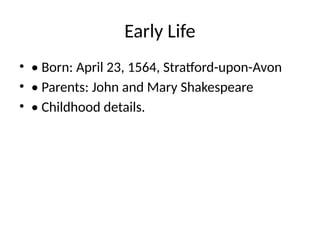
• • Born: April 23, 1564, Stratford-upon-Avon
• • Parents: John and Mary Shakespeare
• • Childhood details.
4. Marriage and Family
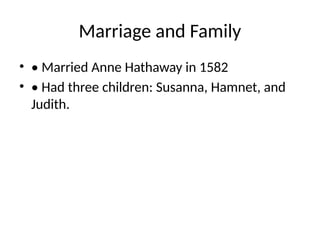
• • Married Anne Hathaway in 1582
• • Had three children: Susanna, Hamnet, and
Judith.
5. Move to London
• • Joined the theater scene in London
• • Became an actor and playwright.
6. 7. Famous Tragedies
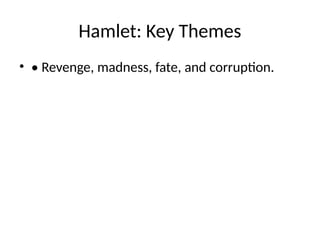
• • Hamlet – Revenge and madness
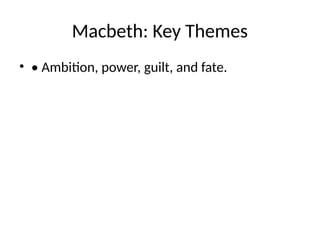
• • Macbeth – Ambition and fate
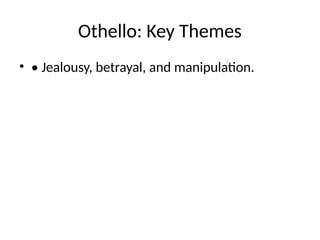
• • Othello – Jealousy and trust issues.
8. Famous Comedies
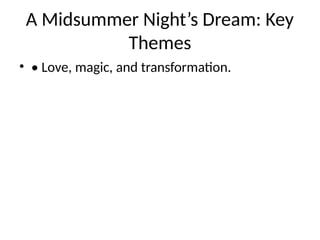
• • A Midsummer Night’s Dream – Magic and
love
• • Much Ado About Nothing – Witty romance
• • Twelfth Night – Disguise and love triangles.
9. Famous Histories
• • Henry IV – The rise of a prince
• • Richard III – Power struggles
• • Henry V – Leadership and war.
10. The Globe Theatre
• • Opened in 1599 in London
• • Hosted many of Shakespeare’s plays
• • Burned down in 1613 but was later rebuilt.
11. 12. Sonnet 18
• • 'Shall I compare thee to a summer’s day?'
• • Talks about eternal beauty.
13. Sonnet 116
• • 'Let me not to the marriage of true minds'
• • Describes true love.
14. Sonnet 130
• • 'My mistress’ eyes are nothing like the sun'
• • A humorous take on love.
15. 16. Impact on the English Language
• • Contributed over 1,700 words
• • Many common phrases originated from his
plays.
17. 18. 19. 20. Shakespeare in Modern Media
• • Movies and adaptations based on his plays
• • Continued influence on literature.
21. 22. 23. 24. 25. 26. 27. 28. 29. 30. 31. The First Folio
• • Published in 1623 by Shakespeare’s friends
• • Preserved many of his plays.
32. 33. 34. 35. 36. 37. Why Shakespeare is Still Relevant
• • His themes are timeless
• • His language is influential.
38.