
























Why jump on bandwagons! Ade Oliveira
Think of a lesson you have taught recently and write down at least one principle or theory that guided you in your teaching for that specific lesson. E.g. Grant  students everything they bring with them.
A definition of method Write your definition on your sheet.
A method is a set of theoretical principles that will guide you on the design of your syllabus and the choice of activities you use in your classroom.
Classification of methods Language-centered Learner-centered Learning-centered
Audio lingual, Situational Language Teaching (Oral Approach) The Silent Way, CLT, TPR, the Lexical Approach CLL, the Natural Approach, TBL
Main differences LANGUAGE PRACTICE Form focused activities Meaning focused activities Problem solving tasks LEARNING Linear, additive process; linguistic competence Linear, additive process; communicative competence Non-linear process; incidental; communicative competence
Principles of the Silent Way Free our students. Develop awareness. Give and receive feedback. Promote independence, autonomy, and responsibility.
Can you name the method you use in your teaching? Write down one phrase or sentence that describes your teaching method.
The eclectic method “ There is no such a thing as an eclectic method if by eclecticism it is meant the random and expedient use of whatever technique comes most readily to hand. There is not merit to that.” Henry Widdowson
“ The weakness of the eclectic position is that it offers no CRITERIA according to which we can determine which is the best theory, nor does it provide any PRINCIPLES by which to include or exclude features which form part of existing theories or practices. The choice is left to the individual’s INTUITIVE JUDGMENT and is therefore too broad and to vague as a theory in its own right.” H.H. Stern.
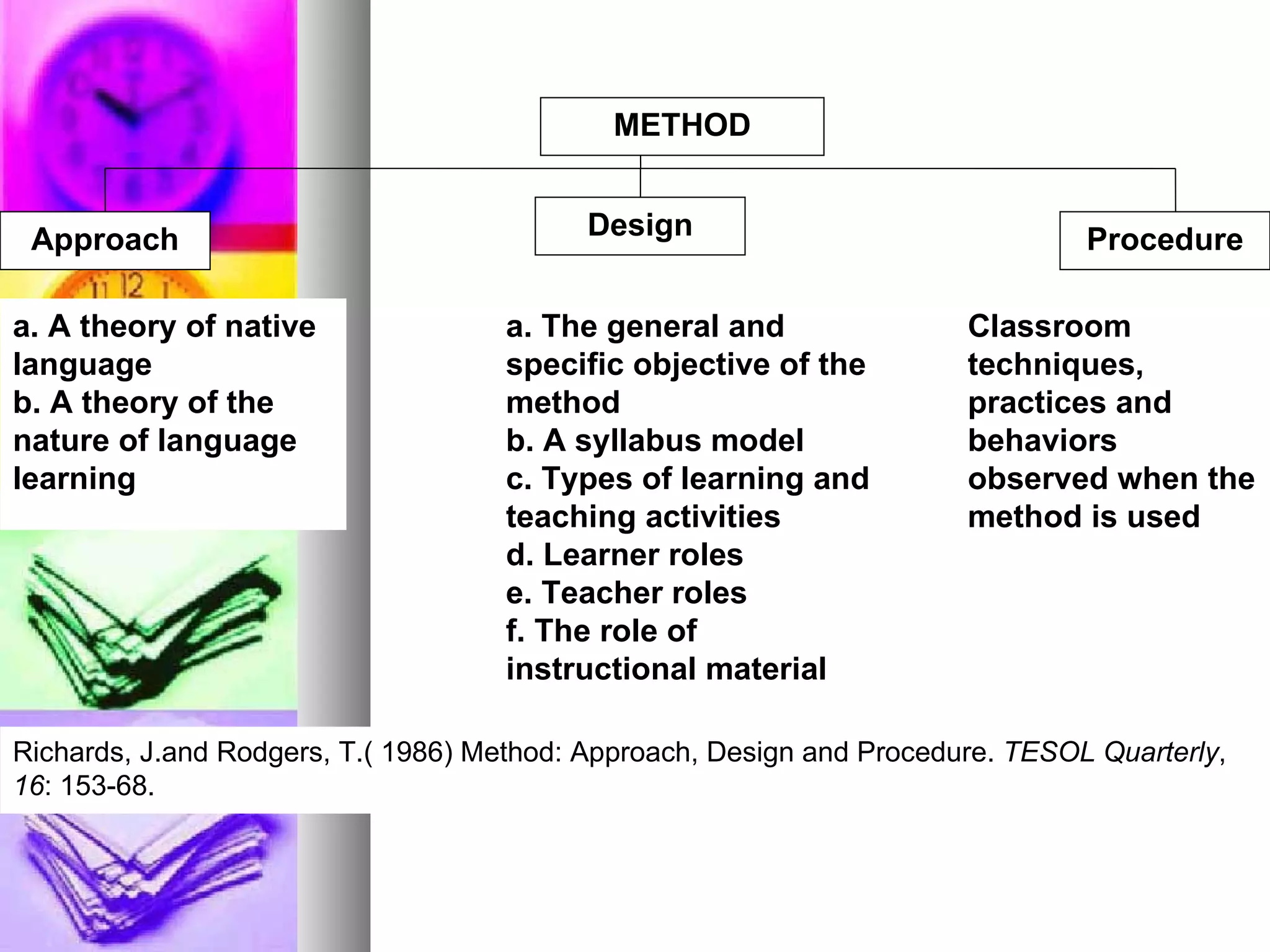
METHOD Approach Design Procedure a. A theory of native language b. A theory of the nature of language learning a. The general and specific objective of the method b. A syllabus model c. Types of learning and teaching activities d. Learner roles e. Teacher roles f. The role of instructional material Classroom techniques, practices and behaviors observed when the method is used Richards, J.and Rodgers, T.( 1986) Method: Approach, Design and Procedure.  TESOL Quarterly ,  16 : 153-68.
WHAT GUIDES YOU IN YOUR TEACHING? Write down a set of principles.
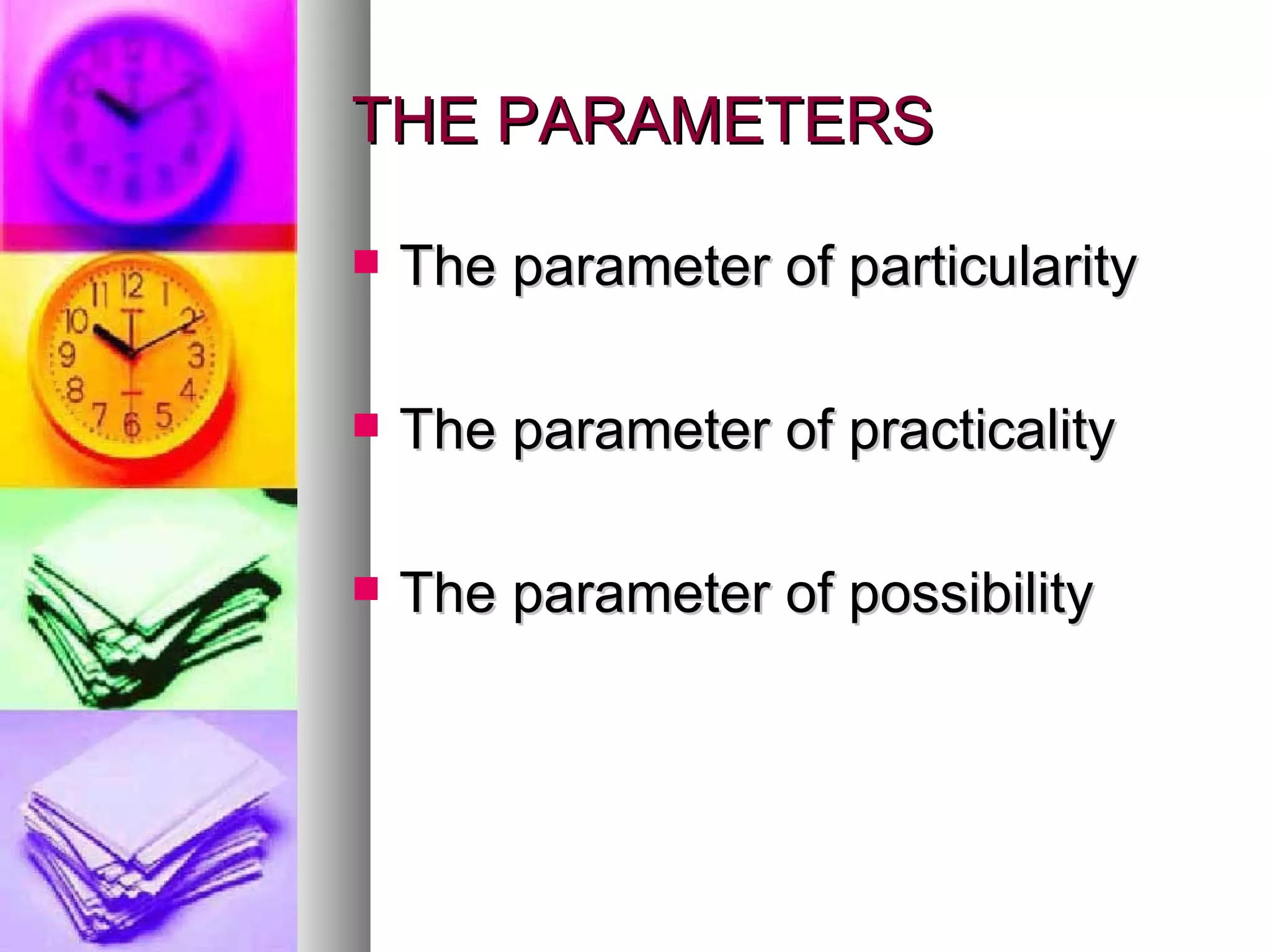
THE PARAMETERS The parameter of particularity The parameter of practicality The parameter of possibility
An ALTERNATIVE TO METHOD rather than an ALTERNATIVE METHOD B. KUMARAVADIVELU
MAXIMIZE LEARNING OPPORTUNITIES
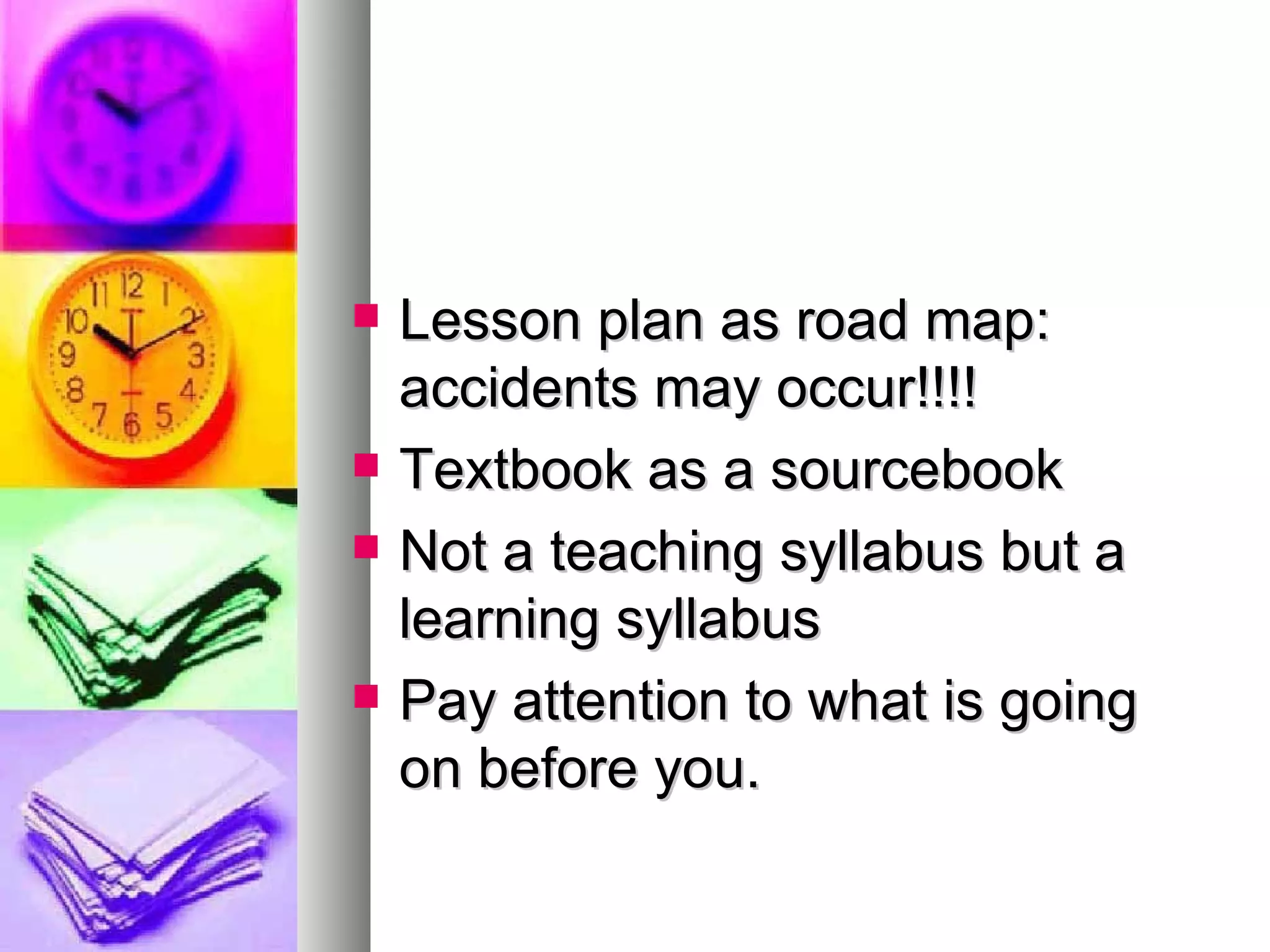
Lesson plan as road map: accidents may occur!!!! Textbook as a sourcebook Not a teaching syllabus but a learning syllabus Pay attention to what is going on before you.
MINIMIZE PERCEPTUAL MISMATCHES
Cognitive: I don’t understand/recognize X. Linguistic: I can recognize X but I can’t give an answer cause I don’t have enough knowledge of the language. Communicative: I don’t feel confident to participate in X. Pedagogic: I’m not clear about the purpose of X. Strategic: I’m not sure about the overall approach I need to take in order to work with X.
FACILITATE NEGOTIATED INTERACTION
Learners should be entitled to initiate topic and talk, not just react and respond!!!
PROMOTE LEARNER AUTONOMY
Can you help your students learn how to learn equipping them with the necessary means to self-direct and self-monitor their learning?
FOSTER LANGUAGE AWARENESS
Language awareness is a person’s sensitivity to and conscious awareness of the language and its role in human life. It’s more than just grammar.
ACTIVATE INTUITIVE HEURISTICS
Heuristics: a process of self-discovery. C-R activities
CONTEXTUALIZE LINGUISTIC INPUT
Is your book still on the table? If so, where are you? Where is the table? Who are the speakers involved?
INTEGRATE LANGUAGE SKILLS
How many times, in real life, do you watch a movie or listen to a song and fill in the blanks ?
ENSURE SOCIAL RELEVANCE
What are the sociocultural values embedded in the textbook? Who actually speaks that way?
RAISE CULTURAL AWARENESS
Whose culture are you working with? How will your students become aware of themselves as cultural beings? Does learning a new language mean learning a new culture?
“ To shape the practice of everyday teaching, teachers need to have a holistic understanding of what happens in their classroom. They need to:
Systematically observe their teaching. Interpret their classroom events. Evaluate their outcomes. Identify problems. Find solutions. Try them out to see once again what works and what doesn’t.” B. Kumaravadivelu
THERE IS NO EASY ANSWER. THERE IS NO RECIPE.  THERE IS NO METHOD.
Have you ever engaged in reflective teaching? If yes, what difference has it made  in your teaching?
One last question. What do the pictures in the slides have to do with this workshop?

Why Jump On Bandwagons 2

  • 1.
    Why jump onbandwagons! Ade Oliveira
  • 2.
    Think of alesson you have taught recently and write down at least one principle or theory that guided you in your teaching for that specific lesson. E.g. Grant students everything they bring with them.
  • 3.
    A definition ofmethod Write your definition on your sheet.
  • 4.
    A method isa set of theoretical principles that will guide you on the design of your syllabus and the choice of activities you use in your classroom.
  • 5.
    Classification of methodsLanguage-centered Learner-centered Learning-centered
  • 6.
    Audio lingual, SituationalLanguage Teaching (Oral Approach) The Silent Way, CLT, TPR, the Lexical Approach CLL, the Natural Approach, TBL
  • 7.
    Main differences LANGUAGEPRACTICE Form focused activities Meaning focused activities Problem solving tasks LEARNING Linear, additive process; linguistic competence Linear, additive process; communicative competence Non-linear process; incidental; communicative competence
  • 8.
    Principles of theSilent Way Free our students. Develop awareness. Give and receive feedback. Promote independence, autonomy, and responsibility.
  • 9.
    Can you namethe method you use in your teaching? Write down one phrase or sentence that describes your teaching method.
  • 10.
    The eclectic method“ There is no such a thing as an eclectic method if by eclecticism it is meant the random and expedient use of whatever technique comes most readily to hand. There is not merit to that.” Henry Widdowson
  • 11.
    “ The weaknessof the eclectic position is that it offers no CRITERIA according to which we can determine which is the best theory, nor does it provide any PRINCIPLES by which to include or exclude features which form part of existing theories or practices. The choice is left to the individual’s INTUITIVE JUDGMENT and is therefore too broad and to vague as a theory in its own right.” H.H. Stern.
  • 12.
    METHOD Approach DesignProcedure a. A theory of native language b. A theory of the nature of language learning a. The general and specific objective of the method b. A syllabus model c. Types of learning and teaching activities d. Learner roles e. Teacher roles f. The role of instructional material Classroom techniques, practices and behaviors observed when the method is used Richards, J.and Rodgers, T.( 1986) Method: Approach, Design and Procedure. TESOL Quarterly , 16 : 153-68.
  • 13.
    WHAT GUIDES YOUIN YOUR TEACHING? Write down a set of principles.
  • 14.
    THE PARAMETERS Theparameter of particularity The parameter of practicality The parameter of possibility
  • 15.
    An ALTERNATIVE TOMETHOD rather than an ALTERNATIVE METHOD B. KUMARAVADIVELU
  • 16.
  • 17.
    Lesson plan asroad map: accidents may occur!!!! Textbook as a sourcebook Not a teaching syllabus but a learning syllabus Pay attention to what is going on before you.
  • 18.
  • 19.
    Cognitive: I don’tunderstand/recognize X. Linguistic: I can recognize X but I can’t give an answer cause I don’t have enough knowledge of the language. Communicative: I don’t feel confident to participate in X. Pedagogic: I’m not clear about the purpose of X. Strategic: I’m not sure about the overall approach I need to take in order to work with X.
  • 20.
  • 21.
    Learners should beentitled to initiate topic and talk, not just react and respond!!!
  • 22.
  • 23.
    Can you helpyour students learn how to learn equipping them with the necessary means to self-direct and self-monitor their learning?
  • 24.
  • 25.
    Language awareness isa person’s sensitivity to and conscious awareness of the language and its role in human life. It’s more than just grammar.
  • 26.
  • 27.
    Heuristics: a processof self-discovery. C-R activities
  • 28.
  • 29.
    Is your bookstill on the table? If so, where are you? Where is the table? Who are the speakers involved?
  • 30.
  • 31.
    How many times,in real life, do you watch a movie or listen to a song and fill in the blanks ?
  • 32.
  • 33.
    What are thesociocultural values embedded in the textbook? Who actually speaks that way?
  • 34.
  • 35.
    Whose culture areyou working with? How will your students become aware of themselves as cultural beings? Does learning a new language mean learning a new culture?
  • 36.
    “ To shapethe practice of everyday teaching, teachers need to have a holistic understanding of what happens in their classroom. They need to:
  • 37.
    Systematically observe theirteaching. Interpret their classroom events. Evaluate their outcomes. Identify problems. Find solutions. Try them out to see once again what works and what doesn’t.” B. Kumaravadivelu
  • 38.
    THERE IS NOEASY ANSWER. THERE IS NO RECIPE. THERE IS NO METHOD.
  • 39.
    Have you everengaged in reflective teaching? If yes, what difference has it made in your teaching?
  • 40.
    One last question.What do the pictures in the slides have to do with this workshop?