THE POST-METHODS ERA 
Approaches and Methods in 
Language Teaching 
Richards and Rodgers, 2001 
Lemmuela Alvita Kurniawati (136332040)
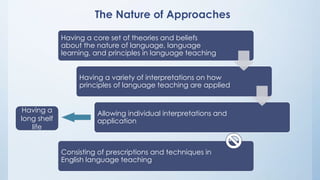
The Nature of Approaches 
Having a core set of theories and beliefs 
about the nature of language, language 
learning, and principles in language teaching 
Having a variety of interpretations on how 
principles of language teaching are applied 
Allowing individual interpretations and 
application 
Consisting of prescriptions and techniques in 
English language teaching 
Having a 
long shelf 
life
Approaches in English Language Teaching 
Communicative 
Language Teaching 
Competency-Based 
Language Teaching 
Content-Based 
Instruction 
Cooperative 
Learning 
Lexical Approaches 
Multiple 
Intelligences 
The Natural 
Approach 
Neurolinguistic 
Programming 
Task-Based 
Language Teaching 
Whole Language
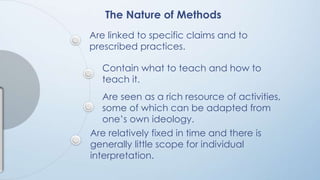
The Nature of Methods 
Are linked to specific claims and to 
prescribed practices. 
Contain what to teach and how to 
teach it. 
Are seen as a rich resource of activities, 
some of which can be adapted from 
one’s own ideology. 
Are relatively fixed in time and there is 
generally little scope for individual 
interpretation.
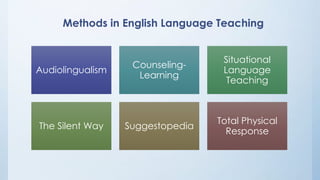
Methods in English Language Teaching 
Audiolingualism 
Counseling- 
Learning 
Situational 
Language 
Teaching 
The Silent Way Suggestopedia 
Total Physical 
Response
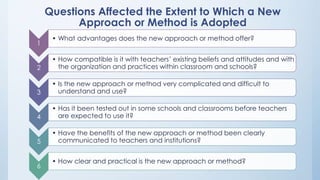
Questions Affected the Extent to Which a New 
Approach or Method is Adopted 
1 
• What advantages does the new approach or method offer? 
2 
• How compatible is it with teachers’ existing beliefs and attitudes and with 
the organization and practices within classroom and schools? 
3 
• Is the new approach or method very complicated and difficult to 
understand and use? 
4 
• Has it been tested out in some schools and classrooms before teachers 
are expected to use it? 
5 
• Have the benefits of the new approach or method been clearly 
communicated to teachers and institutions? 
6 
• How clear and practical is the new approach or method?
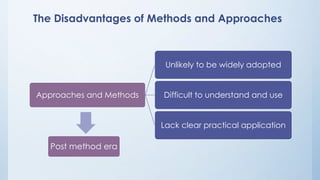
The Disadvantages of Methods and Approaches 
Approaches and Methods 
Unlikely to be widely adopted 
Difficult to understand and use 
Lack clear practical application 
Post method era
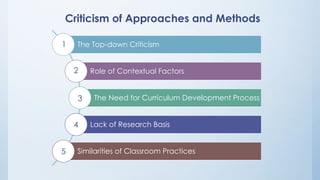
Criticism of Approaches and Methods 
The Top-down Criticism 
Role of Contextual Factors 
The Need for Curriculum Development Process 
Lack of Research Basis 
Similarities of Classroom Practices 
1 
2 
3 
4 
5
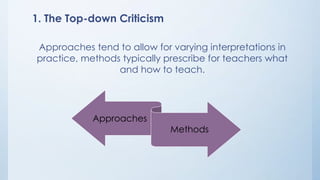
1. The Top-down Criticism 
Approaches tend to allow for varying interpretations in 
practice, methods typically prescribe for teachers what 
and how to teach. 
Approaches 
Methods
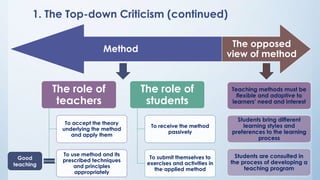
1. The Top-down Criticism (continued) 
The role of 
teachers 
To accept the theory 
underlying the method 
and apply them 
To use method and its 
prescribed techniques 
and principles 
appropriately 
The role of 
students 
To receive the method 
passively 
To submit themselves to 
exercises and activities in 
the applied method 
Good 
teaching 
Method 
The opposed 
view of method 
Teaching methods must be 
flexible and adaptive to 
learners’ need and interest 
Students bring different 
learning styles and 
preferences to the learning 
process 
Students are consulted in 
the process of developing a 
teaching program
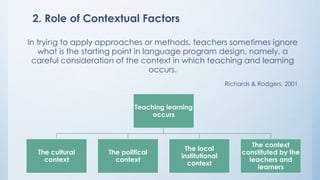
2. Role of Contextual Factors 
In trying to apply approaches or methods, teachers sometimes ignore 
what is the starting point in language program design, namely, a 
careful consideration of the context in which teaching and learning 
occurs. 
Richards & Rodgers, 2001 
Teaching learning 
occurs 
The cultural 
context 
The political 
context 
The local 
institutional 
context 
The context 
constituted by the 
teachers and 
learners
3. The Need for Curriculum Development Process 
Educational 
planning 
and 
implementa 
tion 
practices 
involve: 
The careful examination of the teaching objectives 
The development and trial use in schools of those 
methods and materials which are judged most likely to 
achieve the objectives which teachers agreed upon 
The assessment of the extent to which the 
development work has in fact achieved its objectives 
The feedback of all the experience gained, to provide 
a starting point for further study
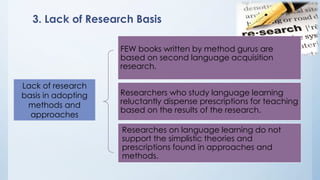
3. Lack of Research Basis 
FEW books written by method gurus are 
based on second language acquisition 
research. 
Researchers who study language learning 
reluctantly dispense prescriptions for teaching 
based on the results of the research. 
Researches on language learning do not 
support the simplistic theories and 
prescriptions found in approaches and 
methods. 
Lack of research 
basis in adopting 
methods and 
approaches
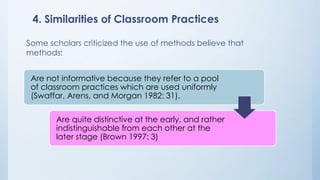
4. Similarities of Classroom Practices 
Some scholars criticized the use of methods believe that 
methods: 
Are not informative because they refer to a pool 
of classroom practices which are used uniformly 
(Swaffar, Arens, and Morgan 1982: 31). 
Are quite distinctive at the early, and rather 
indistinguishable from each other at the 
later stage (Brown 1997: 3)
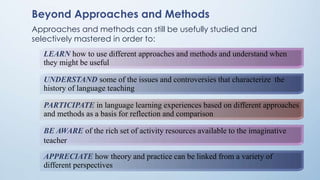
Beyond Approaches and Methods 
Approaches and methods can still be usefully studied and 
selectively mastered in order to: 
LEARN how to use different approaches and methods and understand when 
they might be useful 
UNDERSTAND some of the issues and controversies that characterize the 
history of language teaching 
PARTICIPATE in language learning experiences based on different approaches 
and methods as a basis for reflection and comparison 
BE AWARE of the rich set of activity resources available to the imaginative 
teacher 
APPRECIATE how theory and practice can be linked from a variety of 
different perspectives
Looking Forward 
Government 
policy 
directives 
Factors 
influencing 
language 
teaching 
trends 
Trends in 
the 
profession 
Guru-led 
innovations 
Responses 
to 
technology 
Learner-based 
innovations 
Influences 
from 
academic 
disciplines 
Research 
influences

Post method era

  • 1.
    THE POST-METHODS ERA Approaches and Methods in Language Teaching Richards and Rodgers, 2001 Lemmuela Alvita Kurniawati (136332040)
  • 2.
    The Nature ofApproaches Having a core set of theories and beliefs about the nature of language, language learning, and principles in language teaching Having a variety of interpretations on how principles of language teaching are applied Allowing individual interpretations and application Consisting of prescriptions and techniques in English language teaching Having a long shelf life
  • 3.
    Approaches in EnglishLanguage Teaching Communicative Language Teaching Competency-Based Language Teaching Content-Based Instruction Cooperative Learning Lexical Approaches Multiple Intelligences The Natural Approach Neurolinguistic Programming Task-Based Language Teaching Whole Language
  • 4.
    The Nature ofMethods Are linked to specific claims and to prescribed practices. Contain what to teach and how to teach it. Are seen as a rich resource of activities, some of which can be adapted from one’s own ideology. Are relatively fixed in time and there is generally little scope for individual interpretation.
  • 5.
    Methods in EnglishLanguage Teaching Audiolingualism Counseling- Learning Situational Language Teaching The Silent Way Suggestopedia Total Physical Response
  • 6.
    Questions Affected theExtent to Which a New Approach or Method is Adopted 1 • What advantages does the new approach or method offer? 2 • How compatible is it with teachers’ existing beliefs and attitudes and with the organization and practices within classroom and schools? 3 • Is the new approach or method very complicated and difficult to understand and use? 4 • Has it been tested out in some schools and classrooms before teachers are expected to use it? 5 • Have the benefits of the new approach or method been clearly communicated to teachers and institutions? 6 • How clear and practical is the new approach or method?
  • 7.
    The Disadvantages ofMethods and Approaches Approaches and Methods Unlikely to be widely adopted Difficult to understand and use Lack clear practical application Post method era
  • 8.
    Criticism of Approachesand Methods The Top-down Criticism Role of Contextual Factors The Need for Curriculum Development Process Lack of Research Basis Similarities of Classroom Practices 1 2 3 4 5
  • 9.
    1. The Top-downCriticism Approaches tend to allow for varying interpretations in practice, methods typically prescribe for teachers what and how to teach. Approaches Methods
  • 10.
    1. The Top-downCriticism (continued) The role of teachers To accept the theory underlying the method and apply them To use method and its prescribed techniques and principles appropriately The role of students To receive the method passively To submit themselves to exercises and activities in the applied method Good teaching Method The opposed view of method Teaching methods must be flexible and adaptive to learners’ need and interest Students bring different learning styles and preferences to the learning process Students are consulted in the process of developing a teaching program
  • 11.
    2. Role ofContextual Factors In trying to apply approaches or methods, teachers sometimes ignore what is the starting point in language program design, namely, a careful consideration of the context in which teaching and learning occurs. Richards & Rodgers, 2001 Teaching learning occurs The cultural context The political context The local institutional context The context constituted by the teachers and learners
  • 12.
    3. The Needfor Curriculum Development Process Educational planning and implementa tion practices involve: The careful examination of the teaching objectives The development and trial use in schools of those methods and materials which are judged most likely to achieve the objectives which teachers agreed upon The assessment of the extent to which the development work has in fact achieved its objectives The feedback of all the experience gained, to provide a starting point for further study
  • 13.
    3. Lack ofResearch Basis FEW books written by method gurus are based on second language acquisition research. Researchers who study language learning reluctantly dispense prescriptions for teaching based on the results of the research. Researches on language learning do not support the simplistic theories and prescriptions found in approaches and methods. Lack of research basis in adopting methods and approaches
  • 14.
    4. Similarities ofClassroom Practices Some scholars criticized the use of methods believe that methods: Are not informative because they refer to a pool of classroom practices which are used uniformly (Swaffar, Arens, and Morgan 1982: 31). Are quite distinctive at the early, and rather indistinguishable from each other at the later stage (Brown 1997: 3)
  • 15.
    Beyond Approaches andMethods Approaches and methods can still be usefully studied and selectively mastered in order to: LEARN how to use different approaches and methods and understand when they might be useful UNDERSTAND some of the issues and controversies that characterize the history of language teaching PARTICIPATE in language learning experiences based on different approaches and methods as a basis for reflection and comparison BE AWARE of the rich set of activity resources available to the imaginative teacher APPRECIATE how theory and practice can be linked from a variety of different perspectives
  • 16.
    Looking Forward Government policy directives Factors influencing language teaching trends Trends in the profession Guru-led innovations Responses to technology Learner-based innovations Influences from academic disciplines Research influences