WHEEL GEOMENTRY
KRISHNAMOORTHY R
15M907
Introduction
The steering system allow the driver to control the direction of
vehicle travel.
The following are the secondary function of steering system:
• (1) It provides directional stability of vehicle when going straight
• ahead.
• (2) It provides straight ahead recovery after completing a turn.
• (3) It helps in controlling wear and tear of tyres.
• (4) It converts the rotary movement of the steering wheel into an
• angular turn of the front wheels.
The following are the requirements of a good steering
system.
(1) The steering mechanism should be very accurate and easy to
handle.
(2) The vehicle should be steered with a minimum of effort so that the
driver does not feel driving fatigue.
(3) The steering mechanism should be affected by the side thrusts,
cornering forces and wind effects.
(4)The mechanism should have a tendency to regain the straight ahead
configuration after steering need is over.
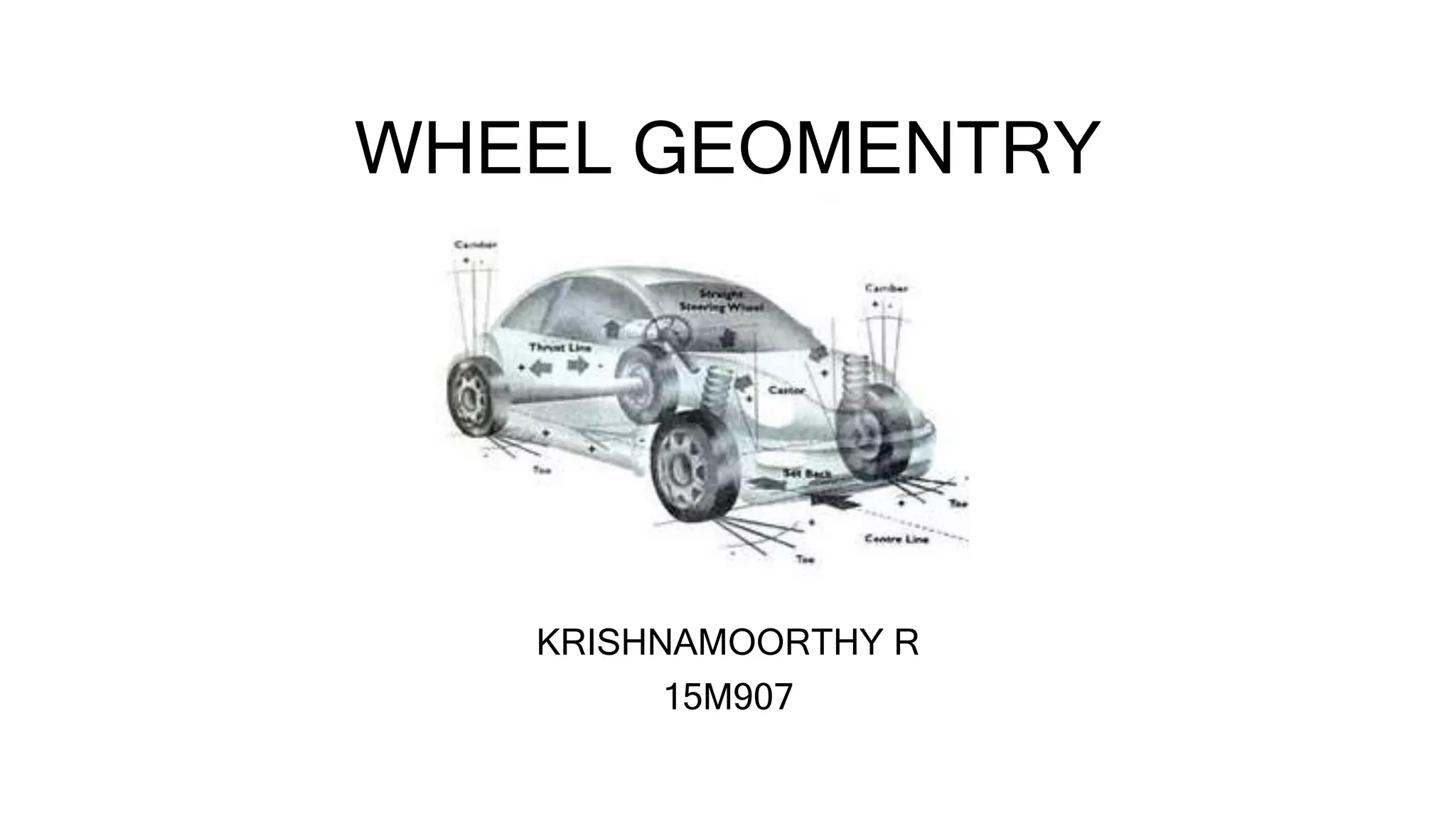
Camber
• Camber is the tilt of the car wheel from the vertical.
• The tyre life will be maximum when camber angle is zero.
• Caster is also know as wheel rake.
Effect:
• Excessive camber causes
• improper contact of the wheel.
Amount:
• Most manufactures specify
• A very small camber. Usually 2º to 3º from Straight up and down.
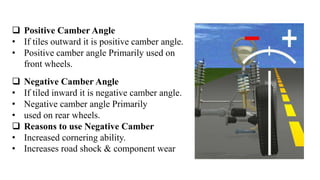
 Positive Camber Angle
• If tiles outward it is positive camber angle.
• Positive camber angle Primarily used on
front wheels.
 Negative Camber Angle
• If tiled inward it is negative camber angle.
• Negative camber angle Primarily
• used on rear wheels.
 Reasons to use Negative Camber
• Increased cornering ability.
• Increases road shock & component wear
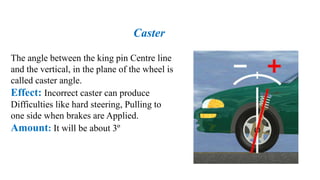
The angle between the king pin Centre line
and the vertical, in the plane of the wheel is
called caster angle.
Effect: Incorrect caster can produce
Difficulties like hard steering, Pulling to
one side when brakes are Applied.
Amount: It will be about 3º
Caster
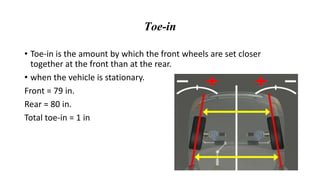
Toe-in
• Toe-in is the amount by which the front wheels are set closer
together at the front than at the rear.
• when the vehicle is stationary.
Front = 79 in.
Rear = 80 in.
Total toe-in = 1 in
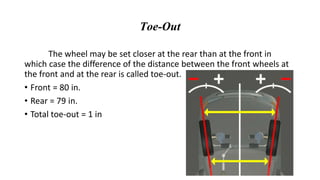
Toe-Out
The wheel may be set closer at the rear than at the front in
which case the difference of the distance between the front wheels at
the front and at the rear is called toe-out.
• Front = 80 in.
• Rear = 79 in.
• Total toe-out = 1 in
Wheel Geomentry

Wheel Geomentry

  • 1.
  • 2.
    Introduction The steering systemallow the driver to control the direction of vehicle travel. The following are the secondary function of steering system: • (1) It provides directional stability of vehicle when going straight • ahead. • (2) It provides straight ahead recovery after completing a turn. • (3) It helps in controlling wear and tear of tyres. • (4) It converts the rotary movement of the steering wheel into an • angular turn of the front wheels.
  • 3.
    The following arethe requirements of a good steering system. (1) The steering mechanism should be very accurate and easy to handle. (2) The vehicle should be steered with a minimum of effort so that the driver does not feel driving fatigue. (3) The steering mechanism should be affected by the side thrusts, cornering forces and wind effects. (4)The mechanism should have a tendency to regain the straight ahead configuration after steering need is over.
  • 4.
    Camber • Camber isthe tilt of the car wheel from the vertical. • The tyre life will be maximum when camber angle is zero. • Caster is also know as wheel rake. Effect: • Excessive camber causes • improper contact of the wheel. Amount: • Most manufactures specify • A very small camber. Usually 2º to 3º from Straight up and down.
  • 5.
     Positive CamberAngle • If tiles outward it is positive camber angle. • Positive camber angle Primarily used on front wheels.  Negative Camber Angle • If tiled inward it is negative camber angle. • Negative camber angle Primarily • used on rear wheels.  Reasons to use Negative Camber • Increased cornering ability. • Increases road shock & component wear
  • 6.
    The angle betweenthe king pin Centre line and the vertical, in the plane of the wheel is called caster angle. Effect: Incorrect caster can produce Difficulties like hard steering, Pulling to one side when brakes are Applied. Amount: It will be about 3º Caster
  • 7.
    Toe-in • Toe-in isthe amount by which the front wheels are set closer together at the front than at the rear. • when the vehicle is stationary. Front = 79 in. Rear = 80 in. Total toe-in = 1 in
  • 8.
    Toe-Out The wheel maybe set closer at the rear than at the front in which case the difference of the distance between the front wheels at the front and at the rear is called toe-out. • Front = 80 in. • Rear = 79 in. • Total toe-out = 1 in