WhatsApp: Language
Learning on-the-go
E- symposium 2014
23rd January, 2013 - 24th January, 2014
University of Southampton

Billy Brick and Tiziana Cervi-Wilson
lsx133@coventry.ac.uk and lsx091@coventry.ac.uk
Coventry University
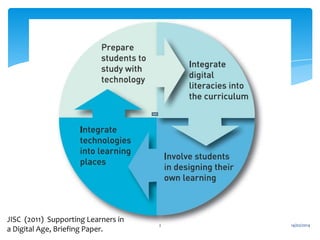
JISC (2011) Supporting Learners in
a Digital Age, Briefing Paper.

2

14/02/2014
3

14/02/2014
4

14/02/2014
What kind of activity is a task?
Willis and Willis (2007:12-14) offer the following
criteria in the form of questions.
‘The more confidently you can answer yes to each
of these questions, the more task-like the
activity.’
Will the activity engage learners' interest?
Is there a primary focus on meaning?
Is there a goal or an outcome?
Is success judged in terms of outcome?
Is completion a priority?
Does the activity relate to real world activities?'
6

14/02/2014
The Pilot Project (1)
Creating the activity (repurposing existing
activity)
Briefing with students (phones, ethics,
willingness, BYOD)
Setting up groups on Whatsapp

7

14/02/2014
The Pilot Project (2)
On the day (weather, graduation ceremony!)
Told students they could text us if they got
stuck
Feedback (Google maps) – Serendipitous!
Discussion about directions, clarifying
contentious issues
8

14/02/2014
Positives

Overwhelming positive response

Preferable to Moodle due to immediacy and
convenience
Using Italian in a ‘real life’ situation
9

14/02/2014
Technical Issues
Anonymity of number – has to ask the Faculty
to get us a phone.
SD memory Card
Wireless Connection. Poor signal.
GPS and installation
Students did not need technology support
and didn’t mention data charges
10

14/02/2014
Improvements

Record sound files directly rather than via
Dropbox
Timed?

Incorporate short videos
11

14/02/2014
Future Directions

Designing Weekly tasks for IWLP students to
reinforce classroom learning.
Experiment with short student videos

12

14/02/2014
References
Avatar Languages (2009) Augmented Reality Language Learning [online] available from
<http://www.slideshare.net/AvatarLanguages.com/augmented-reality-language-learning-virtual-worlds-meet-mlearning > [20th
Jan 2014]
Betham, H. and Sharpe , R. (eds) (2007) Rethinking Pedagogy for a Digital Age: Designing and Delivering E-Learning. London:
Routledge.
Bibby, S (2011) Do Students Wish to ‘Go Mobile’? An Investigation into Student Use of PCs and Cell Phones. International Journal of
Computer-Assisted Language Learning and Teaching, 1 (2), 43-54
Brown, E (2010) Introduction to location-based mobile learning. In: Brown, Elizabeth ed. Education in the wild: contextual and
location-based mobile learning in action. A report from the STELLAR Alpine Rendez-Vous workshop series. STELLAR Alpine
Rendez-Vous workshop. Nottingham, UK: Learning Sciences Research Institute, University of Nottingham, pp. 7–9. [online]
available from <http://www.lsri.nottingham.ac.uk/ejb/preprints/ARV_Education_in_the_wild.pdf >[21st Jan 2014]
Bloom, B (1956). Taxonomy of Educational Objectives, Handbook I: The Cognitive Domain. New York: David McKay
Godwin-Jones, R (2011) Emerging Technologies. Mobile Apps for Language Learning. Language Learning and Technology 15 (2) pp211. [online] available from <http://llt.msu.edu/issues/june2011/emerging.pdf> [10th Jan 2014]
Guardian (2013) Teenagers say goodbye to Facebook and hello to messenger apps. Available from
http://www.theguardian.com/technology/2013/nov/10/teenagers-messenger-apps-facebook-exodus
Conole, G and 
Alevizo, P (2010) A 
literature 
review
 of 
the 
use 
of
 Web
2.0
 tools 
in 
Higher
 Education. HEA Academy.
[online] available from <http://www.heacademy. ac.uk/assets/EvidenceNet/Conole_Alevizou_2010.pdf> [20 January 2013]
Corrin, L. Lockyer, L. and Bennett, S (2010) Technological diversity: an investigation of students' technology use in everyday life and
academic study. Learning, Media and Technology, 35 (4) pp. 387-401
JISC (2011) Supporting Learners in a Digital Age, Briefing Paper.
Kukulska-Hulme, A. (2009) Will mobile learning change language learning? ReCALL 21 (2) 157-165.
Kukulska-Hulme, A and Jones, C (2011) The next generation: design and the infrastructure for learning in a mobile and networked
world. In: Olofsson, A. D. and Lindberg, J. Ola eds. Informed Design of Educational Technologies in Higher Education: Enhanced
Learning and Teaching. Hershey, PA: Information Science Reference (an Imprint of IGI Global), pp. 57–78.
Reedy, K. and Goodfellow, R. (2012) Digital and information literacy framework. Open University.
Willis, D. and Willis, J. (2007) Doing task-based teaching. Oxford: OUP.
13

14/02/2014

WhatsApp: Language Learning on-the-go

  • 1.
    WhatsApp: Language Learning on-the-go E-symposium 2014 23rd January, 2013 - 24th January, 2014 University of Southampton Billy Brick and Tiziana Cervi-Wilson lsx133@coventry.ac.uk and lsx091@coventry.ac.uk Coventry University
  • 2.
    JISC (2011) SupportingLearners in a Digital Age, Briefing Paper. 2 14/02/2014
  • 3.
  • 4.
  • 6.
    What kind ofactivity is a task? Willis and Willis (2007:12-14) offer the following criteria in the form of questions. ‘The more confidently you can answer yes to each of these questions, the more task-like the activity.’ Will the activity engage learners' interest? Is there a primary focus on meaning? Is there a goal or an outcome? Is success judged in terms of outcome? Is completion a priority? Does the activity relate to real world activities?' 6 14/02/2014
  • 7.
    The Pilot Project(1) Creating the activity (repurposing existing activity) Briefing with students (phones, ethics, willingness, BYOD) Setting up groups on Whatsapp 7 14/02/2014
  • 8.
    The Pilot Project(2) On the day (weather, graduation ceremony!) Told students they could text us if they got stuck Feedback (Google maps) – Serendipitous! Discussion about directions, clarifying contentious issues 8 14/02/2014
  • 9.
    Positives Overwhelming positive response Preferableto Moodle due to immediacy and convenience Using Italian in a ‘real life’ situation 9 14/02/2014
  • 10.
    Technical Issues Anonymity ofnumber – has to ask the Faculty to get us a phone. SD memory Card Wireless Connection. Poor signal. GPS and installation Students did not need technology support and didn’t mention data charges 10 14/02/2014
  • 11.
    Improvements Record sound filesdirectly rather than via Dropbox Timed? Incorporate short videos 11 14/02/2014
  • 12.
    Future Directions Designing Weeklytasks for IWLP students to reinforce classroom learning. Experiment with short student videos 12 14/02/2014
  • 13.
    References Avatar Languages (2009)Augmented Reality Language Learning [online] available from <http://www.slideshare.net/AvatarLanguages.com/augmented-reality-language-learning-virtual-worlds-meet-mlearning > [20th Jan 2014] Betham, H. and Sharpe , R. (eds) (2007) Rethinking Pedagogy for a Digital Age: Designing and Delivering E-Learning. London: Routledge. Bibby, S (2011) Do Students Wish to ‘Go Mobile’? An Investigation into Student Use of PCs and Cell Phones. International Journal of Computer-Assisted Language Learning and Teaching, 1 (2), 43-54 Brown, E (2010) Introduction to location-based mobile learning. In: Brown, Elizabeth ed. Education in the wild: contextual and location-based mobile learning in action. A report from the STELLAR Alpine Rendez-Vous workshop series. STELLAR Alpine Rendez-Vous workshop. Nottingham, UK: Learning Sciences Research Institute, University of Nottingham, pp. 7–9. [online] available from <http://www.lsri.nottingham.ac.uk/ejb/preprints/ARV_Education_in_the_wild.pdf >[21st Jan 2014] Bloom, B (1956). Taxonomy of Educational Objectives, Handbook I: The Cognitive Domain. New York: David McKay Godwin-Jones, R (2011) Emerging Technologies. Mobile Apps for Language Learning. Language Learning and Technology 15 (2) pp211. [online] available from <http://llt.msu.edu/issues/june2011/emerging.pdf> [10th Jan 2014] Guardian (2013) Teenagers say goodbye to Facebook and hello to messenger apps. Available from http://www.theguardian.com/technology/2013/nov/10/teenagers-messenger-apps-facebook-exodus Conole, G and 
Alevizo, P (2010) A 
literature 
review
 of 
the 
use 
of
 Web
2.0
 tools 
in 
Higher
 Education. HEA Academy. [online] available from <http://www.heacademy. ac.uk/assets/EvidenceNet/Conole_Alevizou_2010.pdf> [20 January 2013] Corrin, L. Lockyer, L. and Bennett, S (2010) Technological diversity: an investigation of students' technology use in everyday life and academic study. Learning, Media and Technology, 35 (4) pp. 387-401 JISC (2011) Supporting Learners in a Digital Age, Briefing Paper. Kukulska-Hulme, A. (2009) Will mobile learning change language learning? ReCALL 21 (2) 157-165. Kukulska-Hulme, A and Jones, C (2011) The next generation: design and the infrastructure for learning in a mobile and networked world. In: Olofsson, A. D. and Lindberg, J. Ola eds. Informed Design of Educational Technologies in Higher Education: Enhanced Learning and Teaching. Hershey, PA: Information Science Reference (an Imprint of IGI Global), pp. 57–78. Reedy, K. and Goodfellow, R. (2012) Digital and information literacy framework. Open University. Willis, D. and Willis, J. (2007) Doing task-based teaching. Oxford: OUP. 13 14/02/2014

Editor's Notes

  • #6 We Chat – 200 million Chinese market http://www.theguardian.com/world/2012/dec/07/wechat-chinese-social-media-app