technology in language
learning and teaching
Prepared by Ahmad youssef
Brief history
technology was chalk and blackboard. Later audio and video
recording and playback equipment were added.
Now, we have www ( world wide web), a way of accessing
information over the internet.
• Technology makes possible greater :
• 1 individualization, to individualize means to teach according to a
student ability.
• 2 social interaction,
• 3 and reflection on language.
• Technology should be integrated into the curriculum and not just
added to it .
Some principles,
• Students are autonomous in what they shared about
themselves.
• Students work on authentic ( real ,original) language,
which comes from interactions with others through online or
virtual communities.
• Language is learned by using it and tech helps in that .
• Students can learn from each others.
The role of teacher
• The teacher’s role is to plan activities that students accomplish
via technological means.
• Then the teacher monitors their work and guides the students as
they learn the language.
• Facilitator
The role of student
• The students’ role is to be actively involved in
using the language, by connecting with others.
Benefits Of Using Technology In The Classroom
• Types of technology used in classrooms today
• • smart boards
• • Projectors
• • Document cameras
• • Student computers
• • Shared networks
• • Internet
• • Web development programs
Assist teachers in
• Developing interactive lessons
• Organization and grading policies
• Motivating students for involvement
• Reducing time gaps
• Preparing students for the real world
• Keeping students on task and interested
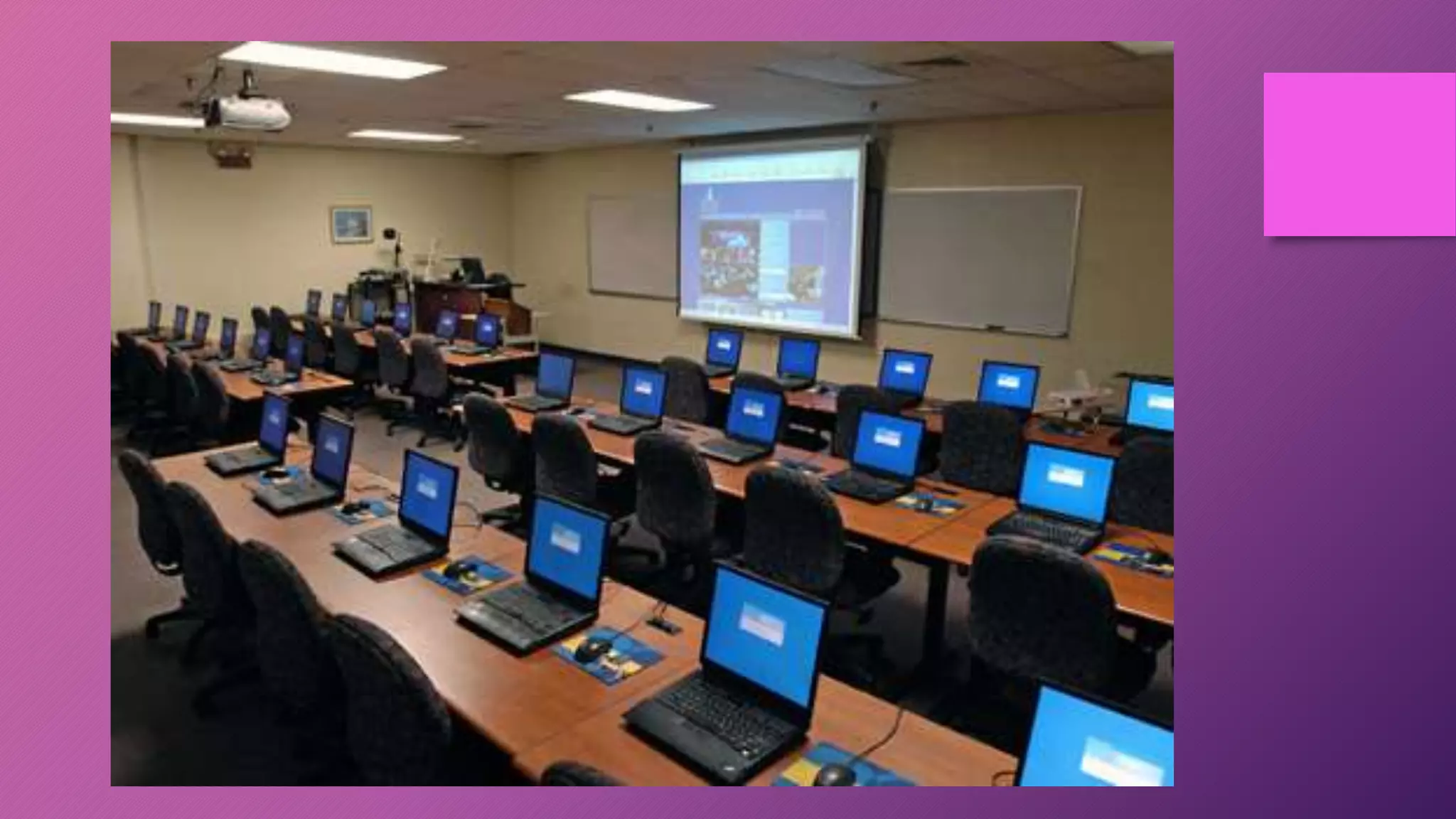
Teachers need to:
• Be trained in technology
• Be capable and competent to use it in classroom
• Actively engage all students
• Receive ongoing training
• Be required to incorporate into lesson planning
• Be expert of technology use
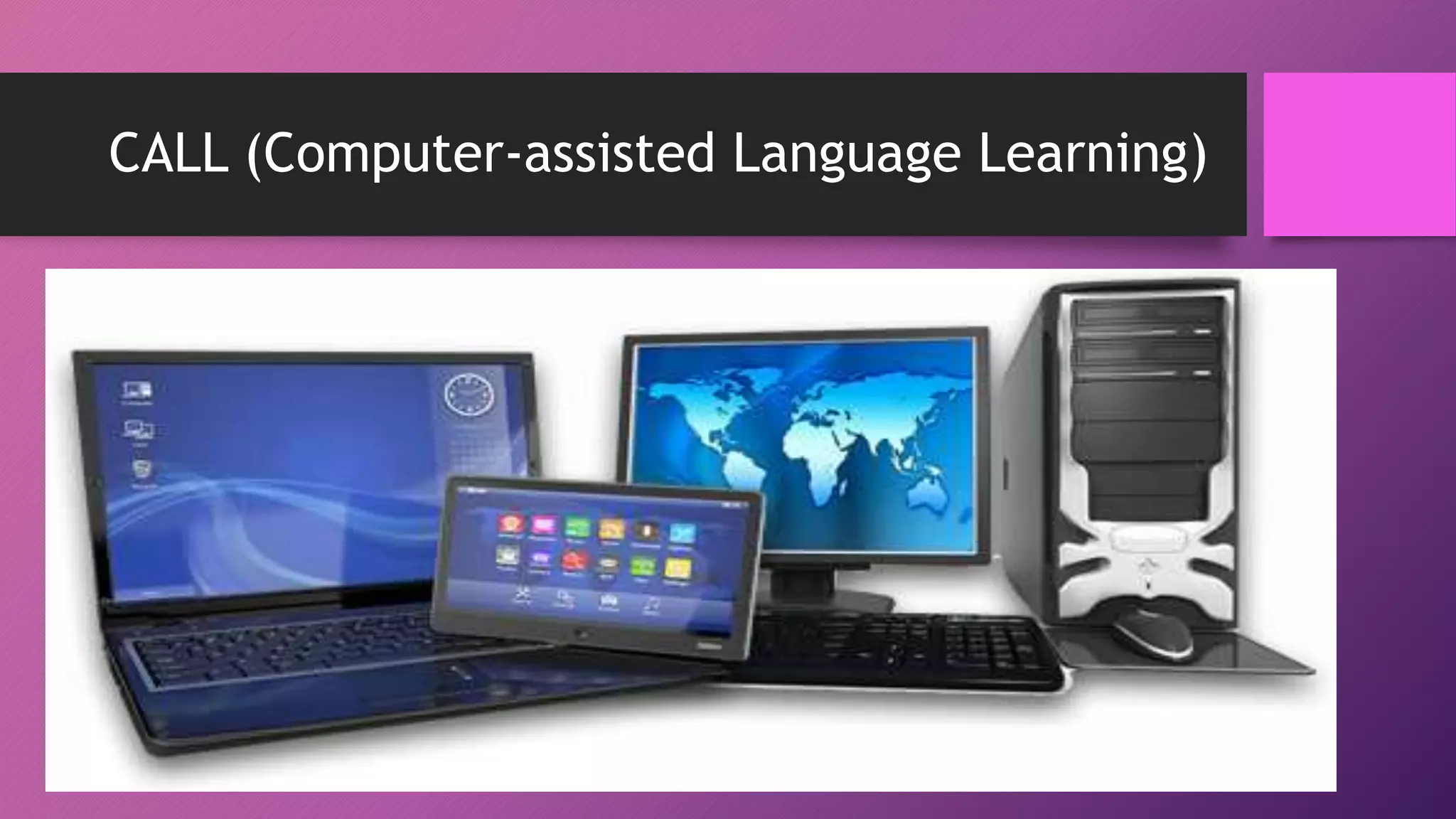
CALL (Computer-assisted Language Learning)
CALL
• There are many available websites for language learners.
• Some of the CALL programs are open source, which means that
they are free and can easily be downloaded onto computers
• Just using the computer needs writing ,reading understanding etc
so it helps for young learners
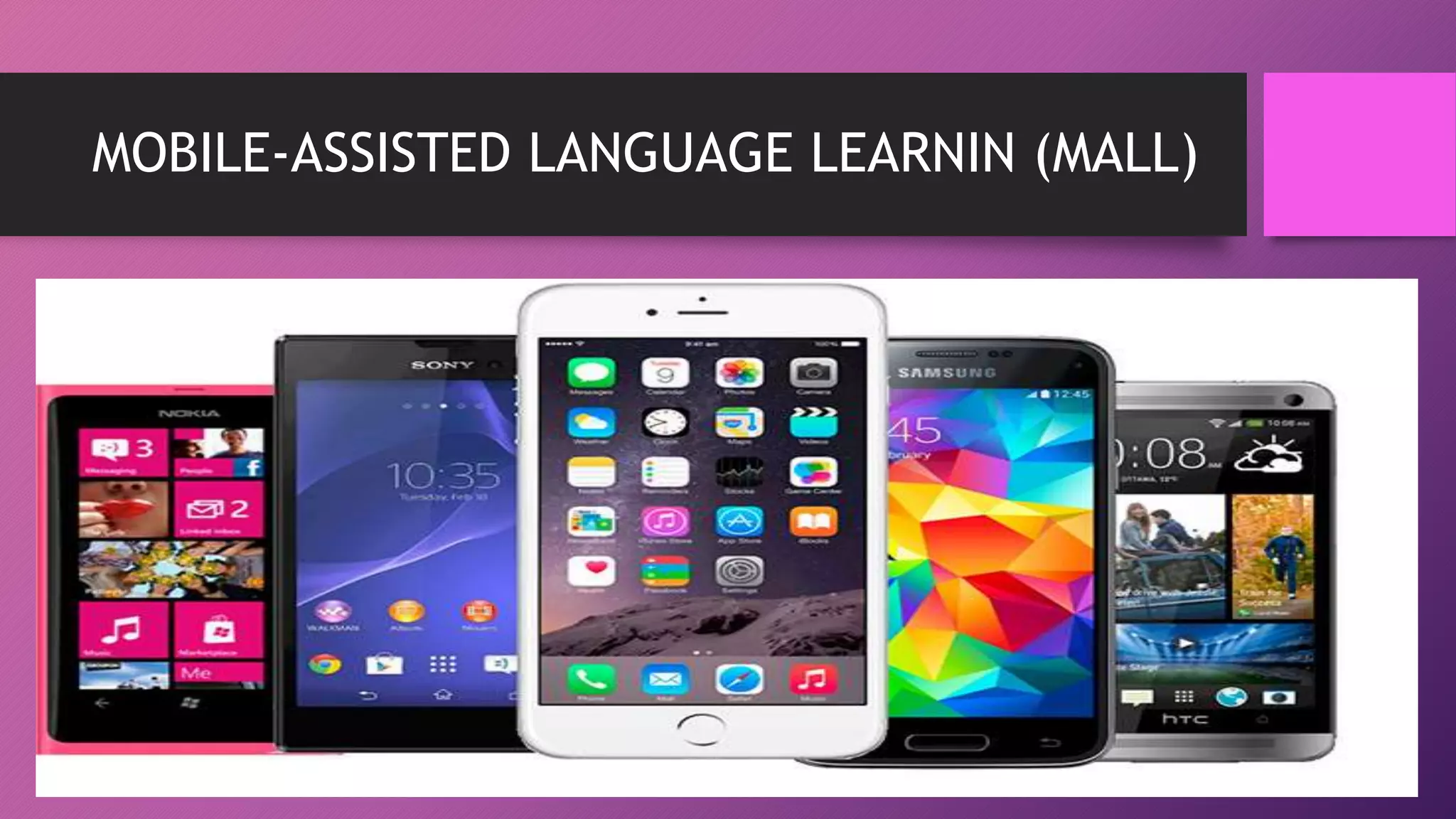
MOBILE-ASSISTED LANGUAGE LEARNIN (MALL)
MALL
• An approach to language learning through using mobile devices
• A way of learning using content facilitated by mobile devices such
as cellphones, mp3 players, notebooks, hand-held mini computers,
PDAs, cameras, data storage devices and a number of other
portable devices
• 90% of the people on earth are covered by mobile phone network
Advantages of MALL :
• Learner driven and centered
• Relatively cheap technology
• free content
• Portable
• Ubiquitous ( something to be every where )
MALL
• Still new and fashionable
• Potential for learner autonomy
• Encourages and facilitates peer interaction
• Integrates real life into learning
• Easy content creation
• eBooks etc
Techniques
• Blogs
• Are personal websites or web pages on which
individuals share their opinions , daily life their
travels,, current events, so its rich source of
authentic material for reading, discussion ,
learning and study.
Distance Education
• One of the applications of technology to language learning is in
the direct delivery of language instruction through the net webs.
• An advantage of web based instruction is that provides access to
language that might not be available otherwise.
Electronic Text Corpora
• Electronic text corpora are collections of language texts,
most often written, but sometimes spoken texts in transcript
form.
Wikipedia
• It is a shared online encyclopedia. What makes it unique is that
anyone can contribute information on topic,so the information is
always being updated.
Wikis
• It is a quick way to create and edit web-documents.
• Wikis can be very useful in collaborative writing tasks . Multiple
authors -group of students- can write one text together.
principles for using technology in
language learning
• Acknowledge the boundary between learning and playing
• Promote learning activities using technology
• Teachers need to Be up to date for the new
• Keep the paragraphs the texts concise .
technology in language learning and teaching Prepared by AHMET YUSUF

technology in language learning and teaching Prepared by AHMET YUSUF

  • 1.
    technology in language learningand teaching Prepared by Ahmad youssef
  • 2.
    Brief history technology waschalk and blackboard. Later audio and video recording and playback equipment were added. Now, we have www ( world wide web), a way of accessing information over the internet.
  • 3.
    • Technology makespossible greater : • 1 individualization, to individualize means to teach according to a student ability. • 2 social interaction, • 3 and reflection on language. • Technology should be integrated into the curriculum and not just added to it .
  • 4.
    Some principles, • Studentsare autonomous in what they shared about themselves. • Students work on authentic ( real ,original) language, which comes from interactions with others through online or virtual communities. • Language is learned by using it and tech helps in that . • Students can learn from each others.
  • 5.
    The role ofteacher • The teacher’s role is to plan activities that students accomplish via technological means. • Then the teacher monitors their work and guides the students as they learn the language. • Facilitator
  • 6.
    The role ofstudent • The students’ role is to be actively involved in using the language, by connecting with others.
  • 7.
    Benefits Of UsingTechnology In The Classroom • Types of technology used in classrooms today • • smart boards • • Projectors • • Document cameras • • Student computers • • Shared networks • • Internet • • Web development programs
  • 8.
    Assist teachers in •Developing interactive lessons • Organization and grading policies • Motivating students for involvement • Reducing time gaps • Preparing students for the real world • Keeping students on task and interested
  • 9.
    Teachers need to: •Be trained in technology • Be capable and competent to use it in classroom • Actively engage all students • Receive ongoing training • Be required to incorporate into lesson planning • Be expert of technology use
  • 11.
  • 12.
    CALL • There aremany available websites for language learners. • Some of the CALL programs are open source, which means that they are free and can easily be downloaded onto computers • Just using the computer needs writing ,reading understanding etc so it helps for young learners
  • 13.
  • 14.
    MALL • An approachto language learning through using mobile devices • A way of learning using content facilitated by mobile devices such as cellphones, mp3 players, notebooks, hand-held mini computers, PDAs, cameras, data storage devices and a number of other portable devices • 90% of the people on earth are covered by mobile phone network
  • 15.
    Advantages of MALL: • Learner driven and centered • Relatively cheap technology • free content • Portable • Ubiquitous ( something to be every where )
  • 16.
    MALL • Still newand fashionable • Potential for learner autonomy • Encourages and facilitates peer interaction • Integrates real life into learning • Easy content creation • eBooks etc
  • 17.
    Techniques • Blogs • Arepersonal websites or web pages on which individuals share their opinions , daily life their travels,, current events, so its rich source of authentic material for reading, discussion , learning and study.
  • 18.
    Distance Education • Oneof the applications of technology to language learning is in the direct delivery of language instruction through the net webs. • An advantage of web based instruction is that provides access to language that might not be available otherwise.
  • 19.
    Electronic Text Corpora •Electronic text corpora are collections of language texts, most often written, but sometimes spoken texts in transcript form.
  • 20.
    Wikipedia • It isa shared online encyclopedia. What makes it unique is that anyone can contribute information on topic,so the information is always being updated.
  • 21.
    Wikis • It isa quick way to create and edit web-documents. • Wikis can be very useful in collaborative writing tasks . Multiple authors -group of students- can write one text together.
  • 22.
    principles for usingtechnology in language learning
  • 23.
    • Acknowledge theboundary between learning and playing • Promote learning activities using technology • Teachers need to Be up to date for the new • Keep the paragraphs the texts concise .