WHAT IS
LEARNING?
Dr. James M. Alo
 isacquiring new
  knowledge,
  behaviors, skills,
  values, preferences
  or understanding,
  and may involve
  synthesizing
  different types of
  information.
Types of learning

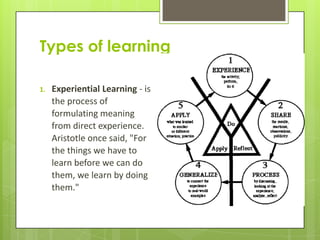
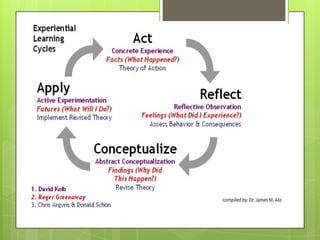
1.   Experiential Learning - is
     the process of
     formulating meaning
     from direct experience.
     Aristotle once said, "For
     the things we have to
     learn before we can do
     them, we learn by doing
     them."
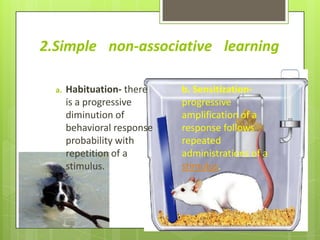
2.Simple non-associative learning

  a.   Habituation- there    b. Sensitization-
       is a progressive      progressive
       diminution of         amplification of a
       behavioral response   response follows
       probability with      repeated
       repetition of a       administrations of a
       stimulus.             stimulus.
3. Associative learning- element is learned
through association with a separate, pre-
occurring element.

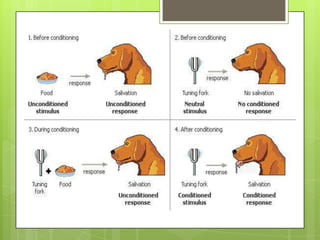
   a.   Operant               b. Classical conditioning-
        conditioning-         involves repeatedly
        conditioning is the   pairing an unconditioned
        use of                stimulus (which unfailingly
                              evokes a particular
        consequences to       response) with another
        modify the            previously neutral
        occurrence and        stimulus (which does not
        form of behavior.     normally evoke the
                              response).
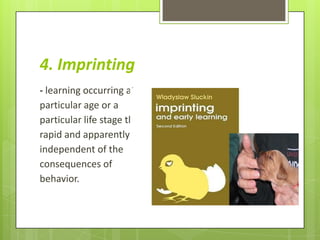
4. Imprinting
- learning occurring at a
particular age or a
particular life stage that is
rapid and apparently
independent of the
consequences of
behavior.
5. Observational learning
-most characteristic of humans is imitation; one's
personal repetition of an observed behavior.
6. Play
- generally describes behavior which has no
particular end in itself, but improves performance in
similar situations in the future.
7. Enculturation
- a person learns the requirements of the culture by
which he or she is surrounded, and acquires values
and behaviors that are appropriate or necessary in
that culture.
8. Multimedia learning
- learner uses multimedia learning environments.
9. e-Learning and Augmented
Learning
- learner interacts with the e-learning environment,
it's called augmented learning.
10. Rote learning-
- focuses on memorizing the material so that it can
be recalled by the learner exactly the way it was read
or heard.
11. Informal learning
- learning occurs through the experience of day-to-
day situations.
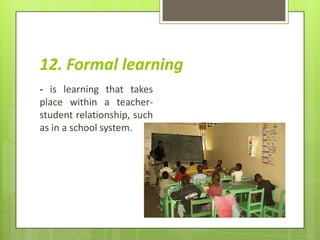
12. Formal learning
- is learning that takes
place within a teacher-
student relationship, such
as in a school system.
13. Non-formal learning
- is organized learning outside the formal learning
system. For example: learning by coming together
with people with similar interests and exchanging
viewpoints, in clubs or in (international) youth
organizations, workshops.
14.Non-formal learning and
combined approaches
- The educational system may use a combination of
formal, informal, and non-formal learning methods.
15. Tangential Learning
- is the process by which some portion of people will
self-educate if a topic is exposed to them in
something that they already enjoy such as playing an
instrument like the guitar or playing the drums.
16. Dialogic Learning
- learning based on dialogue.
Domains of learning

1.   Cognitive--such as          2. Psychomotor--such as
     learning to recall facts,   learning to perform the
     to analyze, and to          correct steps in a dance,
     solve a problem.            learning to swim, learning
                                 to ride a bicycle, or drive
                                 a car; and
3. Affective--such as learning how to like someone,
"to hate sin", to love one's country (patriotism), to
worship God, or to move on after a failed
relationship.
OTHER Types of Learning
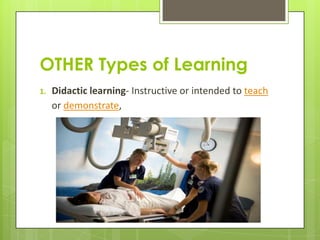
1.   Didactic learning- Instructive or intended to teach
     or demonstrate,
2. Experiential education
- transactive process between teacher and student
involved in direct experience with the learning
environment and content.
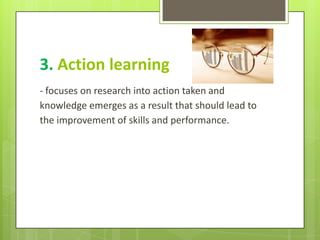
3. Action learning
- focuses on research into action taken and
knowledge emerges as a result that should lead to
the improvement of skills and performance.
4. Adventure learning
- hybrid distance education approach that provides
students with opportunities to explore real-world
issues through authentic learning experiences within
collaborative learning environments.
5. Free-choice learning
- Everyone engages in free-choice learning every day.
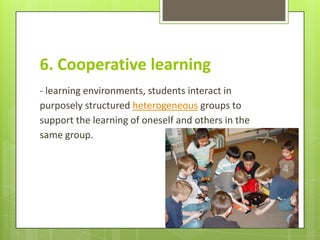
6. Cooperative learning
- learning environments, students interact in
purposely structured heterogeneous groups to
support the learning of oneself and others in the
same group.
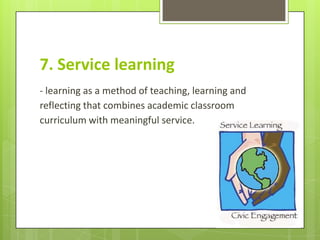
7. Service learning
- learning as a method of teaching, learning and
reflecting that combines academic classroom
curriculum with meaningful service.
Thank you.
 - Dr. James M. Alo

What is learning

  • 1.
  • 2.
     isacquiring new knowledge, behaviors, skills, values, preferences or understanding, and may involve synthesizing different types of information.
  • 5.
    Types of learning 1. Experiential Learning - is the process of formulating meaning from direct experience. Aristotle once said, "For the things we have to learn before we can do them, we learn by doing them."
  • 7.
    2.Simple non-associative learning a. Habituation- there b. Sensitization- is a progressive progressive diminution of amplification of a behavioral response response follows probability with repeated repetition of a administrations of a stimulus. stimulus.
  • 8.
    3. Associative learning-element is learned through association with a separate, pre- occurring element. a. Operant b. Classical conditioning- conditioning- involves repeatedly conditioning is the pairing an unconditioned use of stimulus (which unfailingly evokes a particular consequences to response) with another modify the previously neutral occurrence and stimulus (which does not form of behavior. normally evoke the response).
  • 10.
    4. Imprinting - learningoccurring at a particular age or a particular life stage that is rapid and apparently independent of the consequences of behavior.
  • 11.
    5. Observational learning -mostcharacteristic of humans is imitation; one's personal repetition of an observed behavior.
  • 12.
    6. Play - generallydescribes behavior which has no particular end in itself, but improves performance in similar situations in the future.
  • 13.
    7. Enculturation - aperson learns the requirements of the culture by which he or she is surrounded, and acquires values and behaviors that are appropriate or necessary in that culture.
  • 14.
    8. Multimedia learning -learner uses multimedia learning environments.
  • 15.
    9. e-Learning andAugmented Learning - learner interacts with the e-learning environment, it's called augmented learning.
  • 16.
    10. Rote learning- -focuses on memorizing the material so that it can be recalled by the learner exactly the way it was read or heard.
  • 17.
    11. Informal learning -learning occurs through the experience of day-to- day situations.
  • 18.
    12. Formal learning -is learning that takes place within a teacher- student relationship, such as in a school system.
  • 19.
    13. Non-formal learning -is organized learning outside the formal learning system. For example: learning by coming together with people with similar interests and exchanging viewpoints, in clubs or in (international) youth organizations, workshops.
  • 20.
    14.Non-formal learning and combinedapproaches - The educational system may use a combination of formal, informal, and non-formal learning methods.
  • 21.
    15. Tangential Learning -is the process by which some portion of people will self-educate if a topic is exposed to them in something that they already enjoy such as playing an instrument like the guitar or playing the drums.
  • 22.
    16. Dialogic Learning -learning based on dialogue.
  • 23.
    Domains of learning 1. Cognitive--such as 2. Psychomotor--such as learning to recall facts, learning to perform the to analyze, and to correct steps in a dance, solve a problem. learning to swim, learning to ride a bicycle, or drive a car; and
  • 24.
    3. Affective--such aslearning how to like someone, "to hate sin", to love one's country (patriotism), to worship God, or to move on after a failed relationship.
  • 25.
    OTHER Types ofLearning 1. Didactic learning- Instructive or intended to teach or demonstrate,
  • 26.
    2. Experiential education -transactive process between teacher and student involved in direct experience with the learning environment and content.
  • 27.
    3. Action learning -focuses on research into action taken and knowledge emerges as a result that should lead to the improvement of skills and performance.
  • 28.
    4. Adventure learning -hybrid distance education approach that provides students with opportunities to explore real-world issues through authentic learning experiences within collaborative learning environments.
  • 29.
    5. Free-choice learning -Everyone engages in free-choice learning every day.
  • 30.
    6. Cooperative learning -learning environments, students interact in purposely structured heterogeneous groups to support the learning of oneself and others in the same group.
  • 31.
    7. Service learning -learning as a method of teaching, learning and reflecting that combines academic classroom curriculum with meaningful service.
  • 32.
    Thank you. -Dr. James M. Alo