What is Drafting?
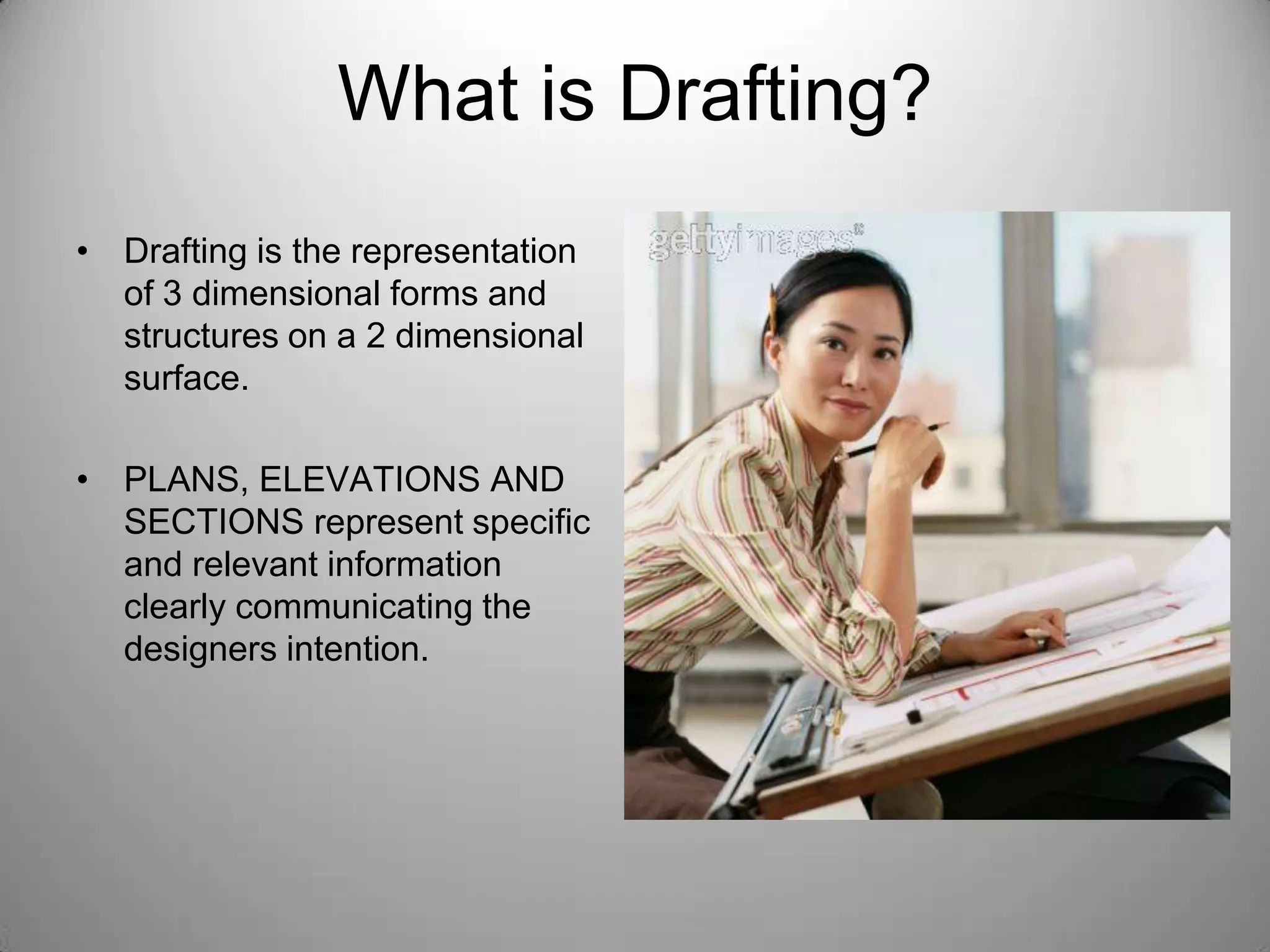
• Drafting is the representation
of 3 dimensional forms and
structures on a 2 dimensional
surface.
• PLANS, ELEVATIONS AND
SECTIONS represent specific
and relevant information
clearly communicating the
designers intention.
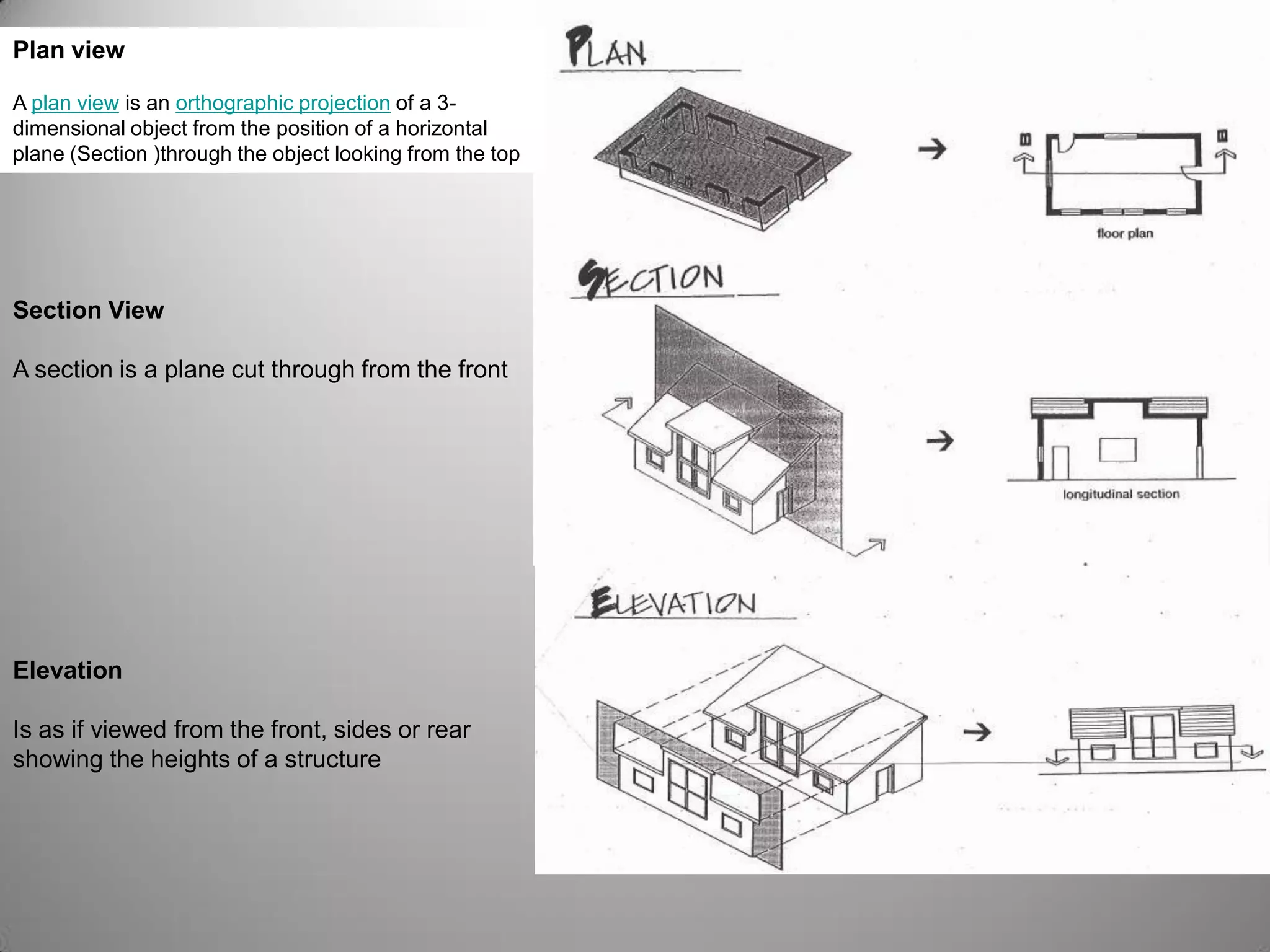
Plan view
A plan view is an orthographic projection of a 3-
dimensional object from the position of a horizontal
plane (Section )through the object looking from the top
Section View
A section is a plane cut through from the front
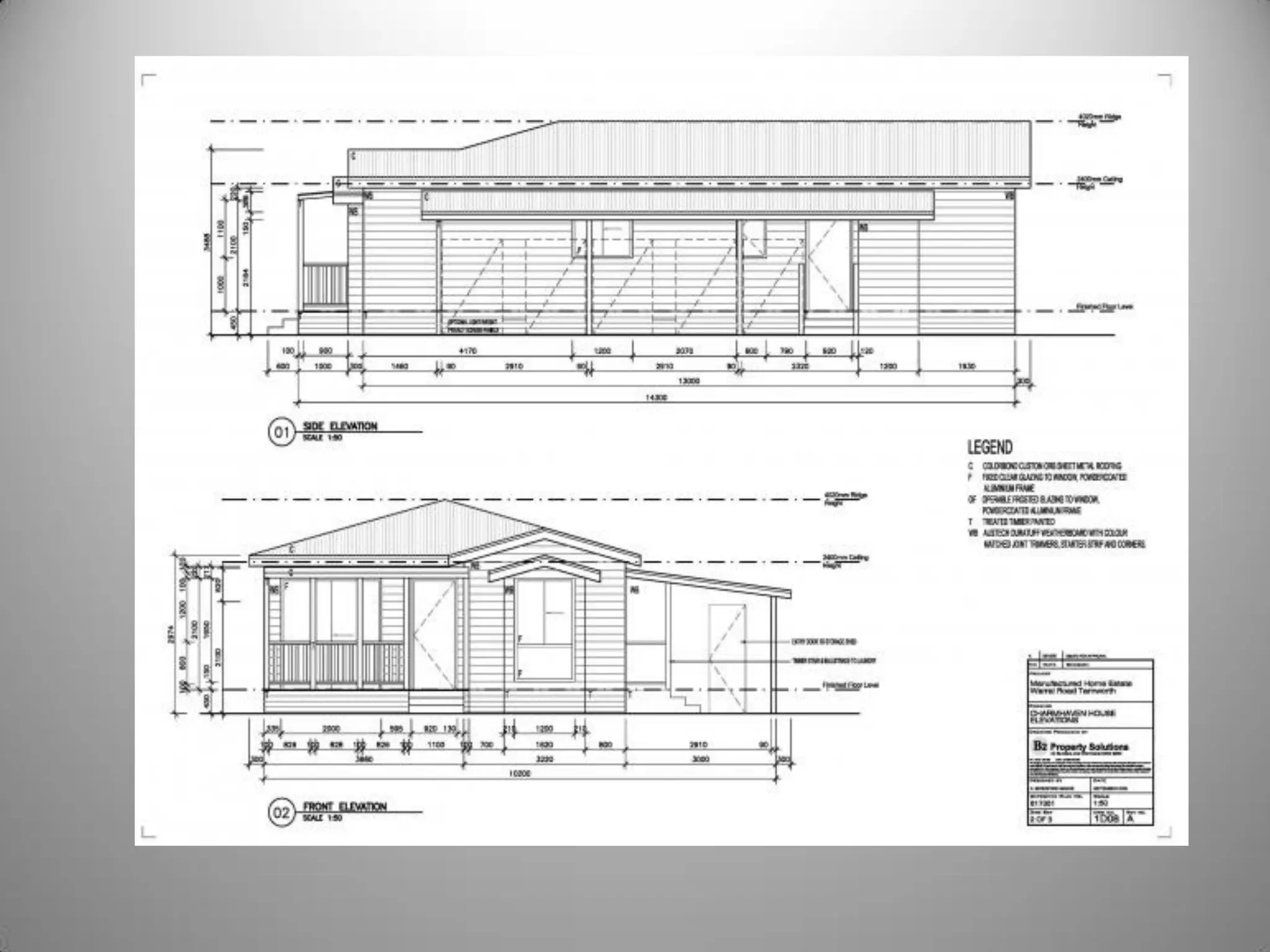
Elevation
Is as if viewed from the front, sides or rear
showing the heights of a structure
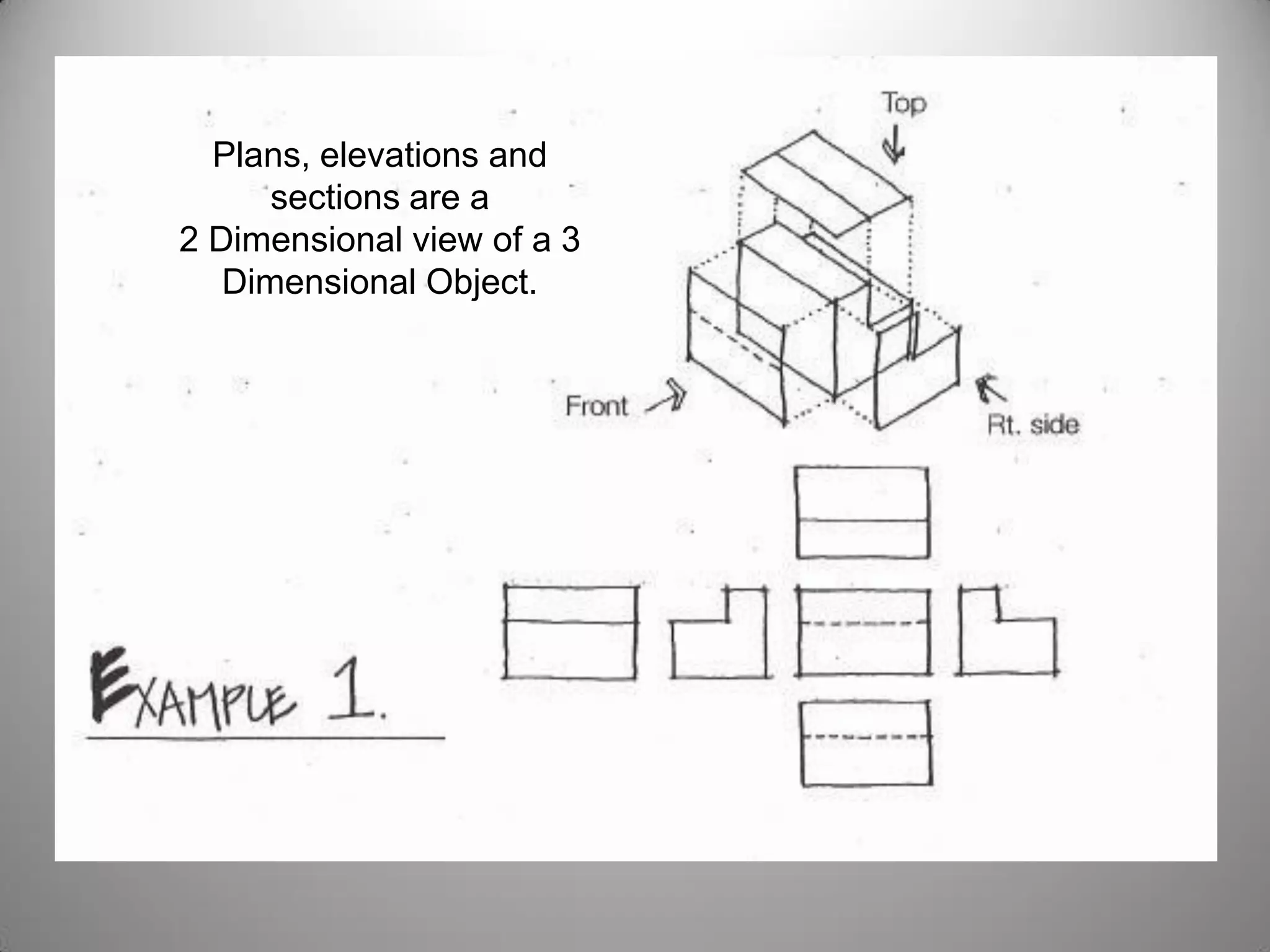
Plans, elevations and
sections are a
2 Dimensional view of a 3
Dimensional Object.
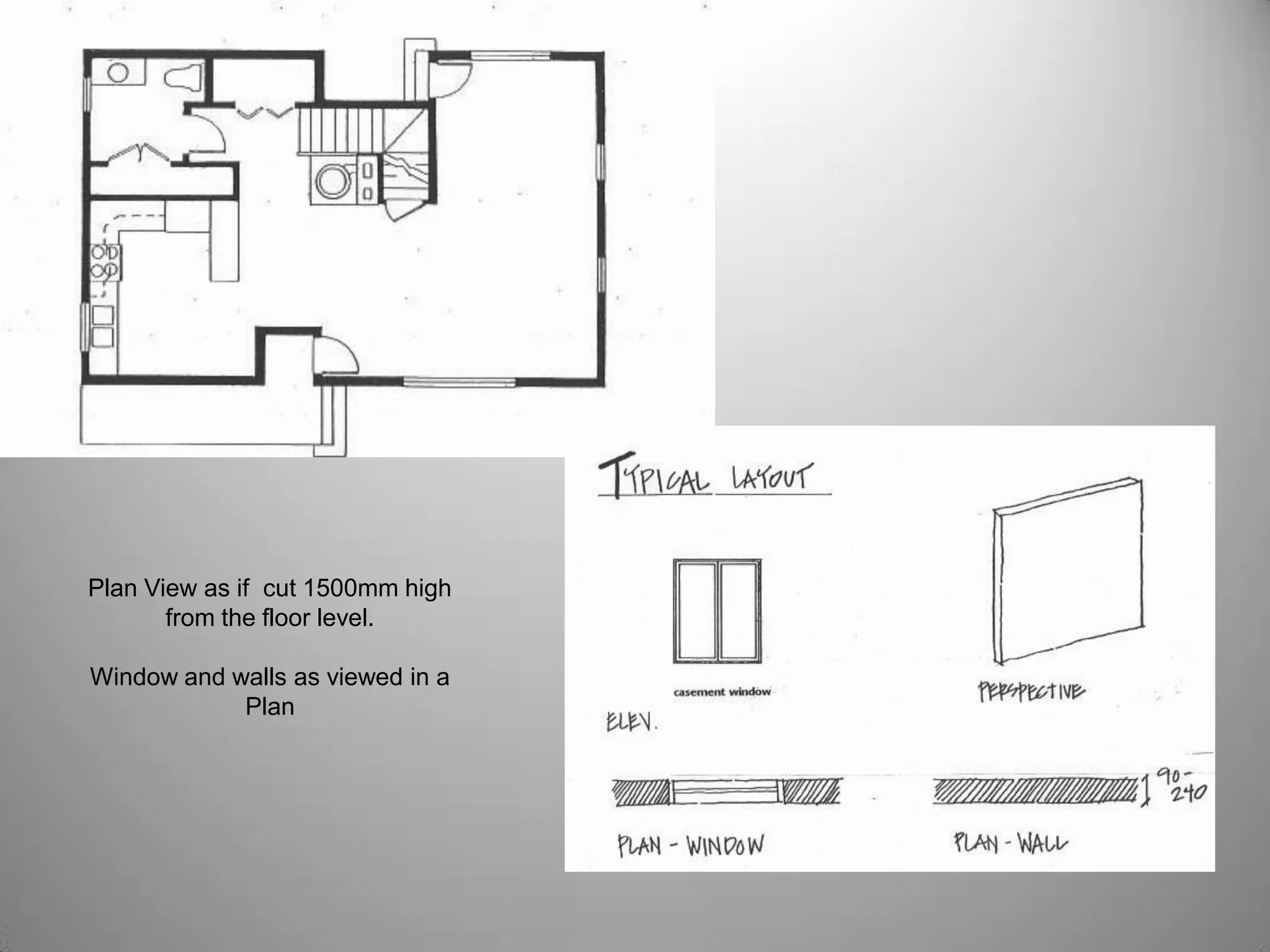
Plan View as if cut 1500mm high
from the floor level.
Window and walls as viewed in a
Plan
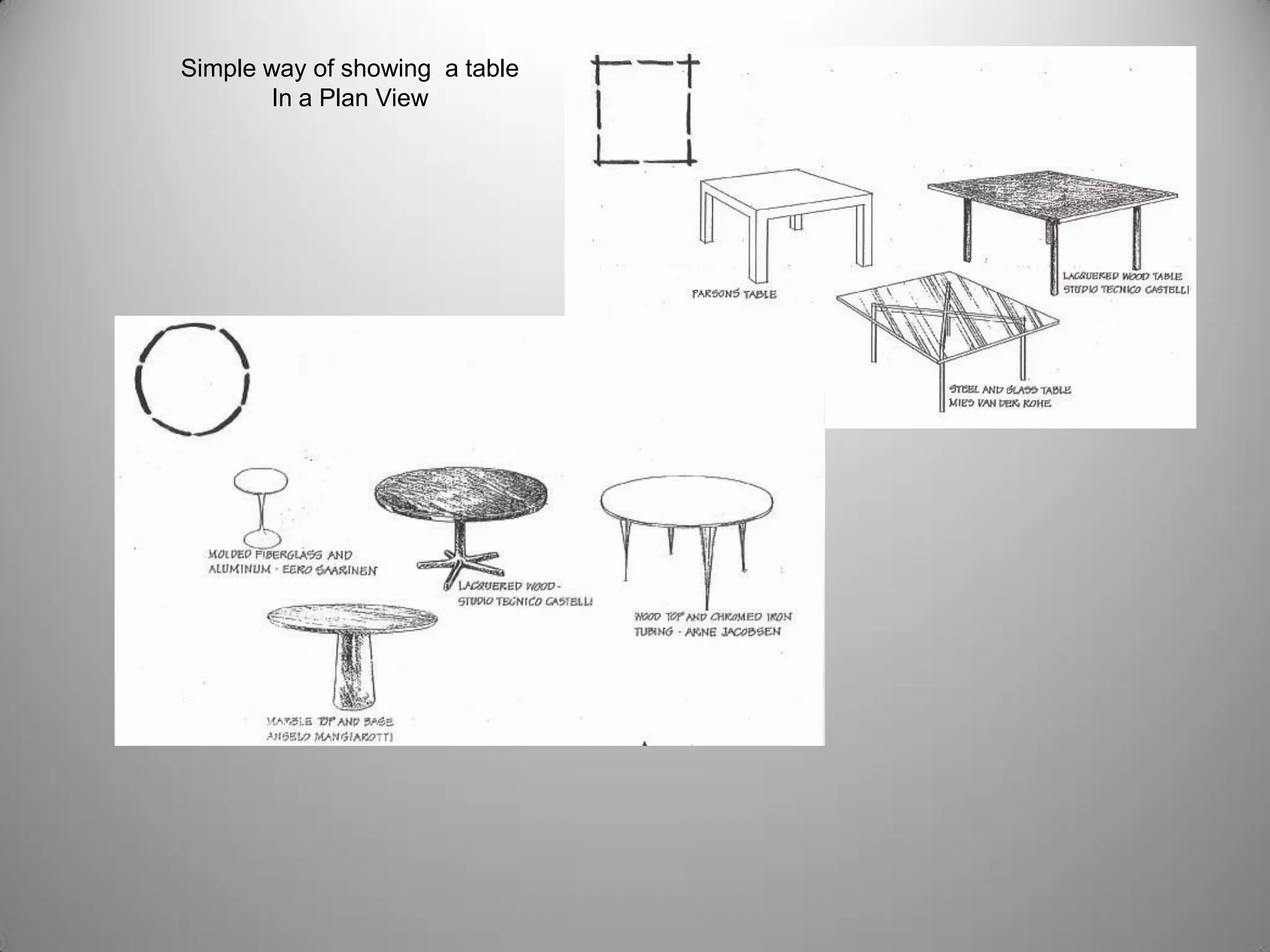
Simple way of showing a table
In a Plan View
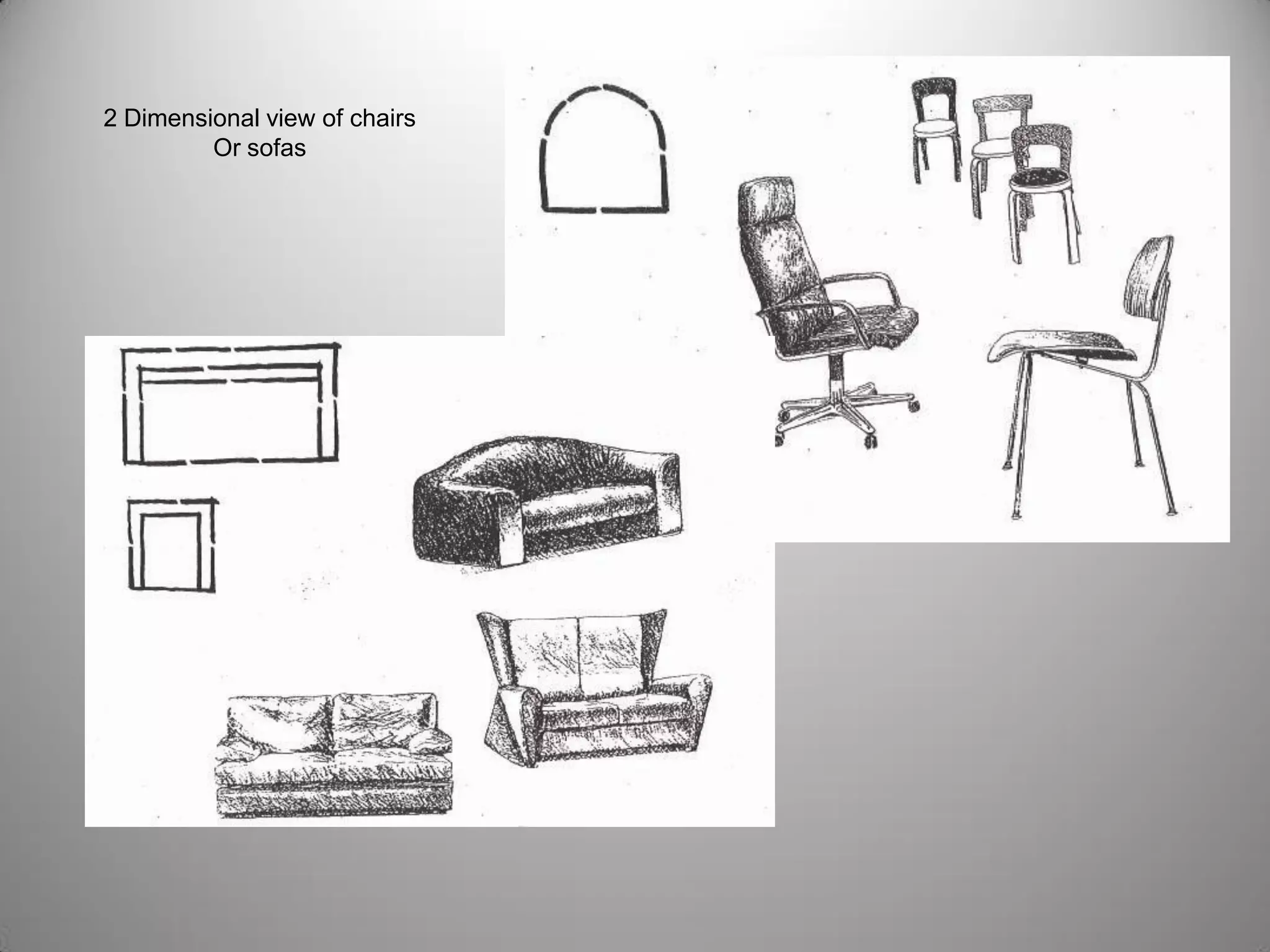
2 Dimensional view of chairs
Or sofas
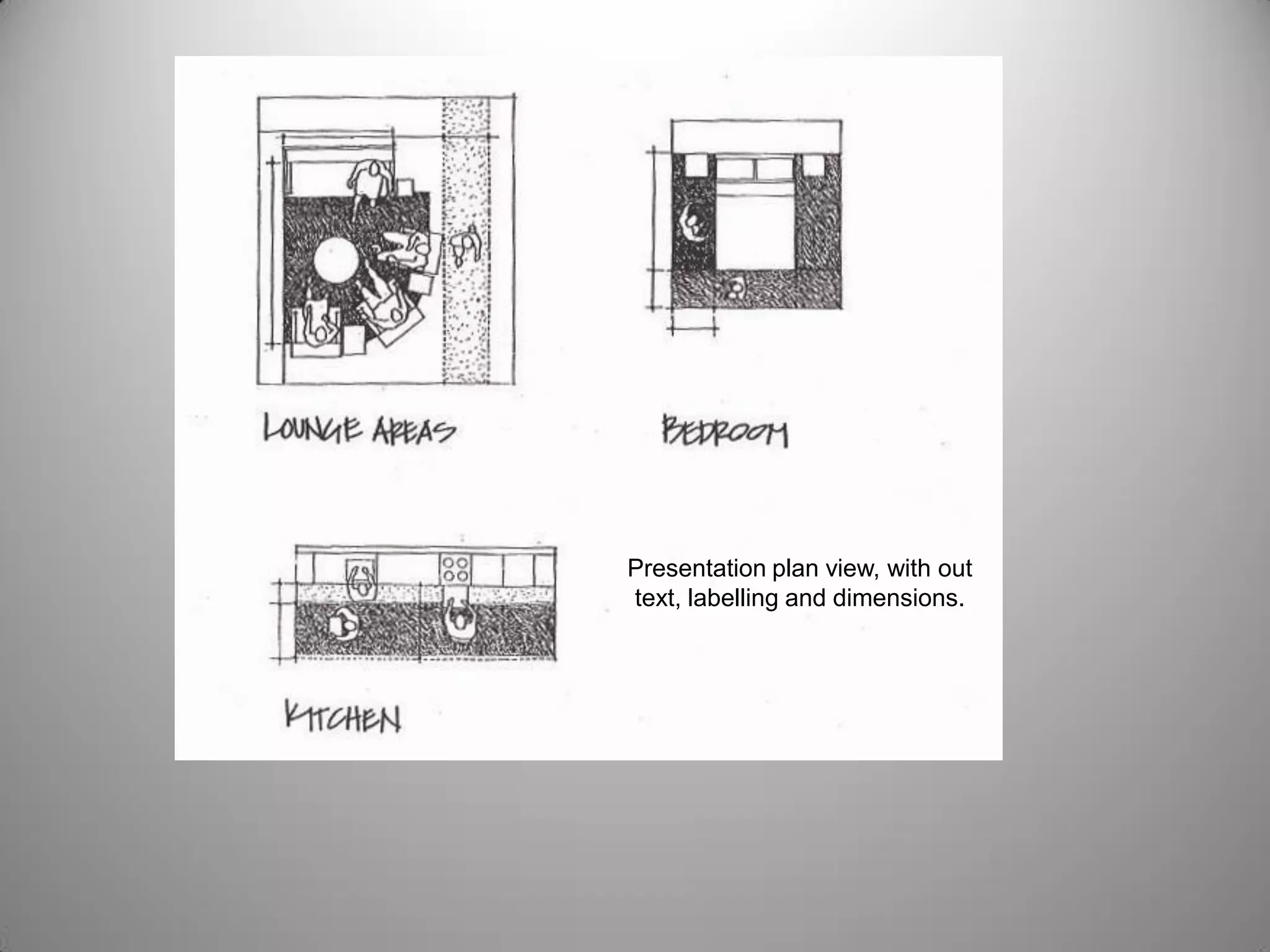
Presentation plan view, with out
text, labelling and dimensions.
WHY DO WE DO WORKING
DRAWINGS?
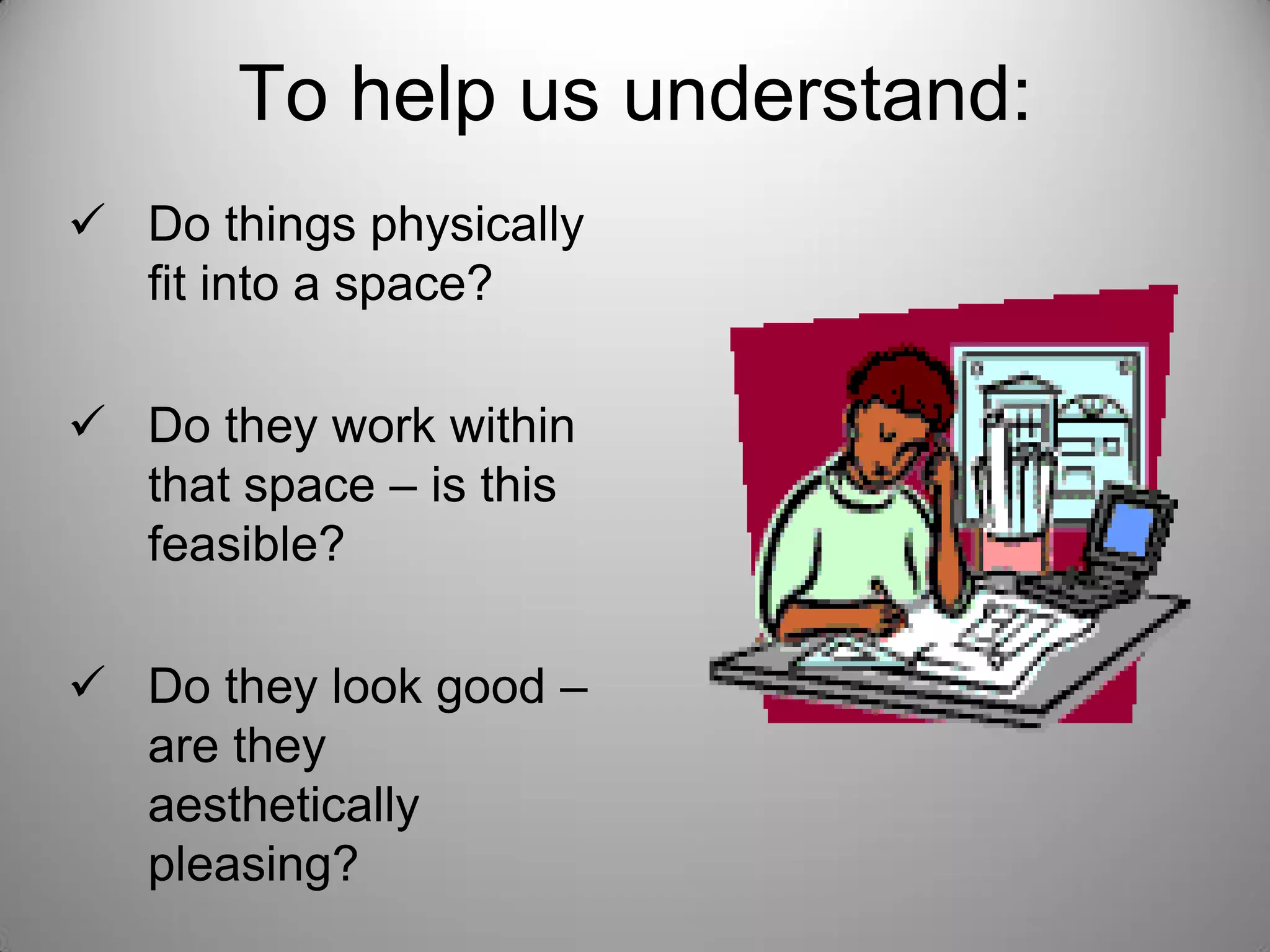
 Do things physically
fit into a space?
 Do they work within
that space – is this
feasible?
 Do they look good –
are they
aesthetically
pleasing?
To help us understand:
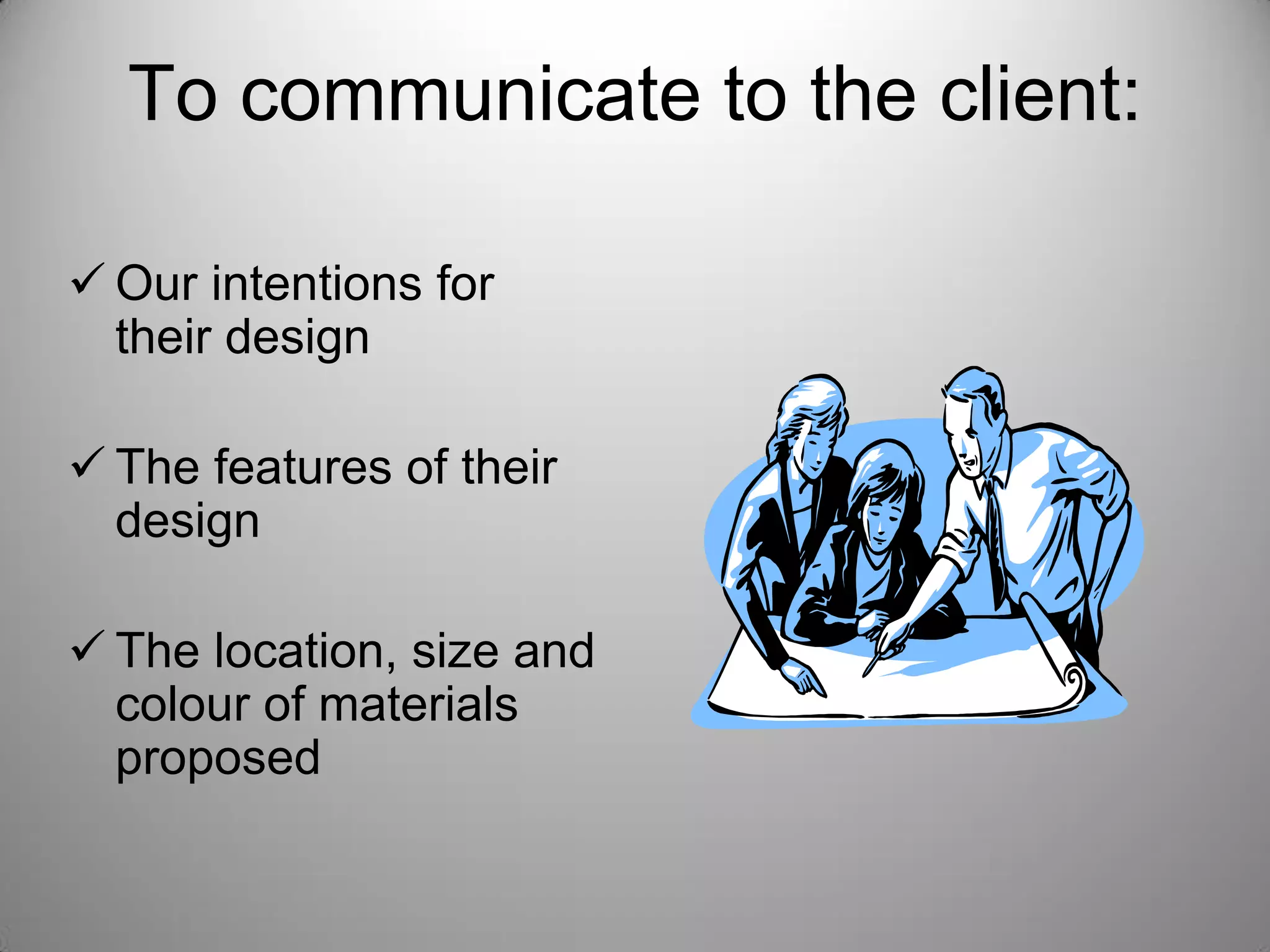
To communicate to the client:
 Our intentions for
their design
 The features of their
design
 The location, size and
colour of materials
proposed
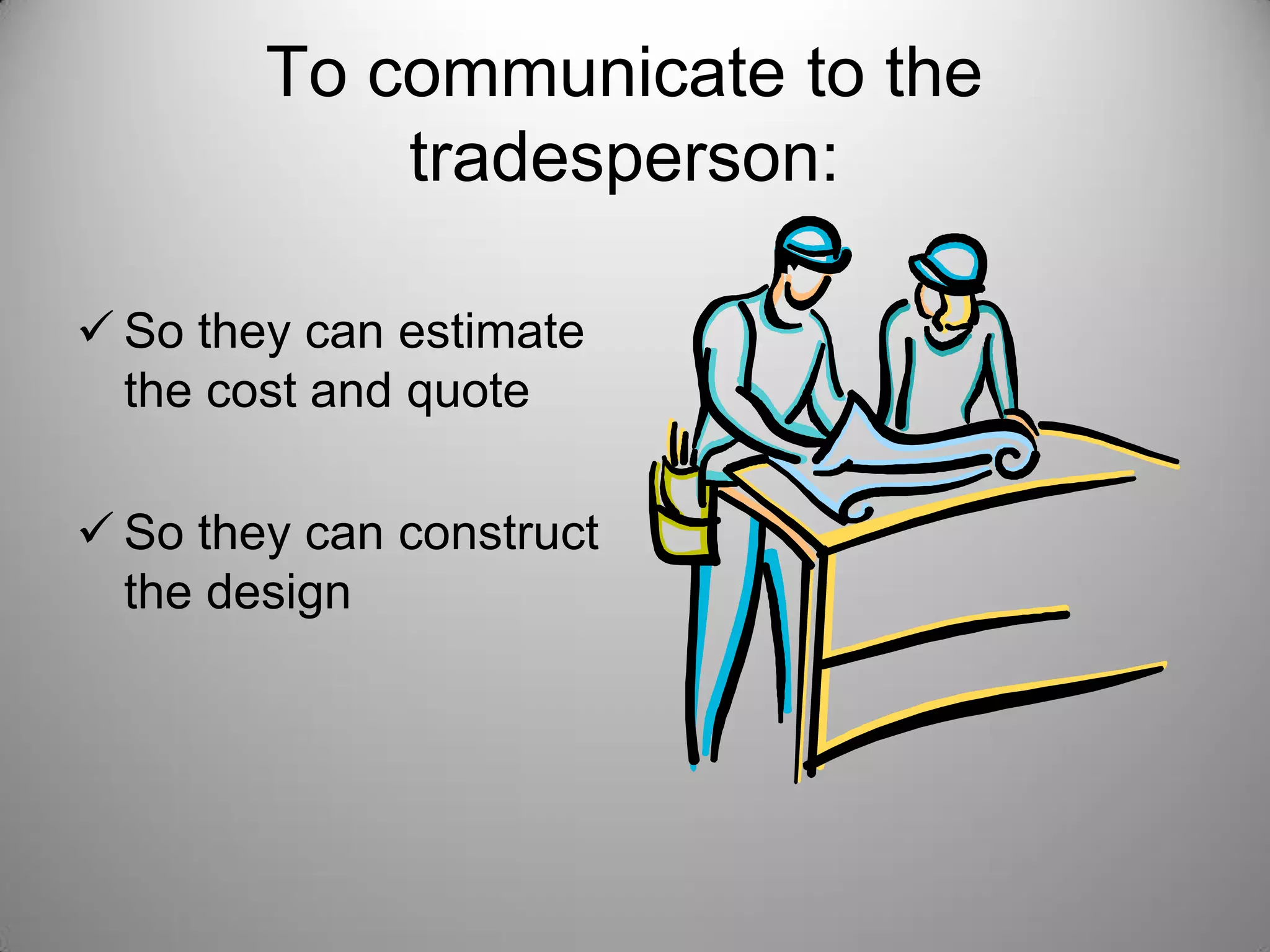
To communicate to the
tradesperson:
 So they can estimate
the cost and quote
 So they can construct
the design
To establish a record
• For legal purposes
• As a resource that
can be used again
What skills are required for
Drafting?
ACCURACY:
• Linework- precise and
consistent using
appropriate pen;
• Dimensioning – relevant
and appropriately located
using correct pen weight
• Lettering – clear, concise
using correct spelling,
size and pen weight
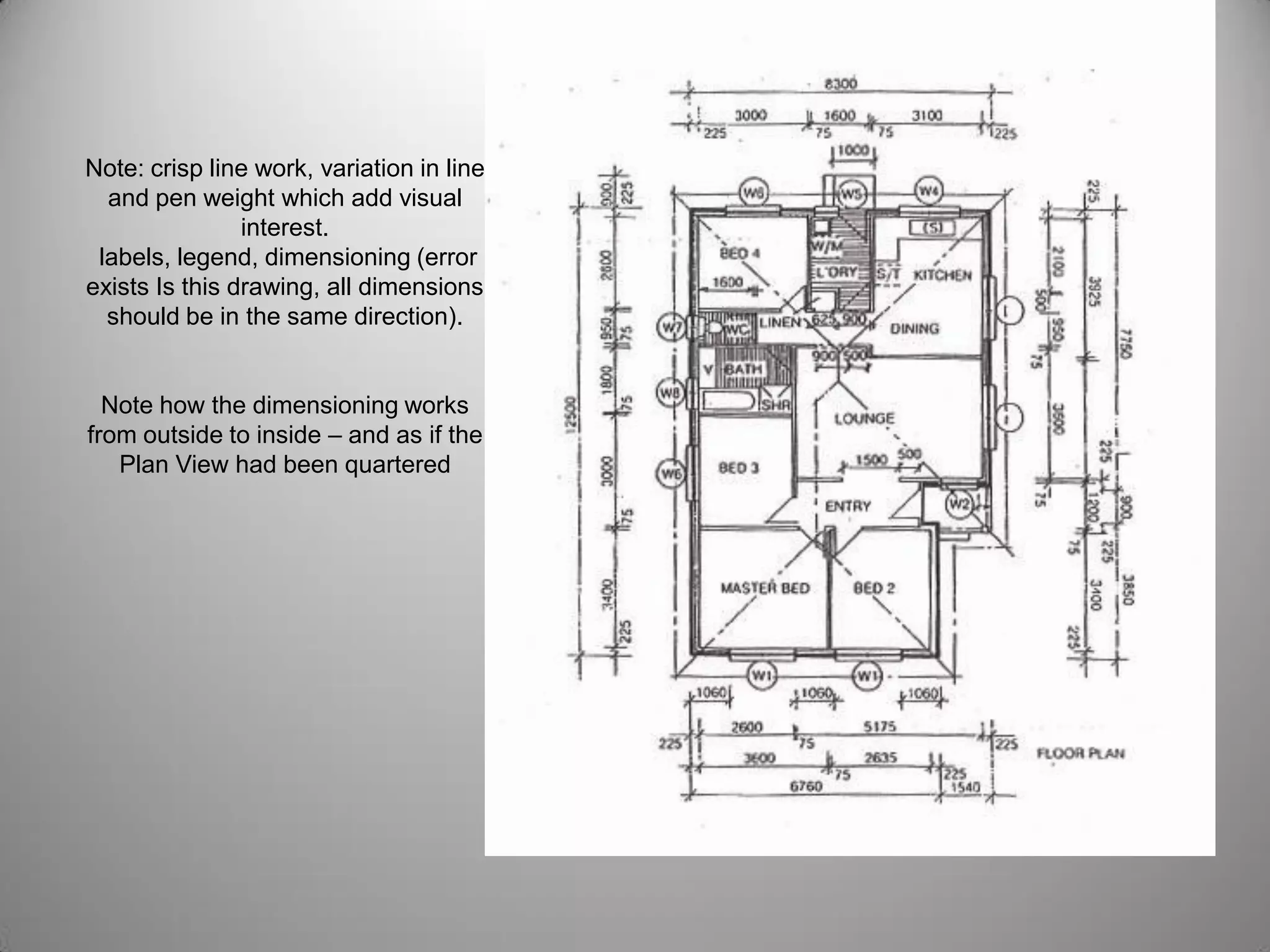
Note: crisp line work, variation in line
and pen weight which add visual
interest.
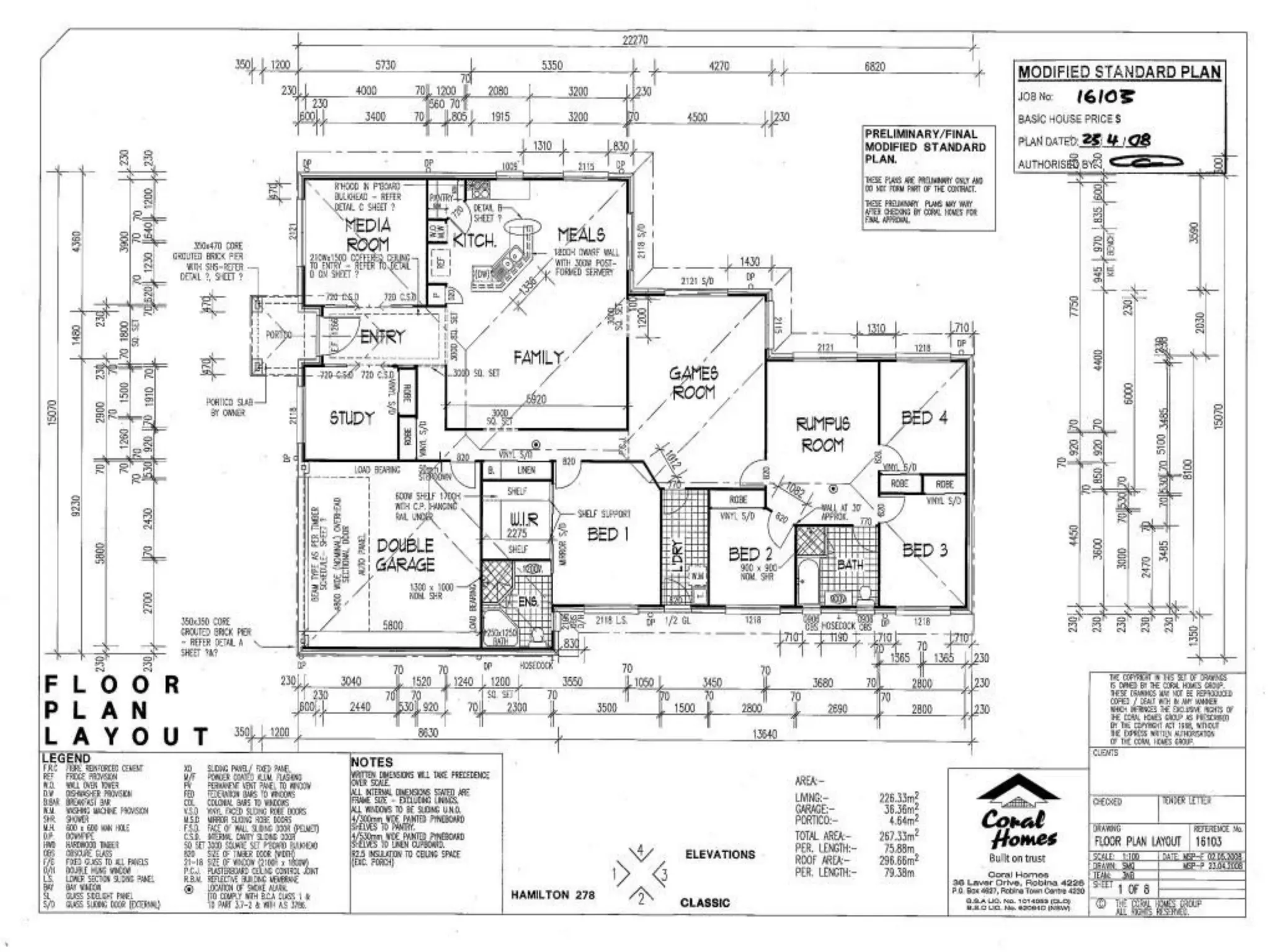
labels, legend, dimensioning (error
exists Is this drawing, all dimensions
should be in the same direction).
Note how the dimensioning works
from outside to inside – and as if the
Plan View had been quartered
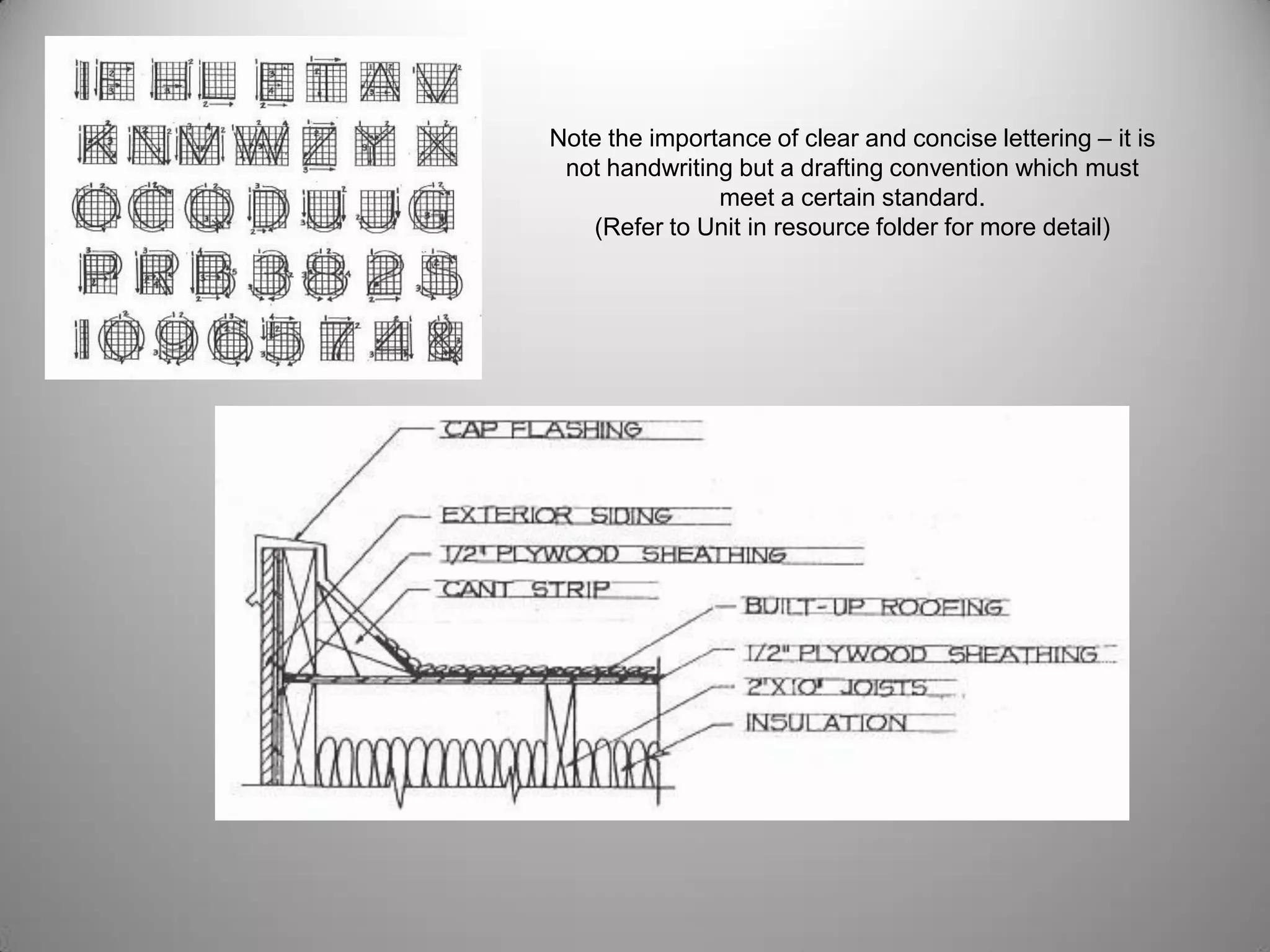
Note the importance of clear and concise lettering – it is
not handwriting but a drafting convention which must
meet a certain standard.
(Refer to Unit in resource folder for more detail)
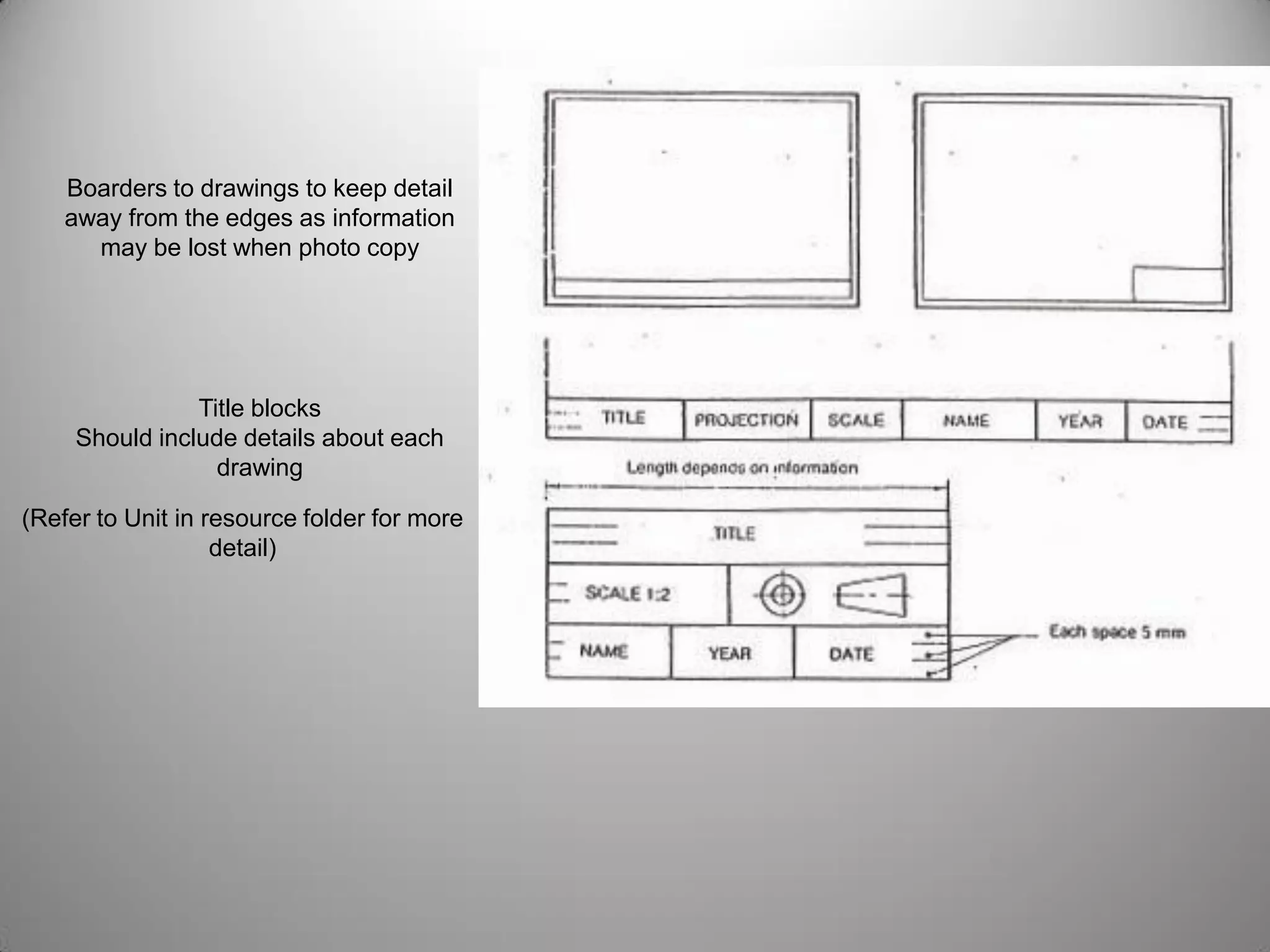
Boarders to drawings to keep detail
away from the edges as information
may be lost when photo copy
Title blocks
Should include details about each
drawing
(Refer to Unit in resource folder for more
detail)
SPEED
• Don’t hurry! Avoid errors
by taking your time,
checking your pencilwork
prior to inking
• Practice – repeat
procedures and
techniques until you feel
confident with your work
• Plan ahead – think about
the big picture – take into
account all the
information which must
appear on your drawing
and make allowances
LEGIBILITY
• Drawings are a means
of communication –
ensure that you present
all relevant information,
clearly and accurately;
• Many people will read
your drawings – take
into account the specific
information they may
need;
• Misrepresentation is
possible – if your
drawing is not clearly
drawn and lettered.
What is Drafting?
What is Drafting?

What is Drafting?

  • 1.
    What is Drafting? •Drafting is the representation of 3 dimensional forms and structures on a 2 dimensional surface. • PLANS, ELEVATIONS AND SECTIONS represent specific and relevant information clearly communicating the designers intention.
  • 2.
    Plan view A planview is an orthographic projection of a 3- dimensional object from the position of a horizontal plane (Section )through the object looking from the top Section View A section is a plane cut through from the front Elevation Is as if viewed from the front, sides or rear showing the heights of a structure
  • 3.
    Plans, elevations and sectionsare a 2 Dimensional view of a 3 Dimensional Object.
  • 4.
    Plan View asif cut 1500mm high from the floor level. Window and walls as viewed in a Plan
  • 5.
    Simple way ofshowing a table In a Plan View
  • 6.
    2 Dimensional viewof chairs Or sofas
  • 8.
    Presentation plan view,with out text, labelling and dimensions.
  • 9.
    WHY DO WEDO WORKING DRAWINGS?
  • 10.
     Do thingsphysically fit into a space?  Do they work within that space – is this feasible?  Do they look good – are they aesthetically pleasing? To help us understand:
  • 11.
    To communicate tothe client:  Our intentions for their design  The features of their design  The location, size and colour of materials proposed
  • 12.
    To communicate tothe tradesperson:  So they can estimate the cost and quote  So they can construct the design
  • 13.
    To establish arecord • For legal purposes • As a resource that can be used again
  • 14.
    What skills arerequired for Drafting? ACCURACY: • Linework- precise and consistent using appropriate pen; • Dimensioning – relevant and appropriately located using correct pen weight • Lettering – clear, concise using correct spelling, size and pen weight
  • 15.
    Note: crisp linework, variation in line and pen weight which add visual interest. labels, legend, dimensioning (error exists Is this drawing, all dimensions should be in the same direction). Note how the dimensioning works from outside to inside – and as if the Plan View had been quartered
  • 16.
    Note the importanceof clear and concise lettering – it is not handwriting but a drafting convention which must meet a certain standard. (Refer to Unit in resource folder for more detail)
  • 17.
    Boarders to drawingsto keep detail away from the edges as information may be lost when photo copy Title blocks Should include details about each drawing (Refer to Unit in resource folder for more detail)
  • 18.
    SPEED • Don’t hurry!Avoid errors by taking your time, checking your pencilwork prior to inking • Practice – repeat procedures and techniques until you feel confident with your work • Plan ahead – think about the big picture – take into account all the information which must appear on your drawing and make allowances
  • 19.
    LEGIBILITY • Drawings area means of communication – ensure that you present all relevant information, clearly and accurately; • Many people will read your drawings – take into account the specific information they may need; • Misrepresentation is possible – if your drawing is not clearly drawn and lettered.