Henry II’s Challenge 
Restoring Stability to England 
An Introduction
When Saints Slept... 
Stephen’s reign generally seen as anarchy 
Mainly due to overmighty subjects 
They had done their homage and sworn oaths of fealty 
to him, but not one of their oaths was kept ... For every 
great man built him castles and held them against the 
king ... They filled them with devils and wicked men ... 
They seized those whom they believed to have any 
wealth ... And in order to get their gold or silver, they ... 
Tortured them with unspeakable tortures ... Anglo Saxon Chronicle 
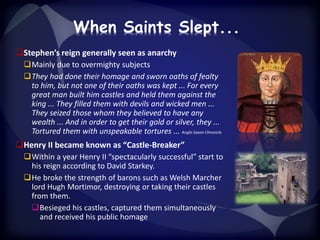
Henry II became known as “Castle-Breaker” 
Within a year Henry II “spectacularly successful” start to 
his reign according to David Starkey. 
He broke the strength of barons such as Welsh Marcher 
lord Hugh Mortimor, destroying or taking their castles 
from them. 
Besieged his castles, captured them simultaneously 
and received his public homage
Henry’s Early Rule 
Henry II dealt swift, decisive with overmighty subjects 
Much of England in state of disorder 
Royal Writ ignored in some parts of the country 
Finances paid to Exchequer were irregular in some areas 
Sheriffs, royal justices hindered by local disturbances and 
stranglehold of rival magnates 
Henry: two important steps  peace and stability 
Expelled Flemish mercenaries – weakened magnates armies 
Demolished illegal castles from Stephen’s rule 
Henry II used rivalries between barons – divide and rule 
Also undisputed King of England = strength
Overmighty Subjects 
Earl of York (William le Gros); Roger, 
Earl of Hereford; Hugh Mortimor, Lord 
of Wigmore 
Henry II marched against William 
within month of coronation – forced 
surrender castles 
Roger of Hereford then surrendered 
his castles 
Hugh held out 
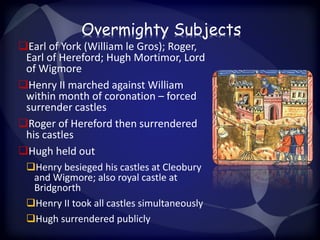
Henry besieged his castles at Cleobury 
and Wigmore; also royal castle at 
Bridgnorth 
Henry II took all castles simultaneously 
Hugh surrendered publicly
Reasserting the King’s Authority – 1 
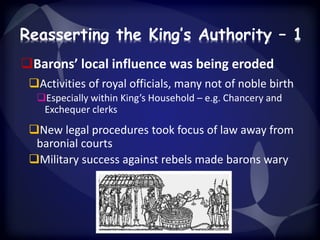
Barons’ local influence was being eroded 
Activities of royal officials, many not of noble birth 
Especially within King’s Household – e.g. Chancery and 
Exchequer clerks 
New legal procedures took focus of law away from 
baronial courts 
Military success against rebels made barons wary
Reasserting the King’s Authority – 2 
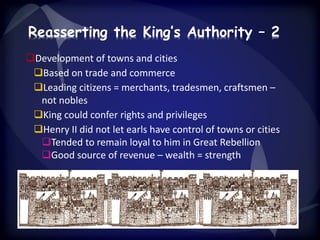
Development of towns and cities 
Based on trade and commerce 
Leading citizens = merchants, tradesmen, craftsmen – 
not nobles 
King could confer rights and privileges 
Henry II did not let earls have control of towns or cities 
Tended to remain loyal to him in Great Rebellion 
Good source of revenue – wealth = strength
Patronage 
Is the giving of lands, privileges and bestowing of offices (official 
posts or jobs) by a king or lord 
Henry appointed men to office on ability, not birth 
Rarest and best was grant of royal land (and title) 
Under Stephen there were 24 earldoms 
Henry II reduced this: 12 by 1189; he re-took the lands 
Important because made him by far most important landlord in 
England and thus most powerful 
Other earldoms trimmed 
e.g. Robert Earl of Leicester not allowed control of that city, nor its 
castle and lost Herefordshire 
E.g. Hugh Bigod, powerful in East Anglia, allowed to buy back 
castle he had built but was denied possession of Norwich.
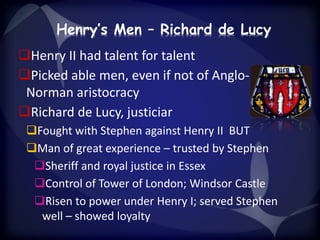
Henry’s Men – Richard de Lucy 
Henry II had talent for talent 
Picked able men, even if not of Anglo- 
Norman aristocracy 
Richard de Lucy, justiciar 
Fought with Stephen against Henry II BUT 
Man of great experience – trusted by Stephen 
Sheriff and royal justice in Essex 
Control of Tower of London; Windsor Castle 
Risen to power under Henry I; served Stephen 
well – showed loyalty
Henry’s Men – Robert Beaumont 
Richard Beaumont, justiciar 
Gave his support to Henry II in 1153 
Educated; highly intelligent 
Prudent and discreet 
Trustworthy
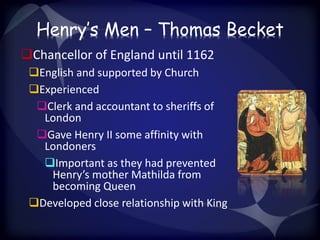
Henry’s Men – Thomas Becket 
Chancellor of England until 1162 
English and supported by Church 
Experienced 
Clerk and accountant to sheriffs of 
London 
Gave Henry II some affinity with 
Londoners 
Important as they had prevented 
Henry’s mother Mathilda from 
becoming Queen 
Developed close relationship with King
Financial Reform 
Reconstruction government England VERY costly 
Henry II took several key measures: 
Revived ancient Danegeld tax 
Seized lost royal estates 
Senior Crown ministers personally held sheriffdoms 
so revenues properly and accurately assessed 
Major reform coinage from 1158 
Successfully revised from 1180 
Henry II used expertise from before Stephen’s reign 
Bishop Nigel of Salisbury out of retirement
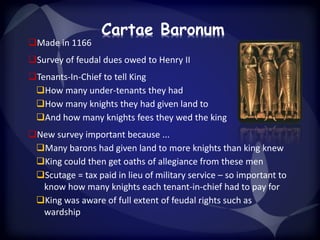
Cartae Baronum 
Made in 1166 
Survey of feudal dues owed to Henry II 
Tenants-In-Chief to tell King 
How many under-tenants they had 
How many knights they had given land to 
And how many knights fees they wed the king 
New survey important because ... 
Many barons had given land to more knights than king knew 
King could then get oaths of allegiance from these men 
Scutage = tax paid in lieu of military service – so important to 
know how many knights each tenant-in-chief had to pay for 
King was aware of full extent of feudal rights such as 
wardship

Henry II and England

  • 1.
    Henry II’s Challenge Restoring Stability to England An Introduction
  • 2.
    When Saints Slept... Stephen’s reign generally seen as anarchy Mainly due to overmighty subjects They had done their homage and sworn oaths of fealty to him, but not one of their oaths was kept ... For every great man built him castles and held them against the king ... They filled them with devils and wicked men ... They seized those whom they believed to have any wealth ... And in order to get their gold or silver, they ... Tortured them with unspeakable tortures ... Anglo Saxon Chronicle Henry II became known as “Castle-Breaker” Within a year Henry II “spectacularly successful” start to his reign according to David Starkey. He broke the strength of barons such as Welsh Marcher lord Hugh Mortimor, destroying or taking their castles from them. Besieged his castles, captured them simultaneously and received his public homage
  • 3.
    Henry’s Early Rule Henry II dealt swift, decisive with overmighty subjects Much of England in state of disorder Royal Writ ignored in some parts of the country Finances paid to Exchequer were irregular in some areas Sheriffs, royal justices hindered by local disturbances and stranglehold of rival magnates Henry: two important steps  peace and stability Expelled Flemish mercenaries – weakened magnates armies Demolished illegal castles from Stephen’s rule Henry II used rivalries between barons – divide and rule Also undisputed King of England = strength
  • 4.
    Overmighty Subjects Earlof York (William le Gros); Roger, Earl of Hereford; Hugh Mortimor, Lord of Wigmore Henry II marched against William within month of coronation – forced surrender castles Roger of Hereford then surrendered his castles Hugh held out Henry besieged his castles at Cleobury and Wigmore; also royal castle at Bridgnorth Henry II took all castles simultaneously Hugh surrendered publicly
  • 5.
    Reasserting the King’sAuthority – 1 Barons’ local influence was being eroded Activities of royal officials, many not of noble birth Especially within King’s Household – e.g. Chancery and Exchequer clerks New legal procedures took focus of law away from baronial courts Military success against rebels made barons wary
  • 6.
    Reasserting the King’sAuthority – 2 Development of towns and cities Based on trade and commerce Leading citizens = merchants, tradesmen, craftsmen – not nobles King could confer rights and privileges Henry II did not let earls have control of towns or cities Tended to remain loyal to him in Great Rebellion Good source of revenue – wealth = strength
  • 7.
    Patronage Is thegiving of lands, privileges and bestowing of offices (official posts or jobs) by a king or lord Henry appointed men to office on ability, not birth Rarest and best was grant of royal land (and title) Under Stephen there were 24 earldoms Henry II reduced this: 12 by 1189; he re-took the lands Important because made him by far most important landlord in England and thus most powerful Other earldoms trimmed e.g. Robert Earl of Leicester not allowed control of that city, nor its castle and lost Herefordshire E.g. Hugh Bigod, powerful in East Anglia, allowed to buy back castle he had built but was denied possession of Norwich.
  • 8.
    Henry’s Men –Richard de Lucy Henry II had talent for talent Picked able men, even if not of Anglo- Norman aristocracy Richard de Lucy, justiciar Fought with Stephen against Henry II BUT Man of great experience – trusted by Stephen Sheriff and royal justice in Essex Control of Tower of London; Windsor Castle Risen to power under Henry I; served Stephen well – showed loyalty
  • 9.
    Henry’s Men –Robert Beaumont Richard Beaumont, justiciar Gave his support to Henry II in 1153 Educated; highly intelligent Prudent and discreet Trustworthy
  • 10.
    Henry’s Men –Thomas Becket Chancellor of England until 1162 English and supported by Church Experienced Clerk and accountant to sheriffs of London Gave Henry II some affinity with Londoners Important as they had prevented Henry’s mother Mathilda from becoming Queen Developed close relationship with King
  • 11.
    Financial Reform Reconstructiongovernment England VERY costly Henry II took several key measures: Revived ancient Danegeld tax Seized lost royal estates Senior Crown ministers personally held sheriffdoms so revenues properly and accurately assessed Major reform coinage from 1158 Successfully revised from 1180 Henry II used expertise from before Stephen’s reign Bishop Nigel of Salisbury out of retirement
  • 12.
    Cartae Baronum Madein 1166 Survey of feudal dues owed to Henry II Tenants-In-Chief to tell King How many under-tenants they had How many knights they had given land to And how many knights fees they wed the king New survey important because ... Many barons had given land to more knights than king knew King could then get oaths of allegiance from these men Scutage = tax paid in lieu of military service – so important to know how many knights each tenant-in-chief had to pay for King was aware of full extent of feudal rights such as wardship