Web 2.0 Why teachers should care. 2007 Version
Evolution of the Web Web 1.0 - originally content creation by few, static pages, digitization of existing knowledge Web 2.0 - now content creation by many - about conversations, collaboration, control of content by few gone, mass participation
Mindset and Expectations Web 1.0 Surfing Browsing Consuming Web 2.0 Connecting Collaborating Creating Sharing
Mindset and Expectations Web 1.0 Surfing Browsing Consuming Megabytes of published test and photos Web 2.0 Connecting Collaborating Creating Sharing Gigabytes of shared audio and video
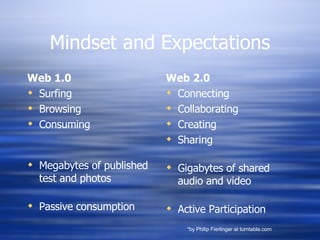
Mindset and Expectations Web 1.0 Surfing Browsing Consuming Megabytes of published test and photos Passive consumption Web 2.0 Connecting Collaborating Creating Sharing Gigabytes of shared audio and video Active Participation *by Philip Fierlinger at turntable.com
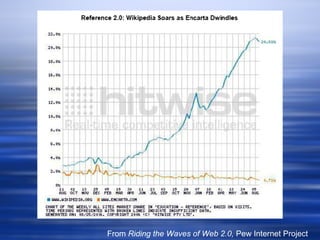
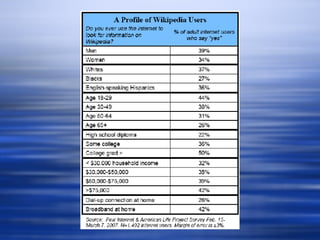
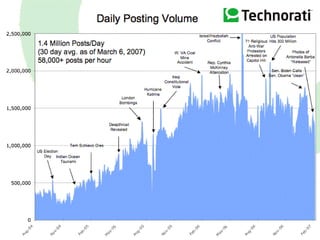
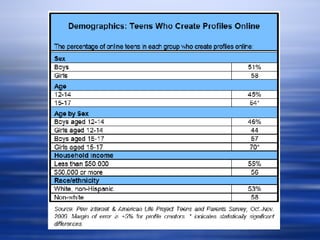
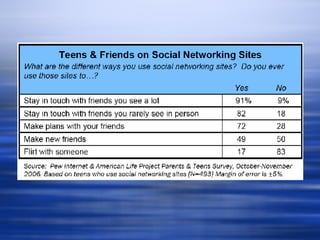
Some Facts From  Riding the Waves of Web 2.0,  Pew Internet Project


Today’s Students Are IMing, blogging, YouTubing, Photobucketing, Flickring, and MySpacing instead of doing homework (or while their doing it). Googles first, doesn’t ask questions – Libraries have fast access to Google
 
 
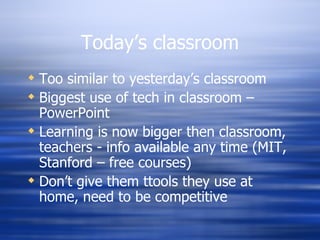
Today’s classroom Too similar to yesterday’s classroom Biggest use of tech in classroom – PowerPoint Learning is now bigger then classroom, teachers - info available any time (MIT, Stanford – free courses) Don’t give them ttools they use at home, need to be competitive
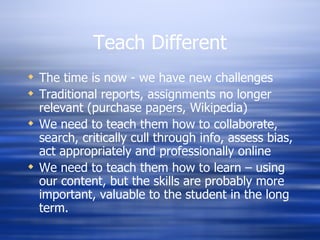
Teach Different The time is now - we have new challenges Traditional reports, assignments no longer relevant (purchase papers, Wikipedia) We need to teach them how to collaborate, search, critically cull through info, assess bias, act appropriately and professionally online We need to teach them how to learn – using our content, but the skills are probably more important, valuable to the student in the long term.
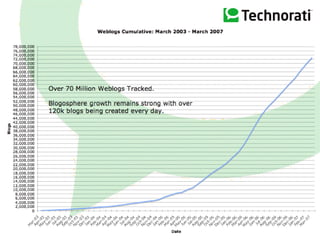
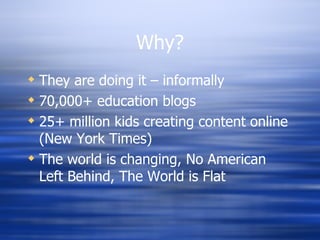
Why? They are doing it – informally 70,000+ education blogs 25+ million kids creating content online (New York Times) The world is changing, No American Left Behind, The World is Flat
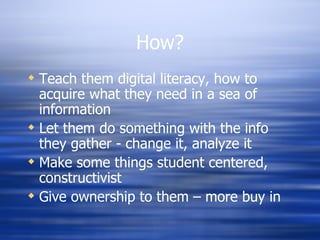
How? Teach them digital literacy, how to acquire what they need in a sea of information Let them do something with the info they gather - change it, analyze it  Make some things student centered, constructivist Give ownership to them – more buy in
No Really, How? Get them producing and interacting online in an education setting Some places to start: Blogs Wikis

Web 2.0 - 2007 Version

  • 1.
    Web 2.0 Whyteachers should care. 2007 Version
  • 2.
    Evolution of theWeb Web 1.0 - originally content creation by few, static pages, digitization of existing knowledge Web 2.0 - now content creation by many - about conversations, collaboration, control of content by few gone, mass participation
  • 3.
    Mindset and ExpectationsWeb 1.0 Surfing Browsing Consuming Web 2.0 Connecting Collaborating Creating Sharing
  • 4.
    Mindset and ExpectationsWeb 1.0 Surfing Browsing Consuming Megabytes of published test and photos Web 2.0 Connecting Collaborating Creating Sharing Gigabytes of shared audio and video
  • 5.
    Mindset and ExpectationsWeb 1.0 Surfing Browsing Consuming Megabytes of published test and photos Passive consumption Web 2.0 Connecting Collaborating Creating Sharing Gigabytes of shared audio and video Active Participation *by Philip Fierlinger at turntable.com
  • 6.
    Some Facts From Riding the Waves of Web 2.0, Pew Internet Project
  • 7.
  • 8.
  • 9.
  • 10.
  • 11.
    Today’s Students AreIMing, blogging, YouTubing, Photobucketing, Flickring, and MySpacing instead of doing homework (or while their doing it). Googles first, doesn’t ask questions – Libraries have fast access to Google
  • 12.
  • 13.
  • 14.
    Today’s classroom Toosimilar to yesterday’s classroom Biggest use of tech in classroom – PowerPoint Learning is now bigger then classroom, teachers - info available any time (MIT, Stanford – free courses) Don’t give them ttools they use at home, need to be competitive
  • 15.
    Teach Different Thetime is now - we have new challenges Traditional reports, assignments no longer relevant (purchase papers, Wikipedia) We need to teach them how to collaborate, search, critically cull through info, assess bias, act appropriately and professionally online We need to teach them how to learn – using our content, but the skills are probably more important, valuable to the student in the long term.
  • 16.
    Why? They aredoing it – informally 70,000+ education blogs 25+ million kids creating content online (New York Times) The world is changing, No American Left Behind, The World is Flat
  • 17.
    How? Teach themdigital literacy, how to acquire what they need in a sea of information Let them do something with the info they gather - change it, analyze it Make some things student centered, constructivist Give ownership to them – more buy in
  • 18.
    No Really, How?Get them producing and interacting online in an education setting Some places to start: Blogs Wikis