Web 2.0
For the 21st Century Learner
Web 2.0 Uses in Higher Ed
• Web 2.0 technologies are being deployed across a
broad spectrum of university activities
• Deployment is in no way systematic and the drive is
principally bottom up
• There is no blueprint for implementation of Web 2.0
technologies, and each is currently deciding its own
path
• It feeds on professional interest and enthusiasm
Critical Issues
• Immediate and Fundamental
• Ongoing Drivers to Change
• Fundamental Over Time
Immediate and
Fundamental
• Digital Divide (Learning with and/or through
technology)
- Ensuring access to technology for all and the
development of practical skills in its use, not only for
students but for faculty and staff (P.D.)
• Information Literacy (Web Awareness)
-Ensuring they possess the skills and understanding to
search, authenticate and critically evaluate material
from the range of appropriate sources
Ongoing Drive to Change
• Tradition (building a bridge between Social Media and
Learning)
• Environmental Factors ( going digital)
• Diversity (The sense of being a contributing member)
• Richer Educational Experience (active learning)
• Practice in School (PBL supported by technology)
• Open Source Materials (Free element of paid education)
• Skills Development (communication, participation, networking,
sharing)
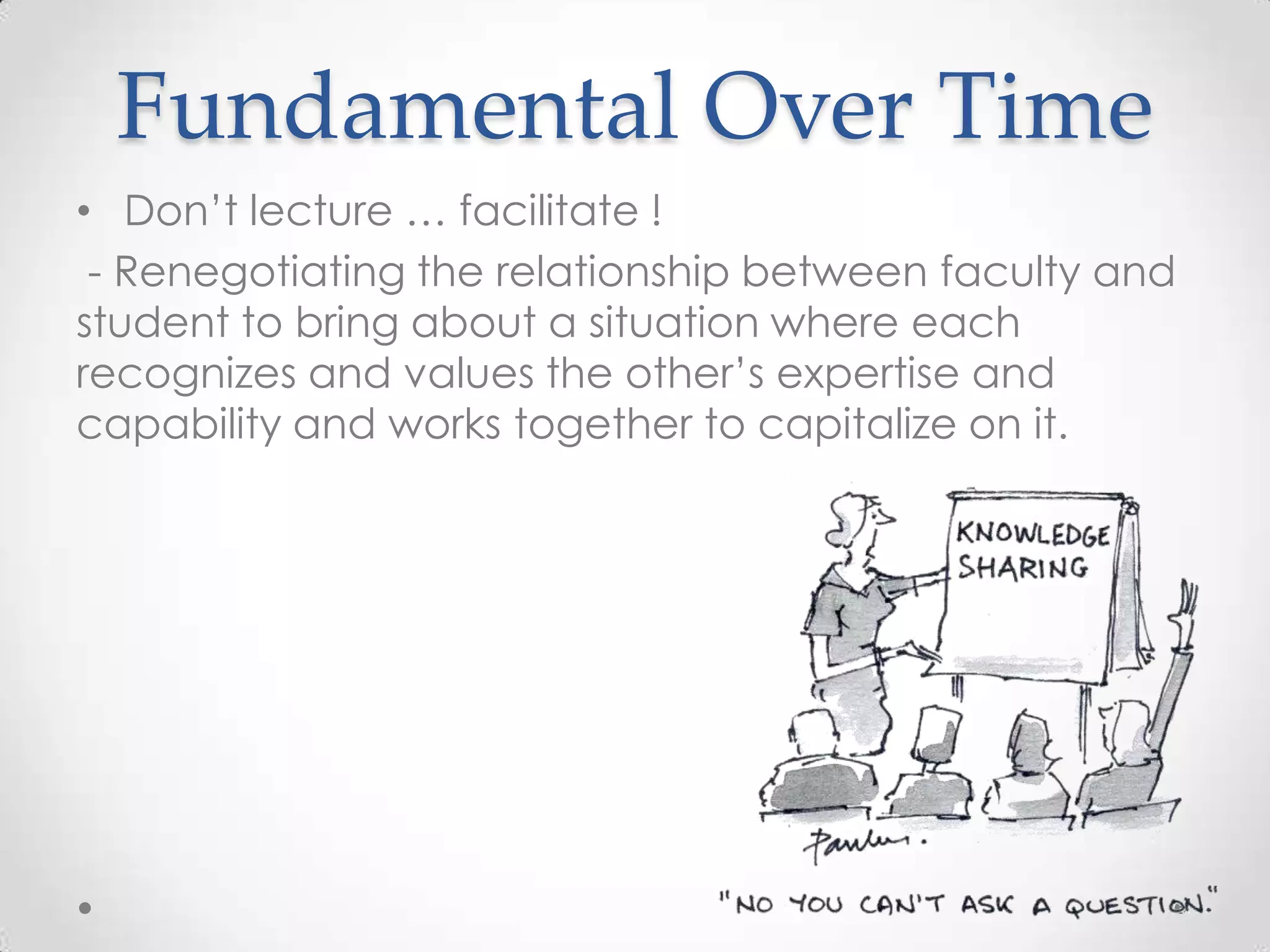
Fundamental Over Time
• Don’t lecture … facilitate !
- Renegotiating the relationship between faculty and
student to bring about a situation where each
recognizes and values the other’s expertise and
capability and works together to capitalize on it.
Times they are a
Changin’…
• Incoming students with strong sense of communities
of interest linked in their own social worlds, and with
a disposition to share and participate. It has also
made them impatient with a preference for quick
answers with a casual approach to evaluating
information and deriving knowledge
• They find a world that is hierarchical, introvert,
guarded, careful, precise and measured
• The two worlds are currently co-existing, but the
students are driving the change

Web 2.0 Tools for the 21st century learner

  • 1.
    Web 2.0 For the21st Century Learner
  • 2.
    Web 2.0 Usesin Higher Ed • Web 2.0 technologies are being deployed across a broad spectrum of university activities • Deployment is in no way systematic and the drive is principally bottom up • There is no blueprint for implementation of Web 2.0 technologies, and each is currently deciding its own path • It feeds on professional interest and enthusiasm
  • 3.
    Critical Issues • Immediateand Fundamental • Ongoing Drivers to Change • Fundamental Over Time
  • 4.
    Immediate and Fundamental • DigitalDivide (Learning with and/or through technology) - Ensuring access to technology for all and the development of practical skills in its use, not only for students but for faculty and staff (P.D.) • Information Literacy (Web Awareness) -Ensuring they possess the skills and understanding to search, authenticate and critically evaluate material from the range of appropriate sources
  • 5.
    Ongoing Drive toChange • Tradition (building a bridge between Social Media and Learning) • Environmental Factors ( going digital) • Diversity (The sense of being a contributing member) • Richer Educational Experience (active learning) • Practice in School (PBL supported by technology) • Open Source Materials (Free element of paid education) • Skills Development (communication, participation, networking, sharing)
  • 6.
    Fundamental Over Time •Don’t lecture … facilitate ! - Renegotiating the relationship between faculty and student to bring about a situation where each recognizes and values the other’s expertise and capability and works together to capitalize on it.
  • 7.
    Times they area Changin’… • Incoming students with strong sense of communities of interest linked in their own social worlds, and with a disposition to share and participate. It has also made them impatient with a preference for quick answers with a casual approach to evaluating information and deriving knowledge • They find a world that is hierarchical, introvert, guarded, careful, precise and measured • The two worlds are currently co-existing, but the students are driving the change