TECHNOLOGY
INTEGRATION
WHAT IS
TECHNOLOGY
INTEGRATION?
Technology integration is the
blending of computer-related learning
activities into curriculum to have
students acquire, organize,
demonstrate, and communicate
information.
Technology integration is using computers
effectively and efficiently in the general
content areas to allow students to learn how to
apply computer skills in meaningful ways.
Discrete computer skills take on new meaning
when they are integrated within the
curriculum. Integration is incorporating
technology in a manner that enhances student
learning.
WHY IS
TECHNOLOGY
INTEGRATION
IMPORTANT?
Many educators may remember life before
the invention of the computer, Internet,
email, chat, cell phones, video game
systems, and hand-held music players.
However, many children today cannot.
They have grown up in a world where they
are surrounded by digital devices that
they use for communication,
entertainment, and learning.
This reason, educators need to
present learning opportunities
that have students expand their
knowledge and skills to broaden
their understanding of how
technology can be used.
It is important to acknowledge that
although many children have technology
skills, many do not. Education must
provide equal access to technology
resources and provide instruction to make
sure ALL children have the skills they
need to become productive members of
society.
Types of
Technology
Integration
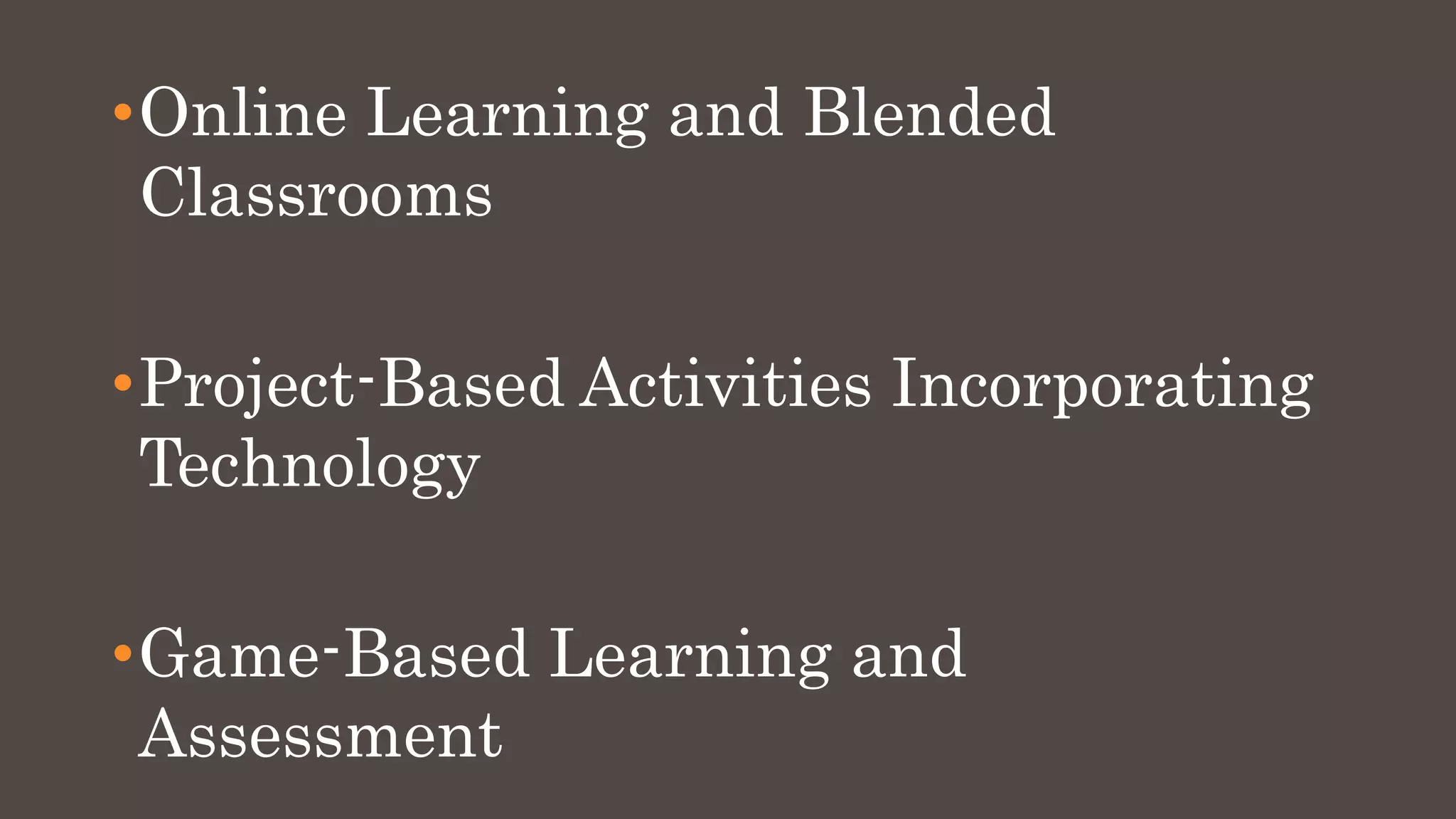
•Online Learning and Blended
Classrooms
•Project-Based Activities Incorporating
Technology
•Game-Based Learning and
Assessment
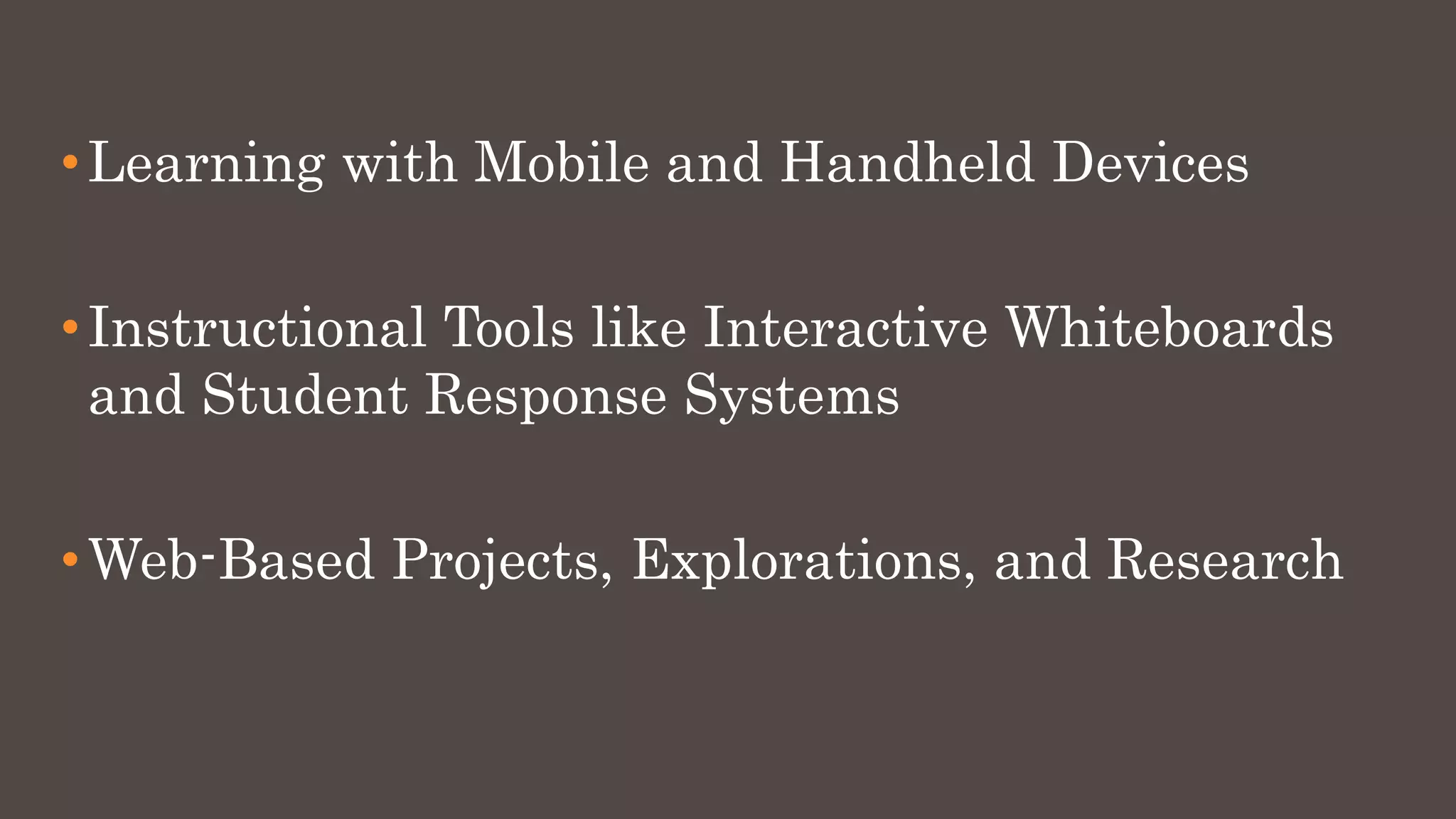
•Learning with Mobile and Handheld Devices
•Instructional Tools like Interactive Whiteboards
and Student Response Systems
•Web-Based Projects, Explorations, and Research
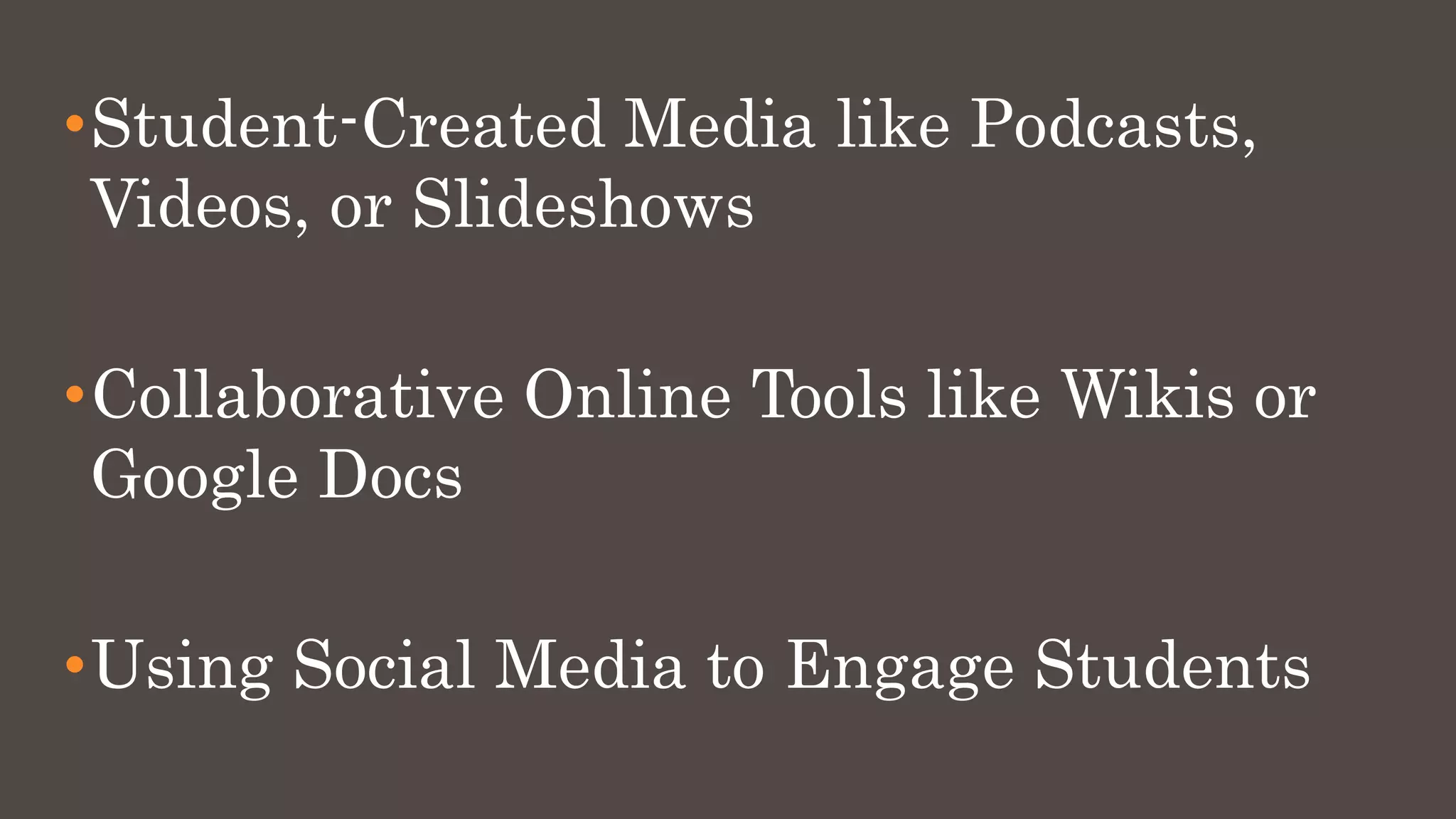
•Student-Created Media like Podcasts,
Videos, or Slideshows
•Collaborative Online Tools like Wikis or
Google Docs
•Using Social Media to Engage Students
What are the
Goals of Technology
Integration?
The goal of technology
integration is to have students
use technology ethically and
safely to acquire, demonstrate,
apply, and communicate
information.
• practice safe, ethical, and responsible use of technology
• gather, research and evaluate information from a variety of sources
• create original works such as reports, posters, presentations, and other
documents
• calculate, manipulate, and analyze data
• organize data using tables, graphs, and other organizers
• summarize ideas using a variety of media
• solve problems using technology
• present information
• communicate information effectively to an audience using a variety of media
• interact and collaborate with peers to solve problems and share information
• transfer knowledge to new technologies
THANK YOU!

Technology integration

  • 1.
  • 2.
  • 3.
    Technology integration isthe blending of computer-related learning activities into curriculum to have students acquire, organize, demonstrate, and communicate information.
  • 4.
    Technology integration isusing computers effectively and efficiently in the general content areas to allow students to learn how to apply computer skills in meaningful ways. Discrete computer skills take on new meaning when they are integrated within the curriculum. Integration is incorporating technology in a manner that enhances student learning.
  • 5.
  • 6.
    Many educators mayremember life before the invention of the computer, Internet, email, chat, cell phones, video game systems, and hand-held music players. However, many children today cannot. They have grown up in a world where they are surrounded by digital devices that they use for communication, entertainment, and learning.
  • 7.
    This reason, educatorsneed to present learning opportunities that have students expand their knowledge and skills to broaden their understanding of how technology can be used.
  • 8.
    It is importantto acknowledge that although many children have technology skills, many do not. Education must provide equal access to technology resources and provide instruction to make sure ALL children have the skills they need to become productive members of society.
  • 9.
  • 10.
    •Online Learning andBlended Classrooms •Project-Based Activities Incorporating Technology •Game-Based Learning and Assessment
  • 11.
    •Learning with Mobileand Handheld Devices •Instructional Tools like Interactive Whiteboards and Student Response Systems •Web-Based Projects, Explorations, and Research
  • 12.
    •Student-Created Media likePodcasts, Videos, or Slideshows •Collaborative Online Tools like Wikis or Google Docs •Using Social Media to Engage Students
  • 13.
    What are the Goalsof Technology Integration?
  • 14.
    The goal oftechnology integration is to have students use technology ethically and safely to acquire, demonstrate, apply, and communicate information.
  • 15.
    • practice safe,ethical, and responsible use of technology • gather, research and evaluate information from a variety of sources • create original works such as reports, posters, presentations, and other documents • calculate, manipulate, and analyze data • organize data using tables, graphs, and other organizers • summarize ideas using a variety of media • solve problems using technology • present information • communicate information effectively to an audience using a variety of media • interact and collaborate with peers to solve problems and share information • transfer knowledge to new technologies
  • 16.