Composition of
the Atmosphere
Nitrogen
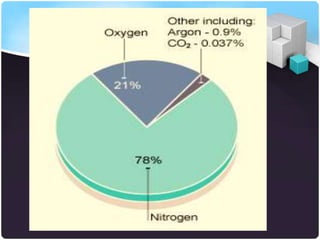
• 78% - Dilutes oxygen and
prevents rapid burning at
the earth's surface. Living
things need it to make
proteins. Nitrogen cannot
be used directly from the
air. The Nitrogen Cycle is
nature's way of supplying
the needed nitrogen for
living things.
Oxygen

21% - Used by all living things. Essential for
respiration. It is necessary for combustion or
burning.
• C. Argon - 0.9% - Used in light bulbs.
D. Carbon Dioxide - 0.03% - Plants use it
to make oxygen. Acts as a blanket and
prevents the escape of heat into outer
space. Scientists are afraid that the
burring of fossil fuels such as coal and oil
are adding more carbon dioxide to the
atmosphere.
• E. Water Vapor - 0.0 to 4.0% - Essential for life
processes. Also prevents heat loss from the
earth.
F. Trace gases - gases found only in very small
amounts. They include neon, helium, krypton,
and xenon.
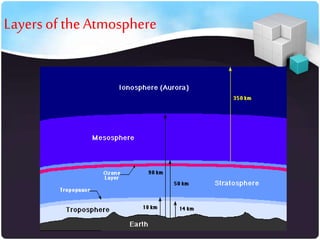
Layers of the Atmosphere
Weather and
Climate
Weather
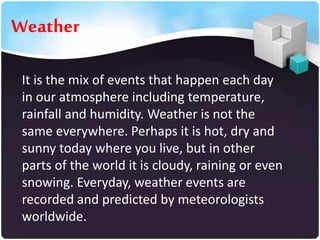
It is the mix of events that happen each day
in our atmosphere including temperature,
rainfall and humidity. Weather is not the
same everywhere. Perhaps it is hot, dry and
sunny today where you live, but in other
parts of the world it is cloudy, raining or even
snowing. Everyday, weather events are
recorded and predicted by meteorologists
worldwide.
Climate
It is the average weather pattern in a
place over many years. So, the climate of
Antarctica is quite different than the
climate of a tropical island. Hot summer
days are quite typical of climates in
many regions of the world, even without
the effects of global warming.
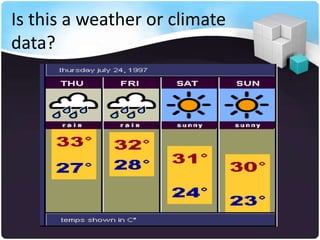
Is this a weather or climate
data?
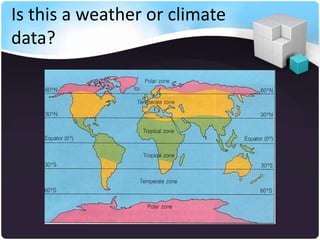
Is this a weather or climate
data?
Climate in the Philippines
The Philippines has a tropical climate with three
distinct seasons.
From June to September, the country
experiences a rainy season brought by the
southwestern monsoon; typhoons are common
during this time.
Climate in the Philippines

From October to February, the northeastern
monsoon brings cold winds from the north,
creating cool and dry weather.
From March to May, the Philippines
experiences hot summers. Coastal areas next to
the Pacific Ocean experience year-round
rainfall.
Weather
Disturbances
Weather Disturbances
• A weather disturbance is a general term that
describes any pulse of energy moving through
the atmosphere. They are important in that
they can act as focusing mechanisms for storm
formation, or even to intensify low pressure
systems.
• They are typically mid or upper atmospheric
troughs of low pressure that are embedded in
the general wind flow of the atmosphere.
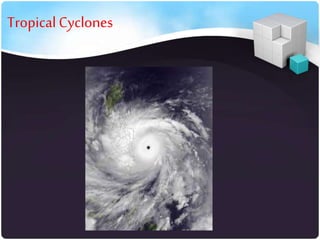
• Tropical Cyclones
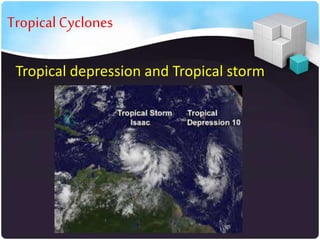
a. Tropical depression
Once a group of thunderstorms has come together
under the right atmospheric conditions for a long
enough time, they may organize into a tropical
depression. Winds near the center are constantly
between 20 and 34 knots (23 - 39 mph).
• Tropical Cyclones
b. Tropical Storm
A tropical storm is an organized system of strong
thunderstorms with a defined surface circulation
and maximum sustained winds between 17 and 33
meters per second (34 to 63 knots, 39 to 73 mph, or
62 to 117 km/h). At this point, the distinctive
cyclonic shape starts to develop, though an eye is
usually not present.
• Tropical Cyclones
Tropical depression and Tropical storm
• Tropical Cyclones
c. Typhoon
A Typhoon is a name used in east Asia for a
Hurricane. It is a type of cyclone occurring in
the western regions of the Pacific Ocean. A
typhoon is similar to a hurricane in levels of
destructiveness. The word typhoon comes
from the Chinese term tai-fung meaning
great wind.
• Tropical Cyclones
• Tropical Cyclones
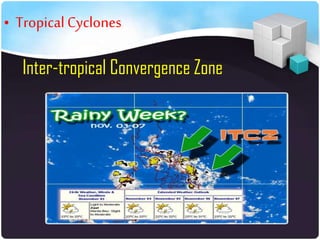
Inter-tropical Convergence Zone
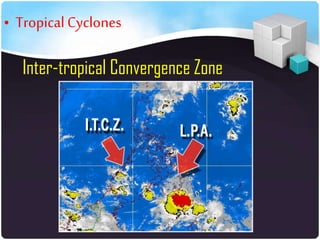
The Intertropical Convergence
Zone (ITCZ), known by sailors as The
Doldrums, is the area encircling the earth
near the equator where winds originating
in the northern and southern
hemispheres come together.
• Tropical Cyclones
Inter-tropical Convergence Zone
• Tropical Cyclones
Inter-tropical Convergence Zone
• Tropical Cyclones

Monsoons
- a consistent wind pattern generated by a large
weather system, that lasts for a period of
months and affects a large area of the planet.
• Tropical Cyclones
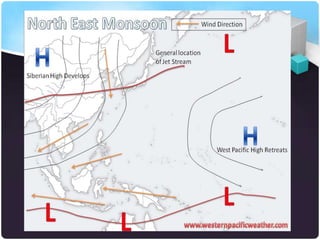
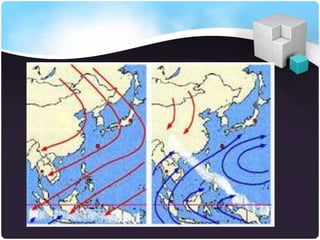
A.Northeast Monsoon
The Winter Monsoon (North or northeast)
features cool and dry air that originates in a vast
anticyclone - a weather system with a high
barometric pressure - which forms over Siberia,
Mongolia and northern China during each
northern winter.
• Tropical Cyclones
B. Southeast Monsoon
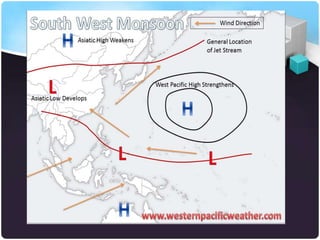
Summer Monsoon weather is characterized by a
strong, generally West or southwest breeze that is
responsible for bringing significant rainfall to the
Asian subcontinent and to South and East Asia.
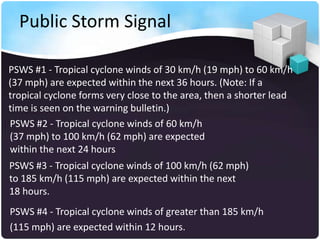
Public Storm Signal
PSWS #1 - Tropical cyclone winds of 30 km/h (19 mph) to 60 km/h
(37 mph) are expected within the next 36 hours. (Note: If a
tropical cyclone forms very close to the area, then a shorter lead
time is seen on the warning bulletin.)
PSWS #2 - Tropical cyclone winds of 60 km/h
(37 mph) to 100 km/h (62 mph) are expected
within the next 24 hours
PSWS #3 - Tropical cyclone winds of 100 km/h (62 mph)
to 185 km/h (115 mph) are expected within the next
18 hours.
PSWS #4 - Tropical cyclone winds of greater than 185 km/h
(115 mph) are expected within 12 hours.
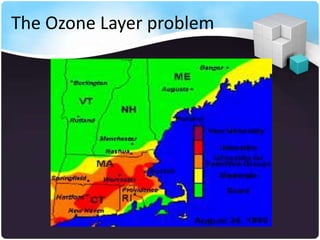
The Ozone Layer problem

Weather and climate

  • 1.
  • 3.
    Nitrogen • 78% -Dilutes oxygen and prevents rapid burning at the earth's surface. Living things need it to make proteins. Nitrogen cannot be used directly from the air. The Nitrogen Cycle is nature's way of supplying the needed nitrogen for living things.
  • 4.
    Oxygen 21% - Usedby all living things. Essential for respiration. It is necessary for combustion or burning.
  • 5.
    • C. Argon- 0.9% - Used in light bulbs. D. Carbon Dioxide - 0.03% - Plants use it to make oxygen. Acts as a blanket and prevents the escape of heat into outer space. Scientists are afraid that the burring of fossil fuels such as coal and oil are adding more carbon dioxide to the atmosphere.
  • 6.
    • E. WaterVapor - 0.0 to 4.0% - Essential for life processes. Also prevents heat loss from the earth. F. Trace gases - gases found only in very small amounts. They include neon, helium, krypton, and xenon.
  • 7.
    Layers of theAtmosphere
  • 8.
  • 9.
    Weather It is themix of events that happen each day in our atmosphere including temperature, rainfall and humidity. Weather is not the same everywhere. Perhaps it is hot, dry and sunny today where you live, but in other parts of the world it is cloudy, raining or even snowing. Everyday, weather events are recorded and predicted by meteorologists worldwide.
  • 10.
    Climate It is theaverage weather pattern in a place over many years. So, the climate of Antarctica is quite different than the climate of a tropical island. Hot summer days are quite typical of climates in many regions of the world, even without the effects of global warming.
  • 11.
    Is this aweather or climate data?
  • 12.
    Is this aweather or climate data?
  • 13.
    Climate in thePhilippines The Philippines has a tropical climate with three distinct seasons. From June to September, the country experiences a rainy season brought by the southwestern monsoon; typhoons are common during this time.
  • 14.
    Climate in thePhilippines From October to February, the northeastern monsoon brings cold winds from the north, creating cool and dry weather. From March to May, the Philippines experiences hot summers. Coastal areas next to the Pacific Ocean experience year-round rainfall.
  • 15.
  • 16.
    Weather Disturbances • Aweather disturbance is a general term that describes any pulse of energy moving through the atmosphere. They are important in that they can act as focusing mechanisms for storm formation, or even to intensify low pressure systems. • They are typically mid or upper atmospheric troughs of low pressure that are embedded in the general wind flow of the atmosphere.
  • 17.
    • Tropical Cyclones a.Tropical depression Once a group of thunderstorms has come together under the right atmospheric conditions for a long enough time, they may organize into a tropical depression. Winds near the center are constantly between 20 and 34 knots (23 - 39 mph).
  • 18.
    • Tropical Cyclones b.Tropical Storm A tropical storm is an organized system of strong thunderstorms with a defined surface circulation and maximum sustained winds between 17 and 33 meters per second (34 to 63 knots, 39 to 73 mph, or 62 to 117 km/h). At this point, the distinctive cyclonic shape starts to develop, though an eye is usually not present.
  • 19.
    • Tropical Cyclones Tropicaldepression and Tropical storm
  • 20.
    • Tropical Cyclones c.Typhoon A Typhoon is a name used in east Asia for a Hurricane. It is a type of cyclone occurring in the western regions of the Pacific Ocean. A typhoon is similar to a hurricane in levels of destructiveness. The word typhoon comes from the Chinese term tai-fung meaning great wind.
  • 21.
  • 22.
    • Tropical Cyclones Inter-tropicalConvergence Zone The Intertropical Convergence Zone (ITCZ), known by sailors as The Doldrums, is the area encircling the earth near the equator where winds originating in the northern and southern hemispheres come together.
  • 23.
  • 24.
  • 25.
    • Tropical Cyclones Monsoons -a consistent wind pattern generated by a large weather system, that lasts for a period of months and affects a large area of the planet.
  • 26.
    • Tropical Cyclones A.NortheastMonsoon The Winter Monsoon (North or northeast) features cool and dry air that originates in a vast anticyclone - a weather system with a high barometric pressure - which forms over Siberia, Mongolia and northern China during each northern winter.
  • 28.
    • Tropical Cyclones B.Southeast Monsoon Summer Monsoon weather is characterized by a strong, generally West or southwest breeze that is responsible for bringing significant rainfall to the Asian subcontinent and to South and East Asia.
  • 31.
    Public Storm Signal PSWS#1 - Tropical cyclone winds of 30 km/h (19 mph) to 60 km/h (37 mph) are expected within the next 36 hours. (Note: If a tropical cyclone forms very close to the area, then a shorter lead time is seen on the warning bulletin.) PSWS #2 - Tropical cyclone winds of 60 km/h (37 mph) to 100 km/h (62 mph) are expected within the next 24 hours PSWS #3 - Tropical cyclone winds of 100 km/h (62 mph) to 185 km/h (115 mph) are expected within the next 18 hours. PSWS #4 - Tropical cyclone winds of greater than 185 km/h (115 mph) are expected within 12 hours.
  • 32.