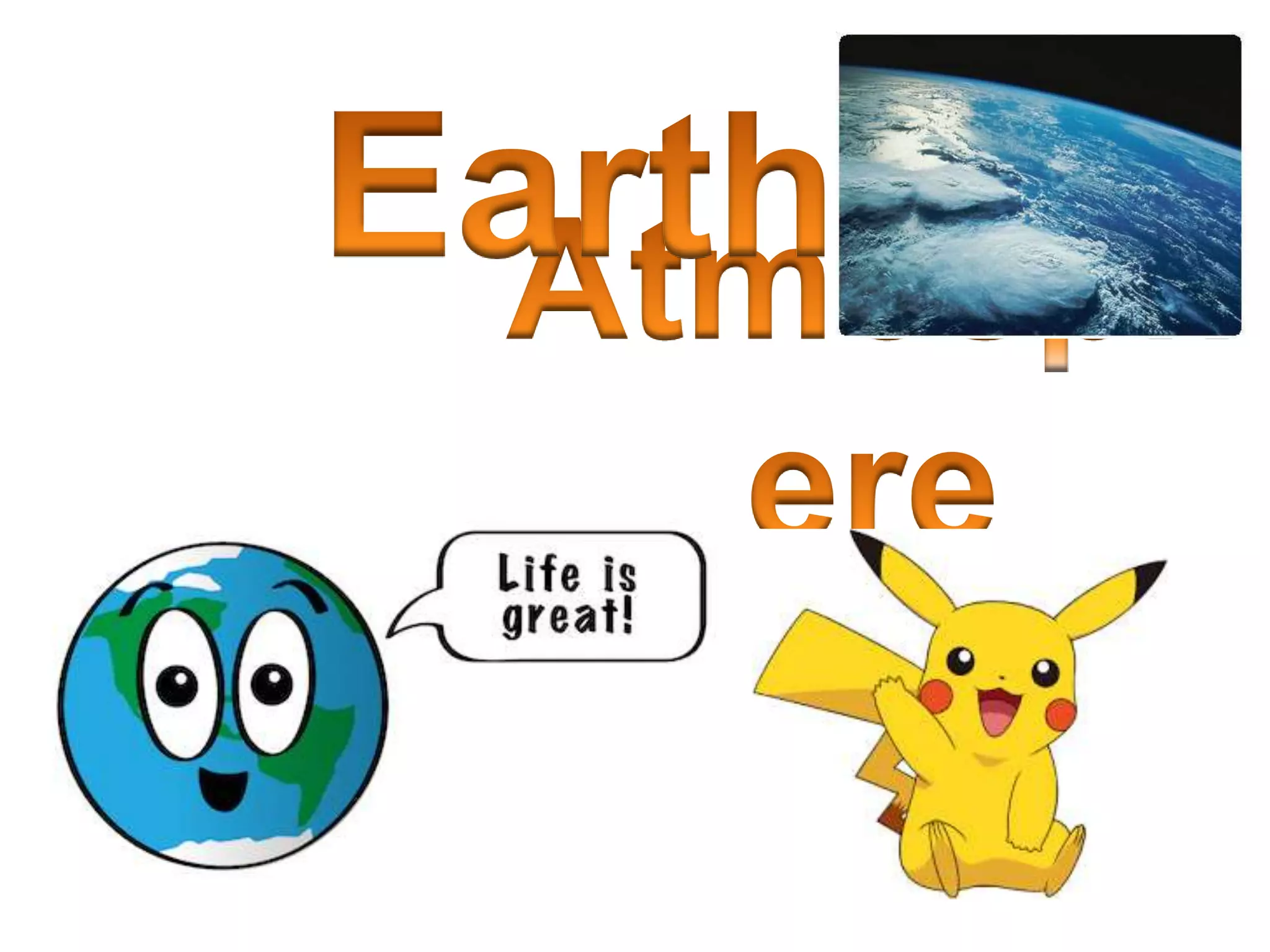
Earth’s atmosphere
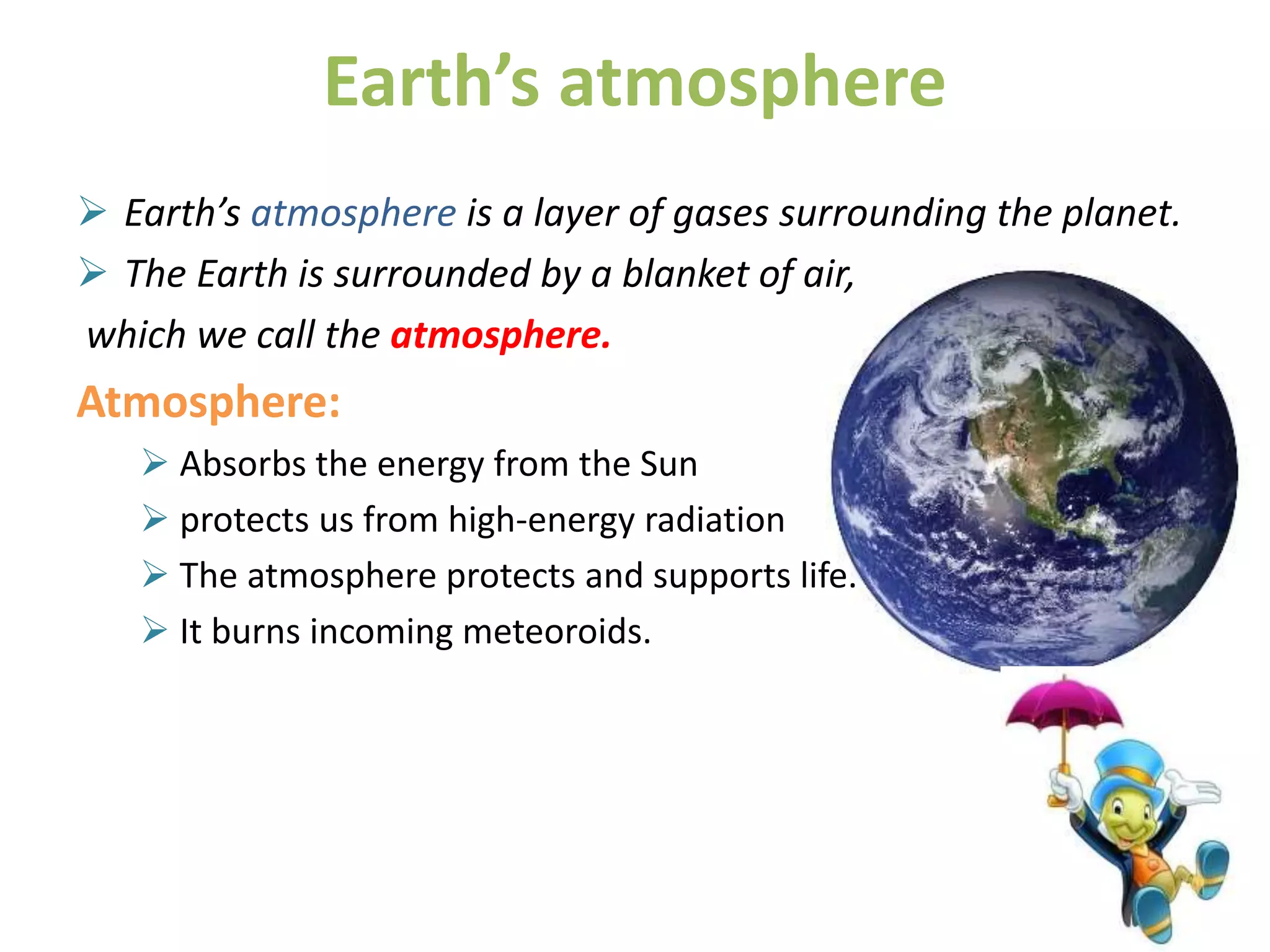
 Earth’s atmosphere is a layer of gases surrounding the planet.
 The Earth is surrounded by a blanket of air,
which we call the atmosphere.
Atmosphere:
 Absorbs the energy from the Sun
 protects us from high-energy radiation
 The atmosphere protects and supports life.
 It burns incoming meteoroids.
Blue layer is an atmosphere
Atmosphere act as a blanket to our
earth
Earth’s atmosphere
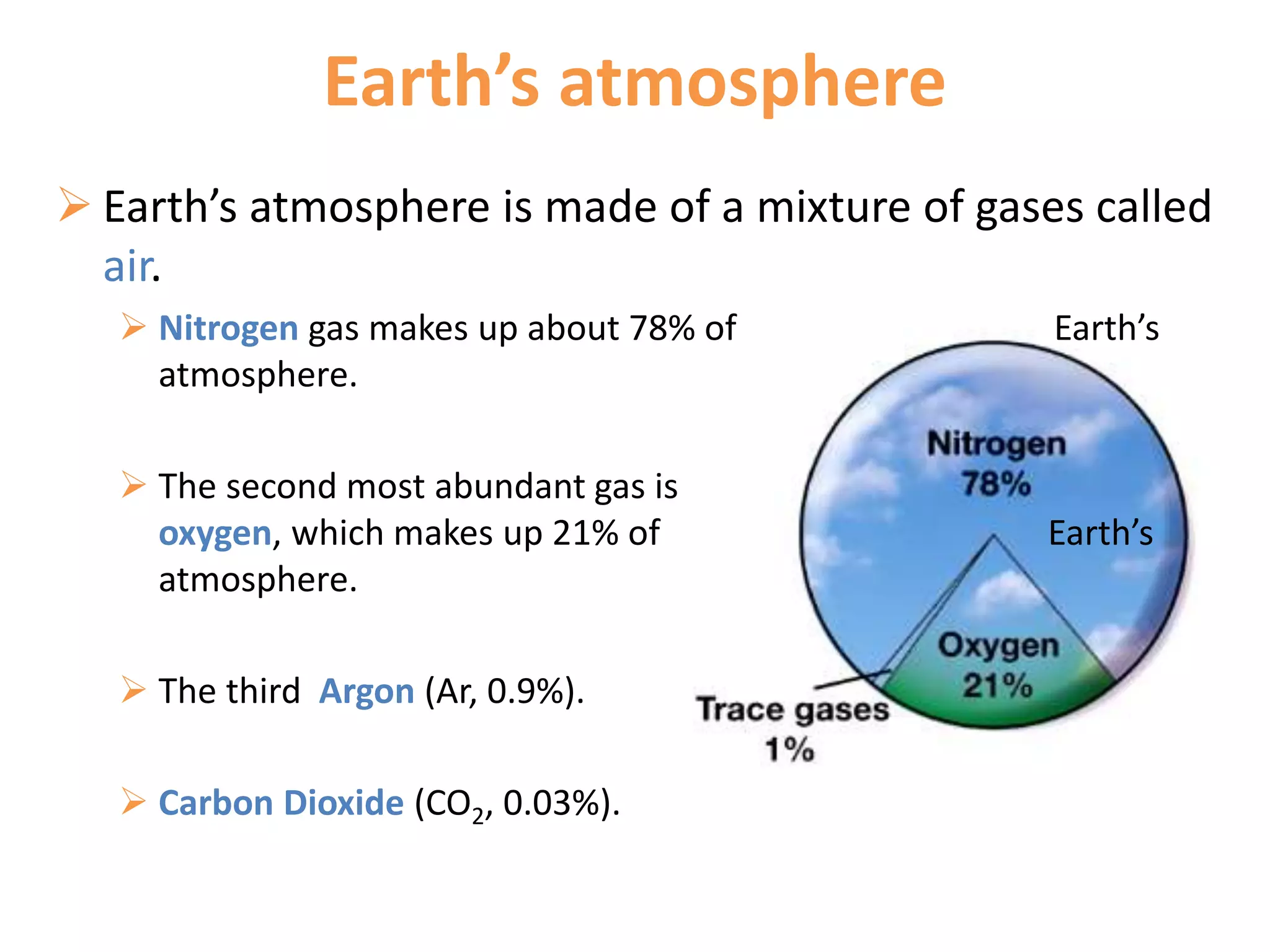
 Earth’s atmosphere is made of a mixture of gases called
air.
 Nitrogen gas makes up about 78% of Earth’s
atmosphere.
 The second most abundant gas is
oxygen, which makes up 21% of Earth’s
atmosphere.
 The third Argon (Ar, 0.9%).
 Carbon Dioxide (CO2, 0.03%).
Lets Understand It With Pizza
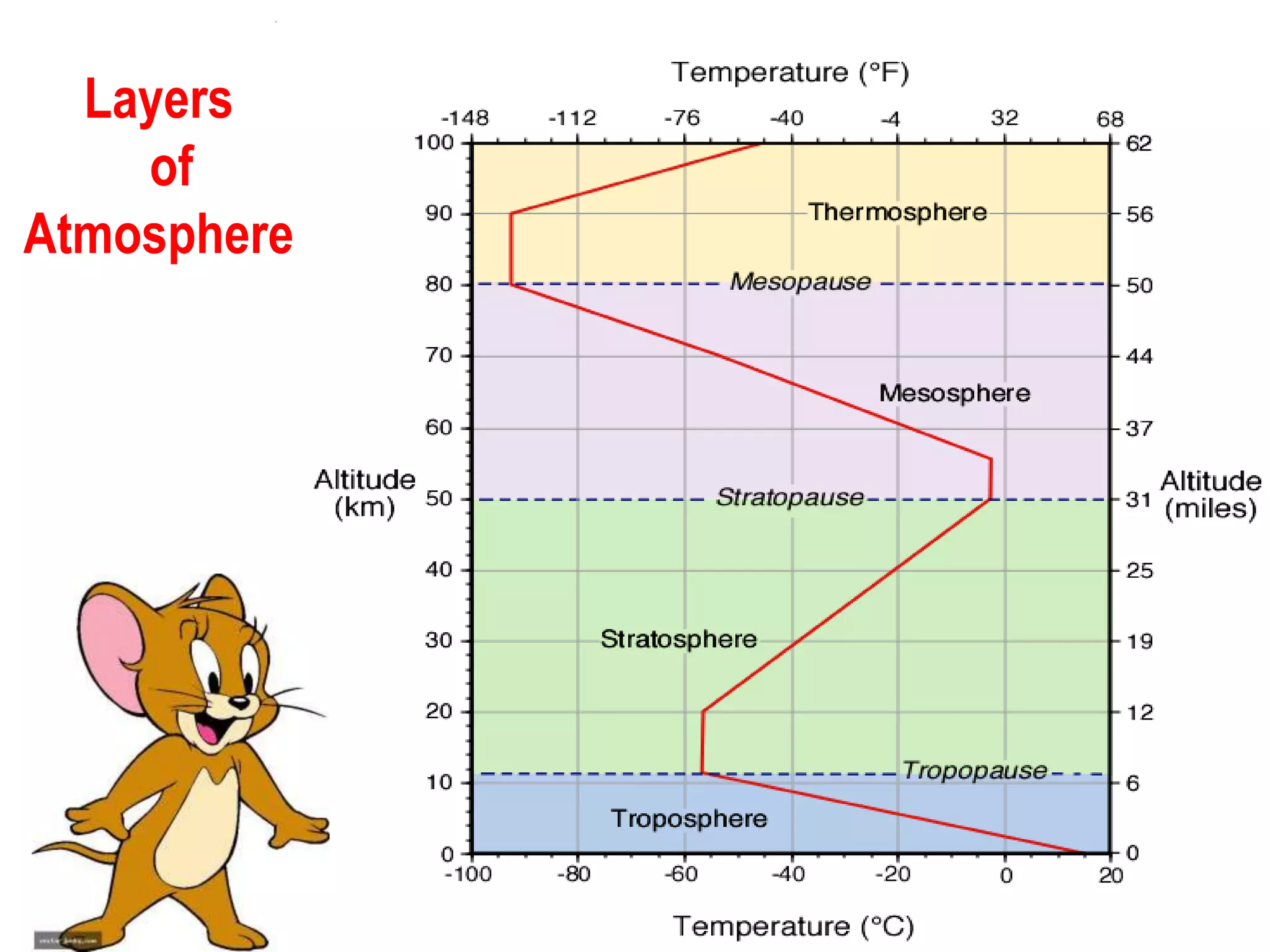
Layers of Atmosphere
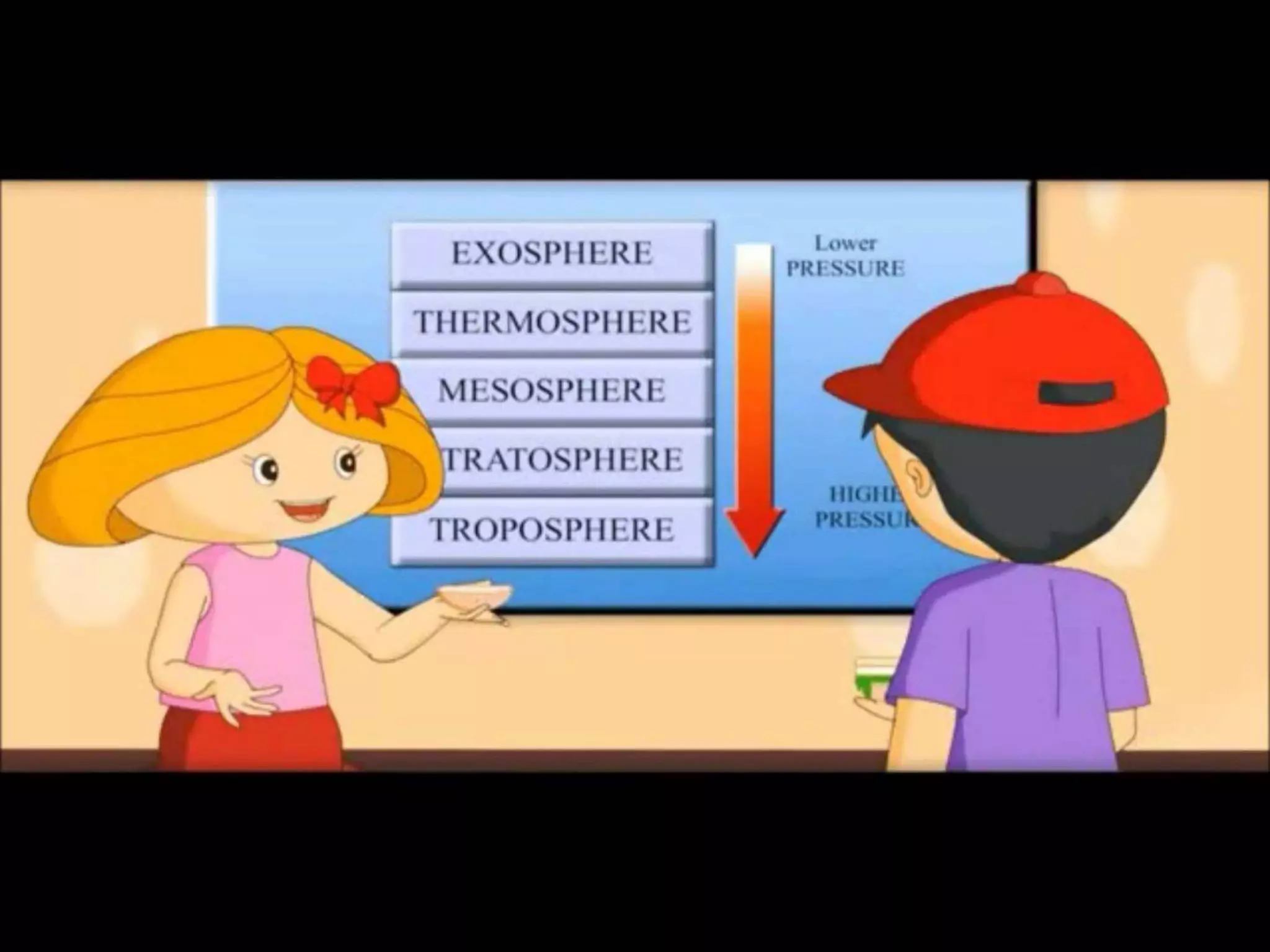
The atmosphere has four layers
Thermosphere
Mesosphere
Stratosphere
Troposphere
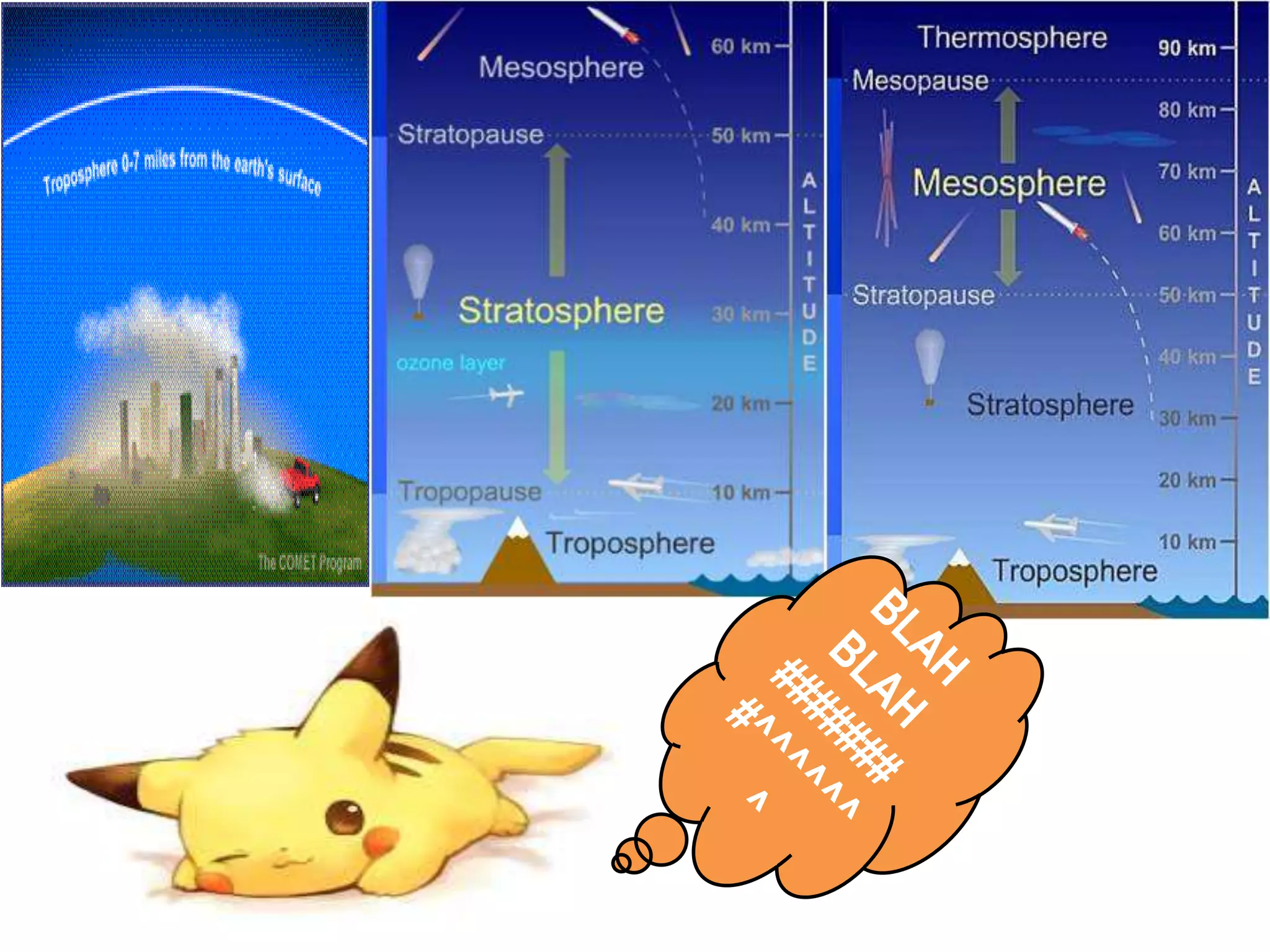
Troposphere
 Lowest and thinnest layer
 17 km at equator, 7 km at poles
 90% of the atmosphere’s mass
 Temperature decreases with altitude
 6°C per kilometer
 Top of troposphere averages –50°C
 Where weather occurs
 Air is warmest at the bottom of the troposphere near ground level.
Higher up it gets colder
 Boundary between the troposphere, and the stratosphere is called
the tropopause
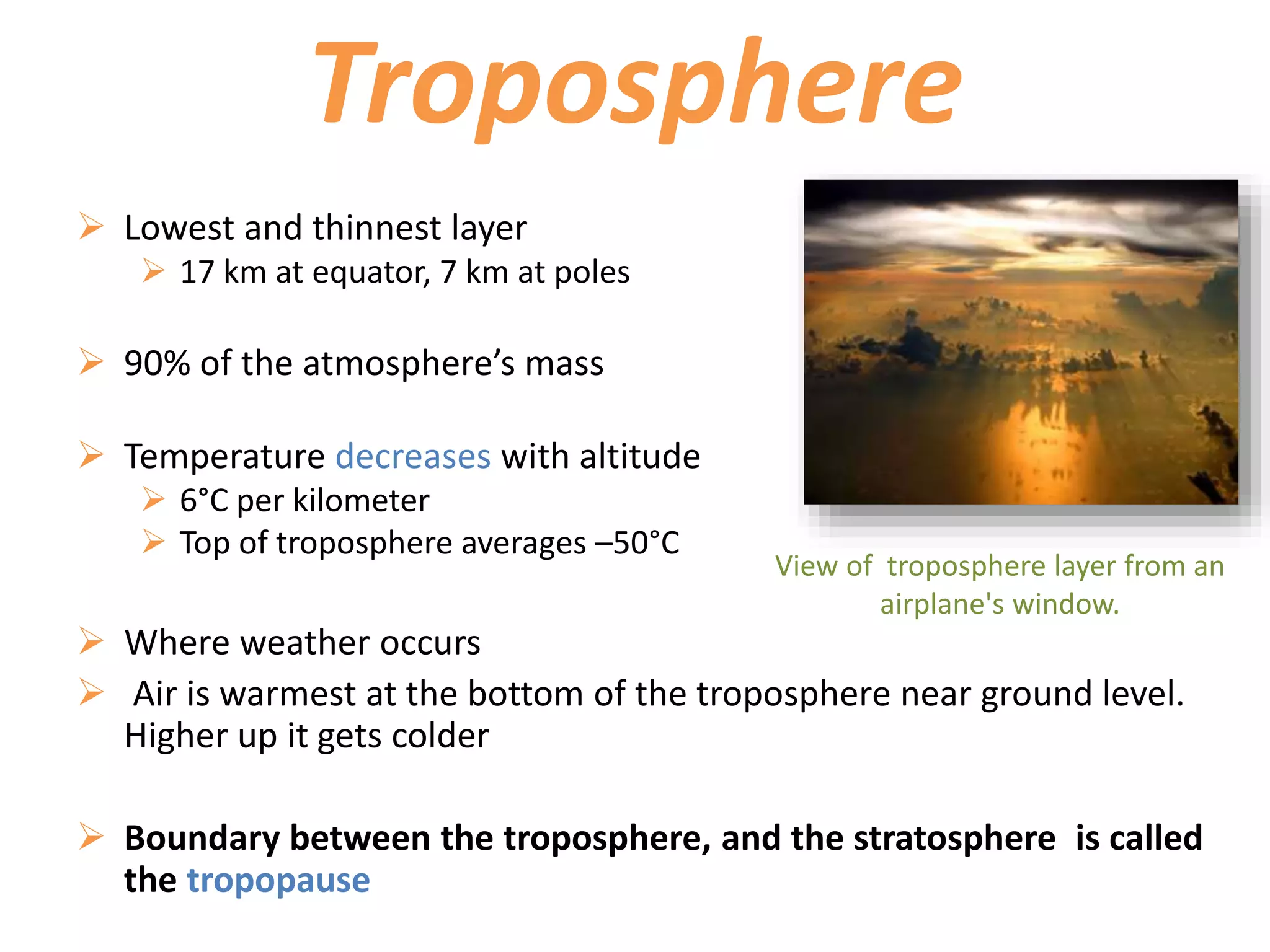
View of troposphere layer from an
airplane's window.
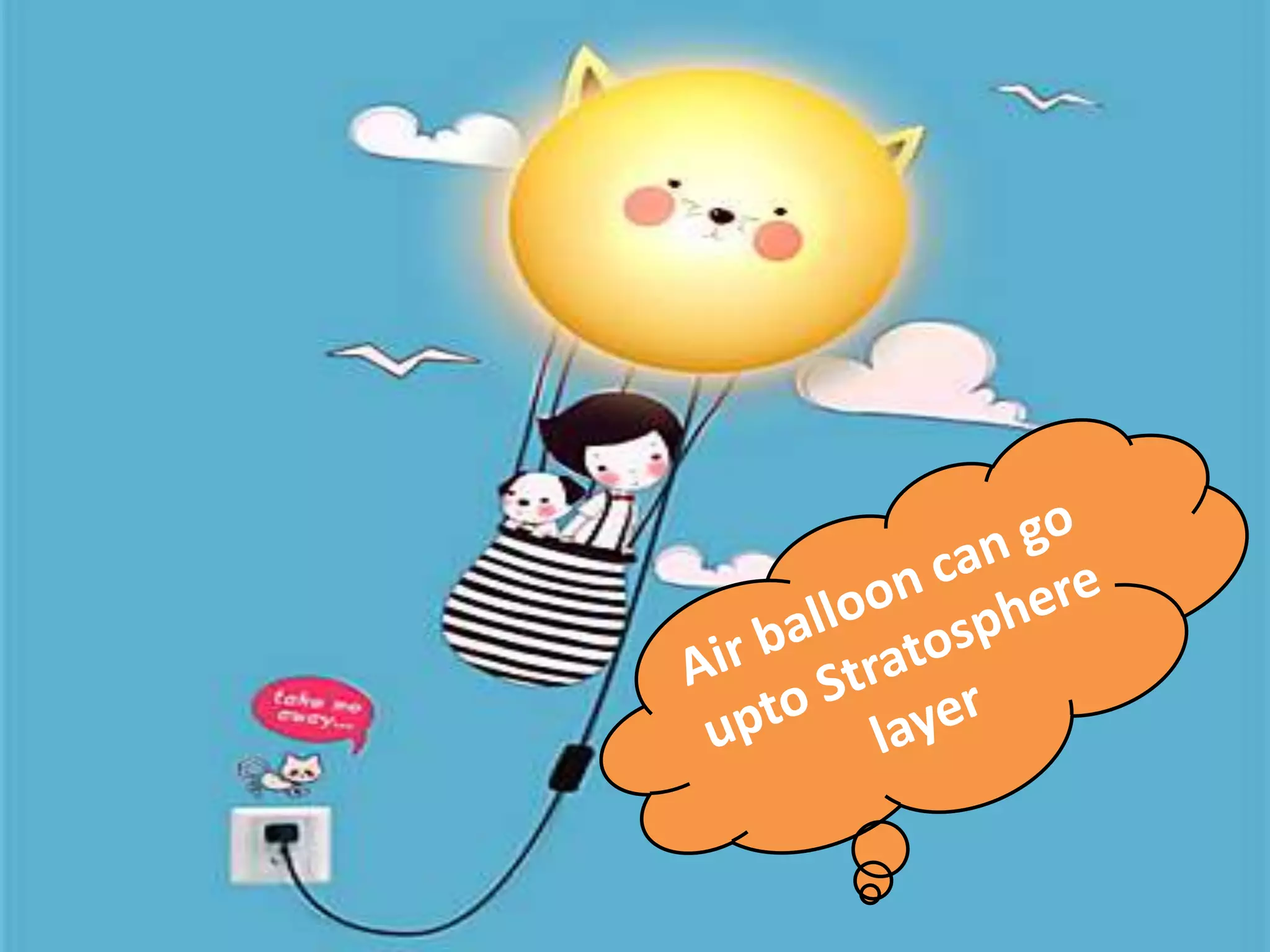
AEROPLANES Fly on Troposphere layer
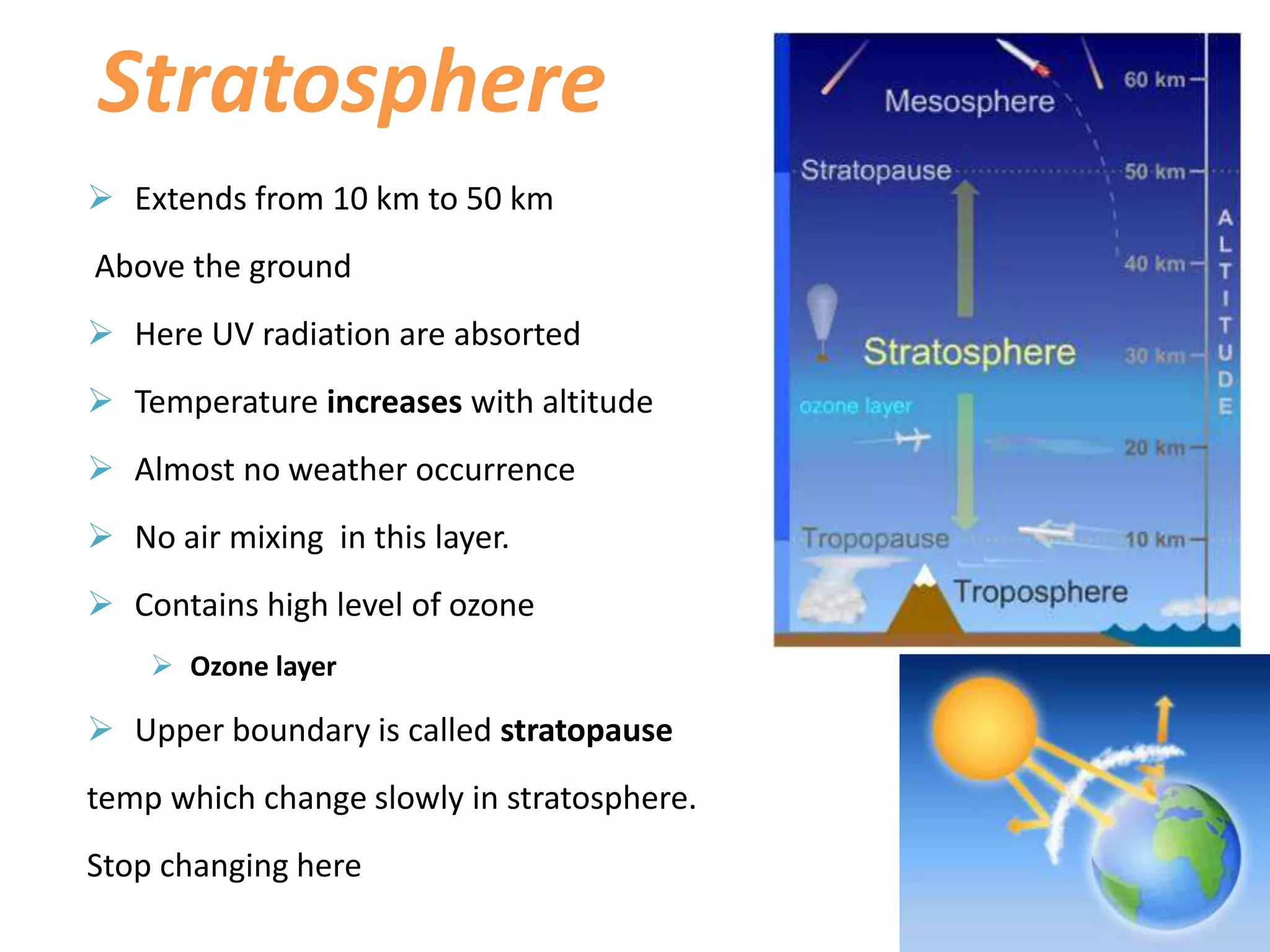
Stratosphere
 Extends from 10 km to 50 km
Above the ground
 Here UV radiation are absorted
 Temperature increases with altitude
 Almost no weather occurrence
 No air mixing in this layer.
 Contains high level of ozone
 Ozone layer
 Upper boundary is called stratopause
temp which change slowly in stratosphere.
Stop changing here
Stratosphere
Troposphere
Mesosphere
COLDEST
 Extends to almost 80-85 km high
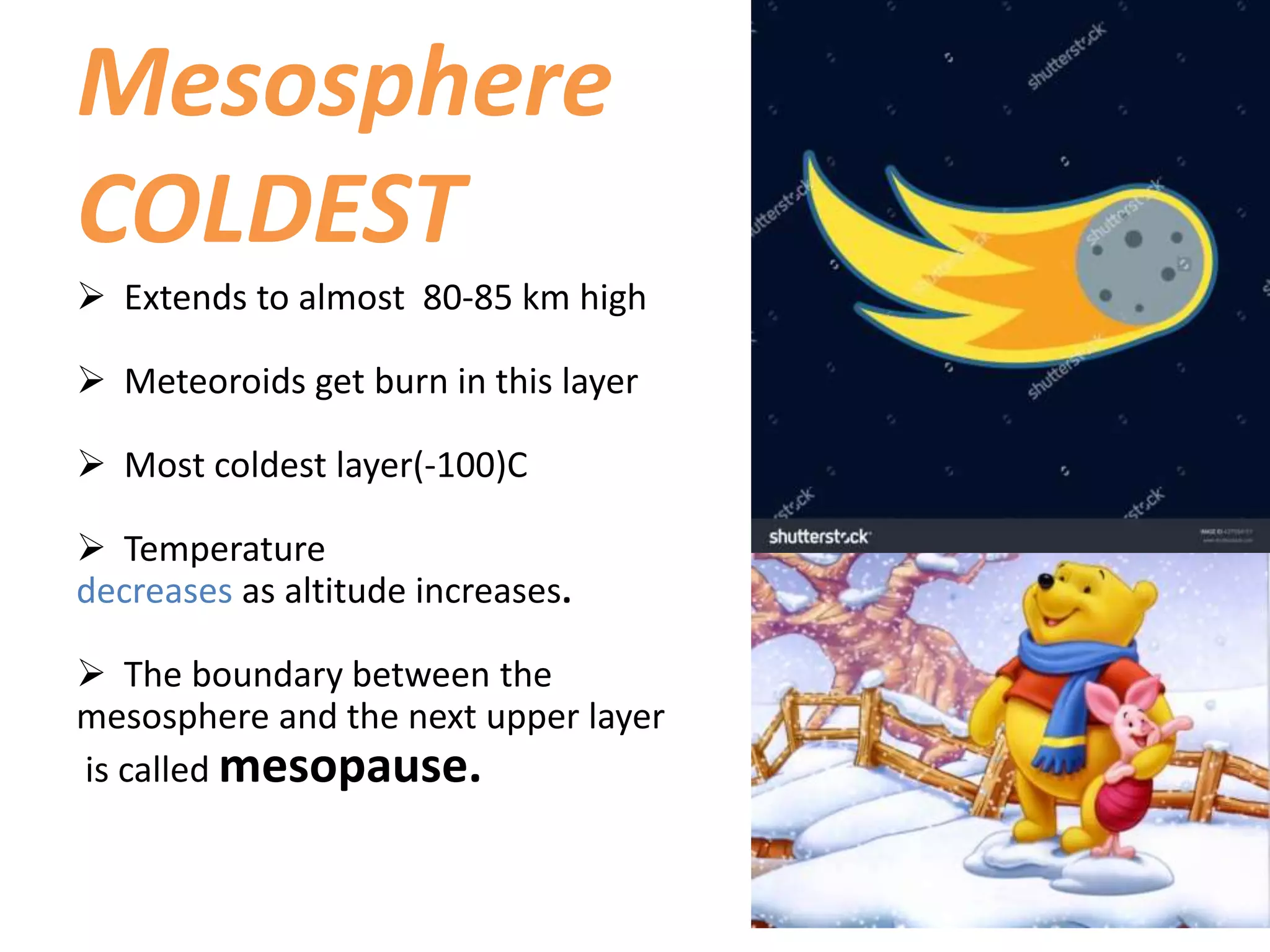
 Meteoroids get burn in this layer
 Most coldest layer(-100)C
 Temperature
decreases as altitude increases.
 The boundary between the
mesosphere and the next upper layer
is called mesopause.
Thermosphere
 Above the mesosphere and extends to almost
500 km high
 Hottest layer
 Temperature increases with altitude.
 The upper Thermosphere is called the
Ionosphere; it extends from 80 to 550 km
above the Earth's surface.
 Ionosphere absorb radiation from the sun and
become electrically charged.
 Electrically charged particles are called ions,
hence the name: the Ionosphere.
 Readily absorbs solar radiation
 Temperature can go as high as 1,500C
 Reflects radio waves.
 International space station are present in this
layer.
Found In THERMOSHERE Layer
INTERNATIONAL SPACE STATION
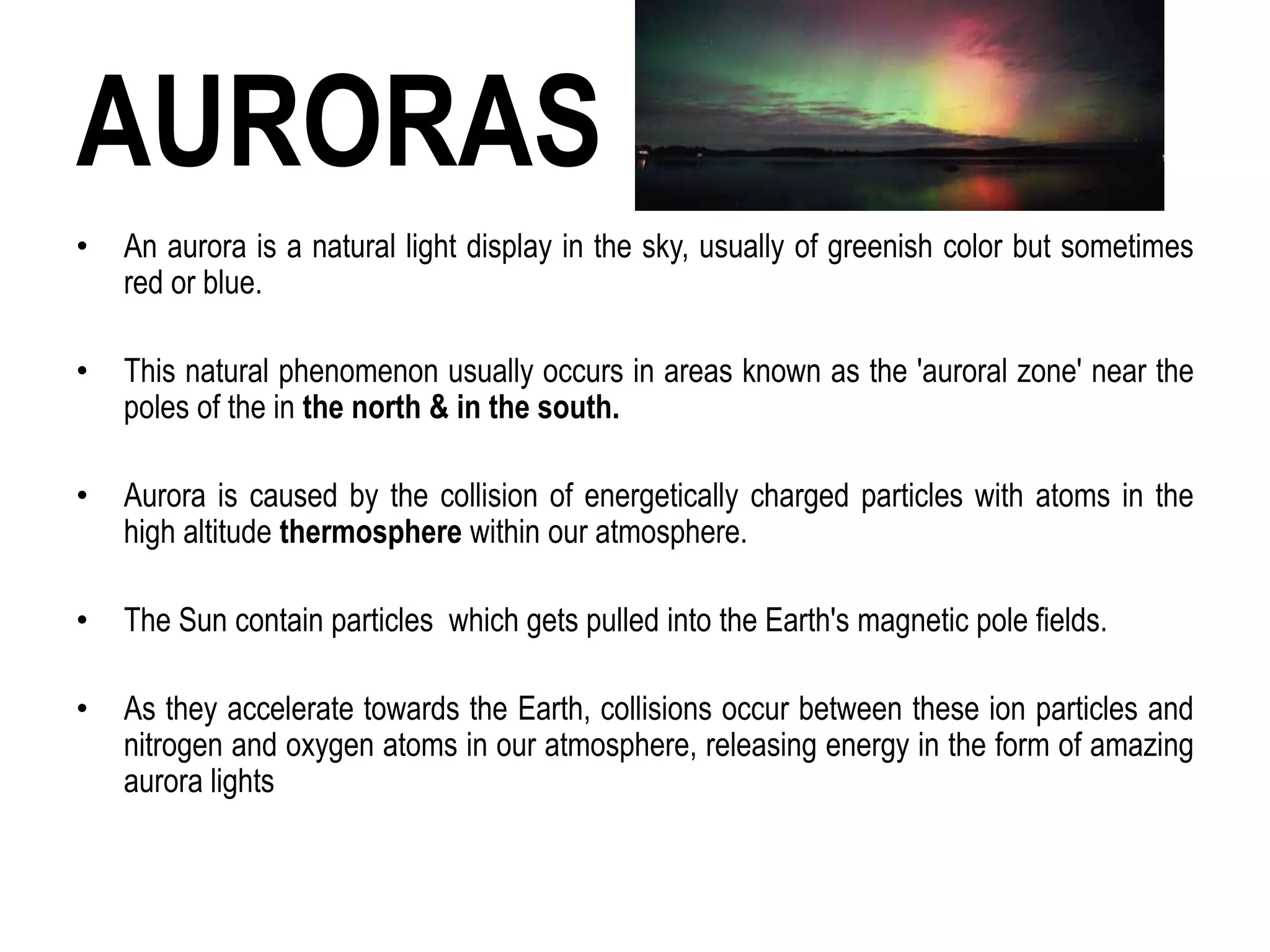
AURORAS
• An aurora is a natural light display in the sky, usually of greenish color but sometimes
red or blue.
• This natural phenomenon usually occurs in areas known as the 'auroral zone' near the
poles of the in the north & in the south.
• Aurora is caused by the collision of energetically charged particles with atoms in the
high altitude thermosphere within our atmosphere.
• The Sun contain particles which gets pulled into the Earth's magnetic pole fields.
• As they accelerate towards the Earth, collisions occur between these ion particles and
nitrogen and oxygen atoms in our atmosphere, releasing energy in the form of amazing
aurora lights
Layers
of
Atmosphere
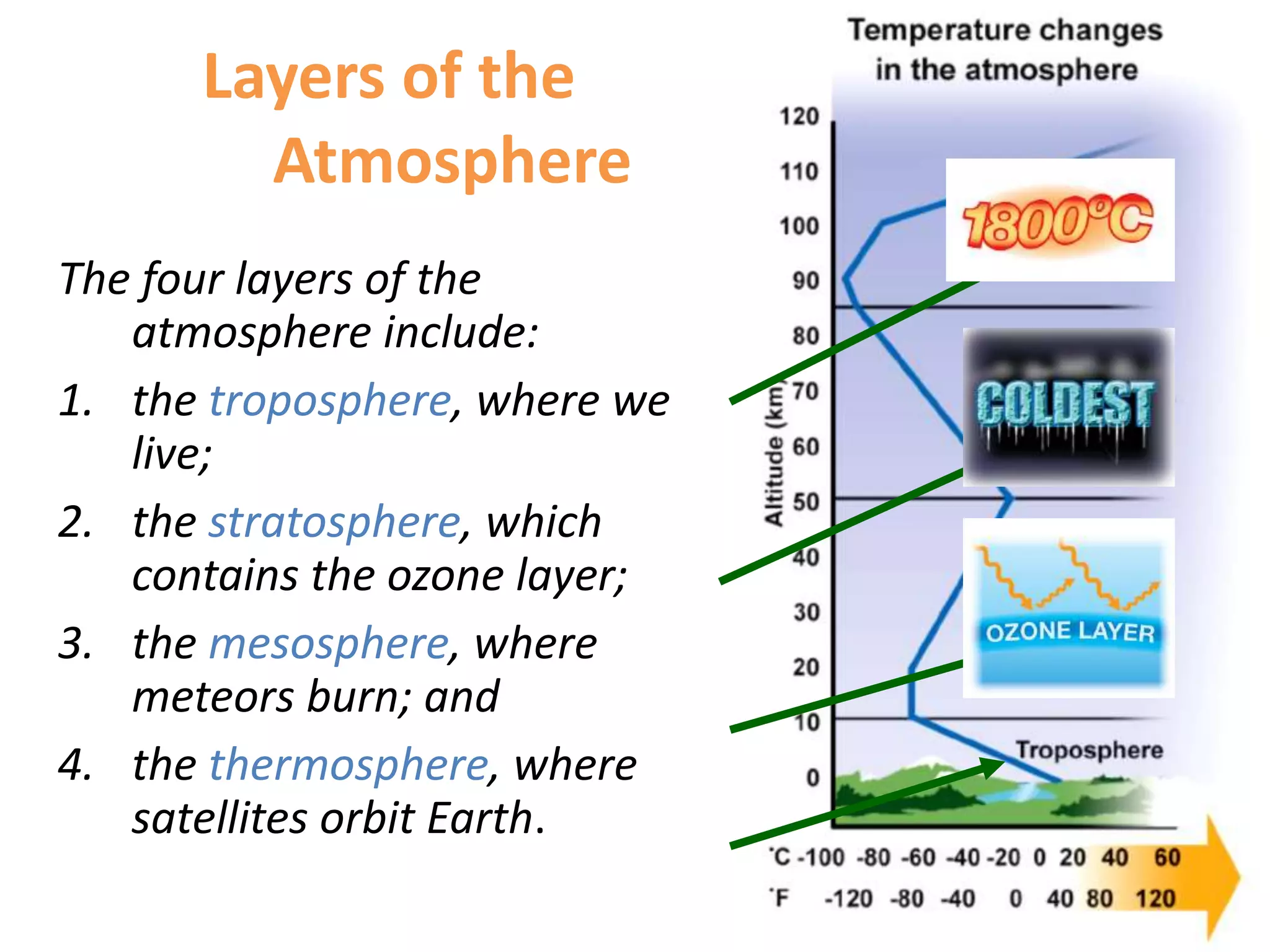
Layers of the
Atmosphere
The four layers of the
atmosphere include:
1. the troposphere, where we
live;
2. the stratosphere, which
contains the ozone layer;
3. the mesosphere, where
meteors burn; and
4. the thermosphere, where
satellites orbit Earth.
earth atmosphere for kids understanding

earth atmosphere for kids understanding

  • 2.
    Earth’s atmosphere  Earth’satmosphere is a layer of gases surrounding the planet.  The Earth is surrounded by a blanket of air, which we call the atmosphere. Atmosphere:  Absorbs the energy from the Sun  protects us from high-energy radiation  The atmosphere protects and supports life.  It burns incoming meteoroids.
  • 3.
    Blue layer isan atmosphere
  • 4.
    Atmosphere act asa blanket to our earth
  • 5.
    Earth’s atmosphere  Earth’satmosphere is made of a mixture of gases called air.  Nitrogen gas makes up about 78% of Earth’s atmosphere.  The second most abundant gas is oxygen, which makes up 21% of Earth’s atmosphere.  The third Argon (Ar, 0.9%).  Carbon Dioxide (CO2, 0.03%).
  • 6.
  • 7.
    Layers of Atmosphere Theatmosphere has four layers Thermosphere Mesosphere Stratosphere Troposphere
  • 10.
    Troposphere  Lowest andthinnest layer  17 km at equator, 7 km at poles  90% of the atmosphere’s mass  Temperature decreases with altitude  6°C per kilometer  Top of troposphere averages –50°C  Where weather occurs  Air is warmest at the bottom of the troposphere near ground level. Higher up it gets colder  Boundary between the troposphere, and the stratosphere is called the tropopause View of troposphere layer from an airplane's window.
  • 11.
    AEROPLANES Fly onTroposphere layer
  • 12.
    Stratosphere  Extends from10 km to 50 km Above the ground  Here UV radiation are absorted  Temperature increases with altitude  Almost no weather occurrence  No air mixing in this layer.  Contains high level of ozone  Ozone layer  Upper boundary is called stratopause temp which change slowly in stratosphere. Stop changing here
  • 14.
  • 15.
    Mesosphere COLDEST  Extends toalmost 80-85 km high  Meteoroids get burn in this layer  Most coldest layer(-100)C  Temperature decreases as altitude increases.  The boundary between the mesosphere and the next upper layer is called mesopause.
  • 16.
    Thermosphere  Above themesosphere and extends to almost 500 km high  Hottest layer  Temperature increases with altitude.  The upper Thermosphere is called the Ionosphere; it extends from 80 to 550 km above the Earth's surface.  Ionosphere absorb radiation from the sun and become electrically charged.  Electrically charged particles are called ions, hence the name: the Ionosphere.  Readily absorbs solar radiation  Temperature can go as high as 1,500C  Reflects radio waves.  International space station are present in this layer.
  • 17.
    Found In THERMOSHERELayer INTERNATIONAL SPACE STATION
  • 18.
    AURORAS • An aurorais a natural light display in the sky, usually of greenish color but sometimes red or blue. • This natural phenomenon usually occurs in areas known as the 'auroral zone' near the poles of the in the north & in the south. • Aurora is caused by the collision of energetically charged particles with atoms in the high altitude thermosphere within our atmosphere. • The Sun contain particles which gets pulled into the Earth's magnetic pole fields. • As they accelerate towards the Earth, collisions occur between these ion particles and nitrogen and oxygen atoms in our atmosphere, releasing energy in the form of amazing aurora lights
  • 19.
  • 21.
    Layers of the Atmosphere Thefour layers of the atmosphere include: 1. the troposphere, where we live; 2. the stratosphere, which contains the ozone layer; 3. the mesosphere, where meteors burn; and 4. the thermosphere, where satellites orbit Earth.