Weather
Disturbances
Introduction
What is a weather disturbance?
• A weather disturbance is a
general term that describes any
pulse of energy moving through the
atmosphere.
• They are important in that they
can act as focusing mechanisms for
storm formation, or even to intensify
low pressure systems.
• They are typically mid or upper
atmospheric troughs of low pressure
that are embedded in the general
wind flow of the atmosphere.
Thunderstorm
What is a Thunderstorm?
• It is a small-scale weather system
in which lightning and thunder are
produced by a funnel-shaped
cumulonimbus cloud.
• It is also known as an electrical
storm, a lightning storm,
thundershower or simply storm.
• It usually produces gusty winds,
heavy rains, and sometimes hail.
• A thunderstorm occurs when the skies
darken, the wind picks up, lightning
flashes, thunder roars, and static is heard
on your AM Radio.
• May last for about 30 min. or even a hour.
• Plays an important role in the hydrologic
cycle and general circulation.
• Are also engines of tropical disturbance
that bring a large fraction of
the annual rainfall to tropical
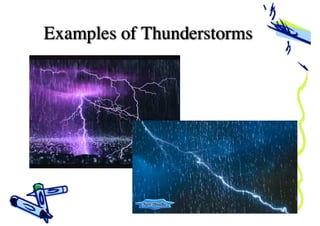
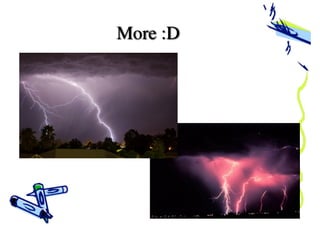
Examples of Thunderstorms
More :D
Tropical
Cyclone
What is a Tropical Cyclone?
• A tropical cyclone is a generic term for a
storm with an organized system of
thunderstorms that are not based on a
frontal system.
• It is a low pressure system that generally
forms over tropical ocean areas, and
brings wind and thunderstorms.
• Comes from the Greek word “kyklos”,
which means “coiling snake.
• It rushes in a spiral motion and have a low
pressure center called “eye of the storm”.
• Tropical cyclones with maximum sustained
surface winds of less than 62 km/h are
called tropical depressions. When the winds
reach 62 km/h, it becomes a tropical storm.
Winds that reaches at least 118 km/h, then
they are called hurricanes in the Atlantic
and typhoons in the Pacific.
• Typhoons are strongest over the ocean
where they get their energy
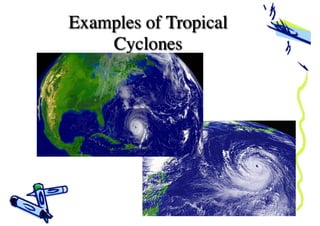
Examples of Tropical
Cyclones
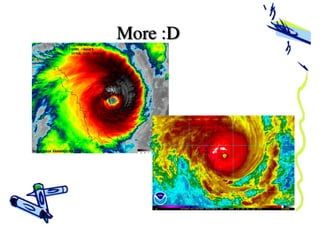
More :D
Moonsoon
What is a Monsoon?
• The term “monsoon” was from the
Arabic word “mausim” which means
“seasonal wind”.
• It is a seasonal flow of winds
between the Northern and Southern
Hemispheres.
• Monsoons are similar to Windflow.
• There are two monsoons system that
affect the areas such as “Monsoon Asia”
or in particular the Philippines and
Southeast Asia. These are the
Southwest Monsoon or “Habagat” and
the Northeast Monsoon or “Amihan”.
• Most summer monsoons produce copious
amounts of rain; winter monsoons
tend to cause drought.
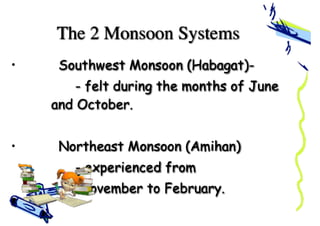
The 2 Monsoon Systems
• Southwest Monsoon (Habagat)-
- felt during the months of June
and October.
• Northeast Monsoon (Amihan)
- experienced from
November to February.
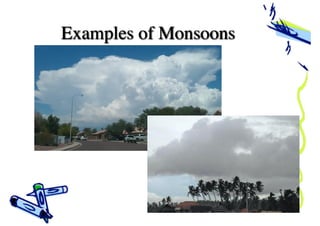
Examples of Monsoons
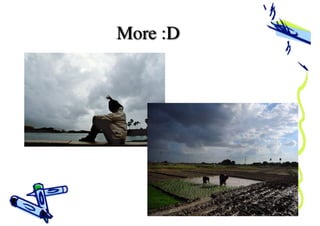
More :D
Intertropical
Convergence
Zone
What is Intertropical
Convergence Zone?
• Intertropical Convergence Zone
(ITCZ) is the meeting place of hot
and cold tradewinds in the northern
and southern hemisphere.
• The weather system may trigger rain
showers, even flash floods in
affected areas.
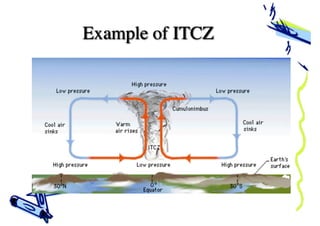
• It is a belt of low pressure that lies
between the trade winds zone of the
northern and southern hemisphere. A
snake-like path and generally near the
equator
• Sailors usually called this doldrums,
where wind speed and direction are
weak and irregular.
• It is located 5°North and 5° South.
Example of ITCZ

Weatherdisturbances 160307110538

  • 1.
  • 2.
    Introduction What is aweather disturbance? • A weather disturbance is a general term that describes any pulse of energy moving through the atmosphere.
  • 3.
    • They areimportant in that they can act as focusing mechanisms for storm formation, or even to intensify low pressure systems. • They are typically mid or upper atmospheric troughs of low pressure that are embedded in the general wind flow of the atmosphere.
  • 4.
  • 5.
    What is aThunderstorm? • It is a small-scale weather system in which lightning and thunder are produced by a funnel-shaped cumulonimbus cloud. • It is also known as an electrical storm, a lightning storm, thundershower or simply storm. • It usually produces gusty winds, heavy rains, and sometimes hail.
  • 6.
    • A thunderstormoccurs when the skies darken, the wind picks up, lightning flashes, thunder roars, and static is heard on your AM Radio. • May last for about 30 min. or even a hour. • Plays an important role in the hydrologic cycle and general circulation. • Are also engines of tropical disturbance that bring a large fraction of the annual rainfall to tropical
  • 7.
  • 8.
  • 9.
  • 10.
    What is aTropical Cyclone? • A tropical cyclone is a generic term for a storm with an organized system of thunderstorms that are not based on a frontal system. • It is a low pressure system that generally forms over tropical ocean areas, and brings wind and thunderstorms. • Comes from the Greek word “kyklos”, which means “coiling snake.
  • 11.
    • It rushesin a spiral motion and have a low pressure center called “eye of the storm”. • Tropical cyclones with maximum sustained surface winds of less than 62 km/h are called tropical depressions. When the winds reach 62 km/h, it becomes a tropical storm. Winds that reaches at least 118 km/h, then they are called hurricanes in the Atlantic and typhoons in the Pacific. • Typhoons are strongest over the ocean where they get their energy
  • 12.
  • 13.
  • 14.
  • 15.
    What is aMonsoon? • The term “monsoon” was from the Arabic word “mausim” which means “seasonal wind”. • It is a seasonal flow of winds between the Northern and Southern Hemispheres. • Monsoons are similar to Windflow.
  • 16.
    • There aretwo monsoons system that affect the areas such as “Monsoon Asia” or in particular the Philippines and Southeast Asia. These are the Southwest Monsoon or “Habagat” and the Northeast Monsoon or “Amihan”. • Most summer monsoons produce copious amounts of rain; winter monsoons tend to cause drought.
  • 17.
    The 2 MonsoonSystems • Southwest Monsoon (Habagat)- - felt during the months of June and October. • Northeast Monsoon (Amihan) - experienced from November to February.
  • 18.
  • 19.
  • 20.
  • 21.
    What is Intertropical ConvergenceZone? • Intertropical Convergence Zone (ITCZ) is the meeting place of hot and cold tradewinds in the northern and southern hemisphere. • The weather system may trigger rain showers, even flash floods in affected areas.
  • 22.
    • It isa belt of low pressure that lies between the trade winds zone of the northern and southern hemisphere. A snake-like path and generally near the equator • Sailors usually called this doldrums, where wind speed and direction are weak and irregular. • It is located 5°North and 5° South.
  • 23.