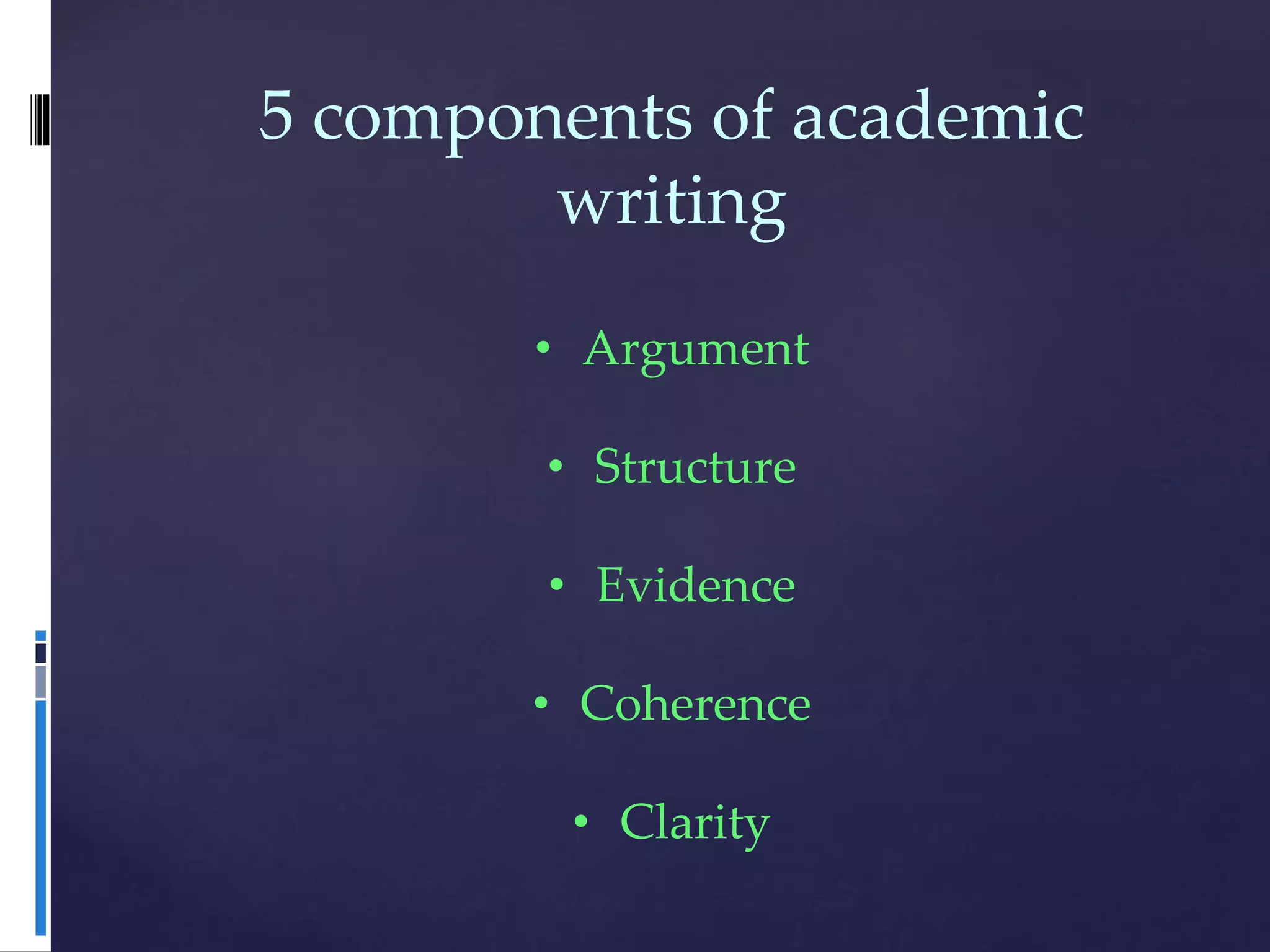
This document discusses academic writing and provides guidance on how to write effectively for university. It defines academic writing as a formal style that presents a focused argument supported by evidence from credible sources. While it has certain conventions, academic writing is not "better" but is what is required in university. The document outlines five components of good academic writing: having a clear argument or approach, structure, evidence, coherence in telling a logical story, and clarity of expression. It emphasizes developing a thesis, signposting your argument, using research to support claims, engaging respectfully with sources, and structuring writing in a coherent way through paragraphs and linking ideas.
What is academicwriting?
Scholarly style of expression
-Formal tone – no slang
-Usually uses third person (not “I”)
-Focused argument and presentation of
information – no “waffle”
-Precise word choice
Writing that talks to the intellect, rather than
appealing to emotions
4.
Academic writing isnot “better” or more
“correct” than other styles of writing
but it is what is required in the university space
-Terms, rules and values to learn
-Need to develop the skills and be able to
“jump through the hoops”
-Takes practice
5.
Harry Potter andthe
Philosopher’s Tone
Harry struggles to write his PHI5000
thesis.
So what makesgood academic
writing?
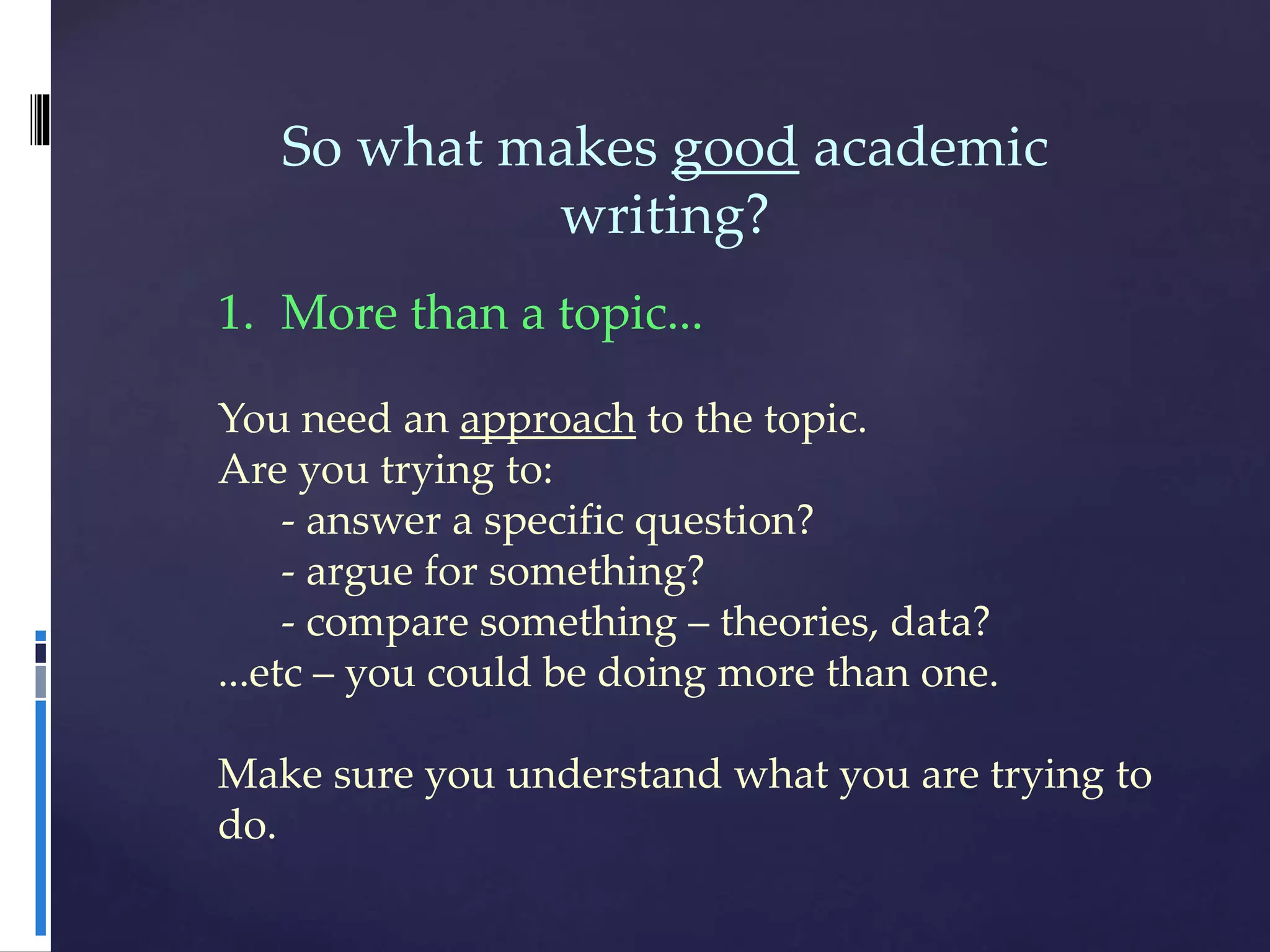
1. More than a topic...
You need an approach to the topic.
Are you trying to:
- answer a specific question?
- argue for something?
- compare something – theories, data?
...etc – you could be doing more than one.
Make sure you understand what you are trying to
do.
8.
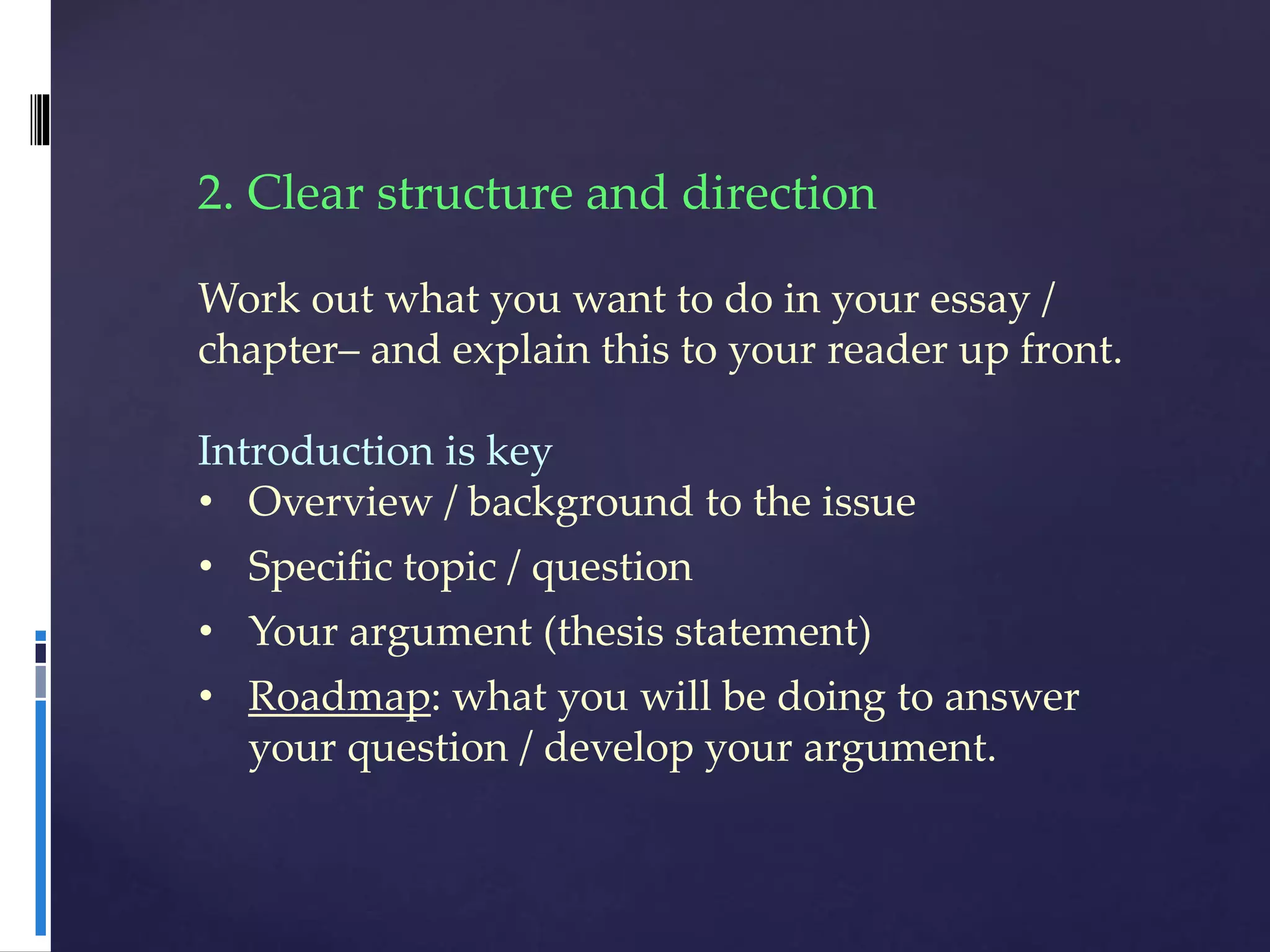
2. Clear structureand direction
Work out what you want to do in your essay /
chapter– and explain this to your reader up front.
Introduction is key
• Overview / background to the issue
• Specific topic / question
• Your argument (thesis statement)
• Roadmap: what you will be doing to answer
your question / develop your argument.
9.
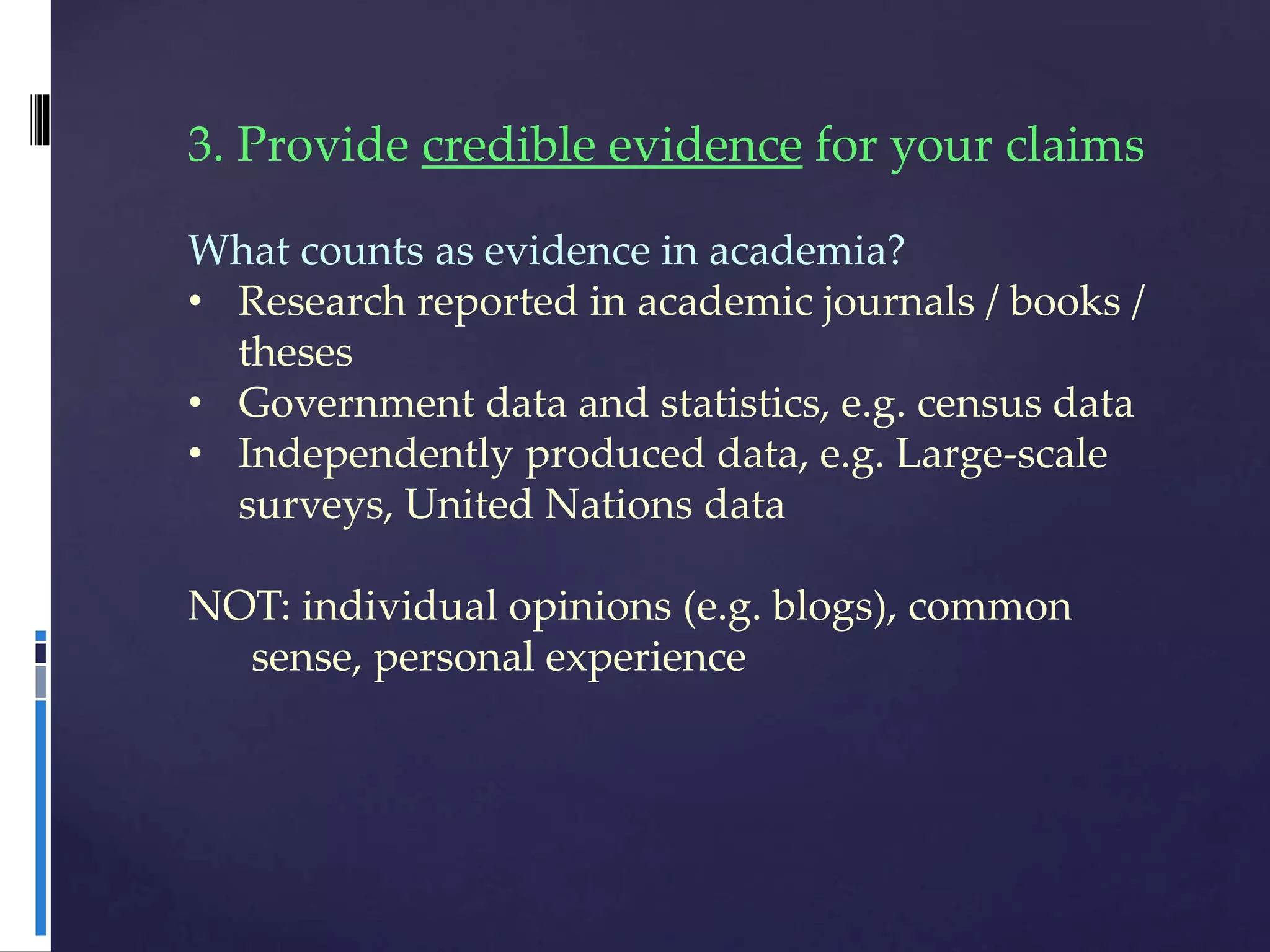
3. Provide credibleevidence for your claims
What counts as evidence in academia?
• Research reported in academic journals / books /
theses
• Government data and statistics, e.g. census data
• Independently produced data, e.g. Large-scale
surveys, United Nations data
NOT: individual opinions (e.g. blogs), common
sense, personal experience
10.
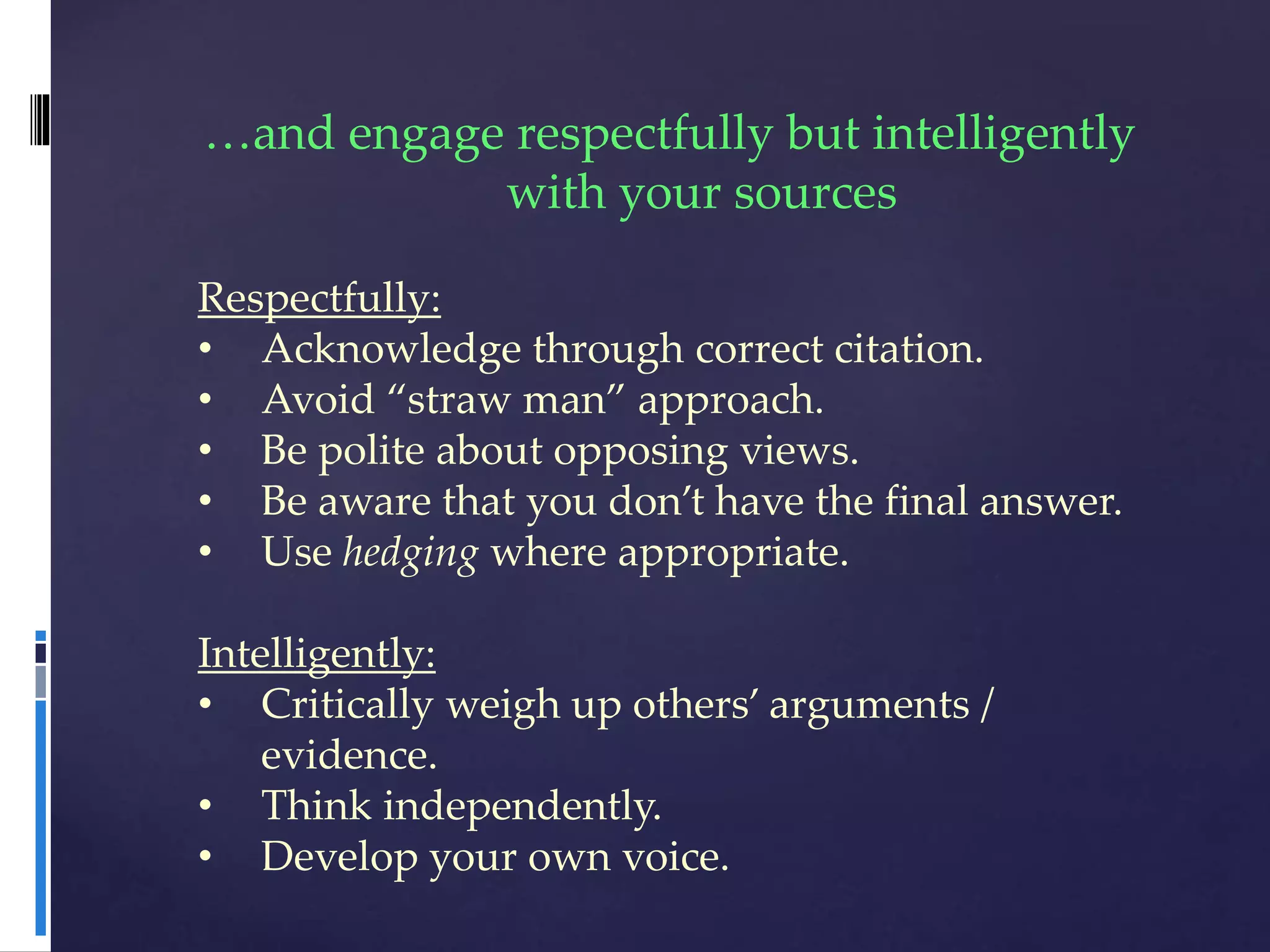
…and engage respectfullybut intelligently
with your sources
Respectfully:
• Acknowledge through correct citation.
• Avoid “straw man” approach.
• Be polite about opposing views.
• Be aware that you don’t have the final answer.
• Use hedging where appropriate.
Intelligently:
• Critically weigh up others’ arguments /
evidence.
• Think independently.
• Develop your own voice.
11.
“South Africa hasvery high levels of violent
crime compared to other countries.”
“South Africans are a sport-loving nation.”
“Getting adolescents involved in sports after
school helps to keep them away from
drugs.”
How do you know this?
What sort of evidence would be relevant here?
12.
4. Tell acoherent story
Work out your overall structure:
• What are your key ideas / pieces of
information?
• How are they connected to each other?
• How should you move from one to the next
one, so that you tell a logical story?
13.
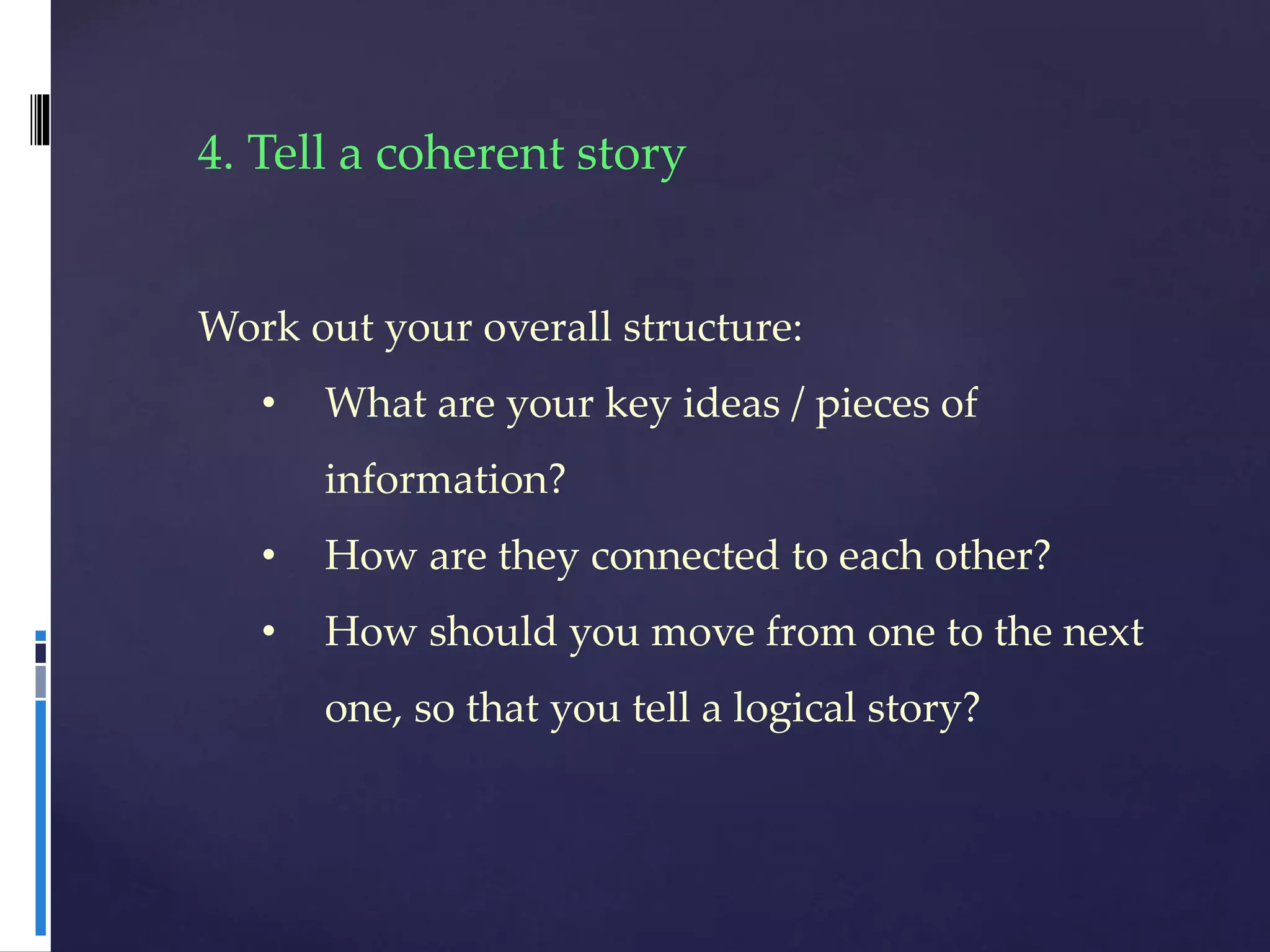
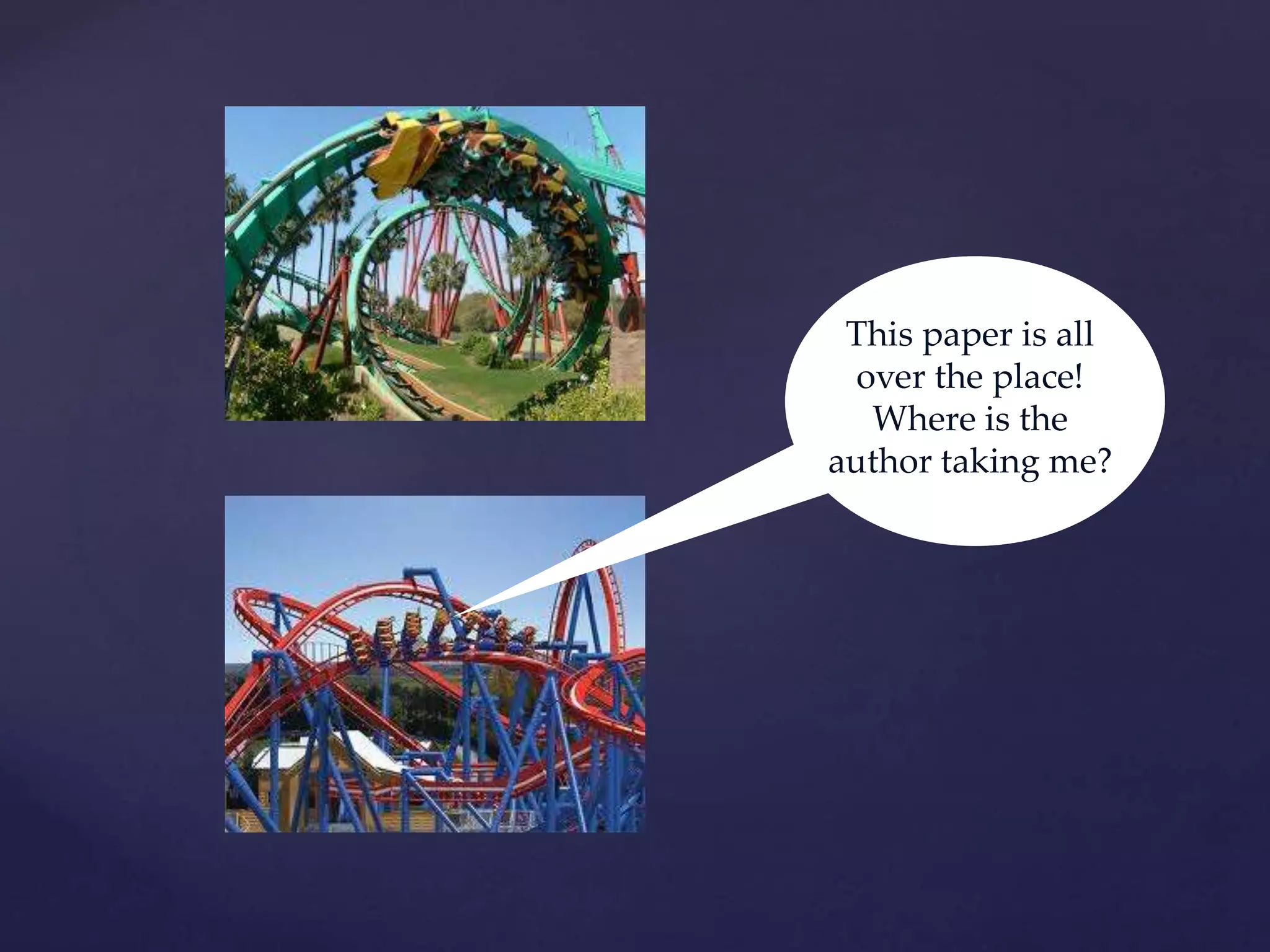
This paper isall
over the place!
Where is the
author taking me?
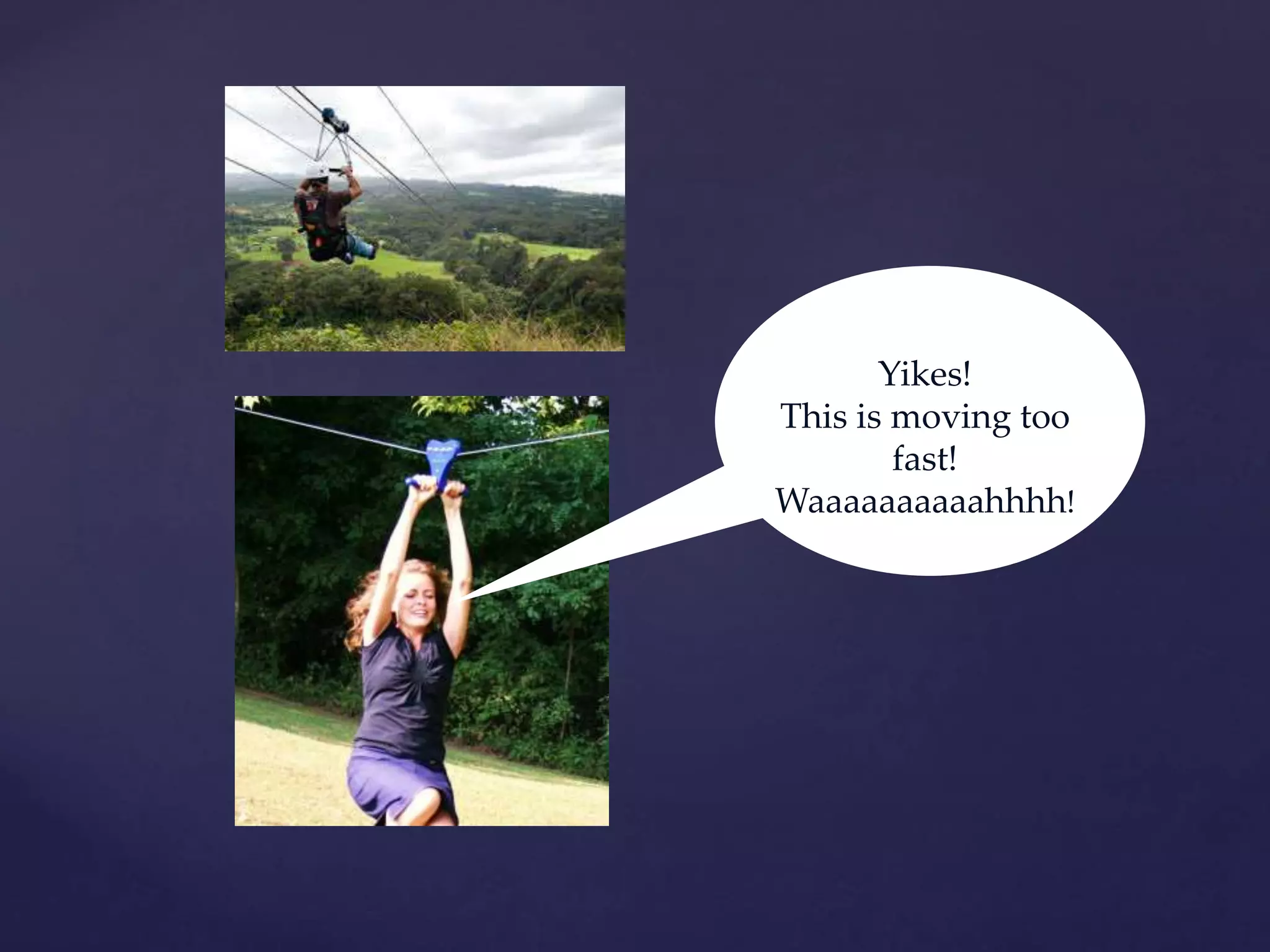
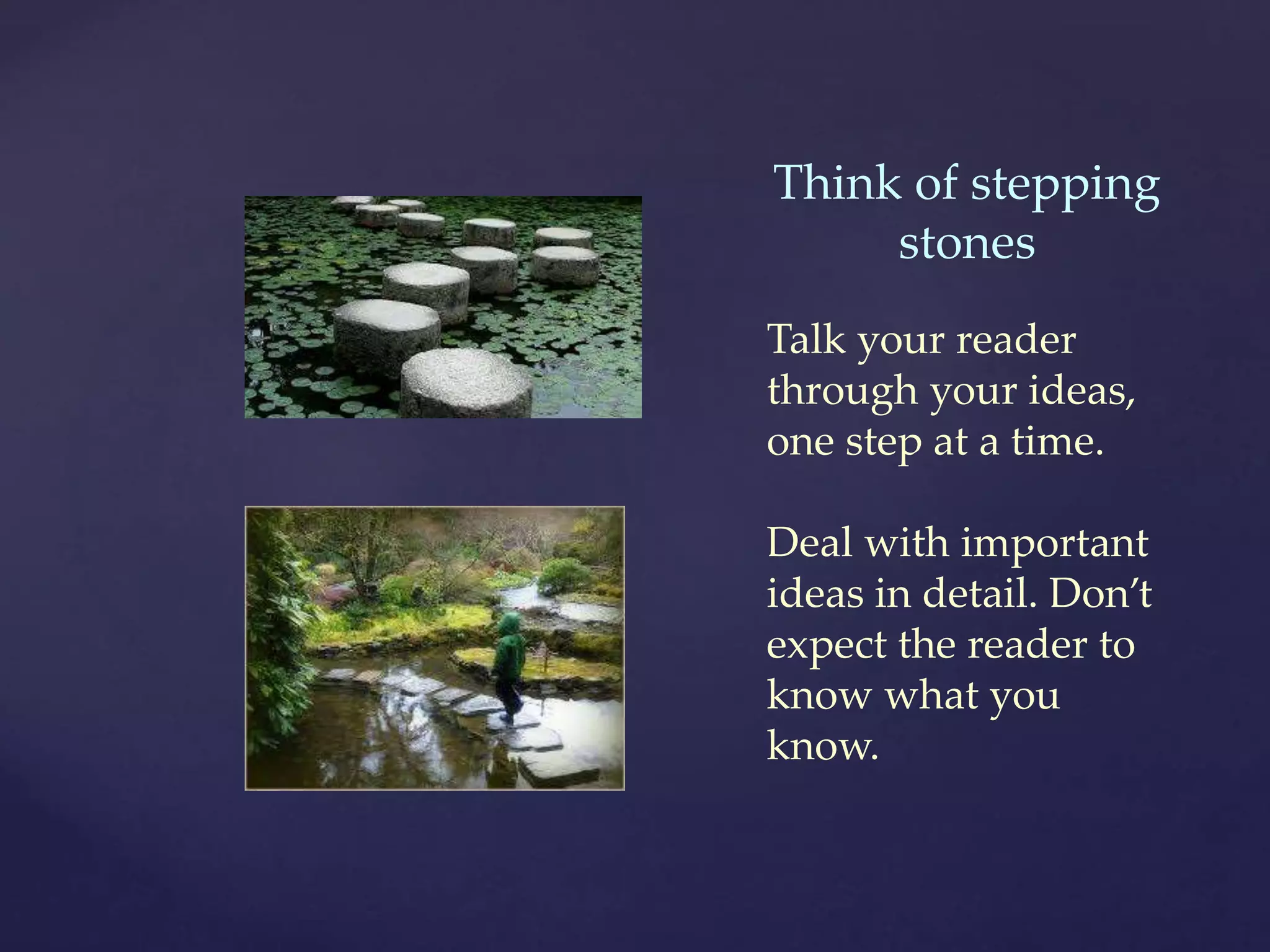
Think of stepping
stones
Talkyour reader
through your ideas,
one step at a time.
Deal with important
ideas in detail. Don’t
expect the reader to
know what you
know.
16.
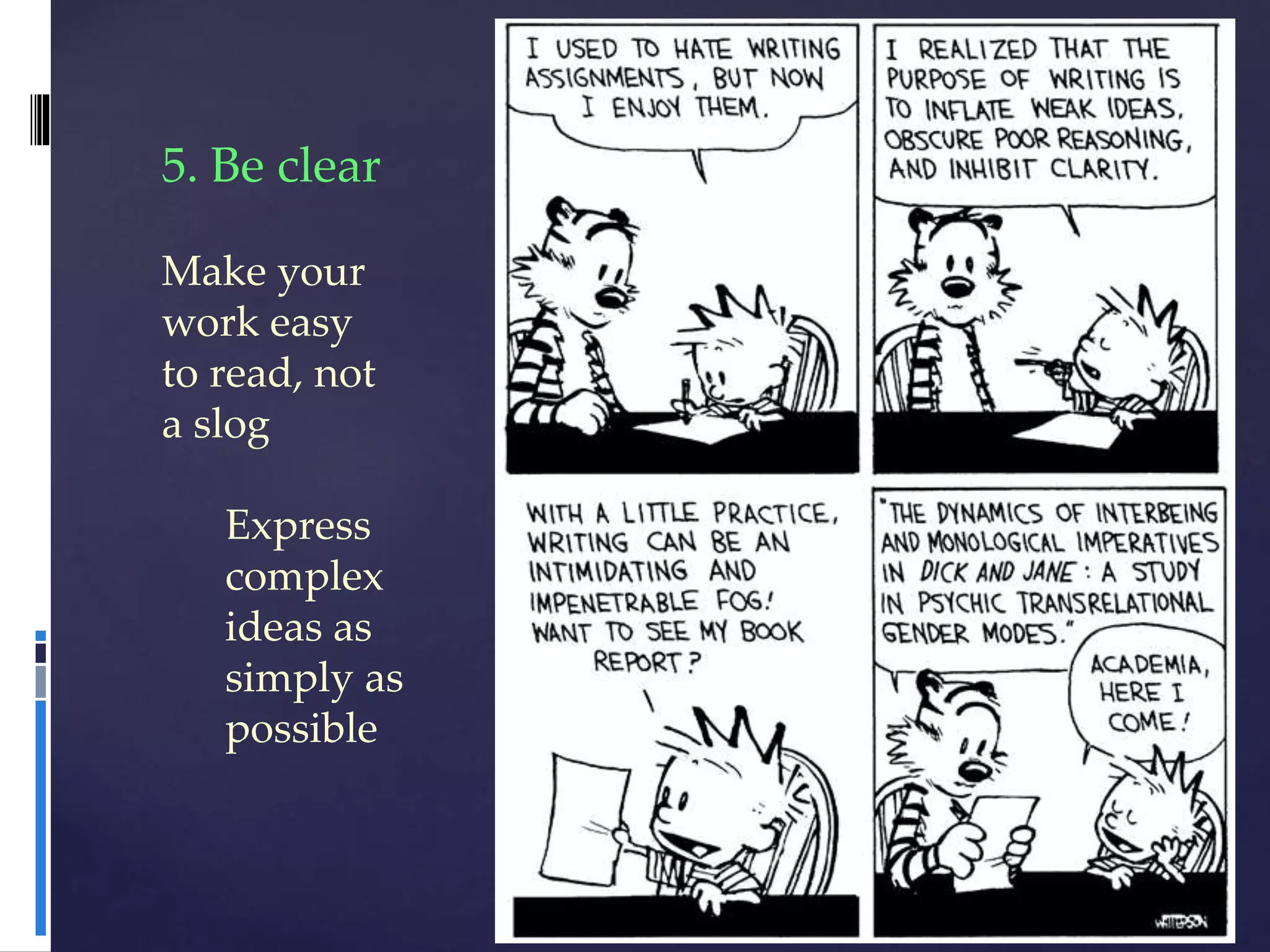
5. Be clear
Makeyour
work easy
to read, not
a slog
Express
complex
ideas as
simply as
possible
One ideaper paragraph
Paragraph structure: topic sentence, elaboration,
evidence / examples
or (my personal favourite) PEE: Point, Evidence, Explain
Links between paragraphs
Cohesive writing “hangs together” by showing the
connections / relationships between ideas.
Mechanics of academic writing:
the paragraph