WATER POLLUTION
AND
TOXICOLOGY
CONTENT
 Introduction
 Definition of water pollution
 Types of water pollution
 Prevalence of water pollution
 Causes of water pollution
 Effects of water pollution
 Water Pollution toxicity and its effects
 Control measures of water pollution toxicity
 Reference
INTRODUCTION
Water pollution can be defined as presence of solid, liquid, or
gaseous contaminants in such concentration that may alter the
quality of water.
Water is typically referred to as polluted when it is impaired
by anthropogenic contaminants.
It can also be defined as the addition to water of an excess
material that is harmful to living organism or which impairs the
beneficial use of water .
Water pollution is measured by analyzing water samples.
Physical, chemical and biological tests can be conducted.
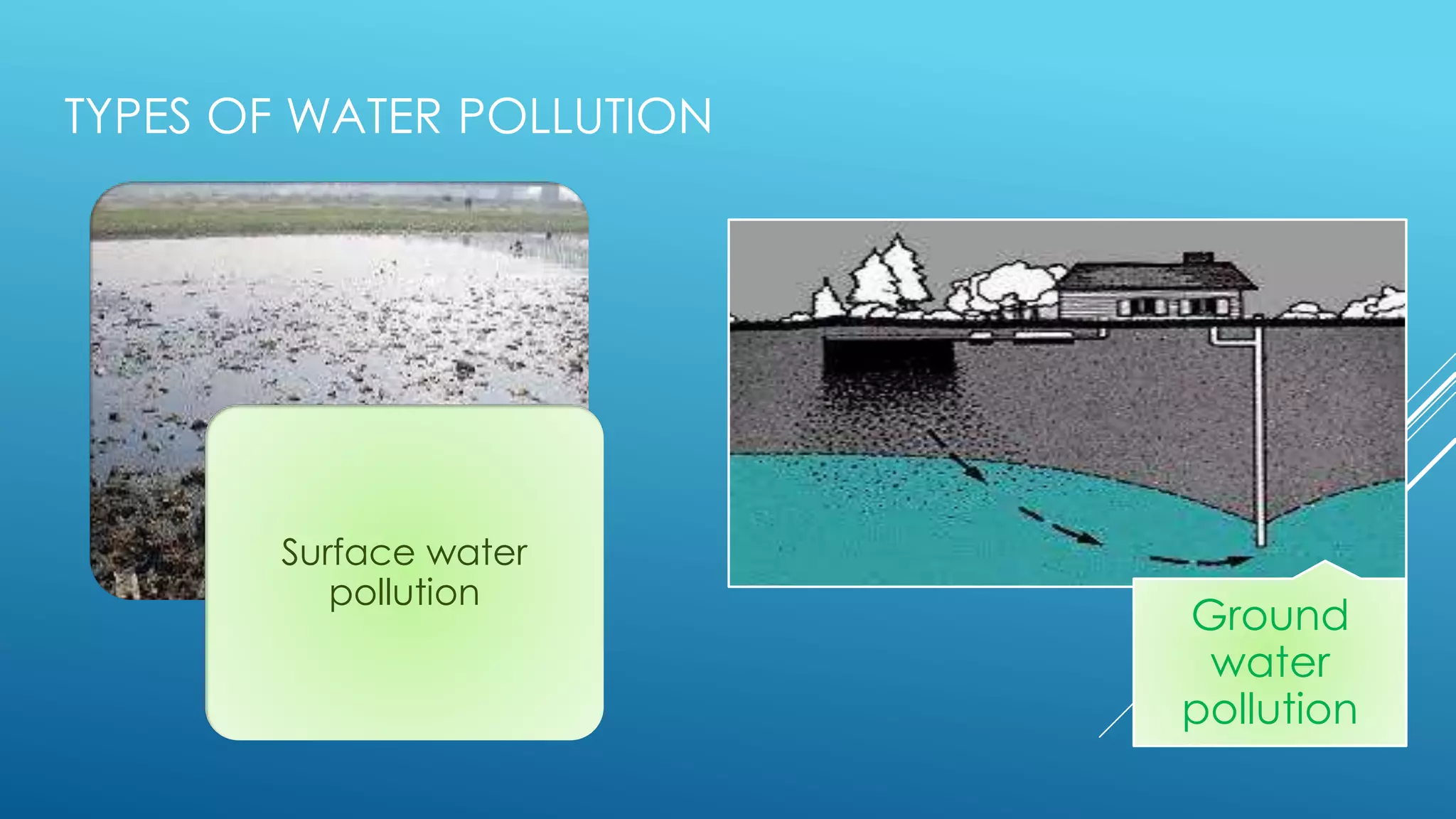
TYPES OF WATER POLLUTION
Surface water
pollution
Ground
water
pollution
Nonpoint source
pollution
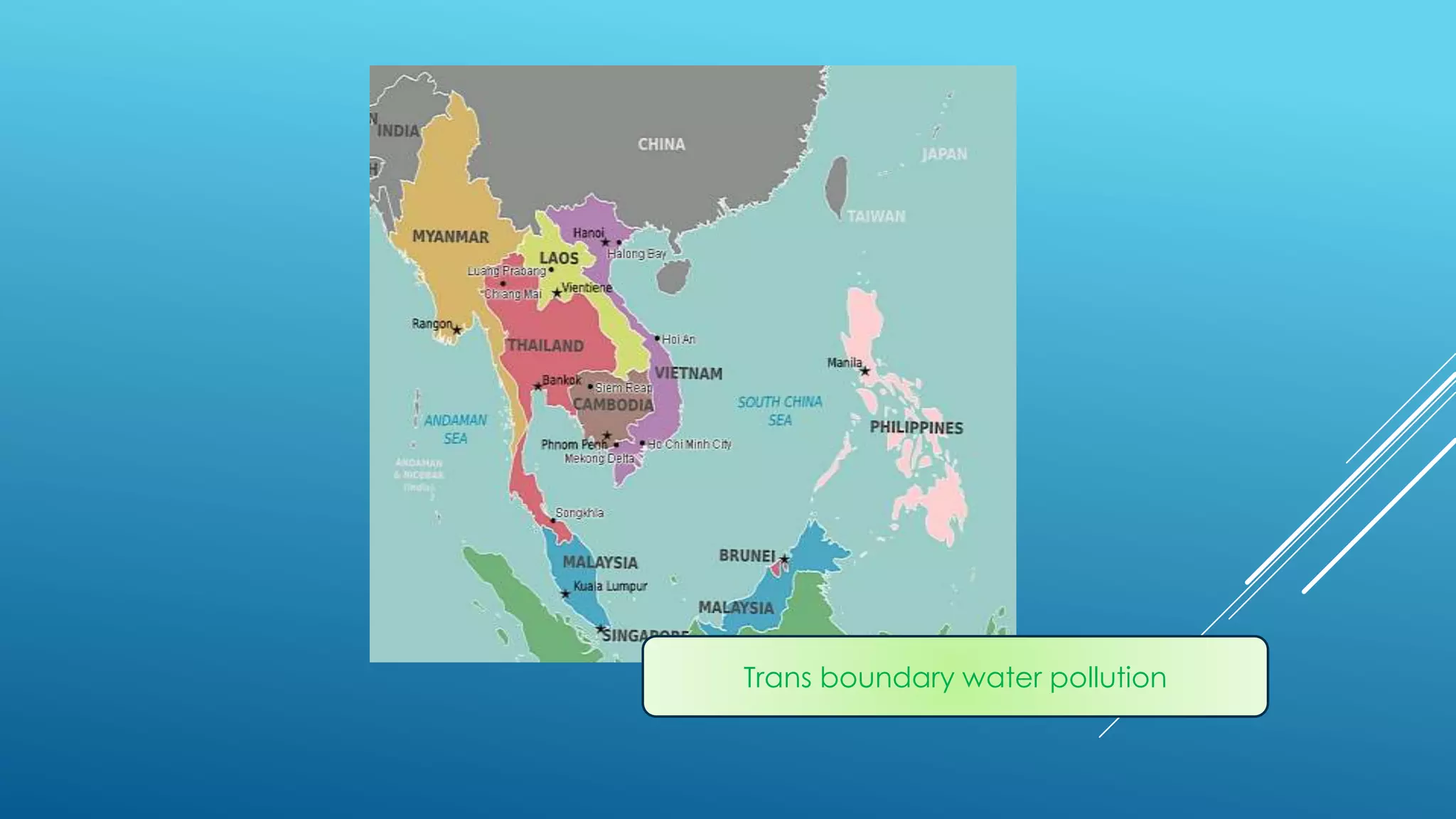
Trans boundary water pollution
CAUSES OF WATER POLLUTION
Aquatic plant causing
water pollution
Unmanaged sewage
system
Religious belief of people
CONTD….
Acid rain Industrial wastes
Domestic wastes
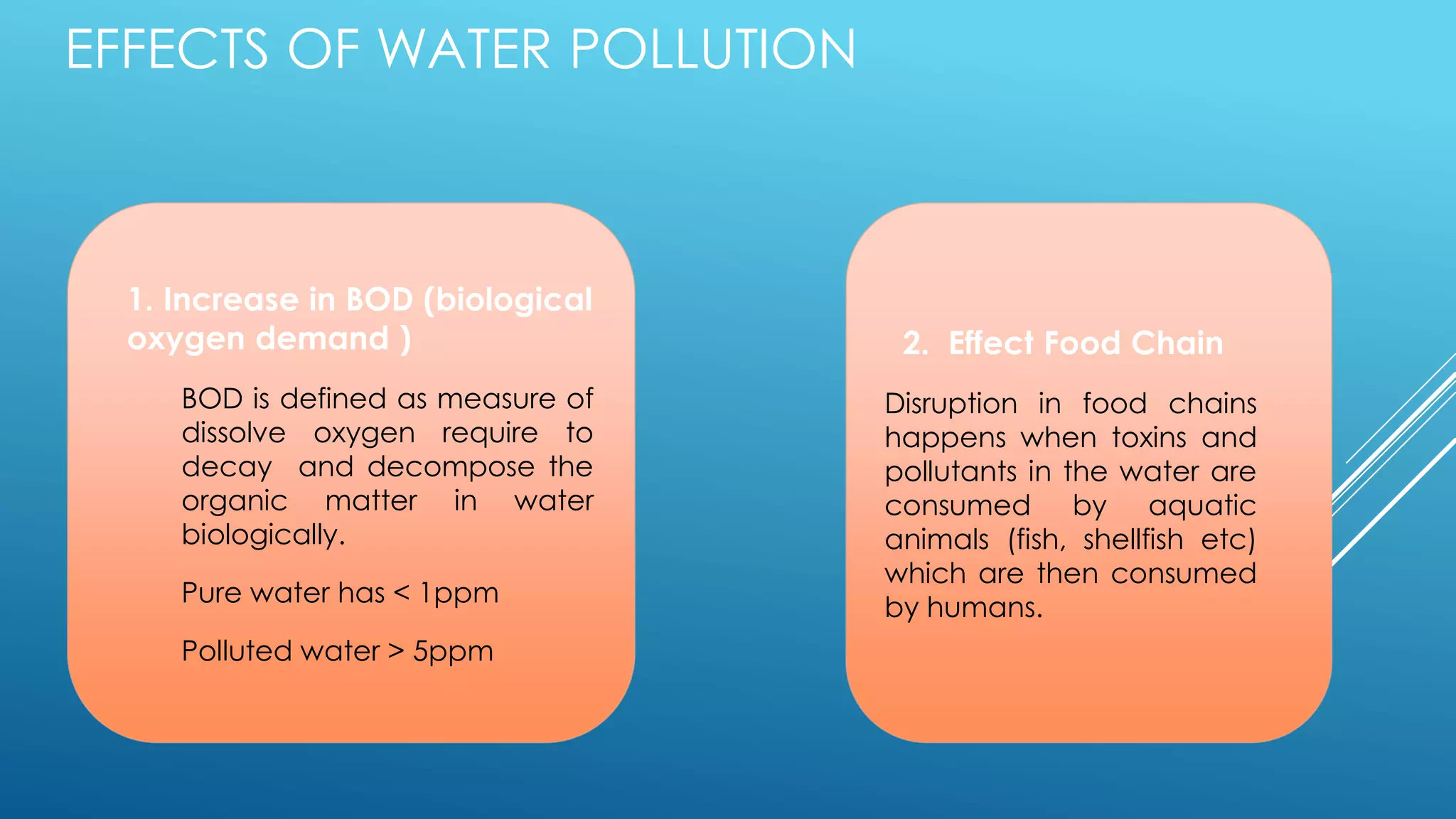
EFFECTS OF WATER POLLUTION
1. Increase in BOD (biological
oxygen demand )
BOD is defined as measure of
dissolve oxygen require to
decay and decompose the
organic matter in water
biologically.
Pure water has < 1ppm
Polluted water > 5ppm
2. Effect Food Chain
Disruption in food chains
happens when toxins and
pollutants in the water are
consumed by aquatic
animals (fish, shellfish etc)
which are then consumed
by humans.
3.Diseases
In humans, drinking or consuming
polluted water in any way has
many disastrous effects on our
health. It causes typhoid, cholera,
hepatitis and various other
diseases.
4.Destruction of ecosystem
Ecosystem are extremely dynamic
and respond to even small
changes in the environment. Water
pollution can cause an entire
ecosystem to collapse if left
unchecked.
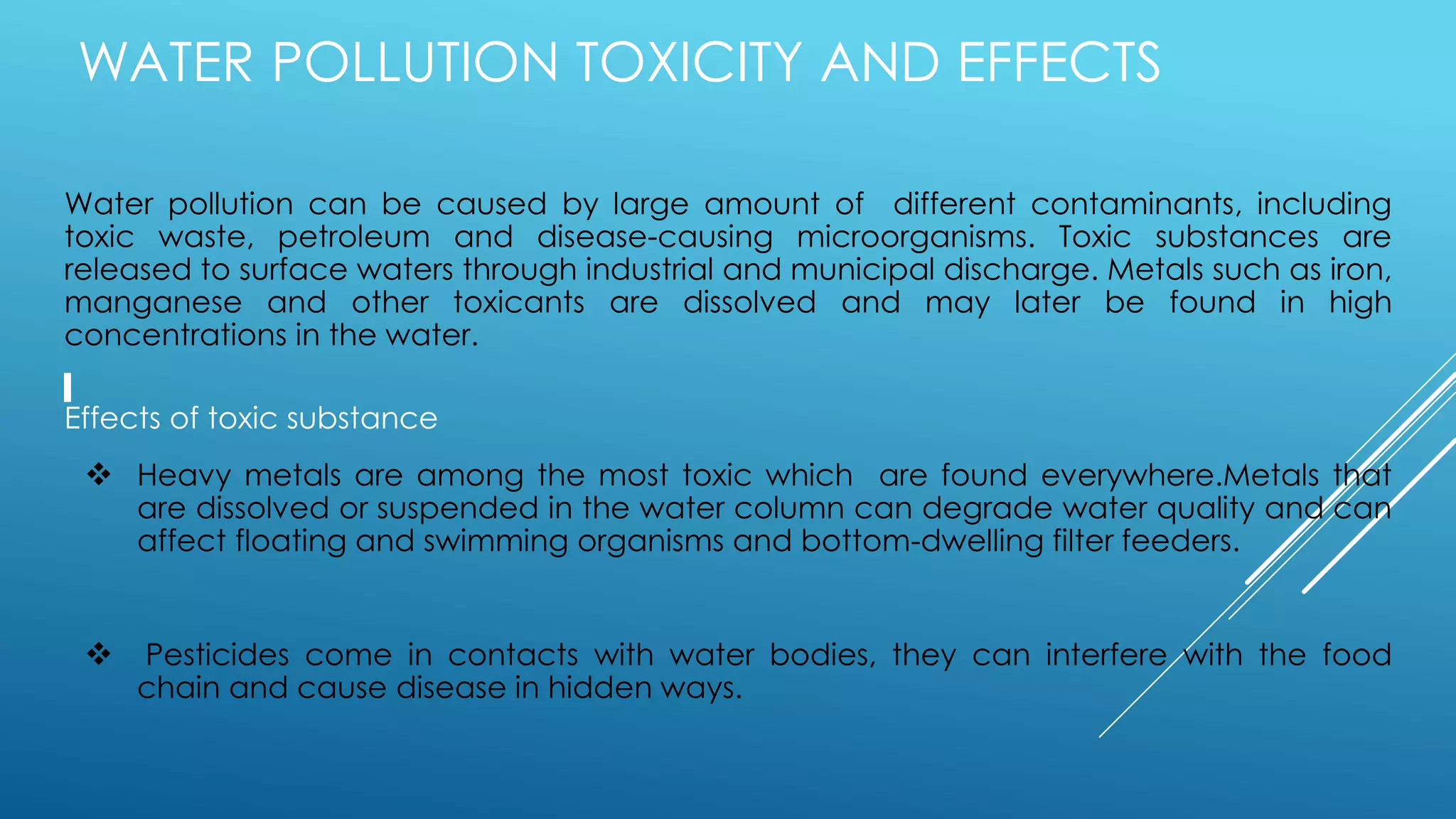
WATER POLLUTION TOXICITY AND EFFECTS
Water pollution can be caused by large amount of different contaminants, including
toxic waste, petroleum and disease-causing microorganisms. Toxic substances are
released to surface waters through industrial and municipal discharge. Metals such as iron,
manganese and other toxicants are dissolved and may later be found in high
concentrations in the water.
Effects of toxic substance
 Heavy metals are among the most toxic which are found everywhere.Metals that
are dissolved or suspended in the water column can degrade water quality and can
affect floating and swimming organisms and bottom-dwelling filter feeders.
 Pesticides come in contacts with water bodies, they can interfere with the food
chain and cause disease in hidden ways.
 Industrial discharges contain Lead, arsenic, Mercury, Cadmium etc which pose
damage life systems.
 Lead- damages liver and skin
 Arsenic- lung cancer, ulcers in gastrointestinal tract
 Cadmium- diarrhea, kidney cysts, bone deformation etc.
 Mercury- neurological disorders
 Higher levels of nitrogen and phosphorus in agricultural run-off causes excessive
growth of algae (Eutrophication). This process may result in oxygen depletion of the
water body.
 Toxicants present in water exert low to high toxicity effect on aquatic organisms and
destroys their habitat.
PREVALENCE OF WATER POLLUTION :
 Some 1.1 billion people do not have access to safe water.
 Almost 2.5 billion lack basic sanitation. A large segment of these people live in
49 developing countries.
 These countries are experiencing increasing cases of water-related diseases such as
cholera, diarrhoea and dysentery, says the latest UN report presented at the ongoing
3rd World Water Forum in Japan.
 The World Health Organization (WHO) estimated in 1996 that every eight seconds a child
died from a water-related disease and that each year more than five million people
died from illnesses linked to unsafe drinking water or inadequate sanitation.
 if sustainable safe drinking water and sanitation services were provided to all, each year
there would be 200 million fewer diarrhoeal episodes, 2.1 million fewer deaths caused by
diarrhoea.
 Water pollution increases the water related vector borne diseases. There are 396 million
episodes of malaria every year.
 Drinking water supplies that contain high amounts of certain chemicals (like arsenic and
nitrates) can cause serious type of disease.
 Data gathered by WHO show that more than 60 water borne outbreaks of hepatitis E
were reported from Bangladesh, India, Indonesia, Myanmar and Nepal during the last
twenty years.
These types of critical effects has resulted in malnutrition, anaemia and other critical diseases.
CONTROL MEASURES:
1.Wastewater treatment
Wastewater treatment consists of removing pollutants from wastewater
through a physical, chemical or biological process. The more efficient
these processes are, the cleaner the water becomes.
2.Green agriculture
Globally, agriculture accounts for 70% of water resources, so it is
essential to have climate-friendly crops, efficient irrigation that
reduces the need for water and energy-efficient food production.
Green agriculture is also crucial to limit the chemicals that enter the water.
3.Stormwater management
Stormwater management is the effort to reduce runoff of rainwater or
melted snow into streets, lawns and other sites
and the improvement of water quality” according to the US
Environmental Protection Agency (EPA). It is important to avoid
pollutants from contaminating the water and helps to use water more efficiently.
4.Air pollution prevention
Air pollution has a direct impact on water contamination as 25% of human
Induced CO2 emissions are absorbed by oceans. This pollution causes a
rapid acidification of our oceans, and threatens marine life and corals.
Preventing air pollution is the best way to prevent this from happening.
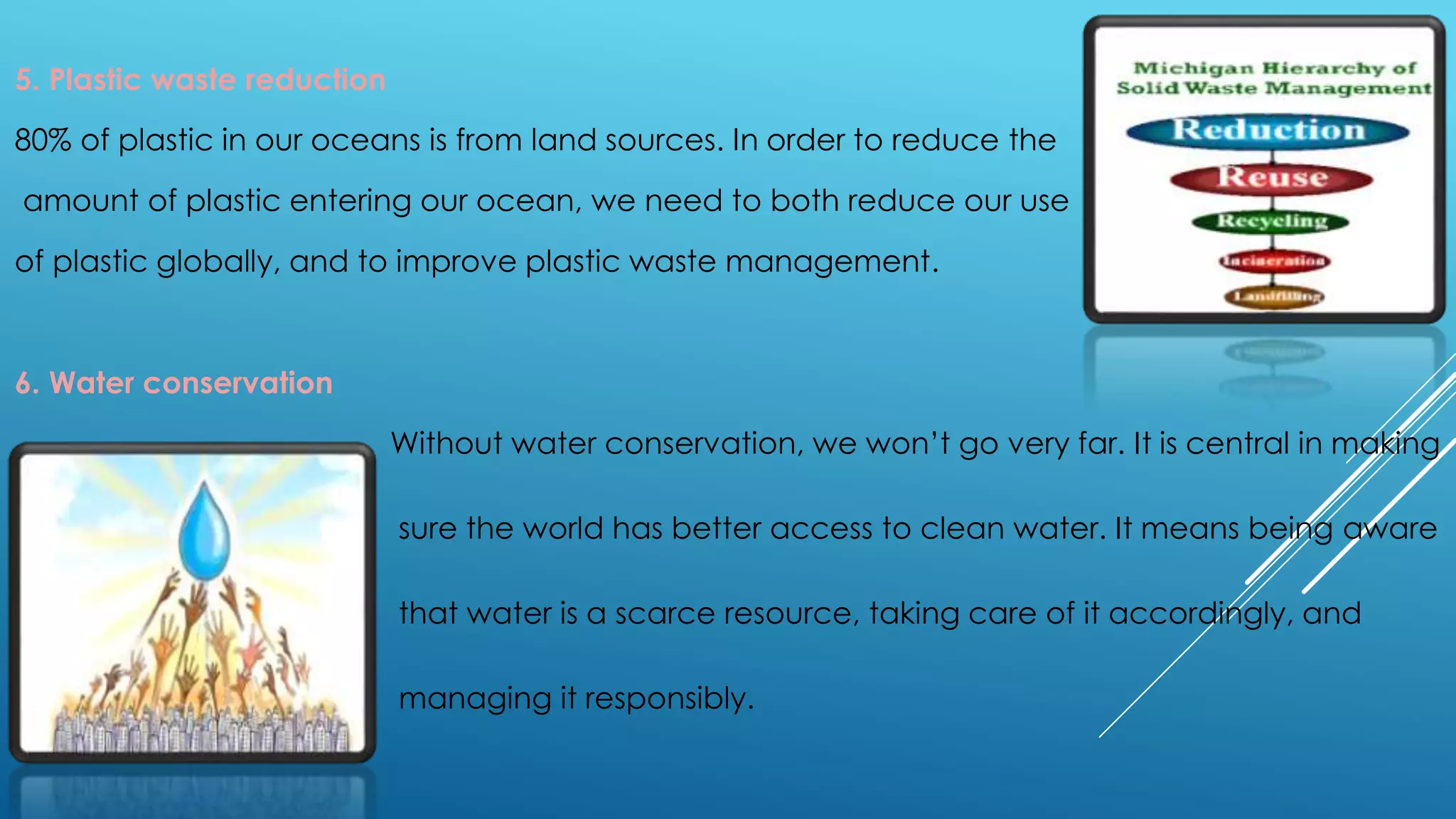
5. Plastic waste reduction
80% of plastic in our oceans is from land sources. In order to reduce the
amount of plastic entering our ocean, we need to both reduce our use
of plastic globally, and to improve plastic waste management.
6. Water conservation
Without water conservation, we won’t go very far. It is central in making
sure the world has better access to clean water. It means being aware
that water is a scarce resource, taking care of it accordingly, and
managing it responsibly.
REFERENCES :
https://solarimpulse.com/water-pollution-solutions
Water pollution and toxicology

Water pollution and toxicology

  • 1.
  • 2.
    CONTENT  Introduction  Definitionof water pollution  Types of water pollution  Prevalence of water pollution  Causes of water pollution  Effects of water pollution  Water Pollution toxicity and its effects  Control measures of water pollution toxicity  Reference
  • 3.
    INTRODUCTION Water pollution canbe defined as presence of solid, liquid, or gaseous contaminants in such concentration that may alter the quality of water. Water is typically referred to as polluted when it is impaired by anthropogenic contaminants. It can also be defined as the addition to water of an excess material that is harmful to living organism or which impairs the beneficial use of water . Water pollution is measured by analyzing water samples. Physical, chemical and biological tests can be conducted.
  • 4.
    TYPES OF WATERPOLLUTION Surface water pollution Ground water pollution
  • 5.
  • 6.
  • 7.
    CAUSES OF WATERPOLLUTION Aquatic plant causing water pollution Unmanaged sewage system Religious belief of people
  • 8.
    CONTD…. Acid rain Industrialwastes Domestic wastes
  • 9.
    EFFECTS OF WATERPOLLUTION 1. Increase in BOD (biological oxygen demand ) BOD is defined as measure of dissolve oxygen require to decay and decompose the organic matter in water biologically. Pure water has < 1ppm Polluted water > 5ppm 2. Effect Food Chain Disruption in food chains happens when toxins and pollutants in the water are consumed by aquatic animals (fish, shellfish etc) which are then consumed by humans.
  • 10.
    3.Diseases In humans, drinkingor consuming polluted water in any way has many disastrous effects on our health. It causes typhoid, cholera, hepatitis and various other diseases. 4.Destruction of ecosystem Ecosystem are extremely dynamic and respond to even small changes in the environment. Water pollution can cause an entire ecosystem to collapse if left unchecked.
  • 11.
    WATER POLLUTION TOXICITYAND EFFECTS Water pollution can be caused by large amount of different contaminants, including toxic waste, petroleum and disease-causing microorganisms. Toxic substances are released to surface waters through industrial and municipal discharge. Metals such as iron, manganese and other toxicants are dissolved and may later be found in high concentrations in the water. Effects of toxic substance  Heavy metals are among the most toxic which are found everywhere.Metals that are dissolved or suspended in the water column can degrade water quality and can affect floating and swimming organisms and bottom-dwelling filter feeders.  Pesticides come in contacts with water bodies, they can interfere with the food chain and cause disease in hidden ways.
  • 12.
     Industrial dischargescontain Lead, arsenic, Mercury, Cadmium etc which pose damage life systems.  Lead- damages liver and skin  Arsenic- lung cancer, ulcers in gastrointestinal tract  Cadmium- diarrhea, kidney cysts, bone deformation etc.  Mercury- neurological disorders  Higher levels of nitrogen and phosphorus in agricultural run-off causes excessive growth of algae (Eutrophication). This process may result in oxygen depletion of the water body.  Toxicants present in water exert low to high toxicity effect on aquatic organisms and destroys their habitat.
  • 13.
    PREVALENCE OF WATERPOLLUTION :  Some 1.1 billion people do not have access to safe water.  Almost 2.5 billion lack basic sanitation. A large segment of these people live in 49 developing countries.  These countries are experiencing increasing cases of water-related diseases such as cholera, diarrhoea and dysentery, says the latest UN report presented at the ongoing 3rd World Water Forum in Japan.  The World Health Organization (WHO) estimated in 1996 that every eight seconds a child died from a water-related disease and that each year more than five million people died from illnesses linked to unsafe drinking water or inadequate sanitation.
  • 14.
     if sustainablesafe drinking water and sanitation services were provided to all, each year there would be 200 million fewer diarrhoeal episodes, 2.1 million fewer deaths caused by diarrhoea.  Water pollution increases the water related vector borne diseases. There are 396 million episodes of malaria every year.  Drinking water supplies that contain high amounts of certain chemicals (like arsenic and nitrates) can cause serious type of disease.  Data gathered by WHO show that more than 60 water borne outbreaks of hepatitis E were reported from Bangladesh, India, Indonesia, Myanmar and Nepal during the last twenty years. These types of critical effects has resulted in malnutrition, anaemia and other critical diseases.
  • 15.
    CONTROL MEASURES: 1.Wastewater treatment Wastewatertreatment consists of removing pollutants from wastewater through a physical, chemical or biological process. The more efficient these processes are, the cleaner the water becomes. 2.Green agriculture Globally, agriculture accounts for 70% of water resources, so it is essential to have climate-friendly crops, efficient irrigation that reduces the need for water and energy-efficient food production. Green agriculture is also crucial to limit the chemicals that enter the water.
  • 16.
    3.Stormwater management Stormwater managementis the effort to reduce runoff of rainwater or melted snow into streets, lawns and other sites and the improvement of water quality” according to the US Environmental Protection Agency (EPA). It is important to avoid pollutants from contaminating the water and helps to use water more efficiently. 4.Air pollution prevention Air pollution has a direct impact on water contamination as 25% of human Induced CO2 emissions are absorbed by oceans. This pollution causes a rapid acidification of our oceans, and threatens marine life and corals. Preventing air pollution is the best way to prevent this from happening.
  • 17.
    5. Plastic wastereduction 80% of plastic in our oceans is from land sources. In order to reduce the amount of plastic entering our ocean, we need to both reduce our use of plastic globally, and to improve plastic waste management. 6. Water conservation Without water conservation, we won’t go very far. It is central in making sure the world has better access to clean water. It means being aware that water is a scarce resource, taking care of it accordingly, and managing it responsibly.
  • 18.