Endocrine Disruptors Chemicals
by
Scholar Abeer Tahir Ansari
INTRODUCTION
Endocrine-disrupting chemicals (EDCs) are a group of diversely
natural compounds or synthetic chemicals that may interfere with
the body’s endocrine system and produce adverse developmental,
reproductive, neurological and immune effects in both humans and
wildlife.
EDC may interfere with hormonal signaling systems and alter
feedback loops in the brain, pituitary, gonads, thyroid, and other
components of the endocrine system.
Growing evidence shows that EDC may also modulate the
activity/expression of steroidogenic enzymes and steroidogenic
pathways. G. Latini,2011
Zoeller RT et al,.2012
World Health Organization. 2012.
•
Scientific evidence indicate that exposure to ED during critical
periods of development can induce permanent changes in several
organs including molecular alterations, although the consequences of
this disruption may not appear until later.
The mechanisms by which ED exert their action remain largely
unclear; however, many ways have been identified by which ED can
affect signal transduction systems.
EDCs may alter gene expression and consequently transmit these
effects to future generations.
INTRODUCTION
McLachlan JA,2001
Boyle CA et al ., 2001
Gerona RR,et al., 2013
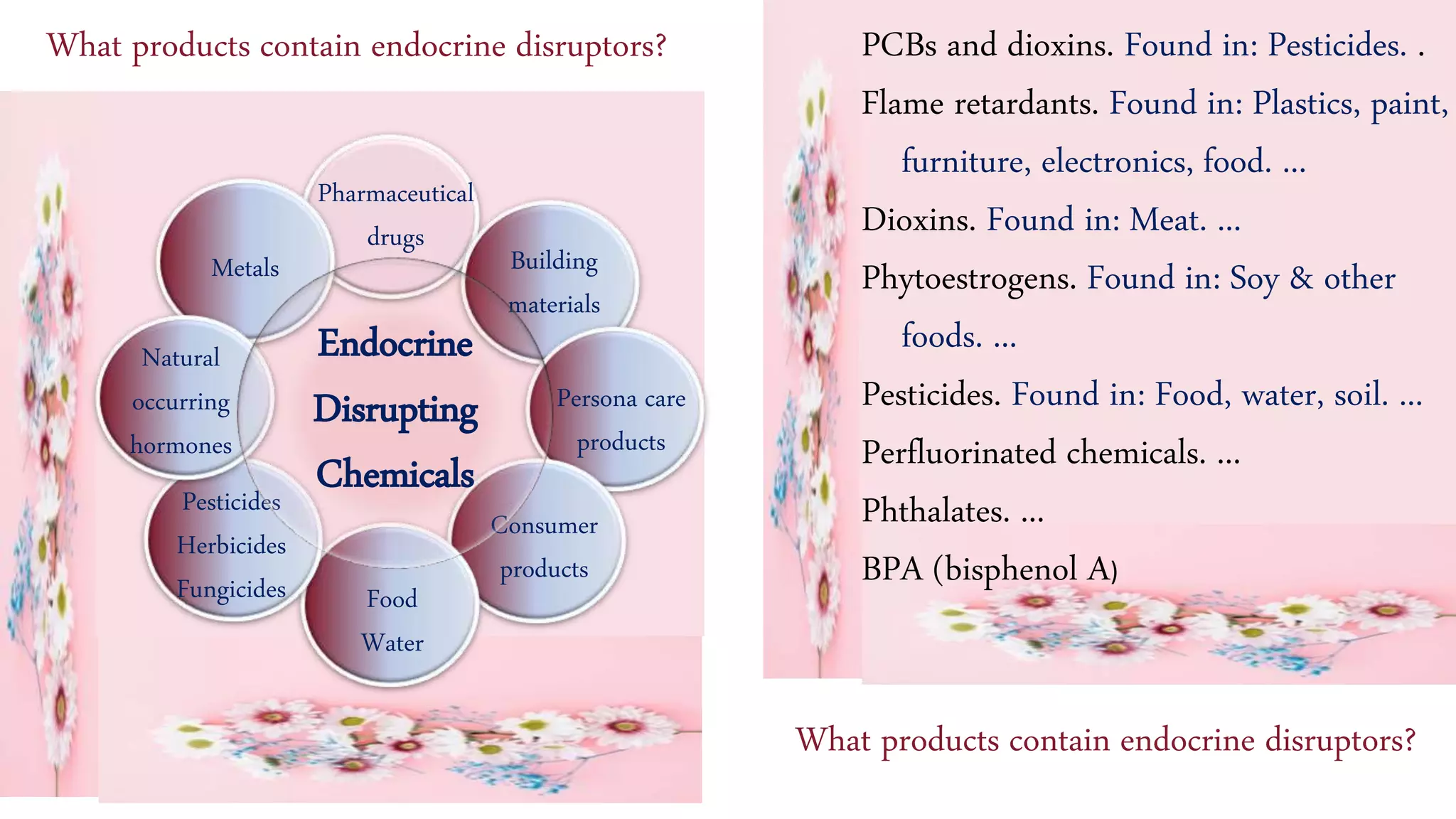
Pharmaceutical
drugs
Metals Building
materials
Persona care
products
Consumer
products
Food
Water
Pesticides
Herbicides
Fungicides
Natural
occurring
hormones
Endocrine
Disrupting
Chemicals
What products contain endocrine disruptors? PCBs and dioxins. Found in: Pesticides. .
Flame retardants. Found in: Plastics, paint,
furniture, electronics, food. ...
Dioxins. Found in: Meat. ...
Phytoestrogens. Found in: Soy & other
foods. ...
Pesticides. Found in: Food, water, soil. ...
Perfluorinated chemicals. ...
Phthalates. ...
BPA (bisphenol A)
What products contain endocrine disruptors?
 Mimics
 Stimulators
 Blockers
 Endocrine flushers
 Enzyme flushers
 Destructors
Mechanisms of Action
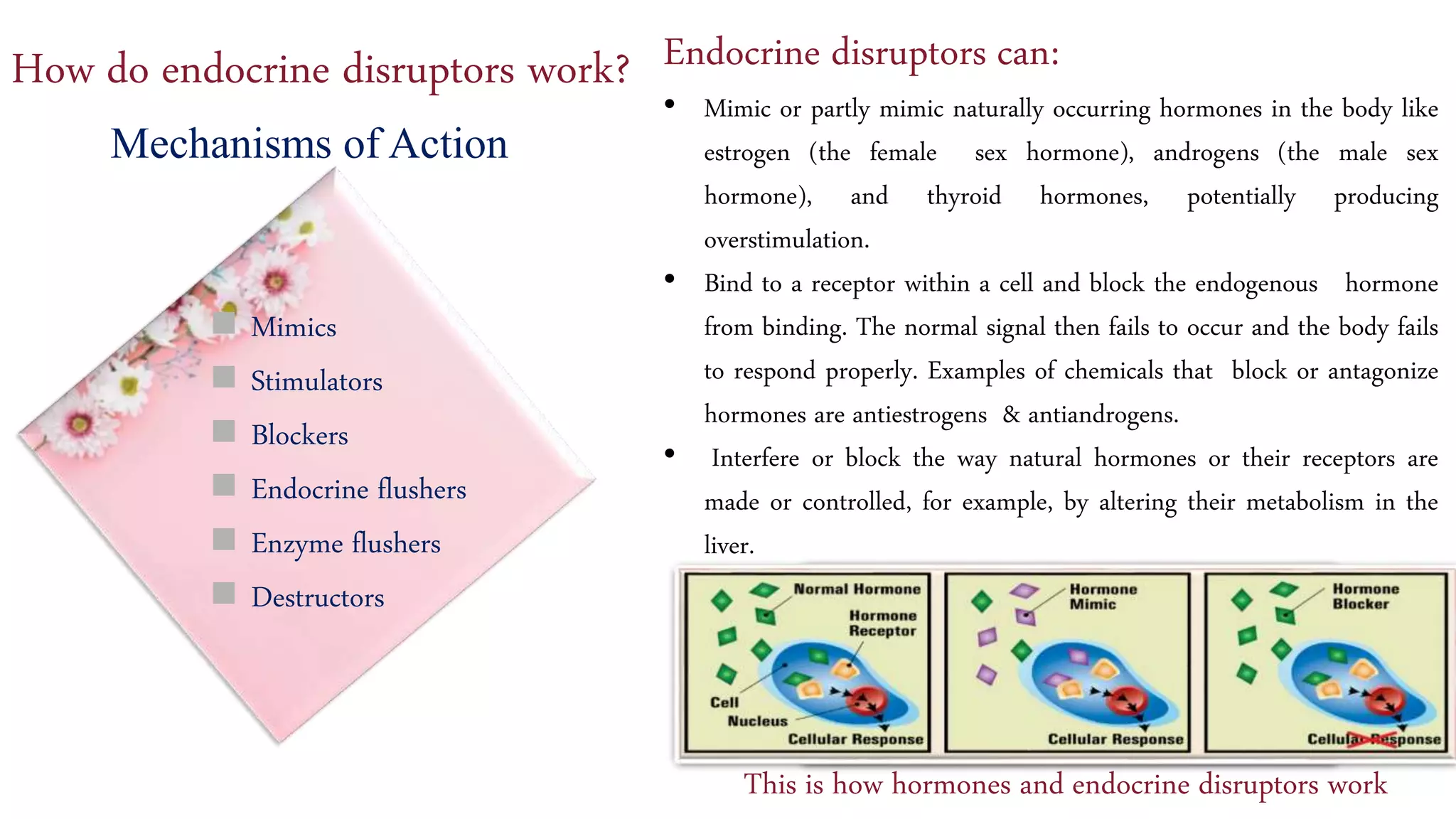
This is how hormones and endocrine disruptors work
Endocrine disruptors can:
• Mimic or partly mimic naturally occurring hormones in the body like
estrogen (the female sex hormone), androgens (the male sex
hormone), and thyroid hormones, potentially producing
overstimulation.
• Bind to a receptor within a cell and block the endogenous hormone
from binding. The normal signal then fails to occur and the body fails
to respond properly. Examples of chemicals that block or antagonize
hormones are antiestrogens & antiandrogens.
• Interfere or block the way natural hormones or their receptors are
made or controlled, for example, by altering their metabolism in the
liver.
How do endocrine disruptors work?
•
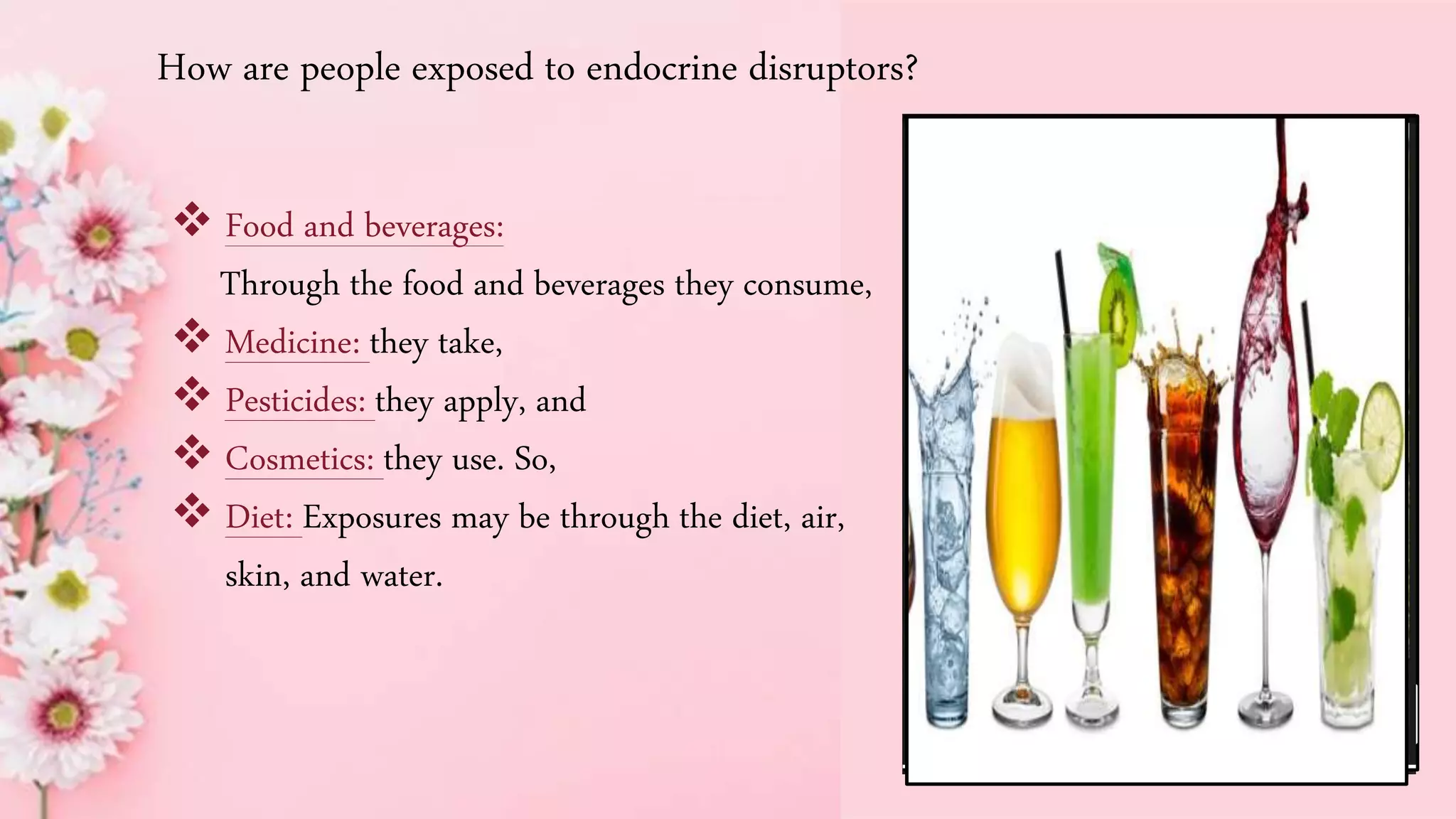
How are people exposed to endocrine disruptors?
 Food and beverages:
Through the food and beverages they consume,
 Medicine: they take,
 Pesticides: they apply, and
 Cosmetics: they use. So,
 Diet: Exposures may be through the diet, air,
skin, and water.
Cosmetics
Medicine
•
Endocrine disrupting chemicals may impact a broad
range of health effects
Endocrine disruptors may cause:
• Reductions in male fertility and declines in the numbers of males born.
• Abnormalities in male reproductive organs.
• Female reproductive health issues, including fertility problems, early puberty, and
early reproductive senescence.
• Increases in mammary, ovarian, and prostate cancers.
• Increases in immune and autoimmune diseases, and some neurodegenerative
diseases.
•
ED Exposure and Paediatric Endocrine Disorders
Thyroid EDCs may exert unwanted actions on thyroid function. Links between
exposure to PCBs and increased thyroid stimulating hormone have been observed by
some, but not other authors. PCB has been proposed to exert goiterogenic actions,
and pentachlorophenol indicated to suppress thyroid hormone levels in newborns.
Given the critical role of the thyroid for fetal and infant neurodevelopment, such
action may be associated with adverse neurodevelopmental consequences in children
Adrenal EDCs are known to exert harmful actions in the adrenal cortex. DDT
metabolites are well known inhibitors of adrenal function, exerting direct
cytotoxicity to adrenocortical cells. Certain EDCs may have a negative impact on
adrenal steroidogenesis. The phytoestrogen resveratrol was found to suppress
glucocorticoid production by inhibiting 21-hydroxylase. This may impair
glucocorticoid driven stress responses, which is a crucial component of the host-
defense system against infection and injury.
•
PESTICIDES: ( DDT) Dichloro Diphenyl Trichloroethane
Where it is used
DDT was one of the first recognized EDCs, with a broad range
of effects on reproduction and hormonal systems.
Duration: DDT is an organochlorine insecticide that was used
extensively worldwide in the 1940s, 1950s and 1960s.
Used: Its use included insect control in the commercial and
private production of crops and livestock, and in homes,
gardens, public places, and institutions. Due to DDT’s toxicity
to wildlife and its persistence, numerous countries banned
DDT use in the 1970s. Despite this, DDT is still used
extensively, particularly in Pakistan India and Africa, that
transmit human diseases.
Crain DA et al ,2008
Ismail-Beigi F, 2006
•
HUMAN HEALTH CONSEQUENCES OF EXPOSURE TO DDTS
• Reduced fertility:
• Urogenital birth defects (males)
• Impaired breast feeding
• Cancer
• Type 2 diabetes
Laboratory animal studies and human observations consistently show associations
between DDTs and negative health consequences, making DDTs one of the most
widely accepted classes of EDCs. In animals and cell lines, DDTs modify the
thyroid, estrogen, androgen, renin-angiotensin, insulin, and neuroendocrine
systems. These pathways are involved in normal functioning of reproductive,
cardiovascular, and metabolic processes, among others.
•
Science on why DDT is an EDC
Reproductive problems.
Some effects of DDTs are as estrogen mimics, and DDTs also interfere with androgen
(testosterone) pathways in the body. In mammals (including humans), gonads of
females (ovaries) and males (testes) make estrogens and androgens, albeit at different
levels. Females have higher estrogens and lower androgens, and males have higher
androgens and lower estrogens. By disrupting the body’s major normal sex hormones
individually, and by causing changes in the ratios of sex hormones, DDTs are
associated with a plethora of reproductive problems.
Male reproductive abnormalities
A rat study also showed that fetal DDT exposure caused male reproductive
abnormalities.
Sohoni P,et al, 1998
Ritter R, et al, 2011
•
Science on why DDT is an EDC
• Reduced fertility:
Numerous studies indicate that high exposure to DDTs reduces male, and possibly female,
fertility, including in humans . For instance, men living in homes with indoor DDT spraying
have decreased sperm quality that may lead to diminished fertility.
Urogenital birth defects
Several human studies indicate that DDT increases risk of urogenital birth defects such as
cryptorchidism (failure of the testes to descend),
Impaired breast feeding
There is also some evidence to suggest that exposure to DDTs shorten the lactation period.
Breast cancer :When girls are exposed to DDTs early in life before the breast is fully matured,
this is associated with increased risk of breast cancer later in life.
Eskenazi B, et al, 2009
Aneck-Hahn NH,et al, 2007
Cohn BA, et al, 2007
•
Science on why DDT is an EDC
Type 2 Diabetes (T2D)
Numerous epidemiological studies have demonstrated a strong positive association
between the DDT metabolite and T2D risk. These studies came from countries that
have banned DDT use for decades, and also from areas contaminated with higher levels
of DDTs. The diabetes epidemic continues to grow dramatically in countries where
DDT is still in use, such as in South Africa and India.
Some other experimental studies have shown that DDT increases circulating blood
glucose, a hallmark of diabetes, in part by increasing enzymes that make glucose.
Under normal circumstances, increased glucose levels cause the pancreas to produce
insulin, which in turn reduces glucose. Mice exposed to DDT become insulin resistant,
a central feature of T2D, because their DDT exposure reduces the normal ability of the
pancreas to secrete insulin in response to high glucose. Taylor KW,2013
Peer N et al,. 2012
Shaw JE et al ,.2010
Yau DT et al,. 1997
•
Frogs are one of the most vulnerable creatures to hormone disruptors
EXAMPLE OF
ENDOCRINE DISRUPTORS EFFECTS
•
5 Steps to Reduce Your Exposure to Endocrine Disruptors
 Eat only super-wild fish. Not semi-wild, but freakishly wild.
 Don't drink from plastic bottles. Ever.
 Don't use Teflon-coated non-stick pans.
 Eat organic produce whenever possible. ...
 Stop using plastic wrap.
Endocrine Disruptors Chemicals

Endocrine Disruptors Chemicals

  • 1.
  • 2.
    INTRODUCTION Endocrine-disrupting chemicals (EDCs)are a group of diversely natural compounds or synthetic chemicals that may interfere with the body’s endocrine system and produce adverse developmental, reproductive, neurological and immune effects in both humans and wildlife. EDC may interfere with hormonal signaling systems and alter feedback loops in the brain, pituitary, gonads, thyroid, and other components of the endocrine system. Growing evidence shows that EDC may also modulate the activity/expression of steroidogenic enzymes and steroidogenic pathways. G. Latini,2011 Zoeller RT et al,.2012 World Health Organization. 2012.
  • 3.
    • Scientific evidence indicatethat exposure to ED during critical periods of development can induce permanent changes in several organs including molecular alterations, although the consequences of this disruption may not appear until later. The mechanisms by which ED exert their action remain largely unclear; however, many ways have been identified by which ED can affect signal transduction systems. EDCs may alter gene expression and consequently transmit these effects to future generations. INTRODUCTION McLachlan JA,2001 Boyle CA et al ., 2001 Gerona RR,et al., 2013
  • 4.
    Pharmaceutical drugs Metals Building materials Persona care products Consumer products Food Water Pesticides Herbicides Fungicides Natural occurring hormones Endocrine Disrupting Chemicals Whatproducts contain endocrine disruptors? PCBs and dioxins. Found in: Pesticides. . Flame retardants. Found in: Plastics, paint, furniture, electronics, food. ... Dioxins. Found in: Meat. ... Phytoestrogens. Found in: Soy & other foods. ... Pesticides. Found in: Food, water, soil. ... Perfluorinated chemicals. ... Phthalates. ... BPA (bisphenol A) What products contain endocrine disruptors?
  • 5.
     Mimics  Stimulators Blockers  Endocrine flushers  Enzyme flushers  Destructors Mechanisms of Action This is how hormones and endocrine disruptors work Endocrine disruptors can: • Mimic or partly mimic naturally occurring hormones in the body like estrogen (the female sex hormone), androgens (the male sex hormone), and thyroid hormones, potentially producing overstimulation. • Bind to a receptor within a cell and block the endogenous hormone from binding. The normal signal then fails to occur and the body fails to respond properly. Examples of chemicals that block or antagonize hormones are antiestrogens & antiandrogens. • Interfere or block the way natural hormones or their receptors are made or controlled, for example, by altering their metabolism in the liver. How do endocrine disruptors work?
  • 6.
    • How are peopleexposed to endocrine disruptors?  Food and beverages: Through the food and beverages they consume,  Medicine: they take,  Pesticides: they apply, and  Cosmetics: they use. So,  Diet: Exposures may be through the diet, air, skin, and water. Cosmetics Medicine
  • 7.
    • Endocrine disrupting chemicalsmay impact a broad range of health effects Endocrine disruptors may cause: • Reductions in male fertility and declines in the numbers of males born. • Abnormalities in male reproductive organs. • Female reproductive health issues, including fertility problems, early puberty, and early reproductive senescence. • Increases in mammary, ovarian, and prostate cancers. • Increases in immune and autoimmune diseases, and some neurodegenerative diseases.
  • 8.
    • ED Exposure andPaediatric Endocrine Disorders Thyroid EDCs may exert unwanted actions on thyroid function. Links between exposure to PCBs and increased thyroid stimulating hormone have been observed by some, but not other authors. PCB has been proposed to exert goiterogenic actions, and pentachlorophenol indicated to suppress thyroid hormone levels in newborns. Given the critical role of the thyroid for fetal and infant neurodevelopment, such action may be associated with adverse neurodevelopmental consequences in children Adrenal EDCs are known to exert harmful actions in the adrenal cortex. DDT metabolites are well known inhibitors of adrenal function, exerting direct cytotoxicity to adrenocortical cells. Certain EDCs may have a negative impact on adrenal steroidogenesis. The phytoestrogen resveratrol was found to suppress glucocorticoid production by inhibiting 21-hydroxylase. This may impair glucocorticoid driven stress responses, which is a crucial component of the host- defense system against infection and injury.
  • 9.
    • PESTICIDES: ( DDT)Dichloro Diphenyl Trichloroethane Where it is used DDT was one of the first recognized EDCs, with a broad range of effects on reproduction and hormonal systems. Duration: DDT is an organochlorine insecticide that was used extensively worldwide in the 1940s, 1950s and 1960s. Used: Its use included insect control in the commercial and private production of crops and livestock, and in homes, gardens, public places, and institutions. Due to DDT’s toxicity to wildlife and its persistence, numerous countries banned DDT use in the 1970s. Despite this, DDT is still used extensively, particularly in Pakistan India and Africa, that transmit human diseases. Crain DA et al ,2008 Ismail-Beigi F, 2006
  • 10.
    • HUMAN HEALTH CONSEQUENCESOF EXPOSURE TO DDTS • Reduced fertility: • Urogenital birth defects (males) • Impaired breast feeding • Cancer • Type 2 diabetes Laboratory animal studies and human observations consistently show associations between DDTs and negative health consequences, making DDTs one of the most widely accepted classes of EDCs. In animals and cell lines, DDTs modify the thyroid, estrogen, androgen, renin-angiotensin, insulin, and neuroendocrine systems. These pathways are involved in normal functioning of reproductive, cardiovascular, and metabolic processes, among others.
  • 11.
    • Science on whyDDT is an EDC Reproductive problems. Some effects of DDTs are as estrogen mimics, and DDTs also interfere with androgen (testosterone) pathways in the body. In mammals (including humans), gonads of females (ovaries) and males (testes) make estrogens and androgens, albeit at different levels. Females have higher estrogens and lower androgens, and males have higher androgens and lower estrogens. By disrupting the body’s major normal sex hormones individually, and by causing changes in the ratios of sex hormones, DDTs are associated with a plethora of reproductive problems. Male reproductive abnormalities A rat study also showed that fetal DDT exposure caused male reproductive abnormalities. Sohoni P,et al, 1998 Ritter R, et al, 2011
  • 12.
    • Science on whyDDT is an EDC • Reduced fertility: Numerous studies indicate that high exposure to DDTs reduces male, and possibly female, fertility, including in humans . For instance, men living in homes with indoor DDT spraying have decreased sperm quality that may lead to diminished fertility. Urogenital birth defects Several human studies indicate that DDT increases risk of urogenital birth defects such as cryptorchidism (failure of the testes to descend), Impaired breast feeding There is also some evidence to suggest that exposure to DDTs shorten the lactation period. Breast cancer :When girls are exposed to DDTs early in life before the breast is fully matured, this is associated with increased risk of breast cancer later in life. Eskenazi B, et al, 2009 Aneck-Hahn NH,et al, 2007 Cohn BA, et al, 2007
  • 13.
    • Science on whyDDT is an EDC Type 2 Diabetes (T2D) Numerous epidemiological studies have demonstrated a strong positive association between the DDT metabolite and T2D risk. These studies came from countries that have banned DDT use for decades, and also from areas contaminated with higher levels of DDTs. The diabetes epidemic continues to grow dramatically in countries where DDT is still in use, such as in South Africa and India. Some other experimental studies have shown that DDT increases circulating blood glucose, a hallmark of diabetes, in part by increasing enzymes that make glucose. Under normal circumstances, increased glucose levels cause the pancreas to produce insulin, which in turn reduces glucose. Mice exposed to DDT become insulin resistant, a central feature of T2D, because their DDT exposure reduces the normal ability of the pancreas to secrete insulin in response to high glucose. Taylor KW,2013 Peer N et al,. 2012 Shaw JE et al ,.2010 Yau DT et al,. 1997
  • 14.
    • Frogs are oneof the most vulnerable creatures to hormone disruptors EXAMPLE OF ENDOCRINE DISRUPTORS EFFECTS
  • 15.
    • 5 Steps toReduce Your Exposure to Endocrine Disruptors  Eat only super-wild fish. Not semi-wild, but freakishly wild.  Don't drink from plastic bottles. Ever.  Don't use Teflon-coated non-stick pans.  Eat organic produce whenever possible. ...  Stop using plastic wrap.

Editor's Notes

  • #3 production of steroids, as by the adrenal glands.
  • #6 Mimic =imitative of something. Flushing Means اچانک زور دار حرکت
  • #12 Albeit aal beit means ہمیشہ Plethora= ple thora =meansڈھیر سارے
  • #13 Cryptorchidism== cryp tor chi dism descend means آدھا
  • #16 Freakishly wild free kish ly waa al d wrap ===rap Teflon-coated.. The best known brand name of PTFE-based formulas is Teflon by Chemours. ... PTFE is used as a non-stick coating for pans and other cookware.