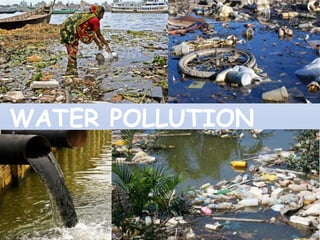
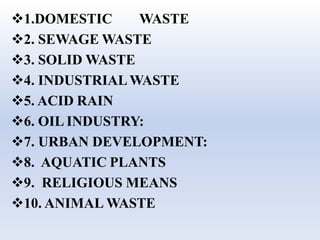
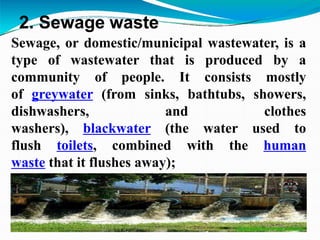
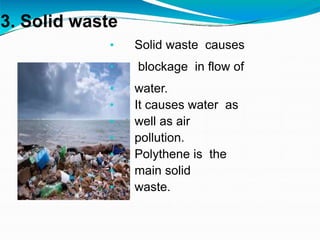
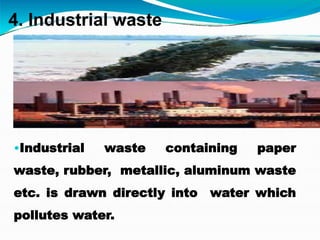
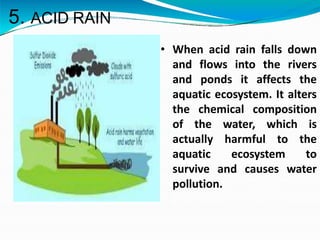
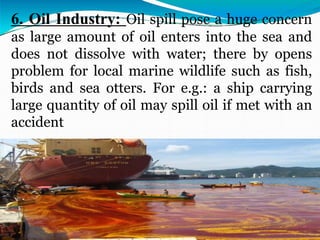
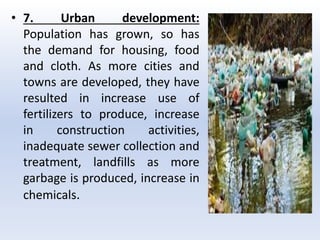
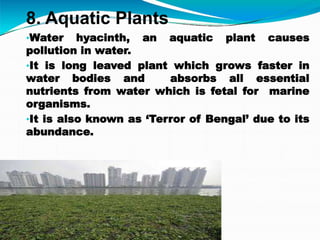
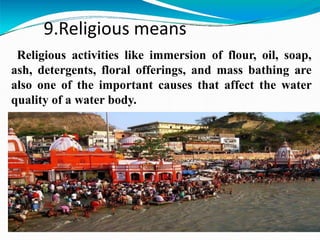
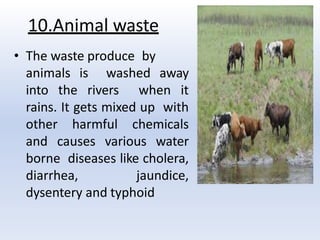
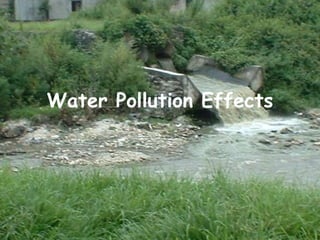
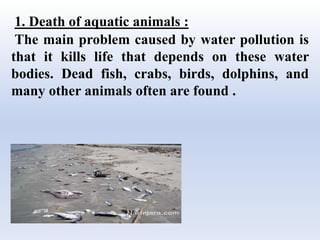
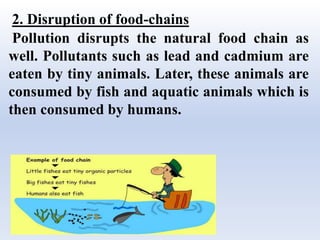
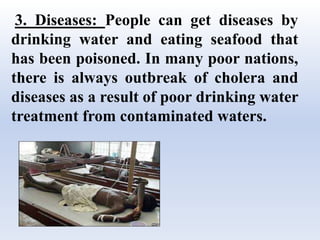
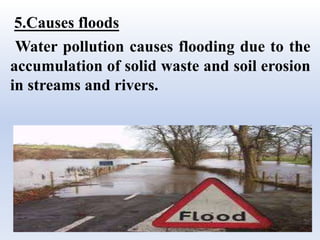
Water is essential for life but can become polluted from various sources. Water pollution is defined as contamination from excess solid, liquid, or gaseous materials that harm aquatic organisms or impair water's uses. Sources include point sources like factory emissions and non-point sources like rain carrying pollutants from multiple areas. Common causes of water pollution are domestic, sewage, industrial, and agricultural waste; urban runoff; oil spills; and religious or animal waste. Effects include harm to aquatic life and humans, disruption of food chains, disease outbreaks, and damage to ecosystems and the economy. Prevention requires efforts from governments, industries, and individuals to properly dispose of waste, reduce pollution, and clean up contaminated areas.





![Unit 3 water_pollution_samak_alam[1]](https://cdn.slidesharecdn.com/ss_thumbnails/unit3waterpollutionsamakalam1-210626200112-thumbnail.jpg?width=640&height=640&fit=bounds)


