Wastewater management
Made by daksh
This Presentation contain
• The treatment of waste water
• How the industries can purify water
• How Can We Make The Water Less Polluted?
• Better housekeeping practices
• Sanitation
• Diseases
The Treatment Of Waste Water
• Wastewater treatment is a process used to remove contaminants
from wastewater or sewage and convert it into an effluent that can be
returned to the water cycle with acceptable impact on the environment, or
reused for various purposes (called water reclamation).
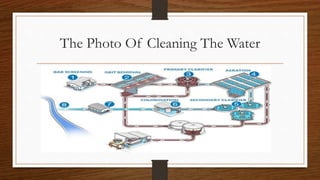
The Photo Of Cleaning The Water
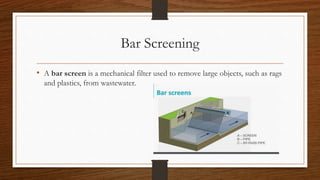
Bar Screening
• A bar screen is a mechanical filter used to remove large objects, such as rags
and plastics, from wastewater.
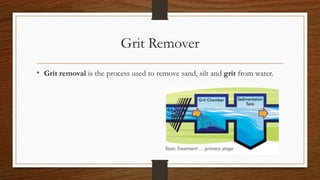
Grit Remover
• Grit removal is the process used to remove sand, silt and grit from water.
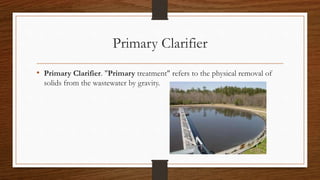
Primary Clarifier
• Primary Clarifier. "Primary treatment" refers to the physical removal of
solids from the wastewater by gravity.
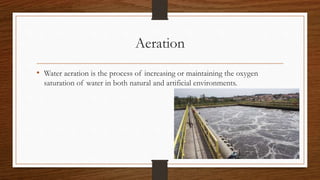
Aeration
• Water aeration is the process of increasing or maintaining the oxygen
saturation of water in both natural and artificial environments.
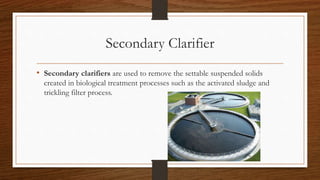
Secondary Clarifier
• Secondary clarifiers are used to remove the settable suspended solids
created in biological treatment processes such as the activated sludge and
trickling filter process.
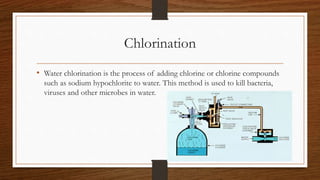
Chlorination
• Water chlorination is the process of adding chlorine or chlorine compounds
such as sodium hypochlorite to water. This method is used to kill bacteria,
viruses and other microbes in water.
How The Industries Can Purify Water
• Although mechanical filtration, such as reverse osmosis, is widely
employed to filter contaminants, other technologies including the use of
ozone generators, wastewater evaporation, electrodeionization and
bioremediation are also able to address the challenges of industrial
water treatment.
How Can We Make The Water Less Polluted?
Re-use water
Conserve water
Reduce water usage
Prevent water pollution
Example Of Re-using Water
• Use the water thrown out by our waterpurifier
• Reuse Water From Old Drinking Bottles. ...
• Water the Plants With Pasta Water. ...
• Reuse the Water You Washed Your Veggies With. ...
Example Conserving Water
• We can do rain water harvesting
• Use a Rain Barrel to Save Runoff From Your Roof.
• Install a Grey Water Collection System.
Example Of Reducing Water Usage
• Use shower in bath
• Close the tap close while brushing
• Close the tap close while shaving.
• reduce the volume of water used in each flush.
Example Of Preventing Water Pollution
• We should not throw plastic
• We should not throw stones in the river.
Better House Keeping Practices
• Cooking oils and fats should not be thrown down in the drains. They can
harden and block the pipes. So, it should be thrown in the dustbin.
• The paints, solvents, insecticides, motor oil, medicines may kill the microbes
that help purify the water. So they should be not thrown in the drains.
• Used tealeaves, solid food particles etc. should not be thrown in drain as they
can chock it .
Sanitation
• Sanitation refers to public health conditions related to clean
drinking water and adequate treatment and disposal of human excreta and
sewage. ... Reuse activities within the sanitation system may focus on the
nutrients, water, energy or organic matter contained in excreta and
wastewater.
Diseases
• Poor sanitation is linked to transmission of diseases such
as cholera, diarrhoea, dysentery, hepatitis A, typhoid and polio and
exacerbates stunting. Poor sanitation reduces human well-being, social and
economic development due to impacts such as anxiety, risk of sexual assault,
and lost educational opportunities.
Thank you
Forseeingmypresentation

Wastewater management

  • 1.
  • 2.
    This Presentation contain •The treatment of waste water • How the industries can purify water • How Can We Make The Water Less Polluted? • Better housekeeping practices • Sanitation • Diseases
  • 3.
    The Treatment OfWaste Water • Wastewater treatment is a process used to remove contaminants from wastewater or sewage and convert it into an effluent that can be returned to the water cycle with acceptable impact on the environment, or reused for various purposes (called water reclamation).
  • 4.
    The Photo OfCleaning The Water
  • 5.
    Bar Screening • Abar screen is a mechanical filter used to remove large objects, such as rags and plastics, from wastewater.
  • 6.
    Grit Remover • Gritremoval is the process used to remove sand, silt and grit from water.
  • 7.
    Primary Clarifier • PrimaryClarifier. "Primary treatment" refers to the physical removal of solids from the wastewater by gravity.
  • 8.
    Aeration • Water aerationis the process of increasing or maintaining the oxygen saturation of water in both natural and artificial environments.
  • 9.
    Secondary Clarifier • Secondaryclarifiers are used to remove the settable suspended solids created in biological treatment processes such as the activated sludge and trickling filter process.
  • 10.
    Chlorination • Water chlorinationis the process of adding chlorine or chlorine compounds such as sodium hypochlorite to water. This method is used to kill bacteria, viruses and other microbes in water.
  • 11.
    How The IndustriesCan Purify Water • Although mechanical filtration, such as reverse osmosis, is widely employed to filter contaminants, other technologies including the use of ozone generators, wastewater evaporation, electrodeionization and bioremediation are also able to address the challenges of industrial water treatment.
  • 12.
    How Can WeMake The Water Less Polluted? Re-use water Conserve water Reduce water usage Prevent water pollution
  • 13.
    Example Of Re-usingWater • Use the water thrown out by our waterpurifier • Reuse Water From Old Drinking Bottles. ... • Water the Plants With Pasta Water. ... • Reuse the Water You Washed Your Veggies With. ...
  • 14.
    Example Conserving Water •We can do rain water harvesting • Use a Rain Barrel to Save Runoff From Your Roof. • Install a Grey Water Collection System.
  • 15.
    Example Of ReducingWater Usage • Use shower in bath • Close the tap close while brushing • Close the tap close while shaving. • reduce the volume of water used in each flush.
  • 16.
    Example Of PreventingWater Pollution • We should not throw plastic • We should not throw stones in the river.
  • 17.
    Better House KeepingPractices • Cooking oils and fats should not be thrown down in the drains. They can harden and block the pipes. So, it should be thrown in the dustbin. • The paints, solvents, insecticides, motor oil, medicines may kill the microbes that help purify the water. So they should be not thrown in the drains. • Used tealeaves, solid food particles etc. should not be thrown in drain as they can chock it .
  • 18.
    Sanitation • Sanitation refersto public health conditions related to clean drinking water and adequate treatment and disposal of human excreta and sewage. ... Reuse activities within the sanitation system may focus on the nutrients, water, energy or organic matter contained in excreta and wastewater.
  • 19.
    Diseases • Poor sanitationis linked to transmission of diseases such as cholera, diarrhoea, dysentery, hepatitis A, typhoid and polio and exacerbates stunting. Poor sanitation reduces human well-being, social and economic development due to impacts such as anxiety, risk of sexual assault, and lost educational opportunities.
  • 20.