BVC COLLEGE OF
ENGINEERING
Rajahmundry,Palacharla
Community Service
Project
TEAM MEMBERS:-
1. N. Manikanta 226M1A4242
2. P. Siva Subba raju 226M1A4248
3. R. Krishna Kowshik 226M1A4254
4. G. Satish 226M1A4220
PROJECT GUIDE:-
V. Pratyusha
INTRODUCTION
We know water’sanother name is life. Water is one of the most important
natural resources, which is absolutely essential in having life and living life. A part
from sustaining life, water is used for various essential purposes. And water pollution
is again a major global problem, which harms the comfortable living of us. It has
been proved that water pollution is a major cause of death and disease worldwide. In
the world everyday more than 1400 people die for water pollution only. The amount
of water pollution in India has increased to such an extent that it has become serious
and many people are suffering from various diseases due to this water pollution.
• 0.5% of the earth’s water is available fresh water.
• About 71% of the earth’s surface is water covered.
So water pollution is an important topic of discussion.
6.
WATER POLLUTION:-
Waterpollution is the contamination of water sources by
substances which make the water unusable for drinking,
cooking, cleaning, swimming, and other activities.
Pollutants include chemicals, trash, bacteria, and parasites.
All forms of pollution eventually make their way to water.
Pollution is the introduction of harmful materials into the
environment. These harmful materials are called pollutants.
Pollutants can be natural, such as volcanic ash.
7.
1.CAUSES OF WATERPOLLUTION:-
The principle sources of water pollution resulting from exploration and production
operations are:-
1.1 Domestic Waste
1.2 Sewage Waste
1.3 Solid Waste
1.4 Industrial Waste
8.
1.1 Domestic Waste:-
Domesticwaste is waste that is generated as a result of the ordinary day-to-day use of
domestic premise. It is defined as the water-borne waste produced from homes, soaps,
organic materials, different types of solids, Waste food, oil detergents , papers and cloth.
fig:- Household waste
9.
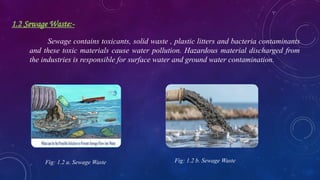
1.2 Sewage Waste:-
Sewagecontains toxicants, solid waste , plastic litters and bacteria contaminants
and these toxic materials cause water pollution. Hazardous material discharged from
the industries is responsible for surface water and ground water contamination.
Fig: 1.2 a. Sewage Waste Fig: 1.2 b. Sewage Waste
10.
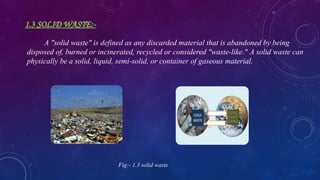
1.3 SOLID WASTE:-
A"solid waste" is defined as any discarded material that is abandoned by being
disposed of, burned or incinerated, recycled or considered "waste-like." A solid waste can
physically be a solid, liquid, semi-solid, or container of gaseous material.
Fig:- 1.3 solid waste
11.
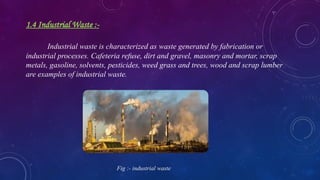
1.4 Industrial Waste:-
Industrial waste is characterized as waste generated by fabrication or
industrial processes. Cafeteria refuse, dirt and gravel, masonry and mortar, scrap
metals, gasoline, solvents, pesticides, weed grass and trees, wood and scrap lumber
are examples of industrial waste.
Fig :- industrial waste
12.
2.EFFECTS OF WATERPOLLUTION :-
2.1 Depth of aquatic organisms
2.2 Human Health
In other words, it is toxic water that cannot be drunk or used for
essential purposes like agriculture, and which also causes diseases like diarrhea,
cholera, dysentery, typhoid and poliomyelitis that kill more than 500,000 people
worldwide every year.
13.
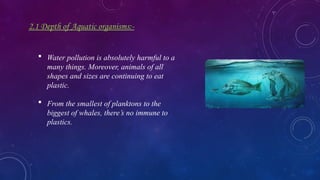
2.1 Depth ofAquatic organisms:-
Water pollution is absolutely harmful to a
many things. Moreover, animals of all
shapes and sizes are continuing to eat
plastic.
From the smallest of planktons to the
biggest of whales, there’s no immune to
plastics.
14.
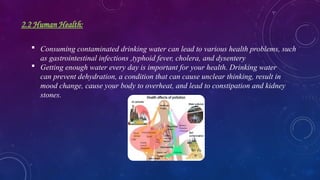
2.2 Human Health:
Consuming contaminated drinking water can lead to various health problems, such
as gastrointestinal infections ,typhoid fever, cholera, and dysentery
Getting enough water every day is important for your health. Drinking water
can prevent dehydration, a condition that can cause unclear thinking, result in
mood change, cause your body to overheat, and lead to constipation and kidney
stones.
15.
3. CONTROL MEASUES
3.1STABILISATION OF ECOSYSTEM
Reduction of waste at source
Burying of organic waste
Fish management
Proper use of water
TREATMENTATION:-
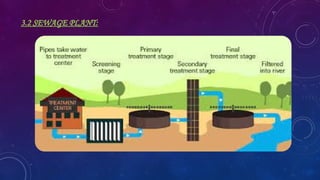
Pumping thewastewater system relies on the force of gravity to move sewage
from your home to the treatment plant.
Screening Wastewater entering the treatment plant includes items like wood,
rocks, and even dead animals.
Removing grit and sludge.
Sedimentation removing scrum
Sewage treatment plants can have significant effects on the biotic status
of receiving waters and can cause some water pollution, especially if the
treatment process used is only basic.
For example, for sewage treatment plants without nutrient removal,
eutrophication of receiving water bodies can be a problem.
18.
4. STATISTICS
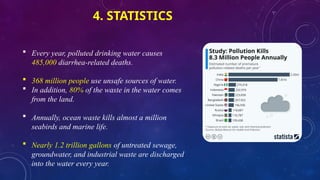
Everyyear, polluted drinking water causes
485,000 diarrhea-related deaths.
368 million people use unsafe sources of water.
In addition, 80% of the waste in the water comes
from the land.
Annually, ocean waste kills almost a million
seabirds and marine life.
Nearly 1.2 trillion gallons of untreated sewage,
groundwater, and industrial waste are discharged
into the water every year.
19.
COMMUNITY AWARENESS
ConserveWater: Conserving water should be out first aim. Water wastage is a major
problem globally and we are only now waking up to the issue.
Treatment of sewage: Treating waste products before disposing of it in water bodies helps
reduce water pollution on a large scale. Agriculture or other industries can reuse this
wastewater by reducing its toxic contents.
Use of environment-friendly products: By using soluble products that do not go on to
become pollutants, we can reduce the amount of water pollution caused by a household.
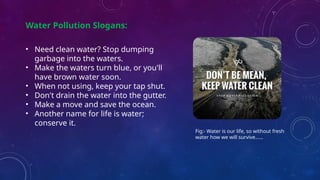
Water Pollution Slogans:
•Need clean water? Stop dumping
garbage into the waters.
• Make the waters turn blue, or you'll
have brown water soon.
• When not using, keep your tap shut.
• Don't drain the water into the gutter.
• Make a move and save the ocean.
• Another name for life is water;
conserve it.
Fig:- Water is our life, so without fresh
water how we will survive……










![Unit 3 water_pollution_samak_alam[1]](https://cdn.slidesharecdn.com/ss_thumbnails/unit3waterpollutionsamakalam1-210626200112-thumbnail.jpg?width=640&height=640&fit=bounds)


